Doubao Phone Assistant said the 30-day consultation for its Screen Automation Execution Protocol (SAEP) had ended and that screen-automation permissions would gradually open to third-party apps that had not explicitly refused them. The updated refusal list contained 155 apps, including 66 from Tencent, 23 from Alibaba, 11 from Meituan and 14 from Kuaishou, as well as DeepSeek and Kimi. Developers can submit or change refusals at any time. The assistant cannot operate apps that have explicitly refused automation, but users can still open and use them manually.
An investigation by Renjian Xiangsu, republished by Huxiu AI and TMTPost, describes graduates being asked to prove how they wrote their theses after AIGC detectors flagged them, with some cases affecting eligibility to defend. The report says one school used CNKI checks before defenses with thresholds of under 20% for humanities and under 15% for science and medicine, while the same thesis scored 15% on VIP and 39% on PaperYY; students rewrote sentences, ran text through Claude and ChatGPT, or paid for 'AI-rate reduction' services, and one 500-yuan service left a thesis at 31%. It also notes that in May 2026 the China Society of Academic Degrees and Graduate Education, commissioned by the Ministry of Education, issued guidance on AI tool use in graduate theses without a nationwide AI-rate threshold.
Intel CEO Lip-Bu Tan, speaking at a DBS-hosted panel, named DeepSeek, Moonshot's Kimi and Z.ai's GLM as Chinese frontier models whose performance is "already good enough," with lower token costs and "very fast" adoption, saying the market will decide which models fit which use cases. He also said he strongly supports open source as the best route to efficiency; the report notes he did not urge enterprises to switch to Chinese models, leaving the choice to the market. Citing a third-party price tracker, the article says DeepSeek's low-cost model charges $0.15 per million input tokens off-peak versus $2 for OpenAI's GPT-6.1 Sol, though DeepSeek doubles prices at peak times and Kimi K3's $10 output price matches GPT-6.1 Sol's.
Unitree CEO Wang Xingxing said OpenAI's GPT-7 could directly address embodied-intelligence problems when it arrives next year, and he now expects a possible industry turning point within one or two years. He proposed robots completing 80% of assigned tasks in 80% of unfamiliar environments through voice or text as a maturity benchmark. TechRadar also reported a Stanford Movement Lab experiment combining a Unitree robot with GPT-6 Astra, while later analyses noted persistent limits in physical interaction, reliability, execution speed, and cost.
This Recode China AI essay uses DeepSeek machine-learning systems and kernel design engineer Liu Shengyu as its case study: his personal WeChat blog, titled roughly "I Had to Bury My Talent in Yesterday," expressed anxiety about AI absorbing his skills and was picked up by outlets including South China Morning Post and Business Insider. The piece says Liu wrote that frontier AI is now fast enough to optimize its own low-level GPU code and that he is rethinking his career, but what circulated most widely was the blog's closing analogy comparing Anthropic CEO Dario Amodei to Adolf Hitler. The author argues that AI translation closes the language gap while carrying little cultural or subcultural literacy, and that engagement-driven algorithms reward the most provocative translations, so one researcher's personal venting can be mistaken for industry consensus.
An original report by 镜相工作室, also published with authorization by 36氪 and 钛媒体, describes apps rapidly adding AI search, assistants, shopping guides and customer-service tools. It cites QuestMobile data showing that in 2025 the year-on-year growth in monthly per-user usage frequency and time for embedded AI plugins was 2.8 times and 3.3 times that of standalone AI apps, respectively; the figures were not independently verified in the supplied reports. User examples and interviews with several product managers point to resistance to low-value, intrusive or hard-to-disable features. Reported approaches include limited testing, simplifying entry points and initially offering standalone AI apps.
Citing a new Epoch AI report, 36Kr says the AI-related revenue of Alibaba, ByteDance, Zhipu, Moonshot AI, DeepSeek and MiniMax totaled about 10% of OpenAI and Anthropic's combined revenue as of September 2026. Epoch AI estimated annualized revenue of about $65 billion for Anthropic and $40 billion for OpenAI, versus roughly $10 billion combined for the six Chinese firms; ByteDance's and Alibaba's figures mainly reflect model-as-a-service revenue. The report outlines five monetization paths and notes that open-weight diffusion pressures API pricing while consumer paid conversion and gross margins remain low.
Citing people familiar with the matter, Bloomberg reported on October 6 that Moonshot AI has closed a final funding round at a valuation of about $50 billion and plans to list in Hong Kong in the first quarter of 2027, according to articles republished by 36Kr and TMTPost from Bohu Finance. That is about a month after Moonshot was reported to have filed a confidential A1 listing application with the Hong Kong Stock Exchange. The articles say K3, released in July, topped the Hugging Face trending list within 30 minutes, and that annualized recurring revenue rose from $100 million in March to $1 billion in August, with Bloomberg's sources pointing to $2 billion by year-end. They also list September commercialization moves, including the "Moon Landing" partner program, the full rollout of K2.8 Preview, K3 on Amazon Bedrock, and the release of Kimi Code Desktop and a financial-industry solution. The funding and IPO details rest on unnamed sources, have not been confirmed by the company, and contrast with founder Yang Zhilin's late-2025 internal letter saying a listing was not an immediate priority.
QuestMobile's report puts China's AI-native app user base at 537 million as of August 2026, with 85.1 uses per user per month, up 67.1% year over year. It says users' first entry point for finding information is shifting from search boxes and news feeds to AI chat boxes, while comprehensive news apps and search engine apps saw monthly per-user usage of 123.6 and 35.8 times, down 7.6% and 21.7% respectively. By active penetration in August, the top five were Doubao at 77.2%, Qwen at 29.4%, DeepSeek at 22.8%, Yuanbao at 8.2% and Ant Afu at 5.8%, with competition described as extending from model capability toward ecosystems and scenarios.
MiniMax has opened its first official Tmall flagship store, offering M Plan subscriptions in Go, Explore and Build tiers for monthly or annual purchase. IT之家 reported that Tmall’s AI Space Station also brings subscriptions from multiple model providers into one entry point, while later coverage found that promotion levels across stores were limited.
Peter Thiel, an investor in OpenAI and Anthropic, received the Axel Springer Award in Berlin in the last week of September and discussed AI with Mathias Döpfner. He argued that the model layer looks more like interchangeable intelligence than a unique gateway: switching costs are low, product differentiation lasts only months, and much of the value may reach users as consumer surplus; he framed the view as an "I wonder." This commentary by Jinduan, republished by 36Kr and TMTPost, adds that chips, power, distribution gateways and irreplaceable workflow-context layers may still capture strong profits.
ByteDance announced on Oct 9 that it merged TraeWork and TraeCode into a single TRAE, repositioning it from an AI coding tool to an "AI Development platform" with an Agent mode and an IDE mode that switch without re-importing a project. In a hands-on test republished by 钛媒体 and written by 光子星球, Agent mode produced a working browser-based bookkeeping web app in about 20 minutes, and the IDE mode then allowed direct code edits plus a click-to-target fix of a text-overlap bug. The review also found the template library's "做同款" button intermittently unresponsive, an always-empty "我的产物" area with generated files saved only locally, and hallucination risks in an automated AI daily-news briefing. It added that former TRAE lead 石扬 was reported to have left ByteDance on the same day as the merger announcement.
A Carnegie China report released on September 23, "Who's Ahead in the Global AI Talent Race?", tracked the CVs of 10,280 authors from NeurIPS 2025 and found that 41% of top AI researchers worked in China in 2025 versus 34% in the US, compared with 27% and 46% three years earlier. The same report shows the US still had a net inflow of 2,145 researchers while China had a net outflow of 1,729, and that China's retention rate for researchers it trains rose from 57% to 69%. In the institutional ranking, Peking University took first place from Google, which led in 2022, followed by Tsinghua, Korea's KAIST and Shanghai Jiao Tong University; the report acknowledges its sample skews toward academia and undercounts industry.
Speaking at a forum hosted by DBS Bank, NVIDIA CEO Jensen Huang said Chinese AI models including DeepSeek, Kimi and GLM are "already good enough." He described himself as a firm supporter of open source, calling it the best way to drive efficiency gains, and said the market will decide which models best fit different use cases. Huang also rejected the framing of AI competition as "a race with a finish line," saying both the US and China will be long-term players, and argued that cheaper, more open models will let more people and companies benefit from AI, increasing demand for NVIDIA chips, data centers and compute. The report says he argued the market first misread DeepSeek's impact and that Wall Street is now misreading Kimi's, and that quantum computing could reach mainstream adoption within three to five years.
Bloomberg reported that DeepSeek aims to lead the first funding round for Winverse AI, a months-old Chinese startup building AI for robots, with the round expected to raise tens of millions of dollars and value the company at roughly $400 million after the investment. Meituan's Long-Z Investments is among the other investors reported to have committed, but the deal has not been finalized and the valuation and investor participation could change, according to Bloomberg. Winverse was founded in 2026 by Hu Han, a former Tencent scientist who led vision-language and embodied AI foundation model work and co-authored the Swin Transformer paper; the startup remains in early R&D and has not publicly disclosed detailed product plans or technical architecture, while DeepSeek did not respond to requests for comment, per Star Market Daily. QbitAI noted that the reported investment follows DeepSeek's roughly 141 million yuan stake in Unitree Robotics in August, moving from robot hardware toward robot foundation models.
Broadcom CEO Hock Tan said many AI investors "have no clue what they are investing in" and set extreme expectations only to find it is "almost like they are in a casino," speaking Monday at the DBS Asia Future Forward Conference in Singapore on a panel with Intel CEO Lip-Bu Tan, moderated by DBS CEO Tan Su Shan. He said many enterprises are "just wasting money, spending tokens" like a child spending $10 in ten minutes at an arcade, and described OpenAI's $50bn annualised revenue in September as "by itself, not that bad" for a startup that is still losing money because of heavy training spend. Both CEOs said capital could become a bigger constraint on AI than chips, memory or power; Tan said compute demand should outstrip supply through 2029, possibly into 2030, with wafer shortages easing by 2028 or 2029, and Broadcom is raising $60bn in debt to help Anthropic and other customers pay for AI chips and infrastructure.
Technology investor Wang Yuquan of Haiyin Capital argues in a conversation that the current AI boom is not a bubble but a decade-plus technology shift, with the real risk window around 2029, when application paradigms in AI software, AI coding and autonomous driving become clear while revenue lags behind infrastructure spending. He expects 24/7 trading, quantitative strategies and stablecoin growth to amplify market swings, hurting memory makers such as SK Hynix and South Korea hardest, while leaders like Nvidia are undervalued. He also calls embodied AI and large language models overhyped, urges Chinese labs to close their models for safety and revenue reasons, and predicts a 70-30 split favoring China outside the US.
A translated commentary on Huxiu AI examines “AI shame”: many people depend on AI daily but are reluctant to admit using it for their most important work. It cites recent embarrassments, including an AI prompt left inside a printed novel and an AI follow-up question appended to a Weibo holiday post by commentator Hu Xijin, who has since openly acknowledged relying on AI. The piece references a 2024 Microsoft and LinkedIn survey of 31,000 people across 31 countries in which 52% of AI users said they would not admit using it for important tasks, and a study in which seven detectors flagged 61.3% of 91 TOEFL essays by Chinese test-takers as AI-generated. It also notes Hebei University has opened an investigation into a doctoral thesis reported for fabricated references and suspected AI generation, arguing that use of AI need not be shameful but output must be checked.
DeepSeek published DeepSeek-V4.1-Flash on Hugging Face, a natively multimodal mixture-of-experts model with 552B backbone parameters and up to a 1M-token context, built on a Causal Encoder-Decoder design (20 encoder plus 20 decoder layers) that activates only 8B parameters per token in prefill and 16B in decode. It combines Compressed Sparse Attention 2 with FP4 main-KV caching (E2M1 format, one E4M3 scale per 16 channels) to cut the global KV cache to about 890 bytes per token — roughly a quarter of DeepSeek-V4-Flash — and offers a continuously controllable reasoning effort from 1 to 100, with weights under the MIT license. The vendor's own model card reports Terminal-Bench 2.1 at 90.6 (versus Opus-5.0 at 89.1 and GPT-5.6 Sol at 88.8), DeepSWE v1.1 at 74.2 and a Codeforces rating of 3471, but these figures are self-reported and not independently verified; the release also omits a Jinja chat template and ships a deepseek-recipe toolkit for prompt encoding instead.
A widely circulated social-media post claims NVIDIA offered a 2026 Peking University integrated-circuit PhD a first-year pre-tax package of about 2.9 million yuan, including signing and performance bonuses plus a possible Silicon Valley posting after two years; the report notes that NVIDIA China PhD campus offers were generally 450,000–600,000 yuan five years ago. Recruiters cited in the piece say multi-million-yuan packages for top-school AI PhDs are no longer unusual, with Tsinghua's Institute for Interdisciplinary Information Sciences large-model graduates starting at 4–5 million yuan, JD.com offering 8 million yuan to a new graduate and Xiaohongshu about 6 million yuan to a master's graduate in large models. ByteDance, Tencent, Alibaba and Kuaishou run programs such as Top Seed, Qingyun Plan, Alibaba Star and Kuaishou Star, with ByteDance's 2026 Top Seed cohort recruiting roughly 30 PhDs; the article also cites market chatter of a near-160 billion yuan ByteDance AI budget for 2026 and Alibaba's 380 billion yuan three-year AI and cloud commitment, plus over 100 billion yuan of quarterly Tencent AI infrastructure spending.
An investor asked Cambricon on an interactive platform why the newly launched DeepSeek-V4 preview only mentioned the Ascend 950 supernode and not Cambricon products, and whether the two companies have any actual business cooperation. Cambricon replied that its general-purpose AI chips are designed for diverse AI workloads including vision, speech, natural language processing and traditional machine learning, and offer broad applicability. The company separately said it currently focuses mainly on domestic customers and will keep concentrating on AI chip design, technical innovation and deployment.
NextFin News, published via TMTPost, reports that Ulanqab in northern China has become one of the country's densest data-center clusters, with Alibaba, Huawei, Kuaishou and specialist operators taking space because of relatively cheap electricity, available land and a climate that eases cooling loads; one abandoned school is being converted into a computing facility. The building boom coincides with falling model prices: DeepSeek made a 75% cut to its V4-Pro API rates permanent in May, and a Token price index compiled by Silicon Data and cited by the Financial Times showed composite prices more than 52% below their May peak by October, though not every model fell equally. Compute sellers are still spending more — Alibaba's capital expenditure for the quarter ended June 30 reached 67.678 billion yuan, up 75% year on year, while AI cloud and computing services revenue rose 45% to 48.437 billion yuan — and the article's hypothetical example of a 10-megawatt IT load at PUE 1.2 implies a roughly 42 million yuan annual electricity-cost gap for every 0.40 yuan per kWh difference, over 200 million yuan cumulatively across five years.
Arena published its Week 41 AI model leaderboard (Oct 5–11, 2026), where Anthropic's Claude Opus 5.5 Max debuted at No. 1 on the agent board with a 15.53% net improvement, a 17.29% task-confirmation success rate and a 0.37% tool-hallucination rate. On the overall board Gemini 4 Argon (High) stayed first at 1525 ELO with Anthropic models filling the rest of the top four, while new entries gpt-5.5 and gemini-3.5-flash-medium placed 29th and 30th. Chinese models sat in the upper-middle tier and moved little: Moonshot's kimi-k3-max 16th overall, Alibaba's qwen3.8-max 22nd, Xiaomi's mimo-v2.6-pro 26th and Z.ai's glm-5.3-max 27th, with glm-5.3-flash the highest Chinese model on the coding board at 27th. Rankings use anonymous blind-vote ELO scores (a percentage signal for the agent board) and reflect user preference rather than absolute capability.
Speaking at a panel organized by DBS Bank, Intel CEO Lip-Bu Tan and Broadcom CEO Hock Tan warned that access to capital could become the biggest constraint on the AI boom. Broadcom's Tan said the company is working through wafer and memory chip shortages but that capital will be the main limiting factor, and he likened some AI investors to casino gamblers who have little understanding of what they are betting on. Intel's Tan said Chinese frontier models such as DeepSeek, Kimi and GLM are already good enough, with low token costs and fast adoption, voiced strong support for open source, and said quantum computing could go mainstream within three to five years.
The open-source repository Shubhamsaboo/awesome-llm-apps has hit GitHub's Python trending list, bundling 100-plus AI agents, agent skills and RAG apps under an Apache-2.0 license that the maintainers say can be cloned, modified and even sold. The project states that every template is hand-built and tested end to end and works with Claude, Gemini, GPT, DeepSeek, Llama, Qwen and other models; its Agent Skills can be installed into coding agents such as Claude Code, Codex and Cursor with a single npx command. The repo organizes templates and step-by-step tutorials by category, including starter agents, advanced agents, always-on agents, multi-agent teams, voice agents, MCP agents and RAG pipelines.
Titan Media published an analysis mapping ethnic-Chinese influence across Jensen Huang's "five-layer cake" of the AI industry — energy, chips, infrastructure, models and applications. It states that AMD announced on Sept 28 an all-stock acquisition of Fei-Fei Li's World Labs for about $8.2 billion, a claim from this single outlet that we could not verify, and that Anthropic hired former White House AI policy adviser Huang Sihao as its frontier compute strategy lead. Cited figures include ethnic-Chinese CEOs at NVIDIA, TSMC, Broadcom, AMD and Intel, Taiwanese ODMs holding roughly 90% of global AI server manufacturing, eight of the top ten AI apps by monthly active users being Chinese products, and the top five humanoid-robot shippers (about 86% combined) all being Chinese firms — while noting thin 5–8% margins and model-layer revenue still far below OpenAI and Anthropic.
The Jetta M6, FAW-Volkswagen's Jetta brand's first new-energy strategic model, will go on sale on October 22 after presales opened September 28 starting at 80,800 yuan (465 Pro at 80,800; 555 Max at 90,800; 555 Ultra at 99,800). The electric sedan measures 4806/1895/1500 mm with a 2820 mm wheelbase and offers 465 km and 555 km range versions. It uses Horizon Robotics' Journey 6M chip for urban and highway NOA plus cross-floor memory parking, and integrates the Qwen, DeepSeek and Doubao models, along with lane-level navigation, phone-car connectivity and a standard heat-pump air conditioner.
A Washington Post investigation reported that the US AI industry is deeply intertwined with Chinese supply chains at the model, hardware and component levels, with US companies including DoorDash and Airbnb using Moonshot AI's Kimi K3 and other Chinese open-weight models for everyday tasks because they cost far less than closed models from Anthropic and OpenAI; when the Trump administration weighed a national-security ban on Chinese AI in July, a coalition of nearly 300 US companies publicly objected, the report said. It said Congress began examining US firms' use of Chinese AI models in April, and that the FBI, NSA and a DHS cyber agency issued a joint advisory last month alleging Moonshot AI, DeepSeek, Alibaba, MiniMax, StepFun and Zhipu trained on US models without authorization and breached US companies' terms of service — allegations attributed to US agencies. The report also cited Epoch AI in putting six leading Chinese AI firms' disclosed annual revenue at roughly 10% of Anthropic and OpenAI combined, and a Morgan Stanley estimate that making Tesla's Optimus 2 with Chinese suppliers costs about $46,000 in materials versus nearly three times that, $132,000, without them.
According to the Sunday Times 2026 UK rich list, 46-year-old mathematician Alex Gerko ranks eighth with a fortune of £16.006 billion, up £7.261 billion in a year; Chinese outlets attribute the wealth mainly to the valuation of XTX Markets, the quantitative market maker he founded in 2015. Reports describe XTX as running machine-learning-driven trading and market making on large GPU clusters, with its website cited as listing more than 25,000 GPUs in its research cluster, coverage of over 53,000 financial instruments, about $250 billion in daily trading volume, roughly 250 to 300 staff, no outside investors and a stake of about 75% held by Gerko. 36Kr and others also report that XTX's three main UK entities posted combined after-tax profit of about £1.71 billion in 2025, and note that public materials do not break out how much profit AI alone contributes.
DeepSeek has released a downloadable desktop version of Harness, with a prominent "Download Desktop" button on its homepage alongside session lists, plugins, workspaces and file previews — users can have agents organize documents, analyze spreadsheets and edit code, while terminals, scripts and code-launched Web UI remain available. The article traces the CLI wave from Anthropic's Claude Code in February 2025 and Google's Gemini CLI that June to Codex CLI and others, and notes that in August 2025 the Zed editor embedded Gemini CLI and proposed the Agent Client Protocol, while OpenAI shipped a Codex desktop app in February 2026. It also cites a study of 440 desktop tasks in which the best GUI agent completed 59.1%, CLI agents completed 48.2% under the original tooling, and CLI agents rose to 69.3% once additional command skills were supplied. The author argues CLI suits agent execution, while GUI is shifting from "operating" to supervising tasks, progress, permissions and diffs.
What problem it solves
Stock analysis often requires users to gather market quotes, news, technical indicators, financial information, and AI-assisted interpretation across multiple sources. The project addresses this by bringing supported-market data, analysis tools, AI agents, alerts, and review workflows into a locally focused desktop application.
Key features
Multi-market market data — The app…
What problem it solves
AI coding tools often expect particular provider protocols, making it difficult to use the models and providers a user prefers. A local gateway can translate between supported client APIs and provider APIs while preserving capabilities such as streaming, tool calls, reasoning, and images.
Key features
Provider protocol translation — The gateway translates Responses, Chat Com…
What problem it solves
The hidden system instructions that shape AI product behavior are difficult to inspect and change across models, products, and versions. This repository makes collected prompts available in a structured, product-oriented archive for study and comparison.
Key features
Broad product coverage — The archive covers prompts from major AI providers and products, including Anthropic…
What problem it solves
Image creation often requires switching between separate tools, manually translating visual ideas into parameters, and losing the context of an ongoing conversation. This project brings generation, editing, reference workflows, model comparison, and asset management into a DeepSeek Harness conversation and canvas.
Key features
Chat-Based Image Creation and Editing — Describe…
Optimizing a GPU kernel or completing a set of formal proofs often requires repeated trial and error: try a different implementation, run an evaluation, and keep iterating in whichever direction proves effective. When giving a model more test-time compute, the most direct approach is to let more agents try simultaneously; if the task only needs one best result, the value of the other attempts lies…
What problem it solves
Complex trading decisions require evaluation across financial fundamentals, market sentiment, news, technical indicators, portfolio holdings, and risk. TradingAgents addresses this by decomposing trading tasks into specialized LLM-powered roles that discuss findings and assess proposed transactions.
Key features
Parallel analyst research — Fundamental, sentiment, news, and t…
What problem it solves
DeepSeek Harness workspaces, tools, and project setup normally remain tied to the computer running the Harness instance. The project addresses the need to continue using that environment from another computer, phone, or browser without requiring a public listening port or public IP on the Host.
Key features
Remote workspace access — Open local workspaces from a web browser, …
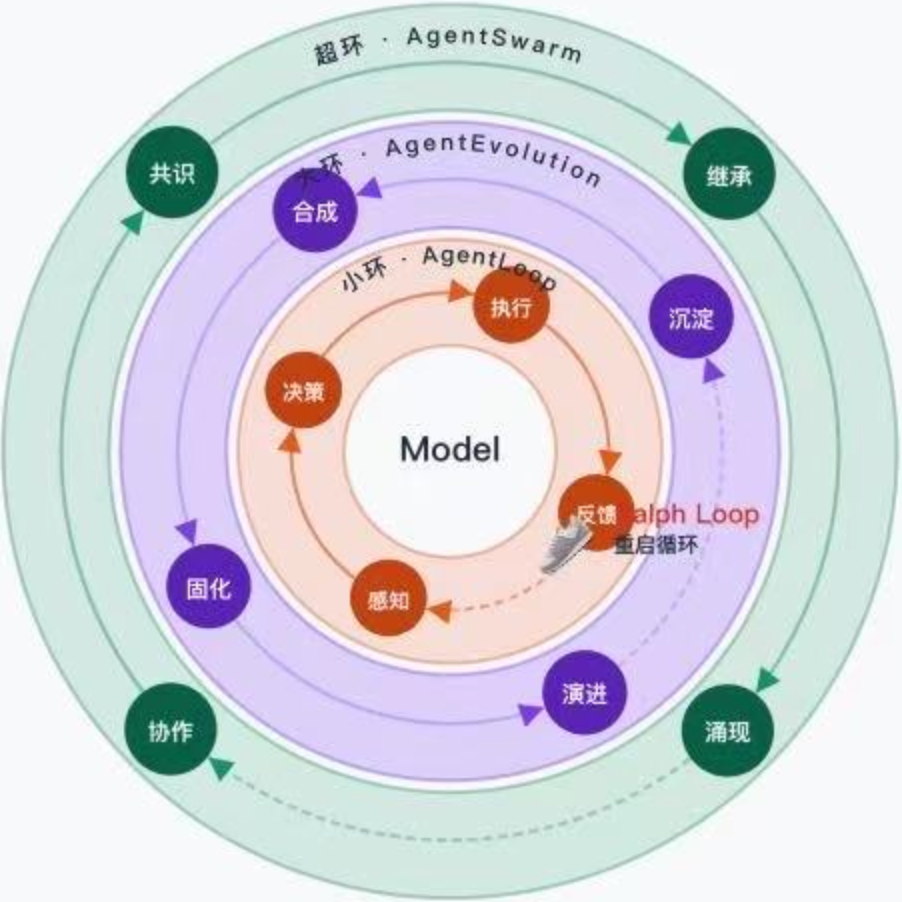
After an Agent completes a task, what it leaves behind is often more than an answer. There is also an expensive exploration path: which files it read, which tools it tried, where it failed, and what checks it used to confirm the result. The problem is that the next execution may not be able to use those experiences. The model parameters have not changed, and a new session will not naturally inheri…
0x01
At the end of 2022, ChatGPT exploded onto the scene, triggering the first wave of excitement in the tech industry. But traditional state-owned enterprises did not act immediately. The real action began in 2023. Domestic large models were open-sourced one after another, and integrated hardware-and-software delivery formats such as “large-model all-in-one machines” became the default option. Mo…
AI has already entered code writing, algorithm optimization, and model development. But after a task is completed, what remains may be reusable capability—or merely an answer and scattered logs. The difference becomes apparent only when a similar problem comes up again: can the system reuse what it learned, or must it pay the cost of exploration all over again?
Recursive Self-Improvement (RSI) co…
My current development workflow for my own projects is to use agent tools like deepseek harness locally to write code and make git commits, then install deepseek harness on the server and connect to it through a tunnel, allowing the server-side deepseek harness to handle deployment. The server is Ubuntu, and the local Mac establishes the tunnel connection. Deployment only requires sending a deploy…
First, the result: over the course of four months, on and off, I built a WeChat Mini Program called “随了么小管家” for keeping track of gift-giving and reciprocity. It currently has about 40 pages, with roughly 29,000 lines of frontend code and 14,000 lines of backend code, 85 commits, and a version number that has reached 1.1.9.
The tech stack is pretty ordinary: uni-app + Vue 3 + Pinia on the fronten…
 go-stock• Pinned