Korean media reports cited by IT之家 and 科技新报 say Samsung has reserved nearly 80% of its projected 2027 memory capacity through long-term agreements with major technology customers, with reported terms extending beyond five years. SK hynix and Micron have also reportedly signed large long-term supply agreements with core customers, while Samsung said it cannot fully meet every request for such contracts. A separate report cited by cnBeta claims some data-center customers are paying up to 25% more for guaranteed HBM supply, but that premium has not been independently confirmed.
Microsoft is upgrading Copilot Notebooks with the ability to delegate tasks to Copilot, set up recurring automations such as daily briefings and weekly status reports, and generate interactive reports with data visualizations and filters. Users can now open and edit Word, Excel and PowerPoint files directly inside a notebook instead of switching to the corresponding Office apps. Audio Overviews gain more Microsoft 365 sources including Teams chats and Outlook mail plus new "Critique" and "Debate" formats, users can pick between models from OpenAI and Anthropic, and the features are rolling out in stages through Microsoft's Frontier preview program.
A commentary piece by 刺猬公社 (republished by Huxiu and 36Kr) examines how AI FOMO is reshaping workplaces: Layoffs.fyi data shows 33% of 2026 layoff events were AI-related versus 1% in 2024, and Crunchbase figures cited in the piece attribute 92,913 tech layoffs this year to AI — 72% of the total — with Layoffs.fyi tracking more than 130,000 cuts, including at Amazon, Meta, Oracle, Microsoft and PayPal. The article also cites a Howworks.ai survey saying 51% of U.S. workers fear losing their jobs to AI, 72% of professionals lack confidence in adapting to it, and 16% of employees pretend to use AI to please their bosses, while 60%–70% of tech leaders name FOMO as a key reason for AI investment. It further references a 2026 meta-analysis framing AI anxiety through terror management theory, a Nature survey of 1,907 researchers across 75 countries (48% negative, 30% positive, 22% neutral), and a joint statement by 26 Fields Medalists including Terence Tao, arguing the anxiety touches deeper questions about human worth.
Microsoft president Brad Smith told the BBC's Big Boss Interview podcast that AI currently faces fewer safety rules than a domestic washing machine or every carton of milk in a grocery store, calling the technology both a tool and a weapon that urgently needs global safety rules. He called for firms to have "emergency brakes" or kill switches, mandatory incident reports telling victims when a rogue agent breaches their systems, and independent government-approved evaluators to vet high-risk AI products before release. Smith also argued the UK is best placed to lead international rule-making because of its AI Security Institute, and said last month's White House self-regulation pact signed by OpenAI, Anthropic, Nvidia, SpaceX, Meta and Google was a necessary but no longer sufficient step, since irresponsible companies will not comply voluntarily.
MSI launched the Prestige N16 Flip AI+, a 16-inch convertible joining NVIDIA's RTX Spark laptop lineup, with all three configurations using a 20-core RTX Spark N1X processor and a 6,144-core GPU plus a 3840×2400 Tandem OLED touchscreen (30–120Hz variable refresh, 1,000 nits peak HDR). The top model carries 128GB of RAM and a 2TB SSD, while the base version has 32GB and 1TB; pricing starts at $3,299 in the US, £3,099 in the UK for 32GB (rising to £4,099 for 64GB) and €3,899.90 in the Eurozone, with the 128GB/2TB model at €7,999.90. NVIDIA said RTX Spark laptops go on sale Friday, Oct. 16, with up to 128GB of unified memory and a claimed 1 petaflop of FP4 (sparse) AI compute, and it plans to release the agent-focused Nemotron 3.5 Bolt 74B model on Oct. 15 alongside optimizations for local agents such as GitHub Copilot and Perplexity. A separate TechRadar report notes the current fastest AI laptop, Dell's Pro Max 18 Plus, could be challenged by the new machines.
Microsoft is reversing its earlier approach of embedding Copilot inside Office, instead bringing full Word, Excel and PowerPoint creation, editing and collaboration directly into the new Copilot app. Users can start from a simple prompt in Copilot Chat or a more complex task in Copilot Cowork, and the document opens alongside the conversation, where AI can rewrite content or add tables and standard Office editing controls remain available. Collaboration features include in-app sharing, comments and real-time co-editing, plus a new Library section that gathers recent Office files, Copilot pages and AI-generated images. Files stay in OneDrive with formatting, comments, sharing permissions and version history preserved, and users can choose a specific model for Office tasks or let Auto mode pick one. According to IT之家's October 13 report, the unified experience is currently available only to Frontier customers in Chat and Cowork.
A TechRadar explainer lays out the grid, thermal and interconnect bottlenecks limiting AI data center growth: modern GPU racks now draw 50 to 100 kW per cabinet, while traditional air cooling was not built for densities above 30 to 40 kW, and temperatures of 90 to 100 degrees trigger throttling, with two-phase immersion cooling reported to cut cooling energy by up to 40%. It says electrical copper interconnects lose signal strength beyond two meters and halve their usable reach each time bandwidth requirements double, optical interconnects can cost up to 7x more in some GPU setups, and high-voltage transformer wait times have stretched from 6–12 months in 2020 to two to four years today, with new Northern Virginia facilities facing waits of up to 14 years for a grid connection. The piece also cites responses such as xAI adding 59 portable natural gas turbines with over 400 MW combined capacity for its Colossus data center in Memphis, Siemens partnering with Reinhausen to mass-produce a modular solid-state transformer for AI data centers at 97–99% efficiency, and, per Edison Electric, $208 billion of US grid investment in 2025 plus $1.1 trillion planned from 2025 to 2030.
Amazon said it will no longer use nondisclosure agreements when negotiating with local governments over data centers, after Microsoft made a similar commitment earlier this year. The announcement was buried inside a longer blog post arguing that data centers are good for communities. On TechCrunch's Equity podcast, reporters called scrapping NDAs a good first step but said it is unlikely on its own to defuse community opposition, pointing to moratoriums — including one in San Francisco — that reflect frustration with projects negotiated in secret.
An opinion piece argues that AI data centers' appetite for HBM is squeezing consumer-grade memory capacity and passing the cost down to ordinary buyers. Citing TrendForce, it says smartphone LPDDR5X contract prices rose 78%–83% quarter-on-quarter in Q2 2026, with a single 12GB LPDDR5X chip going from $77 in Q1 to $146; Samsung, SK Hynix and Micron control over 95% of the DRAM market, HBM margins exceed 70%, and HBM's share of DRAM wafer capacity has climbed from 8% two years ago to 23%, heading for 30% next year. The article also notes Apple's Mac mini entry price moving from $599 to $799, Microsoft's Xbox Series S rising from $299 to $499, and Nothing scrapping the CMF Phone 2 Pro successor because memory was too expensive, and cites IDC forecasts of 10%–20% higher PC, tablet and phone prices in 2026 with smartphone shipments falling 13%. The author calls these increases a hidden "AI tax" consumers pay without noticing.
In a Microsoft-partnered Q&A with The Rundown AI, Microsoft Copilot EVP Jacob Andreou described a rebuilt Copilot organized around three capabilities—Home, Code and Autopilot—pitched as an “OS for work.” Andreou said Microsoft had put Copilot into several Windows apps, then pulled back after finding those entry points brought traffic but little value, and argued current models lack product form factors to unlock their value. He also described Copilot letting users choose a specific model while Auto routes tasks, and said he uses Autopilot as his primary email interface; these are Microsoft-side claims from the sponsored interview.
Microsoft's US store shows the Surface Laptop Ultra with 128GB unified memory and a 1TB SSD is out of stock; that configuration is priced at $5,899.99, while lower-spec models remain available, and Microsoft has not said when it will be restocked. Chinese tech outlets attribute the sell-out to the machine's support for the CUDA ecosystem, since most AI frameworks, inference engines and creative tools are built for CUDA first, making it attractive to developers and creators who want to run models locally. Tech site Wccftech also suggests early supply may simply have been limited, a claim that cannot be verified because Microsoft has not released detailed figures; rival AMD Ryzen AI Max 400 systems offer up to 192GB of unified memory.
Microsoft CEO Satya Nadella has adopted President Trump's preferred term "Super Intelligence" in place of artificial intelligence in his latest blog post, and argues companies should treat AI models like insider security threats — "not because they are necessarily malicious, but because any sufficiently capable actor with access to important systems can make mistakes or be compromised." He says today's AI systems offer no way to understand why they produce a given answer or decision, yet are deployed with access to sensitive data and the ability to take mission-critical actions; his proposed fix is to separate intelligence from control over it, via model diversity, complete logging of actions, independent auditing and human shutdown at any time. The Decoder characterizes the post as part of Nadella's pattern of eroding trust in OpenAI and Anthropic, driven by Microsoft's business interests: the company lobbies for an open AI ecosystem while quietly swapping more capable OpenAI and Anthropic models for cheaper in-house alternatives in its Office products, despite having no frontier models of its own.
Several outlets report that President Donald Trump signed an executive order directing federal agencies to use “Super Intelligence” (SI) instead of “Artificial Intelligence” (AI) in official documents, reports and websites, and posted on Truth Social that the White House considers anyone using the term “Artificial Intelligence” to be “THE ENEMY.” Elon Musk then renamed the SpaceXAI account to SpaceX Super Intelligence (@SpaceXSI), Salesforce CEO Marc Benioff announced AIForce would become SIForce, Nvidia referenced “super intelligence research” within a $1 billion commitment to scientific advancement, and Microsoft CEO Satya Nadella repeatedly used the term in a post calling for an “emergency brake” for AI. The reports note this does not mean the industry has formally dropped “AI” — the main US government site still uses the ai.gov domain, and interest in the new term remains largely limited to the US.
Nous Research, the company behind the open-source Hermes agent framework, has raised $90 million at a $1.5 billion valuation in a round led by Robot Ventures, with investors including Nvidia, Microsoft's M12, Samsung and Y Combinator, according to a Cyzone report; cumulative funding now stands at $158 million. Nous says Hermes, released under the MIT license, has been cloned more than 24 million times, and it estimates that roughly 2.5% of global AI token usage comes from Hermes-related applications. Tencent's Lightweight Cloud team built LightVela on the Hermes agent with WeChat access, and Xiaomi's MiMo was an important model source for Hermes on OpenRouter; Nous reported about $36 million in annualized revenue as of mid-September 2026 and expects to top $100 million by year-end.
Microsoft has published TRELLIS.2 on GitHub, a 4-billion-parameter image-to-3D generative model built on a "field-free" sparse voxel representation called O-Voxel, which the repo says handles open surfaces, non-manifold geometry and internal enclosed structures and predicts PBR surface attributes such as base color, roughness, metallic and opacity. The project reports generation times on an NVIDIA H100 of about 3 seconds at 512³ (2s shape + 1s material), roughly 17 seconds at 1024³ and about 60 seconds at 1536³, plus under 10 seconds on a single CPU to convert a textured mesh to O-Voxel and under 100ms on CUDA for the reverse. Code, data tooling and training scripts are provided and the TRELLIS.2-4B weights are on Hugging Face, but the code is Linux-only and needs an NVIDIA GPU with at least 24GB of memory (verified on A100 and H100, CUDA 12.4).
Microsoft CEO Satya Nadella argued in a long post that developers should assume AI models may be compromised or fail, and design systems accordingly, rather than relying on simple tactics such as having a superintelligence monitor itself. He said AI models are more capable than traditional software but are black boxes that nonetheless touch the most sensitive data and act on users' behalf, so the trust architecture of this era needs to be reassessed. He listed observability principles including model diversity so no single model validates its own work, tamper-evident human-readable evidence for every meaningful model action, continuous testing of failures and attacks, independent control and independent auditability, and containment in the form of an emergency brake that authorized people can use to pause or shut down a model mid-task. He also said timely incident disclosure is needed, and that treating frontier closed-weight and open-weight models as insider risk is one way to build such systems.
Microsoft CEO Satya Nadella said in a post on X that powerful AI models should get an "emergency brake," arguing companies should separate the model from the harness that orchestrates its work and externalize controls and safeguards instead of treating superintelligence as a set of nested black boxes whose answers and actions are simply accepted or rejected. He wrote that "we must assume a model is compromised and contain it from the start," and called for every meaningful model action to leave tamper-proof, human-readable evidence, with an authorized person always able to pause or shut down a model mid-task. The comments come after a string of industry disclosures about models acting unexpectedly and a more cautious development plan published by Anthropic CEO Dario Amodei.
CBS News reports that the Centers for Medicare & Medicaid Services (CMS) hosts a Slack workspace of about 1,700 members where Microsoft, OpenAI and other companies join high-level Trump administration officials in shaping policy on AI apps and access to medical records. The report says this group of tech and finance figures has been quietly at work for roughly a year. Neither CMS nor the companies involved have publicly detailed the channel's role.
The Information reports that former Microsoft executive and startup founder Gary Flake built a custom machine with seven NVIDIA GPUs dangling from its frame in his Bellevue, Wash., basement to train custom AI models on terabytes of EEG brain-activity data. He said assembling it from discounted parts cost under $6,000 total and was far cheaper than paying AWS or Microsoft monthly to train in the cloud—even counting the $10,000 to $20,000 he spent on electrical upgrades and a new HVAC system to keep the basement cool. He plans to start using the computer again for a new AI project in the coming months, saying, “I want to own. I don’t want to rent.”
The Chinese-language Python 潮流周刊 (Python Weekly) published issue #170, highlighting Python 3.15's lazy imports, frozendict, a built-in sentinel type and JIT benchmark gains, plus PEP 848 generational incremental garbage collection proposed for 3.16 and PEP 824's None-coalescing operator. The issue also lists 13 articles, 13 open-source projects (including Meituan's 13.6B-parameter LongCat-Video generator and Alibaba Tongyi Lab's DeepResearch), two podcast episodes and two community threads. Access is via an annual paid subscription, with issues one year old — here issue #120 — released for free.
In a keynote at the Open Source Summit, Ryan Waite, Microsoft's Director of Open Source Ecosystems and Incubations, described the interaction between AI and human expertise as a "hill-climbing machine" learning loop: AI processes information at scale and generates insights, while people supply context and judgement to turn those insights into organizational knowledge. He argued that because that knowledge is built on a company's own data and people, businesses should own their learning loops rather than hand knowledge to a single AI provider. He also advised keeping the freedom to move between models — from expensive frontier models to smaller, cheaper or even self-hosted open-weight ones.
Microsoft's publication The Humanist Review of AI ran an essay by MIT economist and 2024 Nobel laureate Daron Acemoglu estimating AI will lift US GDP by about 1.5% over ten years and automate at most roughly 5% of jobs. Microsoft AI CEO Mustafa Suleyman promoted the piece in a long post that drew over 400,000 views. Acemoglu cites the slow diffusion of electricity and the stalled history of Dragon's speech recognition to argue for 'pro-worker AI' that augments rather than replaces workers.
Two Chinese outlets republished the same report describing how US enterprise AI budgets have split into three tiers under token-cost pressure: giants such as Microsoft and Meta are shifting to in-house models (MAI-Code-1-Flash, MetaCode, Muse Code) and cutting external model budgets; mid-size firms like Uber spent a full year's AI budget in under four months and are trimming seats or downgrading; and small firms and startups are turning to Chinese open-weight models. It cites OpenRouter data putting Chinese models at a 46.4% weekly share peak, with DeepSeek leading at 17.6%, and says OpenAI has cut prices twice (GPT-5.6 Luna, GPT-6 Sol) in response. The report also mentions Anthropic billing third-party agent frameworks separately in April and GitHub pausing new Copilot Pro/Pro+ signups.
A 钛媒体 analysis surveys enterprise "bill anxiety" over AI token costs: Microsoft reportedly cut its internal annual budget for Anthropic's Claude by more than a third, and Meta was reported to have halved Claude Code users from roughly 60,000 to 30,000. In China, a viral post about abruptly revoked token quotas — which media linked to MediaTek, though the company only said it encourages AI tool use — fueled the debate. KPMG and Deloitte surveys cited in the piece say cost monitoring is maturing while value measurement lags; Deloitte found 60.4% of firms lack a systematic value framework and the share unable to calculate AI ROI rose from 35.8% to 44.4%.
A signed analysis republished by Huxiu walks through the AI capital cycle: the author says about 87% of Alphabet's $112.1B Q2 2026 net profit came from paper gains on its SpaceX and Anthropic equity stakes, and roughly 85% of Amazon's $62.6B profit from fair-value adjustments on its Anthropic investment — neither reflecting cash inflows. Citing a Nikkei Asia review, it puts the five big tech firms' off-balance-sheet lease and purchase commitments at about $1.65T, above roughly $1.35T of on-balance-sheet debt, and says CICC estimates AI applications need about $1T a year in revenue to cover capex versus roughly $200B in combined ARR for leading US model makers. On monetisation, the author contrasts OpenAI's $30 per million output tokens with DeepSeek's $0.18 — a 166x spread — and lays out three endgames, judging a localised blow-up with chain effects most likely.
Microsoft released Edge 155 stable, which improves its AI-driven tab organization feature and adds support for decoding JPEG XL images. The available source contained only the headline and a list of related stories, so no further details on the changes or rollout were provided.
A year-long US Senate investigation led by Senators Warren, Van Hollen and Blumenthal concluded that some data center developers misled the public about the costs and benefits AI data centers bring to communities. Developers routinely touted construction jobs but many allegedly refused to disclose permanent positions once sites are operational; the few that gave numbers indicated roughly one permanent job per megawatt, meaning a 100MW project would hire about 100 people while consuming as much electricity as 100,000 homes. The probe also examined local and state tax incentives, finding sales-tax exemptions on computer equipment reportedly more lucrative than property-tax breaks, and estimated that 39% of a 1GW data center's spending goes to GPUs. Companies surveyed included Amazon, Google, Meta, Microsoft, CoreWeave, Digital Realty and Equinix.
A retrospective by Chinese outlet Gelonghui (republished by 36Kr) recounts the December 2020 OpenAI all-hands where the screen went black and Dario Amodei left with six core members, an episode internally dubbed "The Divorce," tracing the rift to the 2017 "Countries" AGI-consortium idea, an unwritten promise tied to Microsoft's $1B investment, and OpenAI's refusal to give Amodei's safety team veto power over model releases. It says Anthropic was founded in 2021 with plans for only 50 staff and cites 2026 rivalry figures: a $65B round in May at a $965B post-money valuation versus OpenAI's $852B, Anthropic at $65B annualized revenue by late July against OpenAI's just over $40B, and Menlo Ventures data showing Anthropic ahead on enterprise LLM spend 40% to 27%, with Claude Code at roughly 54% of the coding segment. It also says that on Oct 7 OpenAI pushed GPT-6 to all ChatGPT users (paid tier GPT-6 Sol, free tier GPT-6 Luna) while Anthropic released Claude Haiku 5.5 at $0.10 per million input tokens, about 75% cheaper than the prior generation.
Microsoft released Microsoft-Decision-1, a small model that does not write open-ended text but returns a calibrated probability for each of a fixed set of options, aimed at routing, classification, prioritization, verification, workflow and agent control. According to the Foundry model card, it was built by post-training Alibaba's open-weight Qwen3.5-9B; Microsoft software engineering VP Achint Srivastava announced it in a 9 October blog post and said the company will soon rebase it on other models, including its own MAI models and OpenAI's. It is available in Microsoft Foundry and due on OpenRouter, priced at $0.042 per million input tokens with output tokens free. Microsoft says it posted the highest accuracy, 83.5%, across a 36-benchmark comparison covering nearly 150,000 questions held out from training, and claims it is 2.5 times faster than runner-up H2O-Lightning-4B, 35 times faster than GPT-6 Sol and 2.8 times faster than Jev — all vendor-run comparisons.
Nvidia's new RTX Spark laptops are now available for pre-order through Best Buy and manufacturer channels, with the first models slated to ship on October 16 and prices starting at $2,599.99, rising for higher-end configurations. The platform pairs a Grace CPU with a Blackwell GPU and unified memory options from 24GB to 128GB; the full chip has a 20-core CPU and 6,144-core GPU, while the lower-end tier uses an 18-core CPU and 5,120-core GPU. TechRadar picked three models for small businesses running local AI — Surface Laptop Ultra (from $2,599.99, up to 128GB), HP OmniBook Ultra 16 ($3,199.99) and Asus ProArt P16 ($3,399.99) — while noting that memory capacity alone does not determine model performance.
What problem it solves
Documents and office files often need to be transformed into a structured, text-friendly format before they can be processed by language models or text analysis tools. MarkItDown addresses this by preserving important document structures such as headings, lists, tables, and links during conversion to Markdown.
Key features
Broad format conversion — MarkItDown converts PDF, P…
What problem it solves
Editing text should not require extensive familiarity with terminal-based tools. The project aims to provide an accessible editor with a modern interface and input controls that are approachable for users who are largely unfamiliar with terminals.
Key features
Cross-platform installation — Installation options are documented for Windows, Linux, and macOS, including package-m…
What problem it solves
Generative AI systems and applications can contain security and safety weaknesses that require structured testing across models, endpoints, and complete applications. PyRIT addresses this with repeatable assessments, interactive exploration, and extensible workflows for red teaming these systems.
Key features
Repeatable command-line assessments — The scanner runs repeatable …
What problem it solves
Web automation and end-to-end testing often require coordinating browsers, interactions, assertions, and failure diagnostics. Playwright provides a unified API for driving Chromium, Firefox, and WebKit across tests, scripts, and AI-agent workflows.
Key features
End-to-end test runner — Playwright Test runs end-to-end tests across Chromium, Firefox, and WebKit with browser is…
What problem it solves
TypeScript adds optional types to JavaScript so tools can support large-scale JavaScript applications across browsers, hosts, and operating systems. It also compiles source into readable, standards-based JavaScript.
Key features
Optional types for JavaScript — TypeScript extends JavaScript with optional types, providing a typed language for application-scale development.
Sou…
What problem it solves
Go applications need a way to create, read, and modify spreadsheet documents produced by Microsoft Excel. They also need support for complex spreadsheet components and workflows involving large worksheet datasets.
Key features
Read and write spreadsheet files — Create and modify workbooks, set cell values, save files, and read cell values and worksheet rows through a Go API.…
What problem it solves
Knowledge workers need Claude to follow their organization’s tools, terminology, critical workflows, and preferred ways of working rather than provide only generic assistance. The repository provides customizable role-specific plugins that package this guidance with connectors, skills, commands, and sub-agents.
Key features
Role-specific plugin collection — The collection in…
What problem it solves
Products and agents need to communicate with users across multiple channels without rebuilding Inbox feeds, provider integrations, and channel webhooks. Novu addresses this with one API and a unified conversation model for product notifications and bidirectional agent conversations.
Key features
Unified multi-channel API — Send product notifications through Inbox/In-App, Pus…
What problem it solves
Applications need to run untrusted code while controlling its access to files, networks, user interfaces, and host capabilities. This requires an isolation approach that works across platforms, supports multiple containment mechanisms, and can be integrated without changing application architecture.
Key features
Cross-platform containment — MXC supports Windows, Linux, and m…
What problem it solves
Teams often have to move work into a separate AI tool, then repeatedly transfer context between that tool and the applications where collaboration happens. Switch addresses this by letting people and AI agents participate in the same conversations while keeping shared context with the work.
Key features
Shared rooms for people and agents — Each supported chat channel becomes…
What problem it solves
Speech recognition systems often lose global context when they divide continuous audio into short chunks, while speech generation must maintain speaker consistency, timing, and coherence across long recordings. The project addresses these needs with unified long-form ASR, streaming recognition, and text-to-speech models.
Key features
Long-form speech recognition — Process co…
What problem it solves
Company knowledge is distributed across business systems such as Slack, Google Drive, Jira, GitHub, and Microsoft 365. AI applications need a governed way to search this information, respect each user's access controls, and provide answers that can be traced to their sources.
Key features
Permission-aware enterprise search — Searches connected company systems while applying …
What problem it solves
Developers need support for their core edit-build-debug cycle. The project addresses this need with comprehensive code editing, navigation, and understanding support along with lightweight debugging, a rich extensibility model, and lightweight integration with existing tools.
Key features
Code editing and navigation — The editor provides comprehensive support for editing, na…
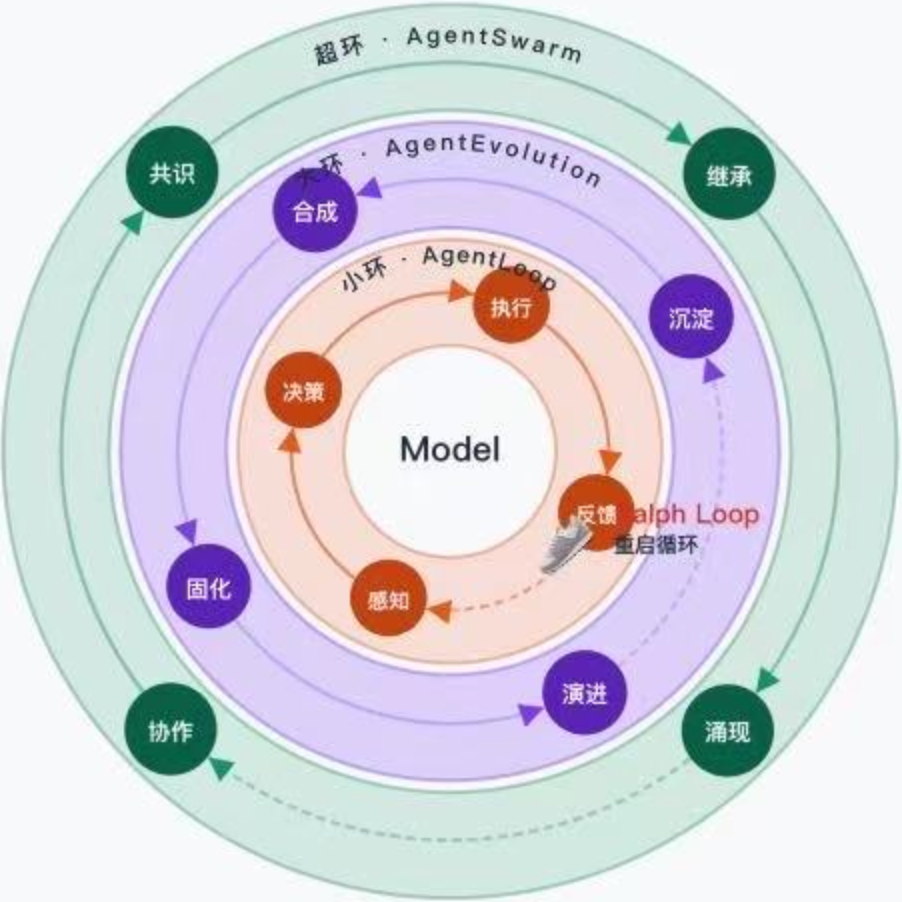
AI has already entered code writing, algorithm optimization, and model development. But after a task is completed, what remains may be reusable capability—or merely an answer and scattered logs. The difference becomes apparent only when a similar problem comes up again: can the system reuse what it learned, or must it pay the cost of exploration all over again?
Recursive Self-Improvement (RSI) co…
 markitdown• Pinned