CoreWeave’s bonds entered distressed territory as their yield spread over government debt reached roughly 1,000 basis points, while the company’s shares fell 10% on October 22 to $55.60, according to Huxiu AI. The cloud provider carried more than $35 billion in debt after losing over $1 billion in the first half, although $103.7 billion in remaining performance obligations and $15.5 billion in cash provide near-term support. The Verge AI, Huxiu AI and 36Kr Artificial Intelligence cited reports of stress spilling into bonds and shares tied to other AI infrastructure companies.
A federal magistrate judge in San Francisco denied bail on Monday to former OpenAI engineer Abdulrahman Alfozan, ordering him to remain in custody while awaiting trial on a charge of using a device to intercept communications; he is accused of hiding a recording device behind a TV in an executive conference room. Prosecutors argued Alfozan, 35, was a flight risk, citing the Saudi government's offer to help fund his release, his wife and son's departure for Saudi Arabia, a one-way ticket to Riyadh and the lack of an extradition treaty, while defense lawyer William Pernik said he is a green card holder weeks from citizenship and offered home detention, an ankle monitor and about $1 million. Judge Alex Tse said there was a real threat that once Alfozan leaves the case is over, and set the next hearing for early November; OpenAI has said it found no evidence that model weights, source code or customer information were stolen.
Meta's engineering team detailed Prometheus, a supercluster in Ohio that the company describes as gigawatt-scale and expected to hold roughly 1 million GPUs at full scale. Meta said the cluster was used to train its recently released Muse family of foundational models. The account comes from Meta's engineering blog, relayed by Techmeme.
An MIT Technology Review analysis argues that personal AI agents such as OpenAI's Dots and Meta's Muse form a "third category" of web visitor, distinct from both humans and traditional bots. It reports that Muse was downloaded 5 million times in its first month and that agentic web traffic tripled from August to September. Many sites now block consumer-dispatched agents: Amazon has blocked Muse's agents and is appealing a court ruling that went in Perplexity's favor, while Shopify gives agents their own checkout lanes that bypass human-facing pages. The piece warns that if demand keeps rising, sites may be optimized for agents rather than people, with heavier human verification, prices tailored to individual agents and recommendations shaped by ads or commissions.
Arena.ai said Meta's Muse Wonder Full (Max) has debuted on the Code Arena: WebDev leaderboard at No. 6 overall with 1726 points, placing Meta among the top three labs on that board. Arena.ai said the result is 75 points and 11 places above Muse Wonder (Max) at No. 17 with 1651 points, and 67 points and 8 places above Muse Spark 1.3 (Max). Alexandr Wang, reposting the news, called the showing "not bad, but clearly lots of room for us to improve." The scores and rankings are Arena.ai's own account and were not independently verified in the supplied material.
Privacy firm Redact said roughly 80 WhatsApp help and FAQ pages contained about 100 hidden blocks of text written for a large language model, including orders not to cite or interpret WhatsApp's terms or privacy policy and not to reference GDPR, LGPD or CCPA once a user raised legal action; the account-deletion page also told the bot not to recommend contacting a data protection regulator. WIRED said it viewed the text in archived page code, and after it contacted Meta the text was removed from all the pages. WhatsApp spokesperson Joshua Breckman said it was displayed because of a bug that is now fixed, that the text was instructions for its support chatbot rather than users and was meant to keep answers accurate and relevant; it is unclear how long it was shown or whether third-party chatbots obtained it.
Quantum位 reports that Tongyan Lingzhi, a company drawing on the Beijing Institute for General Artificial Intelligence (BIGAI) ecosystem, is developing a Personal AI built around parameterized learning and continual evolution: lightweight Personal LoRA adapters sit on top of a shared base model to carry the preferences of individuals, projects and enterprises, while an RSI loop uses an Evaluator to filter feedback, re-runs updated models against the previous version on the same task batch, and rolls back regressions. The company says its core RSI technical route and product architecture are defined, with modules moving into engineering, while a fully automated closed loop is still under development. In staged tests using Qwen2.5-72B-Instruct and eight NVIDIA H800 GPUs, Paged and conventional Flat LoRA modes were both held to a 5.79GB memory budget; Paged showed some latency and tail-latency advantage at 1%–30% LoRA request share, but frequent parameter swapping still degraded performance at 50%. These architecture, mechanism and test results are the company's own claims and have yet to be validated in production.
A hands-on comparison by 字母AI, republished by 钛媒体 and 36氪, tested Meta's Muse against Dot inside ChatGPT on tasks including adding Apple Calendar events, syncing health data, cleaning a 126 mailbox, posting to social media, finding a restaurant on Dianping, picking shoes on JD and building a shareable five-person travel expense ledger. Muse completed the calendar and health tasks from an iPhone after a single authorization prompt and batch-deleted 191 matching emails; Dot could not operate the iPhone calendar directly and needed a connected Mac, but it spotted a timestamp inconsistency in an email and drafted a reply, and it delivered a ledger that recalculated correctly and synced edits made by a friend, while Muse's ledger reverted on refresh and could not sync. The review cites a Similarweb estimate of about 2.18 million daily active users for Muse on October 5, and notes both agents still stumble on Chinese sites that require logins and CAPTCHAs; the reviewer also acknowledges that in some tasks the two ran in different environments, with Dot using the user's Mac and Muse a cloud computer.
Rest of World, citing AppMagic data, reports that Meta's personal AI agent Muse has been downloaded 9 million times in the U.S. and Canada since its September 8 launch, with as many as 1.8 million people using the app daily. Meta chief AI officer Alexandr Wang told the Financial Times the company is "quite excited to bring personal agents to billions of people around the world," while Meta has said an international expansion of Muse would require local language support and integration with local services. The report also cites researchers and startups, including South African company ManyHands, whose Manny WhatsApp assistant must handle all 11 of South Africa's official spoken languages, on obstacles such as weaker non-English model performance, poor connectivity, agent-driven traffic growth, cost, and the difficulty regulators face when agents are hosted abroad.
Conway Research, a US AI startup founded about eight months ago, has shown Underdog, its first personal AI assistant, which runs entirely on the user's device and can work offline; it is still invite-only, with beta builds for Mac and Windows. The company said the project is backed by a16z, the Anthropic-Menlo Ventures investment group Anthology, and individual investors from Google, OpenAI, Hugging Face and elsewhere, without disclosing the amount. According to 智东西, Underdog uses a Saluki 27B model fine-tuned from Qwen3.8 27B plus a proprietary Husky inference engine, and Conway claims Woof 4B handles up to 730 tokens per second on a MacBook, 4.5x faster than Apple's MLX — figures that come from the company itself.
Research firm SemiAnalysis published a report forecasting more than 50GW of global data center capacity additions in 2027, up from 15.6GW in 2025 and roughly 25GW in 2026. It says its Datacenter Industry Model shows over 24GW across 40 campuses in advanced construction, most more than halfway done with exterior cooling and electrical equipment installed, all slated for 2027 delivery. The report acknowledges constraints in power, labor, supply chains and capital, but argues behind-the-meter generation, prefabricated designs and pre-leasing are easing them; TechNews, citing the report, said the next bottleneck could shift back to chips and memory. Techmeme's summary cites about $1.3 trillion of lease contracts signed year-to-date, while TechNews gives roughly $1 trillion.
Several Chinese financial-analysis articles report that at Anthropic's investor day in San Francisco, some investors discussed an IPO valuation of about $1.5 trillion, roughly 25% below the earlier ~$2 trillion expectation, with one investor expecting a listing at $1.4–1.5 trillion. The articles cite third-quarter revenue of $16.8 billion, with quarter-over-quarter growth slowing from over 140% in the second quarter to about 45%, even as adjusted profitability continued for a second quarter. They also note at least $518 billion in committed cloud and compute spending over the next decade, about 80% non-cancelable, and that Anthropic books gross sales through AWS and Google Cloud channels while OpenAI reports net revenue.
A recently updated Digest.Pro report, AI Trends 2027, argues that the most important AI trend for 2027 is not new models but whether companies can deliver measurable results. Citing IBM data, it says only 25% of AI projects deliver the returns executives expected and only 16% scale enterprise-wide; a Gartner 2026 CIO survey found just 17% of organizations had actually deployed agents, and Gartner forecasts that more than 40% of agentic AI projects will be canceled by end-2027 over rising costs, unclear value or weak risk controls. The article also says governance lags adoption: only about 21% of organizations have mature agentic AI governance in Deloitte's survey while 74% expect at least moderate agent use by 2027, and IBM's CEO survey found 76% of organizations now have a chief AI officer, up from 26% a year earlier.
TechNews, citing Goldman Sachs and other机构 statistics, reports that Microsoft, Amazon, Alphabet and Meta will have spent about $1.12 trillion in capital expenditure across 2025 and 2026 combined, and that global AI-related capex is expected to pass $1 trillion in 2026. It says a new JPMorgan report raised its data-center capex growth forecast to 85% for 2026 (from 80%) and 70% for 2027 (from 50%), with installed power capacity projected to grow from 54 GW in 2025 to 82 GW in 2026 and 125 GW in 2027. The article quotes Microsoft CFO Amy Hood saying high-performance GPUs have a three-to-five-year depreciation cycle, and notes the buildout is drawing down cash reserves, with free cash flow under pressure at some firms as investors question whether the hardware spending will convert into software revenue and productivity gains.
IT之家 AI reported that Elon Musk said in a Sunday post on X that Tesla's Optimus humanoid robot and Cybercab autonomous vehicle will account for the “vast majority” of the company's value, reiterating his focus on robotics and AI; he also named superintelligence, robots, solar power and large-scale space transport as the few areas with very high economic expansion potential. 科技新报 reported that Meta chief AI scientist Yann LeCun used physics estimates to challenge Tesla's compressed-air Roadster flying demo, saying useful thrust would likely last about 5 seconds, and Musk replied with a Monty Python quote; the report added that Musk acknowledged Optimus and Cybercab as Tesla's core future value. Tesla was scheduled to report third-quarter results after market close on October 21, with analysts expecting EPS of $0.43 and revenue of $27.9 billion.
A developer posting on Reddit's r/MachineLearning released Cajal-1, a 218-million-parameter whole-cortex encoding model trained on fMRI data from 2,000 people's brains as they watched films, TV and images. The author says the model predicts fMRI responses at 20,484 points across the human cortex every 1.49 seconds for any video, podcast or song, without a scanner, and claims it is 25% more accurate than Meta's TRIBE v2 on held-out films, tracking the real brain more closely in 27 of 32 recordings. The model and a Colab demo are open on Hugging Face; the comparison is self-reported and has not been independently verified.
Arm has published an assessment, conducted by Signal65 with Arm's cooperation, reporting that its AGI CPU averaged 1.99x the modelled rack-level performance of AMD's EPYC 9755 across seven agentic AI workloads, with individual results ranging from 1.43x to 3.19x. The rack figure derives partly from a rated-power density model in which a 24 kW rack holds 21 to 23 Arm servers versus 13 dual-socket EPYC 9755 systems, while at the chip level Arm averaged only about a 20% lead and trailed on MySQL and Milvus. Signal65 remotely observed the runs and reproduced the calculations, but did not perform an independent hardware rerun, and Arm acknowledged that testing on final production hardware is still outstanding.
Meta said automated Instagram security systems mistakenly suspended the No Kings Coalition’s account during nationwide election-related demonstrations. Communications vice president Andy Stone said a Claude-linked tool read profiles, posts, and hashtags at about four times normal volume in intense bursts, resembling automated bot traffic; Meta did not identify the tool, its operator, or its purpose. An automated review found the suspension was wrong, while Meta’s Oversight Board called the incident part of a series of recurring election-integrity enforcement failures.
TechNews, republishing an Unwire HK article, reports that a WIRED test found Meta's Muse personal AI agent would generate multiple passages of explicit sexual text after a user's request, and said in the conversation that it enjoyed such exchanges. The same reporter said OpenAI's recently launched Dots agent and xAI's Grok Bot refused similar requests and steered the conversation back to tasks. Muse, which the report says can connect to Gmail, Outlook and even bank accounts, drew millions of downloads in about three weeks, while a Meta spokesperson said Muse is an 18-and-over app where users can opt into adult conversation stored in a private virtual machine only they can access.
Citing a BofA Global Research report relayed by Sina Finance, 36Kr Express reports that the combined next-12-month free cash flow of hyperscalers including Microsoft, Amazon, Alphabet, Meta and Oracle has plunged below negative $100 billion, with capital expenditure consuming 95% of operating cash flow. By contrast, the report says the combined next-12-month free cash flow of Nvidia, Micron and Broadcom climbed to nearly $500 billion as of September 2026. BofA attributes the divide to an aggressive infrastructure build-out in which the cloud giants sharply increased spending before the related revenue materialized, a shift it describes as a historic flow of capital to semiconductor suppliers.
A 钛媒体 article published with the author's authorization examines Goldman Sachs' Oct. 9 weekly report: roughly $1.7 trillion of US share lockups are expected to expire in 2027, plus about $600 billion of new issuance, against an estimated $1.7 trillion in corporate buybacks, leaving supply and demand roughly balanced. Goldman reportedly concluded that higher supply would pressure valuations without ending the bull market, while Paul Tudor Jones compared 2027 with 2000–2002 and said he might short for a full year. The article also says about $65 billion, or 45%, of this year's US equity fundraising was AI-related, that buybacks at major hyperscalers fell 64% year over year in the first quarter, and that Nvidia is reported to be in talks to anchor Anthropic's IPO with up to $10 billion.
A user posting on r/LocalLLaMA as mrfakename0 alleged that several of AutoTrust's Hugging Face models were trending on the site's front page, but that the accounts behind the likes look fabricated: randomly generated realistic names, usernames derived from those names, AI-written bios, and a pattern of a few random paper or model likes before the target model. The poster said they compared AutoTrust's models against ordinary models from Google, Meta and Hugging Face, and another user, prithivMLmods, separately analyzed likes on AutoTrust's Spaces and the join dates of liking accounts; the poster called the results damning but the methodology and data were not independently verified. The poster explicitly said it cannot be known for sure that AutoTrust itself operated the accounts, and no public response from AutoTrust is reported.
Meta revised its commercial terms for business accounts after criticism that the language appeared to permit website scraping for AI training. The company removed the word “train,” limited the stated uses to advertising and business products, and said the change does not alter how it uses web crawlers or override content owners’ robots.txt preferences. The revised terms were scheduled to take effect on November 20, after originally being set for October 30. Legal experts and publisher representatives cited by The Verge, Nieman Lab and other reports said the remaining language may still permit broad scraping and does not expressly rule out training.
Instagram has added a "Create a song" option to its direct-message menu, letting users enter text or custom lyrics and pick a music style so Meta AI generates a song they can send to friends. TechNews cited a Social Media Today report dated October 4 and creator Jonah Manzano's discovery, saying available styles include Pop, Rock, Hip-hop, Trap, R&B, K-pop, Electronic and Jazz, while the feature is still rolling out gradually. Meta has not published the full list of supported languages, regional rollout timing or pricing, nor clarified whether generated songs can be downloaded, used in Reels or used commercially.
Interconnects argues that Meta's Muse Spark Open, released this week, is now the strongest American-made open-weight model by a wide margin. According to the Hugging Face model card cited in the piece, it has 816B total and 42B active parameters, a 1M-token context window, native multimodality and is built for coding and agentic work. The analysis places its performance above GLM 5.2 and near DeepSeek V4.1 Flash, but behind GLM 5.3 and Kimi K3, and notes that Meta also unveiled the closed frontier models Muse Wonder and Muse Wonder Full days earlier. It says the gap between the best US and Chinese open models has been roughly halved.
The Verge reports that users of agents including Meta's Muse, xAI's Grok, OpenAI's Dots and Instinct have in recent weeks hit blocks preventing them from completing tasks on major websites. Yelp said it only allows AI agents that pay for its data licensing program, Delta Air Lines is stopping agents from booking tickets on users' behalf, and JPMorgan Chase and Charles Schwab confirmed they block agent access to accounts over security concerns; users also report Cars.com and Amtrak no longer working. The piece recounts Amazon's legal fight with Perplexity over agentic shopping and notes Meta has instead partnered with retailers such as Walmart, Gap, Sephora and Best Buy, while Shopify has opened its storefront network to AI agents.
Amid rising electricity demand from AI data centers, Constellation, the largest U.S. nuclear operator, announced plans to uprate 11 existing reactors at six plants, adding nearly 1 GW of capacity at a cost of more than $4.3 billion. The U.S. Department of Energy said on Oct. 5 it would provide a $4.2 billion loan to Vistra for upgrades at three nuclear plants expected to add 433 MW, while Google and Meta have signed long-term power purchase agreements with the plants. The report says the U.S. nuclear fleet totals about 98 GW, with uprates potentially adding 3–8 GW, while PJM expects AI to drive about 30 GW of additional peak demand by 2030.
TechNews reports that YouTube, TikTok, Substack, Pinterest, Meta, LinkedIn and Snapchat have recently adjusted their rules for AI content, aiming to allow AI-assisted creation while limiting unoriginal, repetitive or mechanism-gaming material. YouTube said using AI to strengthen original storytelling is not banned, but formulaic, repetitive, emotionally manipulative or mass-copied content may affect monetization eligibility; it is also tightening AI labeling and adding identification labels to music. TikTok requires creators to label AI-generated content, adds invisible watermarks to some video metadata, is testing detection for accounts that post AI slop, and lets users adjust how much AI content they see; Snapchat's Spotlight will no longer recommend or reward fully AI-generated videos, while Substack, LinkedIn, Pinterest and Meta use disclosure, labels or user controls.
Meta reports third-quarter results after the U.S. market close on Oct. 21, becoming the first major U.S. tech company to face scrutiny over whether its AI capital spending is paying off amid mounting "AI is short of money" concerns. Meta's prior guidance was $61–64 billion in revenue, versus a $63.29 billion analyst consensus and $6.85 adjusted EPS, while institutional estimates see free cash flow turning negative at -$9.14 billion with about $40.97 billion of capex. The September launch of its Muse AI agent and this month's Muse Wonder model are cited as evidence that spending turns into product value, but Guggenheim, citing Apptopia data, said Muse reached 1.3 million daily active users five weeks after launch with a 22% 14-day retention rate, slightly below ChatGPT's, and Meta began charging $20 and $100 monthly subscriptions on Oct. 12.
A Financial Times profile says Alexandr Wang, the 29-year-old who runs Meta's Superintelligence Labs, is being touted as a potential successor to Mark Zuckerberg. Sources described him as "an operator" and said he had "all" of Zuckerberg's support during Meta's AI revamp. The succession framing comes from unnamed sources and has not been confirmed by Meta in the report.
What problem it solves
Local notes, documentation, knowledge bases, and meeting transcripts need to remain searchable without sending their contents to a remote service. QMD addresses this by combining keyword retrieval, semantic search, and local LLM reranking for documents indexed on the user's device.
Key features
Hybrid local search — Queries can use BM25 full-text search, vector semantic sear…
What problem it solves
Organizations need a distributed storage layer that can serve objects, files, tables, and vectors while keeping administration and horizontal expansion straightforward. SeaweedFS addresses this by providing these capabilities on shared storage and allowing capacity to grow by adding volume servers.
Key features
Unified distributed storage — A single cluster exposes S3 object…
What problem it solves
People who save articles, tools, notes, images and PDFs need a self-hosted place to organize and revisit that content. Karakeep addresses this with link previews, lists, collaboration, automatic tagging and summarization, full text and semantic search, and content extraction tools.
Key features
Save and organize varied content — Store links, notes, images and PDFs, automatic…
What problem it solves
Backend applications need an architecture that remains organized as they grow from small APIs into systems used by multiple teams. They also need consistent places for dependency injection, validation, authentication, error handling, and other common backend concerns.
Key features
Progressive application architecture — The framework provides application modules and dependenc…
What problem it solves
AI applications need to store, search, and manage embeddings together with the metadata needed to refine results. They also require flexible filtering, hybrid retrieval, and deployment options for different application environments.
Key features
Flexible vector search — Search dense vectors, sparse vectors, and multivectors, including objects represented by multiple embeddin…
What problem it solves
Web applications need a straightforward way to add animations, gestures, layout transitions, scroll-linked effects, and timelines across JavaScript, React, and Vue. The project provides a shared animation library with a simple API, TypeScript support, a test suite, and tree-shakable packages.
Key features
Framework Packages — Motion provides dedicated packages for React, Jav…
What problem it solves
Token metadata such as logos and off-chain details is not available on-chain, while maintaining information across several thousands of crypto tokens requires coordinated effort. The repository addresses this by providing a structured collection and workflows for adding, validating, and updating assets.
Key features
Multi-blockchain token information — The collection include…
What problem it solves
Applications often need to turn web pages and office documents into PDFs without managing Chromium, LibreOffice, or fonts. They may also need to modify, validate, secure, and deliver the resulting PDFs through a consistent HTTP API.
Key features
Multiple document conversions — Convert HTML, URLs, and Markdown with Headless Chromium. Convert office documents with LibreOffice …
What problem it solves
AI agents used in security work can write code and search the web, but they lack the practitioner playbooks that turn a generic model into a capable security analyst. Existing security tool repositories offer wordlists, payloads, or exploit code, but not the structured decision-making workflow a senior analyst follows: when to use each technique, what prerequisites to check,…
What problem it solves
Go developers need packages for constructing MCP clients and servers while connecting them to transports and supporting protocol features such as OAuth. The SDK organizes these capabilities into importable packages and documents how supported MCP specification versions map to them.
Key features
Client and server APIs — The primary package provides APIs for constructing and u…
What problem it solves
The hidden system instructions that shape AI product behavior are difficult to inspect and change across models, products, and versions. This repository makes collected prompts available in a structured, product-oriented archive for study and comparison.
Key features
Broad product coverage — The archive covers prompts from major AI providers and products, including Anthropic…
What problem it solves
Tailcat provides netcat-style connections over an encrypted WireGuard tunnel while exchanging connection metadata out of band instead of relying on Tailscale's control plane. It lets users run without a Tailscale account, root or administrator access, or changes to machine routing and DNS.
Key features
Encrypted peer-to-peer tunnels — Tailcat creates point-to-point WireGuard…
What problem it solves
Users need a practical way to discover, install, and distribute individual Claude skills across Claude Code and Claude.ai. The repository also provides structured workflows for adding skills, releasing versions, and integrating installation into projects and CI/CD.
Key features
Plugin marketplace installation — Claude Code users can add the repository as a marketplace, brows…
What problem it solves
Serving language models requires reading checkpoints, tokenizing requests, and running accelerated kernels while managing a local model server. TensorFold addresses these requirements with a native binary that can run on Apple Silicon and NVIDIA GPUs without requiring Python or MLX for serving.
Key features
Native Metal and CUDA inference — The Zig-based engine executes mode…
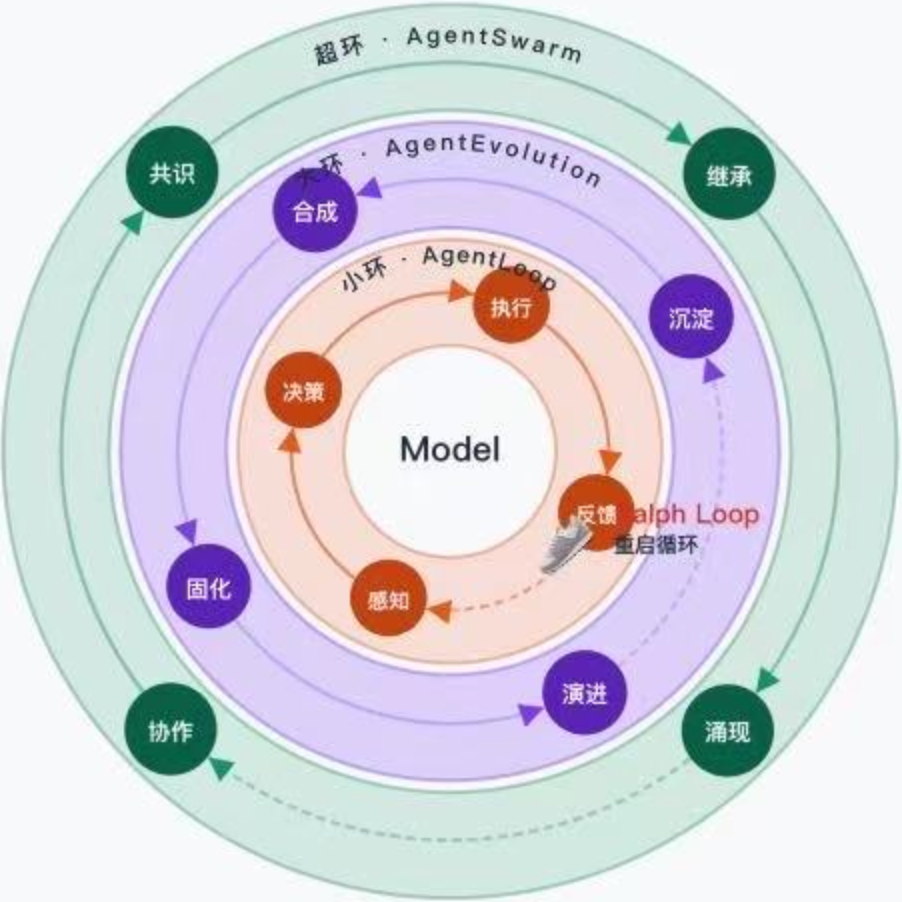
A coding agent can fix a program, yet the next time it encounters an error, it may still follow the same process of debugging, editing, and testing. The task outcome may have changed, but the method that produced it may not have. When the bottleneck lies precisely in that method, who is responsible for improving the program responsible for improvement?
Gödel Machine (GM) [1] framed this as a proo…
What problem it solves
Saleor provides an API-first way to build and extend commerce backends without a monolithic plugin architecture or technology lock-in. Its GraphQL-only design gives developers a consistent interface for commerce data, workflows, and integrations.
Key features
GraphQL API-only architecture — The backend is accessed, configured, and extended through APIs, with GraphQL as its A…
What problem it solves
LLMs and AI agents need structured access to Google Ads account data, API metadata, and management operations. The server provides this access through MCP while adding a two-step proposal and confirmation workflow for write operations.
Key features
Query Google Ads accounts — Use GAQL to retrieve information about a Google Ads account, list directly accessible customers, and…
What problem it solves
App Store Connect workflows cover builds, TestFlight, submissions, signing, analytics, screenshots, subscriptions, and other API operations. This project provides a scriptable CLI for automating those workflows across iOS, macOS, tvOS, and visionOS from a terminal, IDE, or CI/CD pipeline.
Key features
Release workflow automation — Automate builds, TestFlight distribution, su…
What problem it solves
Installing and operating Kubernetes can involve host OS dependencies, infrastructure restrictions, high system requirements, and cumbersome lifecycle management. k0s addresses these concerns with a self-contained distribution, flexible deployment options, and automated cluster lifecycle tooling.
Key features
Self-contained distribution — The distribution packages the compone…
The most direct way to give an Agent long-term memory is to write history into a database and retrieve a few relevant records when a new question arrives. This pipeline soon encounters two different requirements: a personal assistant needs to remember specific people, events, times, and preferences; a task Agent needs to learn from past actions what to do next. The former fears losing details to c…
 qmd• Pinned