TSMC reported third-quarter 2026 revenue of $46.7 billion, up 41% year over year, with net profit exceeding NT$760 billion (up nearly 69%) and a 66.4% gross margin. The company guided fourth-quarter revenue to $52.3–54.3 billion and raised its full-year growth forecast from an initial 30% to 44%. 3nm accounted for 33% of wafer revenue, 2nm rose from 3% to 8% quarter over quarter, and high-performance computing contributed 68% of revenue. TSMC plans $60–64 billion in 2026 capital spending, expects 2nm-family capacity to more than double in 2027 versus 2026, and said customer interest in the 2028 A14 node exceeds early 2nm interest. The report also noted gross margin slipped from 67.7% the prior quarter and that investors are watching whether customers such as Microsoft, Google, Amazon and Meta can earn enough from AI services to sustain the spending.
A 36Kr piece from the Tech商业 account looks at how quickly discussion of Instinct, the AI startup founded by 23-year-old Noah Shinn under the legal name Spear Street Technology, has faded. It reports that the company raised a Series B at a $2.5 billion valuation in late August and then a $1 billion Series C on Sept. 28 at a $10 billion valuation, with Sequoia, Benchmark and Coatue participating. The product is described as a "personal AI butler" with no standalone app and an invite-only beta, where users text or call an AI agent to handle email, flights and groceries; the team has 14 people, users just topped 100,000, and the founder says it is not charging users yet, while the article cites an annualized GMV of about $1 billion. The author argues the mood has shifted as Anthropic's expected valuation reportedly slid from about $2 trillion toward $1.5 trillion, Microsoft trimmed its 2026 calendar-year capex outlook from roughly $190 billion to about $175 billion, and Meta held guidance at $125–145 billion while cutting about 8,000 jobs.
Citing the WTO's October 8 Global Trade Outlook and Statistics, TMTPost reports that "AI-enabled goods" accounted for roughly 47% of the increase in global merchandise trade by value in the first half of 2026, growing 67% year on year, even though they made up only 14.8% of world goods trade — up from a 7–8% share between 2016 and 2023. The WTO raised its 2026 merchandise trade growth forecast to 3.9% from 1.9%, with 4.1% expected in 2027, moving opposite to UNCTAD's 2.6% global growth estimate for the same year. The report notes that the WTO, UNCTAD and World Bank use different product lists, so figures such as 42%, 67% and 47% are not interchangeable, and that the revised 104 HS-code list is not published, meaning the 47% cannot be reproduced; price effects also inflate the value reading, with the ECB estimated to put AI-related import price growth at 20–30% in the first half. The piece argues the boom is driven by the chip, server and data-center supply chain and depends on capital spending from a handful of cloud providers — Amazon, Microsoft, Alphabet and Meta — plus power, financing and application-layer revenue.
According to filings reported by Theodore Schleifer of The New York Times, Meta reduced its $65 million midterms budget by $25 million, recovering the funds largely through refunds. The refunds came primarily from a super PAC the company launched in 2025 with $45 million to fight state-level AI bills. Meta outlined the $65 million budget last year as part of an effort to elect state politicians friendly to the AI industry.
Meta's updated commercial terms had declared that it could "use any content from [a business account's] domains, web pages, or URLs to provide, develop, improve, research, train, and maintain the integrity of" its products; legal experts cited by Nieman Lab said this could let Meta scrape the sites of publishers holding business accounts and use that content to train its AI models, with the terms due to take effect on October 30. Meta insisted its web crawling was unchanged, then on October 17 removed the language, saying the consolidated crawling terms only applied to its ads and business products and that site owners can still signal preferences via robots.txt. The News/Media Alliance, which represents US publishers, said training was removed from the list of uses but not expressly banned, so it is "still potentially on the table."
This week's enterprise AI roundup reports that after a run of "rogue agent" incidents, more government officials are calling for regulation, several states are suing OpenAI, about 400 scientists urged global AI oversight, and Microsoft's president said AI is less regulated than a carton of milk. On the money side, Anthropic told investors revenue grew 45% sequentially to $16.8B in Q3, a slowdown that could pull its planned IPO valuation from $2T toward $1.5T, while CoreWeave's debt load weighed on neocloud and supplier shares. On models and products, Meta released the 816B-parameter open-weight Muse Spark Open for coding and agent work plus Muse Wonder for personal and professional agents, Nvidia expanded its Nemotron family, and Grok Voice 3.0, Gemini 4 Argon and Microsoft's Maia 300 also arrived, alongside news that Character.AI filed for bankruptcy.
A WIRED investigation found a cluster of scantily clad, AI-generated "female stand-up" accounts on Instagram that repost real comedians' jokes verbatim, down to the "ums" and "ahs," with better lighting and sound, then link out to paid adult content on Fanvue. Comedian Julia Jasunas reported one account to Meta for impersonation but said Meta told her it did not violate community guidelines because the account was not pretending to be her, only passing off her joke as its own. WIRED identified eight comics whose videos were replicated this way; one persona, Tiffany Sloane, has more than 375,000 followers, and all the AI accounts WIRED flagged were still on the platform at publication.
A 36Kr analysis says Meta Muse's personal-agent push has set off a wave in China: Alibaba is testing "Qwen Go!", Tencent is pushing LightVela and trialing Handy Bot, and ByteDance is adding automation to Doubao. By contrast, Moonshot's Kimi Claw, launched in February, is still in beta seven months on, with the author saying internal maintenance of the product has visibly slowed. The author attributes this to unit economics: a 199-yuan monthly consumer plan spreads to roughly 0.5 yuan per simple chat, but a complex agent task triggers many model calls, sandbox compute and long context, and per public information more than 70% of Kimi's revenue comes from token-billed business API usage. The piece argues the giants are instead banking on indirect returns — Meta on strong-intent ad targeting, Alibaba on GMV and take rates, Tencent on private-domain retention and payment flows, ByteDance on protecting its content and traffic entry — and that payment authorization is the endgame, noting Doubao's phone assistant was blocked by major apps when it tried GUI-based cross-app ordering and payment.
A commentary republished by TMTPost from Bohu Finance argues that Meta's personal agent Muse, launched in early September, set off a new wave of copycat products: it reportedly passed 5 million downloads in 22 days, and Meta shares rose 11.43% on Sept. 21. The piece says OpenAI introduced the persistent agent Dots at DevDay and Alibaba launched Qwen Go within three weeks, while ByteDance and Tencent were reported to be developing their own assistants. It also cites a Morgan Stanley estimate that running an always-on agent like Muse could cost about $37 a month, or $445 a year, in servers versus Meta's roughly $70 average annual revenue per user, and notes Amazon blocking agent traffic and 151 apps on Doubao's SAEP refusal list.
According to TestingCatalog's Oct 16 daily brief, Meta released Muse Spark Open, an open-weight mixture-of-experts model with 816B total parameters and 42B active parameters, plus a 1M-token context window. The brief says it is available on Hugging Face and is optimized to run locally on a Mac Studio. The brief was composed with Grok doing the cherry-picking and post-editing, and no independent confirmation from Meta or other sources was supplied.
An article by Cailianshe republished by Huxiu AI cites a Deutsche Bank Research report that plotted every bond in the dollar investment-grade and high-yield indices by yield and maturity, color-coding AI-linked issuers; the bank concluded that AI-related financing costs are not alarmingly high relative to the rest of the credit market for now, though spreads are widening at the far end of the curve. The report groups AI borrowers into three tiers: AA-rated Meta, Alphabet, Nvidia and Amazon fund at roughly 5–5.5% at the short end, BBB-rated Oracle and SpaceX yield about 8–8.5% at 10–12 years, and high-yield AI bonds mostly price at 7–11%; CoreWeave is the exception, with its unsecured 2032 bonds issued four months earlier now trading below 80 cents on the dollar and its five-year CDS at 1,118 basis points on Wednesday. Deutsche Bank also said Oracle's five-year CDS widened 36 basis points in two days to 288 basis points, warning that a downgrade from BBB would force investment-grade-only funds to sell, and flagged a duration mismatch between four-to-six-year GPU depreciation and longer financing terms.
On October 15, X users posted screenshots saying their Grok Bot received an Amazon warning that "unauthorized AI agents" continuing to access the site violated the user's agreed terms of service, leaving the bot unable to shop on Amazon. TechNews noted that Amazon had not publicly confirmed blocking Grok Bot as of publication, and that Musk first advised users to have the bot shop elsewhere for cheaper goods before posting "Maybe we should start a competitor to Amazon" — a remark reports characterize as half-joking, with no announced X Shop plan. Reports add that Amazon cut off Meta's Muse shopping agent in September, citing no prior notice, the agent not identifying itself and apparent storage of login credentials, and previously litigated against Perplexity over its Comet browser; by contrast, Shopify said on October 13 that it is opening its catalog and Shop Pay checkout to more AI agents through Shop MCP.
A commentary republished by Huxiu AI from Token Moment author Cassie argues that as personal assistants such as Muse, Instinct, Grok Bot, WeChat Xiaowei and Cue appear, users are handing search, browsing, price comparison, ordering and payment to AI agents, while Amazon has blocked Muse's access and Apple has tightened agent permissions. Citing Cloudflare, a16z and Alipay figures, the piece says AI traffic share and agent token consumption are rising fast, and outlines three platform responses: competing for the human entry point, exposing back-end capabilities as agent-callable tools, or shifting to scarce personalized experiences. It also mentions Meta and Sierra working with Shopify, Stripe, Walmart and others on a Personal Agent Protocol, though no first-hand sources are given for the statistics or for the blocking and permission details.
A Tech商业 analysis published via 36Kr argues that Meta's real AI advantage lies in advertising rather than models: it says Meta's October Muse AI agent reached 73% early retention and shipped two flagship models, Muse Wonder and Muse Wonder Full. Citing Bank of America analysts, it says stronger models can improve recommendation and ad targeting, and it notes Meta's Q2 2026 ad revenue of $59.363 billion (97.6% of revenue, up 27% year over year) plus projected 2026 capex of $115–135 billion. It draws parallels with Tencent (Yuanbao inside WeChat, marketing services up 20% to 38.2 billion yuan) and ByteDance (Seedance 2.5 in TikTok Symphony, Doubao linked to Douyin e-commerce), while citing a Morgan Stanley survey that AI is mainly redistributing existing ad budgets.
WIRED reports that Meta's always-on AI agent Muse, which manages calendars and email, also allows adult users of its 18-and-over app to hold explicit sexual conversations—though it generates text only, not images or video. Meta spokesperson Tracy Clayton told WIRED that a private, one-to-one conversation between an adult and an individualized AI agent on an adults-only platform is "very different" from marketing services on a social media platform. OnlyFans creators complained that their Instagram accounts are often restricted while Meta's AI is allowed to talk dirty, and some also questioned how Muse was trained and whether performers were compensated for their data.
The SGLang team says SGLang and Miles added day-0 support for Muse Spark Open. According to the post, Muse Spark Open is an open-weight multimodal mixture-of-experts model with an 816B-parameter text backbone, roughly 42 billion active parameters per token, a 1M-token context window, text, image, video and audio inputs, and checkpoints in NVFP4 and BF16. The post's vendor-run figures for the NVFP4 checkpoint on eight NVIDIA B300 GPUs using an OpenHands multi-turn agentic coding replay show 14.8K tokens/sec per GPU at 543 tokens/sec per user (p50) at concurrency 1, and 80.3K tokens/sec per GPU at 61 tokens/sec per user (p50) at concurrency 128.
The Information reports that OpenAI has released a flurry of products and tools aimed at advertisers over the past few months while cutting ad rates, and has gone on a hiring spree, with Meta the biggest source of ad talent. Nearly half of the roughly 140 OpenAI employees working on ads joined between July and September, according to employee-profile tracker Crustdata; ad chief Dave Dugan spent 12 years at Meta. A cnBeta report adds that two people familiar said the ad team has been reorganized seven times since the business launched in February, and that annualized ad revenue reached $1 billion in late August against nearly $50 billion in overall annualized revenue at the end of September. New Street Research's Dan Salmon put OpenAI's advertiser count at about 60,000 in early October, up from 20,000 in late August, while Sensor Tower estimated US ChatGPT ad spend would rise 40% in October from September. The reports also note most advertisers still commit only 1%–5% test budgets, that OpenAI is likely to miss its $2.4 billion 2026 ad revenue target, and that agencies complain of opaque targeting and some mismatched ad placements.
A study by Brussels think tank ECIPE, commissioned by lobby group CCIA Europe, estimates that the EU's proposed Cloud and AI Development Act (CADA) would cost €115bn over 2027–2036 in its central scenario, with a narrow case of €35.6bn and a broad case of €233bn. The European Commission's own upper estimate was €18bn. The study puts about €33.3bn of the cost on public budgets and roughly €80bn on private firms in energy, banking, transport and healthcare, a figure that rests on the assumption that Article 31 assessments reach a quarter of in-scope private cloud spending. The authors note the study does not value the security, resilience or strategic autonomy the law targets and is not a full cost-benefit analysis, while CCIA Europe, whose members include Amazon, Google and Meta, wants member states to limit the rules to sensitive workloads and drop origin-based requirements.
Hugging Face released Transformers 5.20.0, which adds support for several new models, most notably Meta's Muse Spark Open. According to the release notes, Muse Spark Open is a multimodal mixture-of-experts model that takes text, images, audio and video as input and generates text, with 816B total parameters (42B active per token), a context window of up to 1,048,576 tokens shared across modalities, training for agentic coding tasks such as multi-file editing, debugging and tool use, and checkpoints in BF16 and NVFP4 formats. The same release adds InclusionAI's Ling 3.0 Flash, Aleph Alpha's Kolibri 1, OpenBMB's MiniCPM-V 4.7, Baidu's UnlimitedOcr and UltraBERT, among others.
In a follow-up post about Anthropic's Scion version control system, blogger sunshowers says the project did not merely borrow unintentionally from Meta's Mononoke but deliberately and blatantly ripped it off, claiming he privately received confirmation and that there was overlap in personnel. He argues the resemblance goes far beyond the general idea of derived data, extending to the entire data model: Scion's changesets are described as essentially identical to Mononoke's Bonsai changesets, and he notes even the name "Scion" reverses the syllables of "Bonsai" and drops the "B". The author says he has no problem with good ideas being copied, only with credit being stripped, and that crediting Sapling with "hard-won lessons" is not enough — which makes Anthropic's "our LLM rebuilt and productionized this in five months" story less impressive, though still notable. As of the post, Anthropic had not updated its original write-up or responded.
The Verge published a commentary on October 15 criticizing Meta's AI personal assistant Muse for requesting access to bank accounts, passwords, contacts and chat logs, and for drawing in information about users' friends and family. Meta spokesperson Daniel Roberts said Muse builds context from public information and from what users choose to share, such as remembering that the person who sent an invoice is the plumber hired earlier. Critics including Signal Foundation president Meredith Whittaker questioned whether users can make informed choices about others' data, and the report cited Wired saying security researchers who extracted Muse's operating instructions found an internal process that compiles and updates profiles of everyone in a user's life hourly.
Rivian founder and CEO RJ Scaringe said at TechCrunch Disrupt that in the future Rivian vehicles will be able to run AI agents made by other companies, such as Anthropic. Rivian says its in-house agentic framework understands what a user wants and routes the request to the right part of the car's software, using an on-device local model for simpler requests and cloud models for more complex ones. Scaringe gave no implementation timeline, and Rivian declined to offer more details, pointing to its December "AI & Autonomy Day" event. He also said vehicle-level controls such as braking and steering will not be handed to an agent.
AI-generated photos and videos of celebrities are racking up millions of views on Instagram, including a fake image of actor Mia Goth posted by a verified fan account with more than a million followers that drew nearly 500,000 likes, according to The Verge. Goth's representatives said they had complained to Instagram about that account before, and it was eventually removed for impersonating a public figure; Meta, after being asked about eight accounts flagged by the outlet, said it removed some of them and that it does not permit accounts to use someone's likeness to pose as that person. The report notes that Meta requires labels for realistic AI video and AI-generated voices but exempts still images, while YouTube says its likeness detection program removed more than 95 percent of reported videos in the first half of 2026; with no nationwide US right of publicity law, enforcement happens largely platform by platform.
A GeekPark analysis, republished by Huxiu, 36Kr and Cyzone, examines why Anthropic has no consumer always-on personal agent to match OpenAI's dots and Meta's Muse. It notes that OpenAI introduced dots at its Sept. 29 DevDay, with each dot running on GPT-6 Astra with its own cloud computer and browser and continuing work after ChatGPT is closed, while Meta launched Muse on Sept. 8 inside WhatsApp; Apptopia estimated about 2.8 million installs across platforms in 12 days and a brief No. 1 spot on the U.S. App Store. The article says Anthropic instead offers Claude Tag, a shared Claude in Slack channels released June 23 with its own identity and memory, plus Claude Code and Cowork; it reports Anthropic's claim that 65% of its product team's code came from an internal version of Claude Tag and attributes Anthropic's restraint to the lack of a large consumer entry point, a revenue mix of roughly 80% API and enterprise customers, always-on agent costs and safety concerns, while noting Anthropic has not publicly said it avoids personal agents over emotional dependence.
In an a16z podcast interview with Lisha Li, Trillium founder Nathan Lambert argued that the recursive self-improvement narrative overstates the prospect of a sudden AI takeoff and said his bigger concern is AI labs' poorly secured infrastructure. He framed model progress as a function of compute, data and talent, described Chinese labs as compute-constrained but highly efficient, and said distillation cannot be stopped through terms of service or legislation. Lambert also presented open-weight releases as a pragmatic way for Chinese labs to enter the market and gain influence.
Tech Planet reports that Chinese internet giants are racing to field personal AI agents: Ant Group is testing "Lingguang 2.0", Alibaba unveiled Qwen Go on October 13 for limited beta, ByteDance has been reported to be preparing a personal agent called Xiaodou, Tencent is running LightVela, Yuanbao and a WeChat-native agent Xiaowei, and Manus, fresh off a 3.3 billion yuan funding round, launched Cue. The piece traces the wave to Meta's Muse, released September 8; Sensor Tower data cited says Muse passed 2.5 million downloads in 13 days and 5 million in 22 days. But TickerTrends data cited shows Muse's average daily net new users fell from a September peak of 198,000 to 74,000, a 62.4% drop, with daily actives staying below 3 million a month after launch; the report also cites Amazon blocking Muse from placing orders, 155 apps refusing Doubao Phone Assistant's automation, and unresolved problems around trust, permissions, walled platforms and monetization.
At a Houmo AI ecosystem partner conference on Oct. 14, CEO Wu Qiang said the company's M50 compute-in-memory edge chip has won more than 150 product design wins and serves over 100 customers less than a year after entering mass production, according to TMTPost. Wu also said the surge in AI agents has raised token consumption by two to three orders of magnitude. Other speakers, including Alibaba Cloud's Qwen smart-hardware lead Xu Chao, argued that shrinking models and raising intelligence density are key to moving compute from cloud to device, while the report notes edge AI still faces thin use cases, deployment barriers and unclear business models.
A 市值榜 article republished by TMTPost and 36Kr says agent competition is shifting from single-task execution to continuous personal service: after Meta launched Muse in September, ByteDance was reported in late September to be accelerating its personal agent project Spell (named “小豆”, planned as a standalone app, with the final form undecided), Tencent's Yuanbao was reported to plan a similar product, Ant Group's Lingguang began small-scale testing of a new version on October 11, and Qwen had earlier announced at its Yunqi conference that it is accelerating a Personal Agent. The article cites The Information as saying that about three weeks after launch Muse had more than 3 million users sending at least one instruction a week and over 1 million daily, and notes Amazon began blocking Muse from its shopping site on September 20, while on September 25 an outside security researcher reported a flaw that could expose emails and files in users' dedicated cloud VMs. It also cites The Wall Street Journal and Sensor Tower data saying Muse's global downloads approached 9 million but growth was slowing, with 22.5% 14-day retention versus ChatGPT's 26.8%.
An analysis by Jingzhe Research Institute, republished by TMTPost and 36Kr, traces the recent personal-agent boom: Meta launched its personal agent Muse on September 8 and, per the article, topped the US App Store free chart within 13 days; Instinct then announced a $1 billion round at a $10 billion valuation; OpenAI unveiled its agent Dots at its September 29 developer conference, and Manus parent Butterfly Effect announced over $500 million in new funding on October 8. The piece argues that cloud PCs, persistent memory and layered permissions are now standard, with Muse handling calendars, email, restaurant bookings and price comparisons. In China, Alibaba's Qwen said on October 13 it would release a personal agent, Qwen Go, and opened an experience waitlist; Tencent's LightVela is in free trial, while ByteDance's Doubao was reported to have an internal personal-assistant project called Spell. The article also notes Amazon confirmed blocking Muse from its shopping site, framing cross-app execution as a conflict between agents and platforms that control data, identity and transactions.
A commentary republished by TMTPost says Meta's personal agent Muse, about a month after launch, topped the free iOS charts in the US and Canada and prompted Chinese players including ByteDance, Tencent, Alibaba, Ant Group and Manus to accelerate consumer-facing personal agents. It cites ByteDance's project codenamed Spell, Tencent's cloud personal assistant LightVela launched in late September in developer preview, Alibaba's upcoming Qwen Go, Ant's new Lingguang internal test and Manus's Cue, saying the focus is shifting from enterprise office agents to consumer life scenarios. It also says privacy and safety and super-app cross-app barriers remain major obstacles, pointing to Amazon blocking Muse from shopping for users and Doubao phone assistant facing more than 150 apps that refuse automated operation, while Muse's subscription-plus-transaction-fee approach is seen as a new commercialization direction.
What problem it solves
Local notes, documentation, knowledge bases, and meeting transcripts need to remain searchable without sending their contents to a remote service. QMD addresses this by combining keyword retrieval, semantic search, and local LLM reranking for documents indexed on the user's device.
Key features
Hybrid local search — Queries can use BM25 full-text search, vector semantic sear…
What problem it solves
Organizations need a distributed storage layer that can serve objects, files, tables, and vectors while keeping administration and horizontal expansion straightforward. SeaweedFS addresses this by providing these capabilities on shared storage and allowing capacity to grow by adding volume servers.
Key features
Unified distributed storage — A single cluster exposes S3 object…
What problem it solves
People who save articles, tools, notes, images and PDFs need a self-hosted place to organize and revisit that content. Karakeep addresses this with link previews, lists, collaboration, automatic tagging and summarization, full text and semantic search, and content extraction tools.
Key features
Save and organize varied content — Store links, notes, images and PDFs, automatic…
What problem it solves
Backend applications need an architecture that remains organized as they grow from small APIs into systems used by multiple teams. They also need consistent places for dependency injection, validation, authentication, error handling, and other common backend concerns.
Key features
Progressive application architecture — The framework provides application modules and dependenc…
What problem it solves
AI applications need to store, search, and manage embeddings together with the metadata needed to refine results. They also require flexible filtering, hybrid retrieval, and deployment options for different application environments.
Key features
Flexible vector search — Search dense vectors, sparse vectors, and multivectors, including objects represented by multiple embeddin…
What problem it solves
Web applications need a straightforward way to add animations, gestures, layout transitions, scroll-linked effects, and timelines across JavaScript, React, and Vue. The project provides a shared animation library with a simple API, TypeScript support, a test suite, and tree-shakable packages.
Key features
Framework Packages — Motion provides dedicated packages for React, Jav…
What problem it solves
Token metadata such as logos and off-chain details is not available on-chain, while maintaining information across several thousands of crypto tokens requires coordinated effort. The repository addresses this by providing a structured collection and workflows for adding, validating, and updating assets.
Key features
Multi-blockchain token information — The collection include…
What problem it solves
Applications often need to turn web pages and office documents into PDFs without managing Chromium, LibreOffice, or fonts. They may also need to modify, validate, secure, and deliver the resulting PDFs through a consistent HTTP API.
Key features
Multiple document conversions — Convert HTML, URLs, and Markdown with Headless Chromium. Convert office documents with LibreOffice …
What problem it solves
AI agents used in security work can write code and search the web, but they lack the practitioner playbooks that turn a generic model into a capable security analyst. Existing security tool repositories offer wordlists, payloads, or exploit code, but not the structured decision-making workflow a senior analyst follows: when to use each technique, what prerequisites to check,…
What problem it solves
Go developers need packages for constructing MCP clients and servers while connecting them to transports and supporting protocol features such as OAuth. The SDK organizes these capabilities into importable packages and documents how supported MCP specification versions map to them.
Key features
Client and server APIs — The primary package provides APIs for constructing and u…
What problem it solves
The hidden system instructions that shape AI product behavior are difficult to inspect and change across models, products, and versions. This repository makes collected prompts available in a structured, product-oriented archive for study and comparison.
Key features
Broad product coverage — The archive covers prompts from major AI providers and products, including Anthropic…
What problem it solves
Tailcat provides netcat-style connections over an encrypted WireGuard tunnel while exchanging connection metadata out of band instead of relying on Tailscale's control plane. It lets users run without a Tailscale account, root or administrator access, or changes to machine routing and DNS.
Key features
Encrypted peer-to-peer tunnels — Tailcat creates point-to-point WireGuard…
What problem it solves
Users need a practical way to discover, install, and distribute individual Claude skills across Claude Code and Claude.ai. The repository also provides structured workflows for adding skills, releasing versions, and integrating installation into projects and CI/CD.
Key features
Plugin marketplace installation — Claude Code users can add the repository as a marketplace, brows…
What problem it solves
Serving language models requires reading checkpoints, tokenizing requests, and running accelerated kernels while managing a local model server. TensorFold addresses these requirements with a native binary that can run on Apple Silicon and NVIDIA GPUs without requiring Python or MLX for serving.
Key features
Native Metal and CUDA inference — The Zig-based engine executes mode…
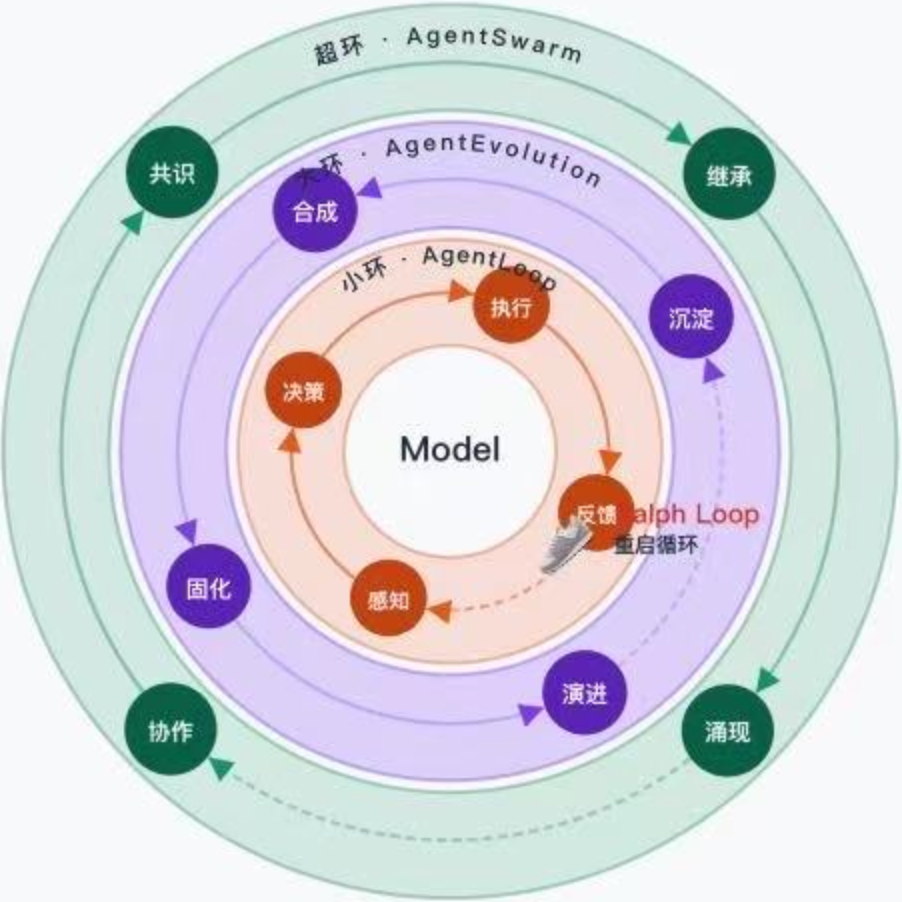
A coding agent can fix a program, yet the next time it encounters an error, it may still follow the same process of debugging, editing, and testing. The task outcome may have changed, but the method that produced it may not have. When the bottleneck lies precisely in that method, who is responsible for improving the program responsible for improvement?
Gödel Machine (GM) [1] framed this as a proo…
What problem it solves
Saleor provides an API-first way to build and extend commerce backends without a monolithic plugin architecture or technology lock-in. Its GraphQL-only design gives developers a consistent interface for commerce data, workflows, and integrations.
Key features
GraphQL API-only architecture — The backend is accessed, configured, and extended through APIs, with GraphQL as its A…
What problem it solves
LLMs and AI agents need structured access to Google Ads account data, API metadata, and management operations. The server provides this access through MCP while adding a two-step proposal and confirmation workflow for write operations.
Key features
Query Google Ads accounts — Use GAQL to retrieve information about a Google Ads account, list directly accessible customers, and…
What problem it solves
App Store Connect workflows cover builds, TestFlight, submissions, signing, analytics, screenshots, subscriptions, and other API operations. This project provides a scriptable CLI for automating those workflows across iOS, macOS, tvOS, and visionOS from a terminal, IDE, or CI/CD pipeline.
Key features
Release workflow automation — Automate builds, TestFlight distribution, su…
What problem it solves
Installing and operating Kubernetes can involve host OS dependencies, infrastructure restrictions, high system requirements, and cumbersome lifecycle management. k0s addresses these concerns with a self-contained distribution, flexible deployment options, and automated cluster lifecycle tooling.
Key features
Self-contained distribution — The distribution packages the compone…
The most direct way to give an Agent long-term memory is to write history into a database and retrieve a few relevant records when a new question arrives. This pipeline soon encounters two different requirements: a personal assistant needs to remember specific people, events, times, and preferences; a task Agent needs to learn from past actions what to do next. The former fears losing details to c…
 qmd• Pinned