Create

Sign in to ReadmeX

or

How we handle your data: Privacy Policy

ReadmeX

Your AI reading companion

What would you like to catch up on?

Pick a briefing, or ask your own question.

Your community and people briefings stay personal to you.

ByteDance

AI overview

Sign in and the AI will write an overview from our coverage.

Headlines · 298

  1. Meta Muse sparks China personal-agent race as big techs pivot to consumers

    A commentary republished by TMTPost says Meta's personal agent Muse, about a month after launch, topped the free iOS charts in the US and Canada and prompted Chinese players including ByteDance, Tencent, Alibaba, Ant Group and Manus to accelerate consumer-facing personal agents. It cites ByteDance's project codenamed Spell, Tencent's cloud personal assistant LightVela launched in late September in developer preview, Alibaba's upcoming Qwen Go, Ant's new Lingguang internal test and Manus's Cue, saying the focus is shifting from enterprise office agents to consumer life scenarios. It also says privacy and safety and super-app cross-app barriers remain major obstacles, pointing to Amazon blocking Muse from shopping for users and Doubao phone assistant facing more than 150 apps that refuse automated operation, while Muse's subscription-plus-transaction-fee approach is seen as a new commercialization direction.

    钛媒体 · 🔥 0
  2. Alibaba, Tencent and ByteDance race into AI office hardware to capture context

    Alibaba, ByteDance and Tencent are competing over AI office hardware, treating recording cards, AI earbuds and smart glasses as entry points for collecting offline "context", according to a China Entrepreneur Magazine report republished by 36Kr. Tencent's WorkBuddy opened its platform in September with more than 100 ecosystem partners and integrations into dozens of devices from Plaud, Rokid and Insta360, while Alibaba's Qwen Office launched the QwenNote A2 AI agent device on Sept 22 for 1,199 yuan and followed on Oct 13 with N1 and N1 Pro AI glasses plus clip-on earbuds. ByteDance's hardware matrix includes Doubao earbuds, a Doubao phone and the AI recording bean developed with Anker Innovations under Feishu, as investors and practitioners cited in the report warn that companion AI hardware has very high idle rates while funding has cooled and customer acquisition costs remain steep.

    36氪 人工智能 · 🔥 0
  3. All seven major Chinese apps refuse Doubao phone assistant proxy access

    On Sept 14 ByteDance's Doubao phone assistant started a proxy-authorization disclosure mechanism (internally coded SAEP), giving partner apps a 30-day window to decide whether to let it act as an agent operating user accounts on their behalf; the window closed on Oct 14. According to a Tech商业 article published via TMTPost, as of Oct 15 WeChat, Alipay, Taobao, Meituan, Pinduoduo, DiDi and Xiaohongshu had all declined, leaving none on the list. The article argues the barrier is not model capability but the triple role of super apps as traffic gateway, data pool and regulated payment node, and notes that overseas agents also face robots.txt, anti-scraping and login risk controls, with OpenAI's Operator running in an isolated environment that requires user confirmation for key actions.

    钛媒体 · 🔥 0
  4. ByteDance said close to MediaTek data center chip supply deal

    Bloomberg, citing unnamed people familiar with the matter, reported that ByteDance is close to an agreement to buy data center semiconductors from MediaTek, with the two sides in advanced talks on custom chips tailored to ByteDance's platforms. MediaTek would supply an unspecified quantity of ASICs, and ByteDance could become its second-largest ASIC customer after Google if the deal closes; the reports say no agreement is final and Reuters said it could not immediately verify the report independently. IT之家 adds that ByteDance cannot buy top-tier Nvidia AI chips and that Huawei and other domestic suppliers cannot fully meet its compute needs, while MediaTek expects about $2 billion in AI chip revenue this year and targets a 15% share of next year's $80 billion data center chip market.

    Bloomberg Technology · 🔥 0
  5. Doubao Phone says it will gradually open third-party app auto-operation permissions

    A report headline says Doubao Phone announced it will gradually open auto-operation permissions for third-party apps. The supplied report has no body text and does not specify the scope, timetable or which apps are covered.

    DoNews · 🔥 0
  6. Doubao Phone Assistant names 151 apps refusing GUI automation, WeChat included

    Doubao Phone Assistant said on October 14 that after a 30-day public notice period for its screen-automation declaration agreement ends, it will gradually open GUI automation of third-party apps, limited to those that have not opted out. It also published an opt-out list of 151 apps that do not permit the assistant to perform GUI screen automation, including WeChat, DeepSeek, Taobao, Kuaishou and Meituan. Doubao said developers can still declare a refusal after the notice period, and that it will not operate on apps that have opted out.

    钛媒体 · 🔥 0
  7. Volcano Engine-led team wins 230M yuan Hengdian film-AI contract

    A recently published result announcement for the Hengdian Film & TV AI Service Platform project named a consortium of Dongyang Shenkong Engine and Volcano Engine as the winner; Zhidx reported a total of 230 million yuan, including 27 million yuan for compute leasing, while Huxiu reported 235 million yuan, matching the tender's stated total budget, so the figures differ by source. The project centers on a "Hengdian Film & TV large model" and a data-model-application system covering model services, asset operations, production enablement, industry ecosystem management, model safety and compute leasing, and calls for 7 vertical-scenario enhanced models plus 20 specialized scenario models. Tender requirements include at least 9 high-quality industry datasets, at least 50 billion tokens of pretraining data, at least 1 million instruction-tuning entries, at least 30,000 reinforcement-learning preference groups and at least 10,000 benchmark items, with peak-load system availability of at least 99.5%; delivery is phased over three years.

    智东西 · 🔥 0
  8. Nscale raises $3.36B pre-IPO, files for NYSE listing

    Nscale said on September 25, 2026 that it raised $3.36 billion through convertible loan notes, including a $1 billion commitment from Nvidia expected by mid-November, after filing a Form S-1 with the SEC on September 18 to list on the NYSE, according to a 智东西 report. The report, citing market expectations, put Nscale's post-financing valuation at up to about $35 billion, up from $14.6 billion less than a month earlier, and said the company disclosed about $103.4 billion in total contract value, including a GPU services agreement with Anthropic worth up to roughly $45 billion. It also reported that one unnamed customer accounted for 73% of Nscale's $33 million 2025 revenue, with the Financial Times identifying the related entity Spring as a ByteDance subsidiary, and that first-half 2026 revenue was $140.6 million against a $1.02 billion net loss.

    智东西 · 🔥 0
  9. AI video prices fall from yuan to fen as Kling, Vidu and Seedance compete

    An analysis by Guangzhui Zhineng, published by 36Kr and syndicated by TMTPost, reports that Kuaishou's Kling AI opened internal testing of Kling 4.0 on September 28, extending single native clips to 30 seconds at 4K, and launched a lightweight Kling 4.0 Flash that emphasizes fast generation and lower cost, though its API pricing has not been disclosed. On October 8, Shengshu Technology released Vidu Q4 Preview, supporting up to 15 reference images, three reference audio clips and 4K output, with launch pricing from 0.09 yuan per second and a company estimate that the same budget can produce up to about five times more content. The article also cites list prices showing ByteDance's Seedance 2.5 at 70 yuan per million tokens for 720p generation without references versus 46 yuan for Seedance 2.0, and argues that flagship video entry prices have moved from yuan to fen per second, shifting competition toward cost-performance and deliverable quality.

    36氪 人工智能 · 🔥 0
  10. The global hunt for the next Ulanqab: where AI compute is moving

    A 36Kr analysis uses Ulanqab as a model for how AI compute capacity is shifting from technology centers toward energy-producing regions, citing cheap power, natural cooling and low latency to Beijing as factors behind roughly 12.5 GW of data-center capacity commitments as of June 2026. It compares candidate locations including Spain’s Aragon, Malaysia’s Johor, Japan’s Chiba, Kazakhstan and Uzbekistan, and the UAE on electricity prices, permitting speed, network latency, geopolitical risk and supporting infrastructure. The article also outlines where Chinese compute-chain companies are already positioned, including Johor and Central Asia, arguing that their overseas role is often to fill gaps in local delivery and operations.

    36氪 人工智能 · 🔥 0
  11. Tencent issues $5B offshore bonds as ByteDance's $29.6B loan funds AI buildout

    TMTPost reported that Tencent launched a $5 billion offshore bond issuance on October 13, its second overseas fundraising this year after a nearly $4.7 billion bond sale in June. In early September, ByteDance finalized a $29.6 billion syndicated loan, which the article describes as Asia's second-largest dollar loan deal this year. The TMTPost author argues both companies are using the proceeds to support AI operations, citing Tencent's negative free cash flow of 13.8 billion yuan and 52.78 billion yuan of capital expenditure in the second quarter, and frames long-term bonds as matching long-term AI capex.

    钛媒体 · 🔥 0
  12. ByteDance showcases AI stack at Douyin's 2026 Wonderful Night

    According to a Lanmeihui report published by TMTPost, Douyin's 2026 Wonderful Night put AI at the center of the stage: singer Hu Yanbin and creators from the Trae community used AI Coding to build an interactive “laser strings” instrument, while tech creator Tim demonstrated an interactive scene based on a ByteDance world model that is still in development and unreleased. The report also says Seedance 2.5's motion-transfer feature let a digital peacock on screen dance in real time with Yang Liping's performance, and that many stage visuals were generated with video models such as Seedance. The article calls it the “most AI-dense” gala and says ByteDance used the event to show an AI stack spanning Volcano Engine compute, Seedance and Seedream models, Trae, and Doubao apps.

    钛媒体 · 🔥 0
  13. AI short dramas hit 1,500 releases a day, but almost no one outside platforms profits

    Leiphone interviewed several AI short-drama practitioners who said daily releases of AI short dramas have surpassed 1,500, with total production spending per title compressible to under 50,000 yuan, versus roughly 300,000–400,000 yuan for low-end live-action shorts and 1–1.5 million yuan for premium ones. Screenwriter Zhu Xiaoran described the business as betting on volume for probability, saying her team's tally put the hit rate at about four in a thousand, and that a title not gaining traction within three days of launch is typically dropped from paid promotion. The report also noted that Hongguo cut base revenue-share coefficients for AI animated dramas and removed a guaranteed minimum for smaller teams in April, then scrapped the series-scale coefficient in September; interviewees broadly said almost no one besides the platforms actually makes money.

    雷峰网 AI · 🔥 0
  14. TrendForce: nine CSPs' 2027 capex to top $1.5T, AI server value up over 90%

    TrendForce's latest AI server industry research forecasts that the top nine cloud service providers — Google, Amazon, Meta, Microsoft, Oracle, ByteDance, Tencent, Alibaba and Baidu — will spend more than $957 billion on capex in 2026, up 106% year over year, and a further 60% in 2027 to roughly $1.5 trillion. TechNews reported the 2027 figure as above $1.5 trillion with 60% growth, while IT之家 put it at $1.531 trillion and said TrendForce had raised its 2027 growth forecast from 50% to 60%. TrendForce attributed the upgrade to higher server system prices, component shortages pushing quotes up, and some suppliers demanding prepayments that force CSPs to spend cash earlier. It also expects AI server shipments to grow 32.2% in 2026 with about $479 billion in output value, nearly 75% of total server value, then rise nearly 36% in 2027 to close to $920 billion, up over 90% and about 81% of total server value, which is seen crossing $1 trillion for the first time.

    科技新报 · 🔥 0
  15. Doubao Work Adds One-Click Import of ChatGPT, Claude Code Chats and Memory

    On October 14, ByteDance's workplace tool Doubao Work announced a data import and sync feature that it says lets users move task-preference instructions, skills, connectors, working memory, projects and past conversations from products including ChatGPT, Claude Code and Trae Work in one click, with imported items filed into the matching sections and conversation context preserved so users can continue chatting. DoNews, citing an official note, reported that imports are limited to locally stored content, that cloud content cannot be imported or synced, and that the exact supported sources and importable items depend on what the client displays. The update also adds a conversation summary sidebar, message annotations and a "continue in a new conversation" option that carries existing context into a new thread.

    IT之家 AI · 🔥 0
  16. Tian Keyu accused of sabotaging ByteDance model training as colleagues publish evidence

    On Oct 12, a dossier titled “Victim Statements and Evidence” was published with five named witnesses alleging that former ByteDance intern Tian Keyu interfered with model training for projects including Goku and LlamaGen between March and July 2024, by altering optimizer, data-sampling and distributed-communication code and restoring file timestamps. Tian has acknowledged misconduct but says he acted about five times over roughly ten days against one intern and rejects the “poisoning” characterization; ByteDance previously confirmed malicious interference and dismissed him, and a first-instance court found breach of contract and ordered 500,000 yuan in damages, with ByteDance appealing. Reports also say his world-model startup raised nearly $30 million from investors including 5Y Capital and IDG Capital at a roughly $200 million valuation, while the company has not disclosed its name or product; a Huxiu commentary examines ethics and trust in AI startups.

    虎嗅 AI · 🔥 0
  17. Chinese tech giants chase Muse-style personal agents as doubts grow about China fit

    An analysis by Qingcheng Caijing, republished by 36Kr and TMTPost, says Meta launched its personal agent Muse on September 8; it runs on a separate cloud virtual machine and can keep completing tasks such as filling forms, comparing prices, cancelling subscriptions and chasing refunds after the user closes the app. Citing TickerTrends, the article says Muse's average daily net new users fell from a September peak of 198,000 to 74,000, a 62.4% drop, with DAU still below 3 million after a full month, while Sensor Tower figures cited in the same piece put downloads above 2.5 million in 13 days and 5 million in 22 days. The authors argue that in China, where super apps such as WeChat, Alipay, Meituan, Taobao and Douyin already bundle most daily services, personal agents face efficiency, decision and permission paradoxes, and they cite a Morgan Stanley estimate putting Muse's per-user monthly service cost at $3 to $130, with a $37 base case.

    36氪 人工智能 · 🔥 0
  18. Alibaba opens limited Qwen Go agent tests as personal AI race widens

    Alibaba's Qwen opened limited invitation testing for its Qwen Go personal assistant in the Qwen app on October 13, according to 36Kr and TMTPost. The reports place the launch in a wider personal-agent race: ByteDance is testing a project code-named Spell for Doubao, Tencent has TX Handy Bot and Yuanbao assistant projects, while Meta and OpenAI have Muse and dots; Meta also released Muse Wonder models with Active Memory and Active Focus on October 12. Qwen's team detailed QwenGyre, an online reinforcement-learning framework for long-horizon agent tasks that it says raised Qwen 3.8 2.4T's NL2RepoBench pass rate from about 52.5% to 58.5% and cut training time by about 44% versus an Async baseline, while TMTPost analyses question how agent execution costs can be recovered.

    36氪 人工智能 · 🔥 0
  19. Doubao Phone Assistant opens screen automation; 155 apps refuse

    Doubao Phone Assistant said the 30-day consultation for its Screen Automation Execution Protocol (SAEP) had ended and that screen-automation permissions would gradually open to third-party apps that had not explicitly refused them. The updated refusal list contained 155 apps, including 66 from Tencent, 23 from Alibaba, 11 from Meituan and 14 from Kuaishou, as well as DeepSeek and Kimi. Developers can submit or change refusals at any time. The assistant cannot operate apps that have explicitly refused automation, but users can still open and use them manually.

    IT之家 AI · 🔥 0
  20. BAT races into personal AI agents, but a copy of Meta's Muse looks unlikely

    A 经济观察报 article carried by 36Kr says that after Meta's personal AI agent Muse gained traction, ByteDance's Doubao team is developing a standalone-app personal assistant codenamed Spell, while Tencent launched cloud assistant LightVela in late September and is testing a standalone-app agent called Handy Bot. The article argues BAT will not copy Muse's dedicated cloud-virtual-machine approach, instead grafting agents onto their existing ecosystems with tighter permission controls, because China's top apps are siloed and lack open authorization systems. It also reports that Muse reached 5 million downloads in three weeks but faces privacy trust concerns, a zero-day vulnerability reported two weeks after launch, and an unproven monetization model.

    36氪 人工智能 · 🔥 0
  21. AI's boom runs on debt: the financing chain behind the compute buildout

    An analysis republished by 36Kr (originally from Yuanchuan Research Institute) argues AI infrastructure is being financed heavily with borrowed money: Tencent is reportedly weighing up to $5bn in offshore bonds, ByteDance has a $29.6bn syndicated loan from 30 banks, and Alphabet and Amazon issued tens of billions in bonds this year. It says Anthropic must spend $125.2bn leasing compute over five years, with Broadcom lending up to $42bn to fund it, and cites Morgan Stanley's estimate that roughly $450bn of AI-related debt was issued by September, more than double all of last year. The piece also cites FT-reported OpenAI internal roadshow materials projecting $840bn cumulative 2026-2030 revenue against $856bn of spending and negative $278bn cumulative free cash flow, while SoftBank raised $11.1bn in high-yield bonds (up to 9.75% coupon) and has invested $64.6bn for a 13% OpenAI stake.

    36氪 人工智能 · 🔥 0
  22. Vidu Q4 Preview launches from ¥0.09/second as China's video-model trio splits paths

    According to Zhi Dongxi and 36Kr, China's leading video-generation players refreshed their line-ups around the National Day holiday: Kuaishou's Kling AI announced Kling 4.0 on Sept 28, and Shengshu Technology released Vidu Q4 Preview on Oct 8, the first preview of its next flagship video model, priced from ¥0.09 per second. The article says Vidu Q4 Preview centres on expressive character acting, camera language and complex VFX, supports up to 4K output and 16-second single generations, and accepts up to 15 reference images plus three reference audio clips. It also claims the preview overtook Seedance 2.0 to rank third globally on Artificial Analysis, with MaaS image-to-video pricing of ¥0.59/s at 720p, ¥0.75/s at 1080p and ¥2.43/s at 4K, described as the lowest in the industry.

    智东西 · 🔥 0
  23. East Asian AI study apps go global, repackaging exam-prep methods

    A commentary by the writer 针尖, carried by Huxiu AI and republished by Tmtpost, describes Chinese and Korean education entrepreneurs packaging East Asian exam-training methods into AI apps sold overseas. It reports that Korean adult-education product Speaker launched in the second half of 2024, raised $78 million from Accel and within about a year ranked first in Korea's online English education market; that ByteDance's Gauth had over 200 million global installs and 53.41 million monthly active users as of September 2026 (the same article elsewhere says 300 million users); that Zuoyebang's Question.AI stayed in the top five of the North American iOS education chart; and that Yuanfudao's Uknow.AI ranked first in user activity among similar apps in Vietnam. It also covers Korea's QANDA, Socra AI's Santa with an ETS content-licensing deal, Japan's Qubena selling through public-school procurement and AvoLingo's B2B engine, distilling three paths: tools first, exam culture as a moat, and B2G/B2B differentiation.

    虎嗅 AI · 🔥 0
  24. Epoch AI: Six Chinese AI firms' revenue is about 10% of OpenAI and Anthropic combined

    Citing a new Epoch AI report, 36Kr says the AI-related revenue of Alibaba, ByteDance, Zhipu, Moonshot AI, DeepSeek and MiniMax totaled about 10% of OpenAI and Anthropic's combined revenue as of September 2026. Epoch AI estimated annualized revenue of about $65 billion for Anthropic and $40 billion for OpenAI, versus roughly $10 billion combined for the six Chinese firms; ByteDance's and Alibaba's figures mainly reflect model-as-a-service revenue. The report outlines five monetization paths and notes that open-weight diffusion pressures API pricing while consumer paid conversion and gross margins remain low.

    36氪 人工智能 · 🔥 0
  25. ByteDance Jiangnan Studio launches AI-heavy game Bu Wen Fan Chen in Steam early access

    36Kr Gaming reports that Jiangnan Studio, under ByteDance's Nuverse, released the cultivation RPG Bu Wen Fan Chen in Steam early access on September 23, with an 88% positive rating. The roughly 20-person team spent a year on the game, using ByteDance's Seedance to generate animated scenes and break them into game assets, while every NPC is a separate conversational agent; producer Xin Jie called it the most AI-dense game on the market. The report also notes early access content currently stops at the Foundation Establishment stage, NPC opening dialogue templates are repetitive and most conversations do not change gameplay, and the team raised its discard rate to 98% to keep pace with model updates, with a launch price of 19.9 yuan.

    36氪 人工智能 · 🔥 0
  26. AI mass-produces virtual stars as China's micro-dramas turn AI-heavy

    A Shenxiang analysis republished by Huxiu AI, 36Kr and TMTPost says 430,000 micro-dramas went online in China in the first eight months of 2026, more than 90% of them AI-made, with virtual characters moving from AI comics into social accounts, CP personas and brand promotions. It cites Duan Yan, the AI male lead of “Yu Ni Shen Qing Qi Ru Yu Sheng,” whose studio Bunming Culture keeps running his social accounts; Fang Taozi of “The Laid-Off Girl,” who drew over 400,000 followers in about 30 days; and AI singer Yuri, who has worked with brands including Yijing Auto and vivo. It also describes Baidu's “AI Star Project” with Du Hua producing HeyDream, billed as Asia's first AI-driven real-person girl group, and Bilibili's AI idol audition contest. The authors argue AI replaces the standardized, repeatable side of entertainment production, while real stars' lived histories and offline interaction remain their difference.

    虎嗅 AI · 🔥 0
  27. Nvidia H200 China orders surge; reported TSMC capacity talks

    TechNews reported that Chinese tech companies' demand for Nvidia chips remains strong despite a recent easing of some U.S. H200 sales restrictions, with unnamed sources saying Chinese firms have ordered more than 2 million H200 chips for 2026 against Nvidia inventory of about 700,000 units. The report said Nvidia is sounding out TSMC about expanding H200 capacity, and that an eight-chip H200 module costs about 1.5 million yuan, offers roughly six times the performance of H20 and is about 15% cheaper than gray-market alternatives. It also reported that ByteDance plans to raise its 2026 Nvidia chip budget to about 100 billion yuan, conditional on Chinese approval of H200 imports, while Tencent is reportedly issuing $5 billion in bonds and has a five-year, roughly $7 billion Oracle lease for about 100,000 high-end AI chips via Southeast Asian data centers; Trump has said he would allow H200 sales to approved Chinese customers with a 25% fee, but Beijing is still reviewing imports and requires new state-funded data centers to use domestic AI chips.

    科技新报 · 🔥 0
  28. AI short film 'Under the Sand' draws 2.78M Douyin likes, creator touts hands-on workflow

    An interview republished by Huxiu AI from the outlet 影视独舌 profiles Douyin creator @林云程Szuhan, who says he spent more than 40 days making the 19-minute AI sci-fi short film "Under the Sand," which launched on Douyin on Aug. 15; the article reports it has since drawn over 2.78 million likes and close to 1.5 million shares. Lin, a 10-year new-media operations veteran who says he first picked up AI tools in April, describes skipping ready-made prompt templates and workflows in favor of writing scripts, hand-drawing storyboards and then converting them to video, with roughly 4,000–5,000 yuan in compute cost and a laptop destroyed by sustained load. He released a 27-minute sequel, "烈火焚城," on Douyin on Oct. 5, part of an effort he describes as building the "泽生纪元" series; the article's account that the story is modeled on the 1937 Battle of Shanghai, with "中河市" standing in for Shanghai, comes from the creator himself.

    虎嗅 AI · 🔥 0
  29. ByteDance Seed creates standalone AI safety and alignment department

    ByteDance's Seed AI lab has set up a standalone "Seed Model-Alignment & Preparedness" department led by Yan Lin and reporting directly to Seed head Wu Yonghui, with the former Responsible AI team and some Chat team members moving into it, according to Chinese media citing an internal email. Seed then posted a global recruitment notice seeking 10 researchers for Beijing, Shanghai and San Jose, saying the team will get computing and research resources comparable to frontier model research teams and will work on agent-model safety, automated vulnerability testing, tools to monitor and explain model behavior, and preparedness for frontier risks including CBRN. Reports citing Pengpai describe it as the first standalone safety and alignment department at a Chinese frontier AI lab; that "first" claim has not been independently verified in the supplied material.

    36氪快讯 · 🔥 0
  30. FDE postings jump 729% as firms chase AI's last mile, research report says

    A 36Kr-published digest of a Mushi Consulting research report charts the rapid rise of the Forward Deployed Engineer (FDE) role in enterprise AI. Citing Indeed, it says FDE-related postings reached 5,330 in April 2026, up 729% from 643 a year earlier, while LinkedIn data showed FDE postings growing 42-fold from 2023 to 2025 versus 13-fold for AI engineers. The report also cites a Liepin study putting average annual pay for China's FDE roles at 408,000 yuan with a supply-demand ratio of just 0.28, and says mid-level FDE packages at frontier labs reach $350,000–$550,000. It ties demand to the deployment gap, citing an MIT NANDA finding that about 95% of enterprise GenAI pilots produced no measurable P&L impact, and notes OpenAI's deployment company with over $4 billion in initial funding and roughly 150 FDEs gained via its Tomoro acquisition, plus Anthropic's enterprise services joint venture with Blackstone and Goldman Sachs.

    36氪 人工智能 · 🔥 0

← PreviousNext →

Experience and discussion from the community

Share my ByteDance experienceAsk about ByteDance

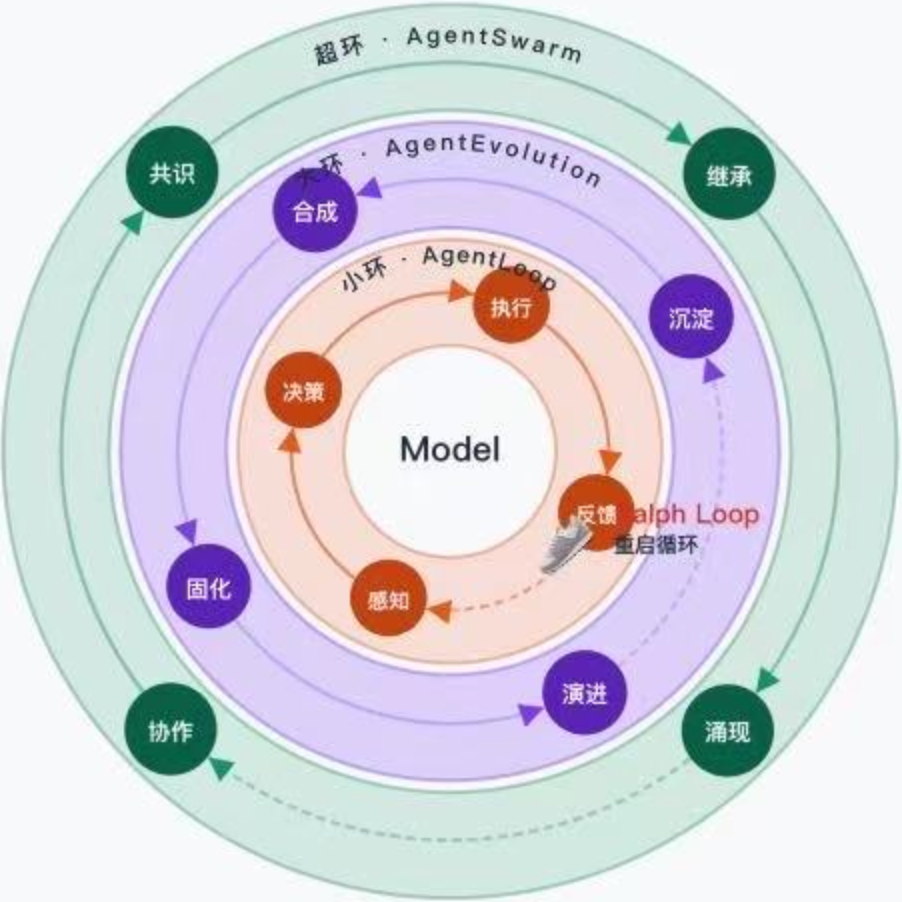
RSI: Evolution Goes Beyond Models

AI has already entered code writing, algorithm optimization, and model development. But after a task is completed, what remains may be reusable capability—or merely an answer and scattered logs. The difference becomes apparent only when a similar problem comes up again: can the system reuse what it learned, or must it pay the cost of exploration all over again? Recursive Self-Improvement (RSI) co…

RSISwarmEvoMapLoopEvolution

evomap.aihttps://evomap.ai