Create

Sign in to ReadmeX

or

How we handle your data: Privacy Policy

ReadmeX

Your AI reading companion

What would you like to catch up on?

Pick a briefing, or ask your own question.

Your community and people briefings stay personal to you.

ByteDance

AI overview

Sign in and the AI will write an overview from our coverage.

Headlines · 298

  1. China's AI office agent race takes three-way shape: WorkBuddy, Qianwen Office, Doubao

    A column by 影子备忘录, republished with authorization by 钛媒体, argues that China's AI office agent market has begun to settle into a three-way contest among Tencent WorkBuddy, Alibaba Qianwen Office and ByteDance Doubao Work. Citing QuestMobile data, it says the AI productivity-office segment reached 102 million monthly active users and about 1.387 billion monthly uses as of July 2026, up 112.4% year on year, but the vendors' user figures use very different definitions: Doubao's 382 million is the whole Doubao app, Qianwen Office's 30 million is cumulative first-month sign-ups with only 1.58 million MAU in August, and WorkBuddy's 20 million is cross-platform MAU, with the article saying its enterprise paid customers number 3,000–7,300 and paid seats about 140,000. It also notes Qianwen Office's August 3 public beta consolidating QoderWork, 悟空 and MuleRun, Doubao Work's August 25 launch, and WorkBuddy's March 9 full launch and September 2 open platform; claims such as first place in an Alibaba Cloud-organized evaluation are attributed to the article alone.

    钛媒体 · 🔥 0
  2. Analysis: AI short dramas take 55% of China's token use

    A column by Yingzi Beiwanglu, published by TMTPost with authorization, cites Chinese Online industry data saying AI short dramas and video generation account for 55% of domestic token consumption, ahead of e-commerce and marketing at 24% and software development at 15%. The piece estimates that one second of 1080p video costs about 50,000 tokens (3 million per minute), and that a 120-minute AI live-action short drama carries 30,000–40,000 yuan in model-side compute cost, roughly half of total cost in large-volume production. It also cites Kling AI revenue of more than 650 million yuan in Q1 2026, up over 300% year on year, with API revenue reaching 60% of the total, and estimates a revenue split of 25–35% to compute providers, 20–30% to producers and 30–40% to platforms. The figures come from company disclosures and the author's industry citations and are not independently verified in the article.

    钛媒体 · 🔥 0
  3. Hands-on: ByteDance's merged TRAE links Agent and IDE modes, but features lag

    ByteDance announced on Oct 9 that it merged TraeWork and TraeCode into a single TRAE, repositioning it from an AI coding tool to an "AI Development platform" with an Agent mode and an IDE mode that switch without re-importing a project. In a hands-on test republished by 钛媒体 and written by 光子星球, Agent mode produced a working browser-based bookkeeping web app in about 20 minutes, and the IDE mode then allowed direct code edits plus a click-to-target fix of a text-overlap bug. The review also found the template library's "做同款" button intermittently unresponsive, an always-empty "我的产物" area with generated files saved only locally, and hallucination risks in an automated AI daily-news briefing. It added that former TRAE lead 石扬 was reported to have left ByteDance on the same day as the merger announcement.

    钛媒体 · 🔥 0
  4. AI comic short dramas surge in China as supply, not demand, drives the boom

    An industry analysis argues the boom in AI-made comic short dramas in China stems from a supply-side shift rather than surging viewer demand: citing the national broadcast regulator, it says more than 430,000 micro-dramas launched in the first eight months of 2026, over 90% with AI involvement at roughly 1,800 new titles a day, while per-title production costs fell from hundreds of thousands of yuan to hundreds or thousands. It cites QuestMobile for ByteDance's Hongguo short-drama app at 168 million DAU (July 2026) and an overseas AI-narrative market projected to top $4 billion, with Chinese teams earning most of the revenue. The same piece flags pressure on creators: producers take only 4–7% of revenue shares, per-10,000-view payouts dropped from 30–100 yuan to 5–10 yuan, per-episode compute costs rose from 17 yuan to 80–100 yuan, active production firms fell from 1,216 to 698 in Q1 2026, and only 1,055 of 221,900 new titles passed 100 million views (0.47%).

    虎嗅 AI · 🔥 0
  5. AI game mod platform ModCraft raises tens of millions of RMB seed round

    ModCraft, a platform for AI-assisted game mod creation and distribution, has completed a seed round of tens of millions of RMB, with investors including SenseTime Guoxiang Capital and L2F, and will use the funds mainly for AI model training and platform growth. The platform offers two services: letting users create game mods through natural language, and discovering, playing and sharing mods made by others; it currently lists 28 well-known Steam titles, including The Scroll of Taiwu, Clair Obscur: Expedition 33 and PEAK. Founder Li Shuo, a game-industry veteran, describes mods as an interface between games and the world outside them, and the team says it is already working with model makers such as ByteDance to train models on mod creation, feedback and gameplay data.

    36氪 人工智能 · 🔥 0
  6. Personal agent race: Meta Muse, OpenAI Dots, Manus Cue target next AI entry point

    In September 2026, Meta, OpenAI, Manus and others launched personal agent products within weeks: Meta's Muse passed 2.5 million downloads in 13 days, Manus's Cue gives each agent its own email, phone number, digital wallet and cloud computer, and OpenAI's Dots runs in isolated cloud environments with access to more than 4,000 apps through ChatGPT plugins. In China, Alibaba said at its Yunqi conference it is accelerating a Qwen Personal Agent, ByteDance is reported to be merging its Spell project more deeply into Doubao, Tencent's Yuanbao is rumored to get a personal agent, and Tencent's lightweight cloud team already runs LightVela. The article argues this wave differs from earlier ones because agents shift from chat tools to executors, with ecosystem depth and monetization deciding the winners.

    36氪 人工智能 · 🔥 0
  7. AI micro-drama stocks rally; Decai unit's monthly revenue nears RMB 20M

    AI micro-drama (AI漫剧) concept stocks extended a rally in China from Oct 12–14: Decai Co. (605287.SH) closed limit-up at 44.20 yuan for its third limit-up in four sessions (up 30.04% over that span), while Ciwen Media rose 46.47% over four sessions; Bona Film Group, Huanrui Century, Zhangyue Technology and Guomai Culture also gained. Decai's controlled unit Qixiang Wuxian booked RMB 19.2677M in June revenue — about 78.4% of its first-half total — while still posting a RMB 5.6217M net loss; Ciwen said its AIGC platform "Ciwen TV" is still under construction with no related revenue yet, and Huanrui said AI short-drama revenue is under 1% of overall sales. Catalysts include ByteDance's PineDrama topping 100M downloads and roughly 7M DAU about nine months after launch, platform incentive programs such as Volcano Engine's Seedance film plan and Bilibili's upgraded anime-drama plan, local subsidies, and DataEye's estimate of a RMB 40B China AI drama/micro-drama market in 2026.

    虎嗅 AI · 🔥 0
  8. AI PhD graduates draw packages up to 8M yuan as Chinese tech giants battle for talent

    A widely circulated social-media post claims NVIDIA offered a 2026 Peking University integrated-circuit PhD a first-year pre-tax package of about 2.9 million yuan, including signing and performance bonuses plus a possible Silicon Valley posting after two years; the report notes that NVIDIA China PhD campus offers were generally 450,000–600,000 yuan five years ago. Recruiters cited in the piece say multi-million-yuan packages for top-school AI PhDs are no longer unusual, with Tsinghua's Institute for Interdisciplinary Information Sciences large-model graduates starting at 4–5 million yuan, JD.com offering 8 million yuan to a new graduate and Xiaohongshu about 6 million yuan to a master's graduate in large models. ByteDance, Tencent, Alibaba and Kuaishou run programs such as Top Seed, Qingyun Plan, Alibaba Star and Kuaishou Star, with ByteDance's 2026 Top Seed cohort recruiting roughly 30 PhDs; the article also cites market chatter of a near-160 billion yuan ByteDance AI budget for 2026 and Alibaba's 380 billion yuan three-year AI and cloud commitment, plus over 100 billion yuan of quarterly Tencent AI infrastructure spending.

    36氪 人工智能 · 🔥 0
  9. TikTok CEO Shou Chew predicts AI science breakthrough within three years

    Speaking at DBS Bank's Asia Future Forward Conference in Singapore on Oct 12, TikTok CEO Shou Zi Chew said AI is likely to deliver real scientific breakthroughs in physics, biotech, chemistry and materials science within two to three years. He said short-term expectations for AI are probably overstated while its long-term potential is underrated, argued humans still handle nuanced visual recognition and long-term memory retrieval better than models, and warned that cybersecurity risks from widely adopted autonomous systems are considerable. Reports also note that ByteDance's Seed team published Protenix-v2, a biomolecular structure prediction and design model, in April, and that Chew said ByteDance is exploring how to work with scientists.

    The Next Web · 🔥 0
  10. China's office AI war: Feishu, WorkBuddy, Qwen Office and DuMate push agents

    On Sept 15, 2026, ByteDance held its Feishu annual conference in Beijing, where Liang Rubo appeared for the first time to back Doubao Work; Feishu 8.0 treats agents as "organization members" that can be pulled into group chats to write docs, edit multi-dimensional tables, schedule meetings, join calls and start approvals, alongside a team-level agent called Doubao Work Companion that is still in co-creation with enterprises. The piece compares Tencent's WorkBuddy, Alibaba's Qwen Office, Baidu's DuMate and Feishu using vendor-reported figures: Feishu says H1 ARR grew 2.5x year on year and agent-callable features rose from 247 to 767 with execution success up from 78% to 95%; WorkBuddy claims 20.97M PC monthly visits in June and raised enterprise pricing from 78 to 198 yuan per user per month; Qwen Office claims 30M users in its first month, roughly 100% faster single-task generation and 75% lower token consumption; DuMate claims 150 iterations in five months and 60x growth in daily queries. It argues models are no longer the moat, with workflow and the combination of model, enterprise context, tool permissions and security governance deciding the outcome.

    虎嗅 AI · 🔥 0
  11. Meta Muse sparks personal-agent race as ByteDance and Tencent rush in

    An analysis published by TMTPost says Meta's personal agent Muse, launched on Sept 8, 2026, topped the U.S. App Store free chart within two weeks, citing about 2.8 million downloads in the U.S. and Canada over 12 days, roughly 1.8 million iOS downloads in the same period, about 642,000 U.S. mobile daily active users, and a more than 20% rise in Meta's share price (about $200 billion in market value). Zuckerberg described Muse as a personal agent that understands a user's goals and works around the clock to complete tasks, calling it a first step toward "personal superintelligence"; the article also cites 100 million free tokens a week, a cloud-based Muse Secure VM, and a plan to earn commissions on transactions rather than rely on subscriptions. It relays the follow-on moves: OpenAI's always-on agent Dots built on GPT-6 Astra with 4,000-plus app connections (Sept 30), Manus's Cue (Sept 28), ByteDance's "Spell" personal-assistant project, Tencent's LightVela and Yuanbao, and Alibaba's Qwen Personal Agent — while Amazon blocked Muse's purchasing feature, citing unauthorized AI agent access.

    钛媒体 · 🔥 0
  12. AI-driven PCB boom lifts Kingboard unit, parent still trades at 34% discount

    An analysis republished by TMTPost (written by Jinduan) says AI compute demand has pushed copper-clad laminate (CCL) and PCB demand to a cyclical high: it states the top nine global cloud providers' combined 2026 capex exceeds US$886.7 billion, up nearly 90% year on year, and that the PCB prosperity index rose from roughly 1,000 to 4,800 in under three years. Kingboard Laminates, the CCL leader, reported H1 2026 revenue of HK$12.474 billion (+61.63%) and EBITDA up 172%, giving it a HK$158 billion market value, while parent Kingboard Holdings — holder of 61.69% — is valued at HK$64.7 billion, a discount of at least 34%. The article also flags announced expansions equal to about 70% of existing capacity and more than HK$20 billion of share sales by Kingboard shareholders and executives in 2026.

    钛媒体 · 🔥 0
  13. Property operators cross into AI: from construction sites to compute delivery

    This essay describes two parallel shifts of China's real-estate world into tech and AI. On the capital side, Country Garden Venture Capital backed LandSpace, and Guangdong-Hong Kong-Macau Bay Smart Computing acquired Shenzhen Tiandun Data, which the article says contributed about RMB 616.7 million in revenue in just over two months of consolidation and helped the group turn profitable; on the people side, former Longfor executive Lyu Gang became president of autonomous-driving firm Xiantu Intelligent, Vanke staff joined ByteDance's enterprise services unit, and Tesla is described as recruiting from property circles. The author argues that project management, cost control and multi-party coordination transfer well, while technical judgement, product thinking and tolerance for uncertainty must be relearned, and suggests indicators for judging these transitions: surviving two years, regular tech recruiting from property, formal pricing of the skills, and integration with engineering-native teams.

    虎嗅 AI · 🔥 0
  14. Kling AI plans Hong Kong IPO as early as 2027, raising at least $1B

    Bloomberg reports that Kling AI, Kuaishou's video-generation business, plans a Hong Kong IPO as early as 2027, raising at least $1 billion, with CICC, Goldman Sachs and UBS underwriting. The report says Kling began independent fundraising in July with backing from Tencent, Alibaba Cloud, Baidu and others, and that based on late-August capital-increase data it is valued at about 122.8 billion yuan — above Kuaishou's market value at the time; the same account cites cumulative losses of more than 2 billion yuan from full-year 2025 through this year's first quarter. The article also says AI micro-dramas accounted for roughly 122,000 of about 128,000 short dramas released in Q1, or 95.3%, while hit and break-even rates remain very low as the sector consolidates.

    36氪 人工智能 · 🔥 0
  15. Essay: Hongguo short dramas and AI in a 'pure living' era

    A commentary republished by Huxiu AI argues that Chinese users are entering a "pure living era": AI chat handles translation, proposals and resumes that once required favors from friends, saving time while removing reasons to reach out to people. The article says ByteDance's free short-drama app Hongguo launched in April 2023 with only 320,000 monthly users, grew to 356 million three years later and passed 100 million daily users in January 2026; it cites QuestMobile data putting May 2026 short-drama viewers at 851 million. It also pairs Tencent's cited Q2 capital spending of 52.8 billion yuan, up 176% year on year, with a lower-consumption, low-social "low-power" lifestyle, framed by director Jia Zhangke's Aug. 6 Weibo post saying he had been watching Hongguo.

    虎嗅 AI · 🔥 0
  16. AI infra spending boom meets idle GPUs at Beijing salon

    A closed-door salon on AI infrastructure hosted by Touzhongwang with Zhongguancun partners, republished by 36Kr, examined the gap between huge AI infrastructure spending and weak efficiency. It cites ByteDance's $29.6 billion syndicated loan, Alibaba's HK$80 billion placement, more than $80 billion raised earlier by Google and Amazon, and NVIDIA's $500 billion plan, while noting China's daily token calls topped 140 trillion in March, over a thousand times early-2024 levels. Participants cited a Carnegie Mellon test of 756 GPUs running 31 days with the cluster waiting nearly 20% of the time, claimed over half of OpenAI's inference energy goes to idle work, and said average GPU utilization at Chinese smart-computing centers is below 30%. Several investors called lowering token cost and raising utilization the new deciding factor; SGLang's RadixArk reportedly raised a $100 million seed at a $400 million valuation, while one dissenting view argued inference revenue will fall sharply as algorithms compress token use by orders of magnitude.

    36氪 人工智能 · 🔥 0
  17. Tian Keyu's World-Model Startup Reportedly Raised Nearly $30M

    36Kr reported that former ByteDance intern Tian Keyu raised nearly US$30 million for a world-model startup at a US$200 million post-money valuation, adding that the financing had been disclosed about three months earlier. TMT reported that the round closed after a first-instance court judgment ordered Tian to pay ByteDance 500,000 yuan for breach of contract and confiscate his salary. Tian acknowledged improperly stopping another intern’s project, while ByteDance alleged that he interfered with internal model training; the technical allegations remain disputed.

    36氪 人工智能 · 🔥 0
  18. ByteDance AI drug spinout Anew Labs raises $290M angel round

    Anew Labs, which spun out of ByteDance in June 2026, raised a $290 million angel round in September 2026 at a reported valuation of about 10 billion yuan, which the report calls China's first AI drug-discovery company to reach that valuation in a first round. Investors include Sequoia China, IDG Capital, Hillhouse Venture Capital, Five Source Capital, Gaorong Ventures, Primavera Venture Partners and Boyu Capital, with Sino Biopharmaceutical and the Shanghai Future Industry Fund joining as strategic investors; ByteDance remains the controlling shareholder and continues to supply Volcano Engine compute. The company has released biological AI models Protenix and PXDesign along with AnewMind, a scientific reasoning model for drug-development decisions, and lists four preclinical pipeline assets, with a lead oral small-molecule candidate it describes as the world's first to target both IL-17A and IL-17F, currently in preclinical lead optimization. Anew Labs said it is focused on R&D and declined an interview.

    虎嗅 AI · 🔥 0
  19. China's Golden Week OTA split: Doubao sells answers, Fliggy and Tongcheng sell inventory

    A TMTPost retrospective on China's National Day Golden Week says AI entry points became a key battleground for online travel platforms. Doubao launched a dedicated travel hub covering maps, transport, hotels and dining before the holiday, and Douyin Life Services said Doubao hotel bookings rose over 56% month-on-month; Fliggy's Bangbang assistant saw interactions up 158% and guided flight and hotel bookings up 110%, while Tongcheng Travel's DeepTrip agent and Meituan's “Xiaotuan” assistant also reported holiday gains. The piece argues that legacy OTAs stress interaction and traffic while Doubao stresses transaction conversion, and that AI itineraries still struggle to adjust for weather, crowds, fares and traffic, so turning plans into real fulfillment rather than chat quality will decide the winner.

    钛媒体 · 🔥 0
  20. Volcano Engine launches Seedance film program, up to ¥1M per project

    At the Pingyao International Film Festival, ByteDance's cloud unit Volcano Engine announced a Seedance film cooperation program offering token subsidies, marketing resources and technical support to professional film and series, animation and short-film projects worldwide, with incentives of up to 1 million RMB per project. The push follows Volcano Engine's Cannes appearance with Seedance 2.0 in May, where the source says Higgsfield's 95-minute AI feature "Hell Grind," with nearly all video and voice generated by Seedance 2.0, was made for under $500,000 in 14 days. Separately, Bona Film Group's "Sanxingdui: Future Past," in which Bona says Seedance 2.0 was used only to enhance some scenes, reaches theaters on Oct. 23, while ByteDance's Jimeng AI launched a film label, Jimeng Film Studio, on Aug. 26 and Douyin hosted an AI short-film hackathon with computing support from Volcano Engine.

    钛媒体 · 🔥 0
  21. ByteDance, Tencent speed up personal AI agents to chase Meta Muse

    According to a Caixin report, Chinese tech giants moved quickly to follow Meta's September launch of the personal agent Muse, which can send emails and book travel for users, accesses data across email, calendar, payments, health, shopping and smart home only with user authorization, and lets users revoke access at any time; Mark Zuckerberg has described it as a key product on the path to "personal superintelligence." A ByteDance insider said the company stepped up work on its own personal agent project before China's National Day holiday: the effort began in April under the codename "Spell," extends its 2025 Doubao phone-assistant personal agent direction, and is led by the Doubao phone assistant team jointly with the Doubao conversation team, with plans to combine Spell with Doubao and launch it as soon as possible. Tencent, meanwhile, launched a personal agent product called LightVela in late September, positioning it as a "cloud personal assistant" that connects through WeChat and stays online around the clock to handle daily requests; it remains in a developer-experience stage.

    IT之家 AI · 🔥 0
  22. ByteDance paper finds periodic blind spots in DeepSeek V4 chunked KV-cache compression

    A ByteDance team paper, “Periodic Weak Spots: Phase Sensitivity from Chunked KV-Cache Compression,” says the chunked KV-cache compression used by the DeepSeek V4 series creates “phase sensitivity”: adding only decorative equals signs ahead of a code snippet flipped DeepSeek-V4-Flash-Base's completion between 8 and 32, with an error rate of about 71.3% when the count of equals signs modulo 4 was 0 or 1 and about 91.5% accuracy when it was 2 or 3. In a 128K-token needle-in-a-haystack test with roughly 16,000 key-value pairs, moving a single pair changed accuracy by up to 40.2% for V4-Flash-Base and 34.8% for V4-Pro-Base, with gaps of 19.1% and 14.8% remaining after post-training; halving the compression stride in DeepSeek-V4.1-Flash narrowed the gap to 6.1% but did not remove it. Control models trained from scratch on the Qwen3-0.6B architecture showed the same periodic swings whenever fixed-length chunked compression was used, while a full-attention baseline did not, which the authors present as a structural flaw rather than a tuning issue.

    雷峰网 AI · 🔥 0
  23. The AI capital loop: $1.65T off-balance-sheet pledges and a 166x token price gap

    A signed analysis republished by Huxiu walks through the AI capital cycle: the author says about 87% of Alphabet's $112.1B Q2 2026 net profit came from paper gains on its SpaceX and Anthropic equity stakes, and roughly 85% of Amazon's $62.6B profit from fair-value adjustments on its Anthropic investment — neither reflecting cash inflows. Citing a Nikkei Asia review, it puts the five big tech firms' off-balance-sheet lease and purchase commitments at about $1.65T, above roughly $1.35T of on-balance-sheet debt, and says CICC estimates AI applications need about $1T a year in revenue to cover capex versus roughly $200B in combined ARR for leading US model makers. On monetisation, the author contrasts OpenAI's $30 per million output tokens with DeepSeek's $0.18 — a 166x spread — and lays out three endgames, judging a localised blow-up with chain effects most likely.

    虎嗅 AI · 🔥 0
  24. ByteDance AI roles reach 42.8% of job postings in 'full-stack' hiring push

    An analysis of ByteDance's careers site counted 11,187 open China social-recruitment roles on Oct 5, of which 4,791 (42.8%) relate to AI — with AI's share of newly posted roles rising from 33% to 55%. By unit, the Seed model team was 96.1% AI roles, Doubao and other AI-native apps 77.2% and CapCut 74.3%, while e-commerce (26.4%) and local services (16.9%) trailed. The author argues ByteDance is hiring across six layers — chips, compute, foundation models, cloud, applications and devices — a "saturated, full-stack" push that comes at the cost of focus.

    创业邦 科技 · 🔥 0
  25. Huawei says Ascend tops Nvidia in China share as supply stays tight

    According to a media briefing summary published by Jiemian, Huawei rotating chairman Xu Zhijun said Ascend is still far from meeting domestic demand and that Huawei has no plan to expand broadly overseas, urging the supply chain to "go faster, produce more"; he said Huawei's own data suggests Ascend's China market share has surpassed Nvidia's, though the note gave no figure or methodology. Nvidia said in its quarterly report that H200 shipments to some Chinese customers permitted since February accounted for less than 1% of data center revenue in the quarter, and it excluded China data center compute revenue from next-quarter guidance. The article also reports intent prices for Ascend 950DT accelerator cards up 20%-50% in two months to over 250,000 yuan and 950PR up from about 60,000 yuan early this year to over 80,000 yuan (intent quotes, not final prices), and that DeepSeek published Ascend-targeted software components including TileKernels and DeepGEMM-Ascend on September 30.

    虎嗅 AI · 🔥 0
  26. Doubao moves toward personal agent with utility payments, taking aim at Alipay

    According to a report by 字母榜 (Zimubang), Doubao now supports paying water, electricity and gas bills, with the payment screen handled by a Douyin life-services mini program rather than embedded inside Doubao. Doubao had earlier launched "Travel with Doubao," which bundles navigation, ride-hailing, flights and hotels, plus "Ask Doubao before buying" for purchase advice. The piece argues ByteDance is steering Doubao from a chatbot toward a personal agent, starting with travel, local services and bill payments — a path that could eventually erode Alipay's core turf; it cites 380 million MAU and 140 million DAU for Doubao without sourcing the figures.

    36氪 人工智能 · 🔥 0
  27. AI glasses boom meets 'China's eyewear capital': Danyang shops hesitate

    In Q1 2026 global smart glasses shipments hit 3.566 million units, up 130.1% year on year; Tmall's first 618 phase saw AI glasses sales rise ninefold, and smart glasses joined China's national subsidy list, with 15% off devices under 6,000 yuan. Yet in Danyang, Jiangsu — known as "China's eyewear capital" — small shop owners hesitate: display-equipped AI glasses cost nearly 1,800 yuan wholesale, models iterate fast and merchants lack stock-return guarantees, while industry monitoring puts average AI glasses return rates near 30% on major e-commerce platforms and 40%–50% on Douyin livestreams. Danyang has 1,600+ eyewear companies and 50,000+ workers making over 400 million lens pairs a year — about 75% of China's lens output and half the world's — and local leader Mingyue Optical Lens has been Xiaomi's exclusive optical partner for its AI glasses since June 2025, reporting 6.51 million yuan in cumulative revenue from that business as of Sept 30, 2025 and a 78.6% gross margin on smart-glasses lenses.

    虎嗅 AI · 🔥 0
  28. World models framed as key to physical AI, easing robot training-data scarcity

    An industry analysis argues that world models differ fundamentally from LLMs: rather than generating text, they predict how the physical world will change based on environment observations and actions, making them a cornerstone of "physical AI." Their biggest claimed value is easing the extreme scarcity of embodied training data — robots' actions, contact and force responses have no ready-made datasets, so an accurate world model could generate near-unlimited practice experience in simulation while cutting the cost and safety risk of real-world data collection. The piece cautions the approach is still early, citing weak long-horizon consistency, insufficient physical accuracy and high compute and memory costs, plus the sim-to-real gap, a shortage of physically annotated action data and partial observability; the most commercially mature use remains autonomous-driving simulation and validation, while general-purpose and humanoid robotics largely stay at demo or loss-making R&D stage.

    科技新报 · 🔥 0
  29. Making 'good enough' AI a business: cheap models, cost tiers and the budget gap

    This analysis (originally by 最话FunTalk, republished by 36Kr and TMTPost) examines how AI vendors are turning "good enough" intelligence into a business. It notes that on October 6 OpenAI published math research produced by its internal frontier model, saying each result took compute equivalent to roughly three hours of ChatGPT Pro thinking, and that on October 7 Anthropic released the small model Haiku 5.5 for high-volume tasks such as summarization, classification and database queries, while OpenAI pushed GPT-6 to more ChatGPT users and gave free users the lighter Luna. Citing published API prices, it says GPT-6 Astra costs $50 per million output tokens versus $0.5 for Luna, while Haiku 5.5 is priced at $0.1 per million input tokens and $0.5 per million output tokens for prompts under 100,000 tokens, with Anthropic claiming roughly 75% average savings versus its predecessor on real tasks and halving Sonnet 5.5 cache-read prices. In China, Alibaba's Qwen Office, Tencent's Marvis and WorkBuddy, and ByteDance's Doubao Work integration with Feishu are all embedding AI into office workflows; the article argues the test is winning incremental budget, not topping leaderboards.

    36氪 人工智能 · 🔥 0
  30. China's personal AI agents stall on ecosystem access, not model power

    A TMTPost analysis argues that ByteDance's Doubao, Alibaba's Qwen and Tencent's Yuanbao are all pushing personal agents, but the binding constraint is not model quality — it is whether platforms will open up accounts, payments and fulfillment to a third-party assistant. The dispute over Meta's Muse, which Amazon restricted from its store, illustrates that user consent does not equal platform permission; Doubao's phone assistant on Nubia's NaviX Ultra could complete a coffee order inside Douyin after authorization but could not drive Taobao Flash Purchase, JD.com or WeChat messaging. Each group is leaning on in-house ecosystems to cut integration costs, yet inference and task-state management still consume resources, and merchants will only keep participating if agents bring incremental demand.

    钛媒体 · 🔥 0

← PreviousNext →

Experience and discussion from the community

Share my ByteDance experienceAsk about ByteDance

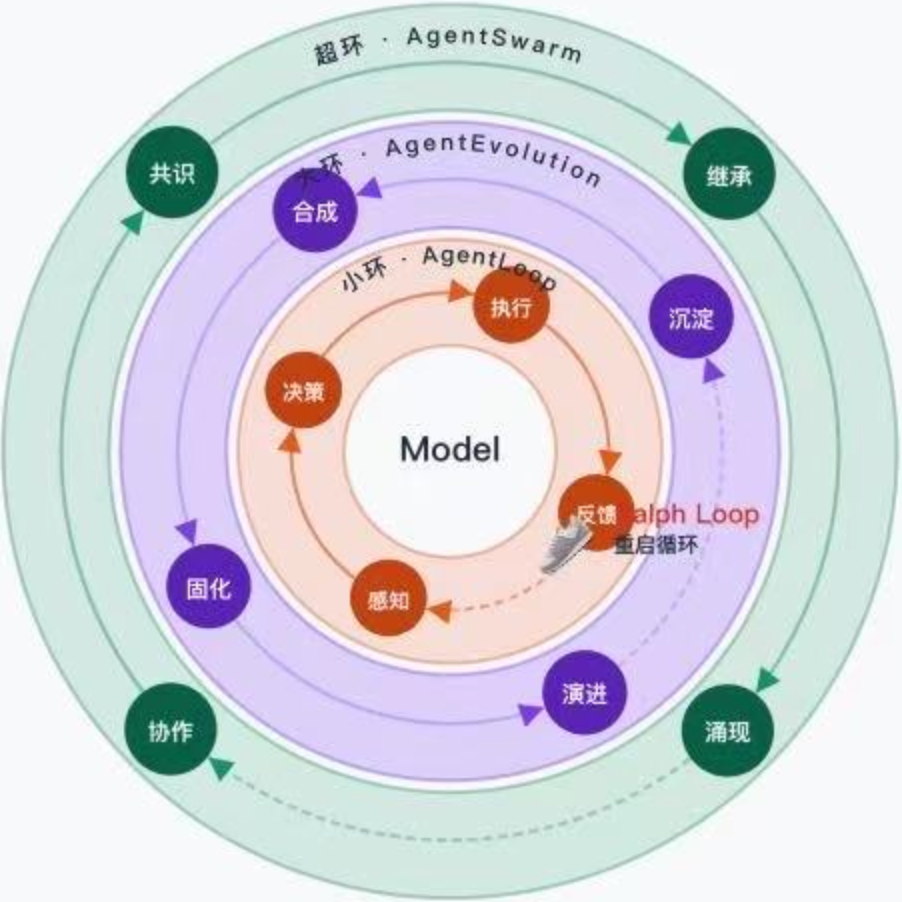
RSI: Evolution Goes Beyond Models

AI has already entered code writing, algorithm optimization, and model development. But after a task is completed, what remains may be reusable capability—or merely an answer and scattered logs. The difference becomes apparent only when a similar problem comes up again: can the system reuse what it learned, or must it pay the cost of exploration all over again? Recursive Self-Improvement (RSI) co…

RSISwarmEvoMapLoopEvolution

evomap.aihttps://evomap.ai