Create

Sign in to ReadmeX

or

How we handle your data: Privacy Policy

ReadmeX

Your AI reading companion

What would you like to catch up on?

Pick a briefing, or ask your own question.

Your community and people briefings stay personal to you.

Bytedance

AI overview

Sign in and the AI will write an overview from our coverage.

Headlines · 284

  1. Fanqie Novel raises the bar for new authors as AI floods submissions

    Fanqie Novel has changed its signing rules so Lv.0 and Lv.1 authors must finish works of 150,000 or 300,000 characters before applying, without reader feedback or manuscript revenue beforehand. The reports describe the change as an attempt to reduce low-quality, AI-generated submissions, while also shifting more creative and financial risk onto new authors. One report says authors were already publishing tools capable of generating million-character novels, potentially weakening the word-count barrier.

    钛媒体 · 🔥 0
  2. After Muse's breakout, big tech races to ship personal AI agents

    A commentary republished by TMTPost from Bohu Finance argues that Meta's personal agent Muse, launched in early September, set off a new wave of copycat products: it reportedly passed 5 million downloads in 22 days, and Meta shares rose 11.43% on Sept. 21. The piece says OpenAI introduced the persistent agent Dots at DevDay and Alibaba launched Qwen Go within three weeks, while ByteDance and Tencent were reported to be developing their own assistants. It also cites a Morgan Stanley estimate that running an always-on agent like Muse could cost about $37 a month, or $445 a year, in servers versus Meta's roughly $70 average annual revenue per user, and notes Amazon blocking agent traffic and 151 apps on Doubao's SAEP refusal list.

    钛媒体 · 🔥 0
  3. China proposes export controls on 23 AI technologies, including models and chip designs

    China’s Ministry of Commerce and Ministry of Science and Technology released a draft revision to the export-control technology catalog on October 16, proposing 40 additions, 23 of them AI-related, including large models, agents, compute clusters and chip designs. Reports on the draft say model controls could cover weights, checkpoints and source code and apply at thresholds of 2 trillion parameters, 10^26 training FLOPs or a global top-10 ranking; already open-sourced or published research is exempt, and API, app, website and SaaS access is generally not treated as a technology export. Overseas local deployment would fall under the rules, with automatic licensing possible on a company’s own overseas cloud, while a temporary pre-export registration requirement took effect immediately, public comment runs until November 15 and the Ministry of Commerce said most AI technology can still be exported freely once the measures take effect.

    r/LocalLLaMA · 🔥 0
  4. Kling AI picks CICC, Goldman Sachs and UBS for Hong Kong IPO targeted at 2027

    Kuaishou's video-generation unit Kling AI has raised about $3 billion at a post-money valuation of roughly $18 billion and, according to Bloomberg as cited by TMTPost, has selected CICC, Goldman Sachs and UBS as underwriters for a Hong Kong IPO targeted for as early as 2027, aiming to raise at least $1 billion. Kuaishou disclosed in July 2026 a plan to fold Kling's assets into Beijing Kling and bring in outside funding, with its stake diluted from 100% to about 68.33% if the full raise and a staff incentive pool of up to 15% are used. Kling's revenue topped 1.5 billion yuan in the first half of 2026, including more than 850 million yuan in the second quarter, up over 200% year on year, but its net loss widened to 1.9 billion yuan in 2025.

    钛媒体 · 🔥 0
  5. Double 11 AI economics: Alibaba, JD and Douyin monetization paths

    A TMTPost analysis by retail expert Zhuang Shuai breaks down three paths Chinese e-commerce platforms use to monetize AI during Double 11: ad placement, subscriptions and per-use fees. On advertising, Alibaba's Wanxiang Dianjing uses AI to infer shopping intent in real time; the author says it generated over RMB 2 billion in combined GMV across keyword and audience promotion after full rollout, with more than 150,000 merchants using it, while JD.com's Jingzhuntong instead uses ad subsidies and ROI compensation. For subscriptions, JD opened 14 Jingmai AI tools for free and Alibaba launched the Qwen Office e-commerce edition before the festival; on per-use pricing, Alibaba's AI customer service Dianxiaomi costs RMB 0.2 per conversation on the standard tier and RMB 0.5 on the advanced tier, with the article citing Xtep and Xiaomi data for lower human-handoff rates and higher inquiry conversion. The author argues the festival is when merchants must pay for AI and a key test of whether they keep paying afterwards, and notes most figures are platform or merchant claims rather than independently verified.

    钛媒体 · 🔥 0
  6. Tian Keyu AI lab's $200M valuation sparks founder-integrity debate

    According to a 36Kr AI commentary, an AI lab founded by Tian Keyu has raised nearly $30 million at a $200 million post-money valuation despite having a 10-person team, no product and no public name; the article, citing Bloomberg, names 5Y Capital and IDG Capital as investors. Tian is the first author of a NeurIPS 2024 Best Paper and a central figure in ByteDance's so-called model-sabotage incident; a first-instance court ordered him to pay 500,000 yuan and return all internship pay, and ByteDance has appealed, so the case remains under second-instance review. The commentary argues that the market should not treat controversy-driven attention as a valuation asset, while noting that the competing accounts of the 2024 incident are both one-sided.

    36氪 人工智能 · 🔥 0
  7. ByteDance world model demo surfaces, reportedly overseen by Zhang Yiming

    An analysis published by TMTPost describes a Xiaohongshu note in which Tim of the channel 影视飓风 demonstrated ByteDance's latest world model, creating a world and interacting with it — controlling camera movement in old films, stepping through a "door" into imagined scenes, letting robots learn manipulation (including driving) in a virtual world, and using a VR headset for simulated professional training such as medicine. The note named no model, and ByteDance has not officially announced one. Citing unnamed people familiar with the matter, the article says the model is built on ByteDance's video generation model Seedance, generates 20 frames per second on demand with about 50 ms end-to-end latency, renders in the cloud and streams to devices, is planned for Pico headsets, and targets live streaming, interactive short dramas and games. It also says Zhang Yiming personally coordinates model research, cloud infrastructure, Pico hardware and content teams with priority compute, and that world models rank first among ByteDance's four AI priorities for 2026; none of these details has been confirmed by ByteDance.

    钛媒体 · 🔥 0
  8. As AI comic dramas surge, Wondershare bets on an all-in-one production line

    A Lianxian Insight analysis republished by 36Kr and Cyzone examines Wondershare's position in the AI comic-drama and short-drama rally: on Oct 12 its shares touched an intraday high of 51.68 yuan and market value recovered to 9.818 billion yuan. The company launched Wanxing Juchang in January, pitched as a single platform spanning script to finished video; by Wondershare's own account it achieves over 95% character and scene extraction accuracy and over 80% usable automated storyboards, cutting per-episode storyboard time from one episode per person-day to eight and labor costs by 72%. The report also describes a dual-model strategy combining its in-house ToMoviee model with third-party models such as Veo3, Sora2 and Kling 2.5 Turbo, a Token billing model opened in March, and first-half 2026 revenue of 706 million yuan, down 7.09% year on year, with a net loss of 68.98 million yuan and gross margin down 5.79 points to 86.63%.

    36氪 人工智能 · 🔥 0
  9. Meta's AI edge is advertising, with Tencent and ByteDance on a similar path

    A Tech商业 analysis published via 36Kr argues that Meta's real AI advantage lies in advertising rather than models: it says Meta's October Muse AI agent reached 73% early retention and shipped two flagship models, Muse Wonder and Muse Wonder Full. Citing Bank of America analysts, it says stronger models can improve recommendation and ad targeting, and it notes Meta's Q2 2026 ad revenue of $59.363 billion (97.6% of revenue, up 27% year over year) plus projected 2026 capex of $115–135 billion. It draws parallels with Tencent (Yuanbao inside WeChat, marketing services up 20% to 38.2 billion yuan) and ByteDance (Seedance 2.5 in TikTok Symphony, Doubao linked to Douyin e-commerce), while citing a Morgan Stanley survey that AI is mainly redistributing existing ad budgets.

    36氪 人工智能 · 🔥 0
  10. Nscale seeks up to $3B IPO as flagship Norway AI data center slips six months

    Bloomberg reports that UK-based AI infrastructure firm Nscale is seeking to raise up to $3 billion in an initial public offering as soon as this month, with a Techmeme summary of Bloomberg's reporting putting the targeted valuation at up to $35 billion. One flagship AI data center in Norway is about six months behind schedule, and construction has also been hit by regulatory hurdles, a fire and other delays, with workers set to be housed in a floating hotel to get it over the finish line. Sources told Bloomberg that Nscale owes penalties to Microsoft and ByteDance, and the reporting notes investors are growing increasingly wary of the risks of the AI buildout.

    Bloomberg Technology · 🔥 0
  11. WorkBuddy, Doubao, Qwen Office and Kimi compared as office AI assistants

    A comparative test by 壹览商业's 未来科技界, republished by 36Kr and 创业邦, gave the same beverage-store dataset — 4,510 records for five brands from January to September 2026 — to Tencent WorkBuddy, Doubao Work, Qwen Office and Kimi Work, asking each for a 2,000-word analysis and a visual report. WorkBuddy was the only product to de-duplicate same-month records (353 records against 351 stores), but it put one brand's mall-store share at about 60% where the test calculated 43.3%; Qwen Office conflated monthly records with store counts and Kimi Work kept 942 records as 942 stores. Doubao Work delivered a single-page HTML report with seven ECharts chart groups, Kimi Work a nine-slide deck, and Qwen Office and WorkBuddy twelve-slide decks that leaned on text. Personal plans start at 49 yuan a month for Kimi and 68, 70 and 78 yuan for Doubao Work, WorkBuddy and Qwen Office; the review found no published token-to-credit conversion, leaving task costs hard to estimate.

    36氪 人工智能 · 🔥 0
  12. ByteDance, Alibaba and Tencent pile into personal AI agents after Meta Muse

    Tech Planet reports that Chinese internet giants are racing to field personal AI agents: Ant Group is testing "Lingguang 2.0", Alibaba unveiled Qwen Go on October 13 for limited beta, ByteDance has been reported to be preparing a personal agent called Xiaodou, Tencent is running LightVela, Yuanbao and a WeChat-native agent Xiaowei, and Manus, fresh off a 3.3 billion yuan funding round, launched Cue. The piece traces the wave to Meta's Muse, released September 8; Sensor Tower data cited says Muse passed 2.5 million downloads in 13 days and 5 million in 22 days. But TickerTrends data cited shows Muse's average daily net new users fell from a September peak of 198,000 to 74,000, a 62.4% drop, with daily actives staying below 3 million a month after launch; the report also cites Amazon blocking Muse from placing orders, 155 apps refusing Doubao Phone Assistant's automation, and unresolved problems around trust, permissions, walled platforms and monetization.

    36氪 人工智能 · 🔥 0
  13. AI short dramas reach 600 million users as long-video platforms join in

    A FoST Future Narrative article published via TMTPost, citing DataEye Research Institute, says 128,000 micro-dramas launched in China in the first quarter of 2026, of which 122,000 were AI-made, more than 95% of the total, while AI short-drama users topped 600 million in the first half and the market exceeded 22 billion yuan. The article describes ByteDance's chain — Fanqie Novel for IP, Seedance for production, Douyin for traffic and Hongguo for distribution, with Hongguo at 168 million daily active users in July 2026 — and notes iQiyi's Nadou Pro, Tencent Video's WorkRally, Mango TV's AI-generated long drama 'Hou Xi You Ji' on Hunan TV primetime, and Youku's animation channel. It also reports that Douyin, Tencent and iQiyi adjusted AI short-drama revenue-sharing rules in July 2026 to favor 'live-action + AI' productions, with interactive content as the next area being tested.

    钛媒体 · 🔥 0
  14. Tencent, ByteDance, Alibaba race to build personal AI agents

    A 市值榜 article republished by TMTPost and 36Kr says agent competition is shifting from single-task execution to continuous personal service: after Meta launched Muse in September, ByteDance was reported in late September to be accelerating its personal agent project Spell (named “小豆”, planned as a standalone app, with the final form undecided), Tencent's Yuanbao was reported to plan a similar product, Ant Group's Lingguang began small-scale testing of a new version on October 11, and Qwen had earlier announced at its Yunqi conference that it is accelerating a Personal Agent. The article cites The Information as saying that about three weeks after launch Muse had more than 3 million users sending at least one instruction a week and over 1 million daily, and notes Amazon began blocking Muse from its shopping site on September 20, while on September 25 an outside security researcher reported a flaw that could expose emails and files in users' dedicated cloud VMs. It also cites The Wall Street Journal and Sensor Tower data saying Muse's global downloads approached 9 million but growth was slowing, with 22.5% 14-day retention versus ChatGPT's 26.8%.

    钛媒体 · 🔥 0
  15. Doubao AI phone returns at 5,999 yuan, HuXiu reports first-second sales above 100 million yuan

    HuXiu AI reported on October 15 that the Doubao AI phone, which it says had previously been "besieged" by platforms, is back on sale at 5,999 yuan, claiming sales passed 100 million yuan in the first second. The report also says the device's current buzz outshines Apple and Xiaomi phones, but it does not name the platforms involved earlier, the basis for the sales figure, or any independent verification.

    虎嗅 AI · 🔥 0
  16. Personal agent rush: Meta Muse, OpenAI Dots and Qwen Go jostle for users

    An analysis by Jingzhe Research Institute, republished by TMTPost and 36Kr, traces the recent personal-agent boom: Meta launched its personal agent Muse on September 8 and, per the article, topped the US App Store free chart within 13 days; Instinct then announced a $1 billion round at a $10 billion valuation; OpenAI unveiled its agent Dots at its September 29 developer conference, and Manus parent Butterfly Effect announced over $500 million in new funding on October 8. The piece argues that cloud PCs, persistent memory and layered permissions are now standard, with Muse handling calendars, email, restaurant bookings and price comparisons. In China, Alibaba's Qwen said on October 13 it would release a personal agent, Qwen Go, and opened an experience waitlist; Tencent's LightVela is in free trial, while ByteDance's Doubao was reported to have an internal personal-assistant project called Spell. The article also notes Amazon confirmed blocking Muse from its shopping site, framing cross-app execution as a conflict between agents and platforms that control data, identity and transactions.

    钛媒体 · 🔥 0
  17. Meta Muse sparks China personal-agent race as big techs pivot to consumers

    A commentary republished by TMTPost says Meta's personal agent Muse, about a month after launch, topped the free iOS charts in the US and Canada and prompted Chinese players including ByteDance, Tencent, Alibaba, Ant Group and Manus to accelerate consumer-facing personal agents. It cites ByteDance's project codenamed Spell, Tencent's cloud personal assistant LightVela launched in late September in developer preview, Alibaba's upcoming Qwen Go, Ant's new Lingguang internal test and Manus's Cue, saying the focus is shifting from enterprise office agents to consumer life scenarios. It also says privacy and safety and super-app cross-app barriers remain major obstacles, pointing to Amazon blocking Muse from shopping for users and Doubao phone assistant facing more than 150 apps that refuse automated operation, while Muse's subscription-plus-transaction-fee approach is seen as a new commercialization direction.

    钛媒体 · 🔥 0
  18. Alibaba, Tencent and ByteDance race into AI office hardware to capture context

    Alibaba, ByteDance and Tencent are competing over AI office hardware, treating recording cards, AI earbuds and smart glasses as entry points for collecting offline "context", according to a China Entrepreneur Magazine report republished by 36Kr. Tencent's WorkBuddy opened its platform in September with more than 100 ecosystem partners and integrations into dozens of devices from Plaud, Rokid and Insta360, while Alibaba's Qwen Office launched the QwenNote A2 AI agent device on Sept 22 for 1,199 yuan and followed on Oct 13 with N1 and N1 Pro AI glasses plus clip-on earbuds. ByteDance's hardware matrix includes Doubao earbuds, a Doubao phone and the AI recording bean developed with Anker Innovations under Feishu, as investors and practitioners cited in the report warn that companion AI hardware has very high idle rates while funding has cooled and customer acquisition costs remain steep.

    36氪 人工智能 · 🔥 0
  19. All seven major Chinese apps refuse Doubao phone assistant proxy access

    On Sept 14 ByteDance's Doubao phone assistant started a proxy-authorization disclosure mechanism (internally coded SAEP), giving partner apps a 30-day window to decide whether to let it act as an agent operating user accounts on their behalf; the window closed on Oct 14. According to a Tech商业 article published via TMTPost, as of Oct 15 WeChat, Alipay, Taobao, Meituan, Pinduoduo, DiDi and Xiaohongshu had all declined, leaving none on the list. The article argues the barrier is not model capability but the triple role of super apps as traffic gateway, data pool and regulated payment node, and notes that overseas agents also face robots.txt, anti-scraping and login risk controls, with OpenAI's Operator running in an isolated environment that requires user confirmation for key actions.

    钛媒体 · 🔥 0
  20. ByteDance said close to MediaTek data center chip supply deal

    Bloomberg, citing unnamed people familiar with the matter, reported that ByteDance is close to an agreement to buy data center semiconductors from MediaTek, with the two sides in advanced talks on custom chips tailored to ByteDance's platforms. MediaTek would supply an unspecified quantity of ASICs, and ByteDance could become its second-largest ASIC customer after Google if the deal closes; the reports say no agreement is final and Reuters said it could not immediately verify the report independently. IT之家 adds that ByteDance cannot buy top-tier Nvidia AI chips and that Huawei and other domestic suppliers cannot fully meet its compute needs, while MediaTek expects about $2 billion in AI chip revenue this year and targets a 15% share of next year's $80 billion data center chip market.

    Bloomberg Technology · 🔥 0
  21. Doubao Phone says it will gradually open third-party app auto-operation permissions

    A report headline says Doubao Phone announced it will gradually open auto-operation permissions for third-party apps. The supplied report has no body text and does not specify the scope, timetable or which apps are covered.

    DoNews · 🔥 0
  22. Doubao Phone Assistant names 151 apps refusing GUI automation, WeChat included

    Doubao Phone Assistant said on October 14 that after a 30-day public notice period for its screen-automation declaration agreement ends, it will gradually open GUI automation of third-party apps, limited to those that have not opted out. It also published an opt-out list of 151 apps that do not permit the assistant to perform GUI screen automation, including WeChat, DeepSeek, Taobao, Kuaishou and Meituan. Doubao said developers can still declare a refusal after the notice period, and that it will not operate on apps that have opted out.

    钛媒体 · 🔥 0
  23. Volcano Engine-led team wins 230M yuan Hengdian film-AI contract

    A recently published result announcement for the Hengdian Film & TV AI Service Platform project named a consortium of Dongyang Shenkong Engine and Volcano Engine as the winner; Zhidx reported a total of 230 million yuan, including 27 million yuan for compute leasing, while Huxiu reported 235 million yuan, matching the tender's stated total budget, so the figures differ by source. The project centers on a "Hengdian Film & TV large model" and a data-model-application system covering model services, asset operations, production enablement, industry ecosystem management, model safety and compute leasing, and calls for 7 vertical-scenario enhanced models plus 20 specialized scenario models. Tender requirements include at least 9 high-quality industry datasets, at least 50 billion tokens of pretraining data, at least 1 million instruction-tuning entries, at least 30,000 reinforcement-learning preference groups and at least 10,000 benchmark items, with peak-load system availability of at least 99.5%; delivery is phased over three years.

    智东西 · 🔥 0
  24. Nscale raises $3.36B pre-IPO, files for NYSE listing

    Nscale said on September 25, 2026 that it raised $3.36 billion through convertible loan notes, including a $1 billion commitment from Nvidia expected by mid-November, after filing a Form S-1 with the SEC on September 18 to list on the NYSE, according to a 智东西 report. The report, citing market expectations, put Nscale's post-financing valuation at up to about $35 billion, up from $14.6 billion less than a month earlier, and said the company disclosed about $103.4 billion in total contract value, including a GPU services agreement with Anthropic worth up to roughly $45 billion. It also reported that one unnamed customer accounted for 73% of Nscale's $33 million 2025 revenue, with the Financial Times identifying the related entity Spring as a ByteDance subsidiary, and that first-half 2026 revenue was $140.6 million against a $1.02 billion net loss.

    智东西 · 🔥 0
  25. AI video prices fall from yuan to fen as Kling, Vidu and Seedance compete

    An analysis by Guangzhui Zhineng, published by 36Kr and syndicated by TMTPost, reports that Kuaishou's Kling AI opened internal testing of Kling 4.0 on September 28, extending single native clips to 30 seconds at 4K, and launched a lightweight Kling 4.0 Flash that emphasizes fast generation and lower cost, though its API pricing has not been disclosed. On October 8, Shengshu Technology released Vidu Q4 Preview, supporting up to 15 reference images, three reference audio clips and 4K output, with launch pricing from 0.09 yuan per second and a company estimate that the same budget can produce up to about five times more content. The article also cites list prices showing ByteDance's Seedance 2.5 at 70 yuan per million tokens for 720p generation without references versus 46 yuan for Seedance 2.0, and argues that flagship video entry prices have moved from yuan to fen per second, shifting competition toward cost-performance and deliverable quality.

    36氪 人工智能 · 🔥 0
  26. The global hunt for the next Ulanqab: where AI compute is moving

    A 36Kr analysis uses Ulanqab as a model for how AI compute capacity is shifting from technology centers toward energy-producing regions, citing cheap power, natural cooling and low latency to Beijing as factors behind roughly 12.5 GW of data-center capacity commitments as of June 2026. It compares candidate locations including Spain’s Aragon, Malaysia’s Johor, Japan’s Chiba, Kazakhstan and Uzbekistan, and the UAE on electricity prices, permitting speed, network latency, geopolitical risk and supporting infrastructure. The article also outlines where Chinese compute-chain companies are already positioned, including Johor and Central Asia, arguing that their overseas role is often to fill gaps in local delivery and operations.

    36氪 人工智能 · 🔥 0
  27. Tencent issues $5B offshore bonds as ByteDance's $29.6B loan funds AI buildout

    TMTPost reported that Tencent launched a $5 billion offshore bond issuance on October 13, its second overseas fundraising this year after a nearly $4.7 billion bond sale in June. In early September, ByteDance finalized a $29.6 billion syndicated loan, which the article describes as Asia's second-largest dollar loan deal this year. The TMTPost author argues both companies are using the proceeds to support AI operations, citing Tencent's negative free cash flow of 13.8 billion yuan and 52.78 billion yuan of capital expenditure in the second quarter, and frames long-term bonds as matching long-term AI capex.

    钛媒体 · 🔥 0
  28. ByteDance showcases AI stack at Douyin's 2026 Wonderful Night

    According to a Lanmeihui report published by TMTPost, Douyin's 2026 Wonderful Night put AI at the center of the stage: singer Hu Yanbin and creators from the Trae community used AI Coding to build an interactive “laser strings” instrument, while tech creator Tim demonstrated an interactive scene based on a ByteDance world model that is still in development and unreleased. The report also says Seedance 2.5's motion-transfer feature let a digital peacock on screen dance in real time with Yang Liping's performance, and that many stage visuals were generated with video models such as Seedance. The article calls it the “most AI-dense” gala and says ByteDance used the event to show an AI stack spanning Volcano Engine compute, Seedance and Seedream models, Trae, and Doubao apps.

    钛媒体 · 🔥 0
  29. AI short dramas hit 1,500 releases a day, but almost no one outside platforms profits

    Leiphone interviewed several AI short-drama practitioners who said daily releases of AI short dramas have surpassed 1,500, with total production spending per title compressible to under 50,000 yuan, versus roughly 300,000–400,000 yuan for low-end live-action shorts and 1–1.5 million yuan for premium ones. Screenwriter Zhu Xiaoran described the business as betting on volume for probability, saying her team's tally put the hit rate at about four in a thousand, and that a title not gaining traction within three days of launch is typically dropped from paid promotion. The report also noted that Hongguo cut base revenue-share coefficients for AI animated dramas and removed a guaranteed minimum for smaller teams in April, then scrapped the series-scale coefficient in September; interviewees broadly said almost no one besides the platforms actually makes money.

    雷峰网 AI · 🔥 0
  30. TrendForce: nine CSPs' 2027 capex to top $1.5T, AI server value up over 90%

    TrendForce's latest AI server industry research forecasts that the top nine cloud service providers — Google, Amazon, Meta, Microsoft, Oracle, ByteDance, Tencent, Alibaba and Baidu — will spend more than $957 billion on capex in 2026, up 106% year over year, and a further 60% in 2027 to roughly $1.5 trillion. TechNews reported the 2027 figure as above $1.5 trillion with 60% growth, while IT之家 put it at $1.531 trillion and said TrendForce had raised its 2027 growth forecast from 50% to 60%. TrendForce attributed the upgrade to higher server system prices, component shortages pushing quotes up, and some suppliers demanding prepayments that force CSPs to spend cash earlier. It also expects AI server shipments to grow 32.2% in 2026 with about $479 billion in output value, nearly 75% of total server value, then rise nearly 36% in 2027 to close to $920 billion, up over 90% and about 81% of total server value, which is seen crossing $1 trillion for the first time.

    科技新报 · 🔥 0

← PreviousNext →

Experience and discussion from the community

Share my Bytedance experienceAsk about Bytedance

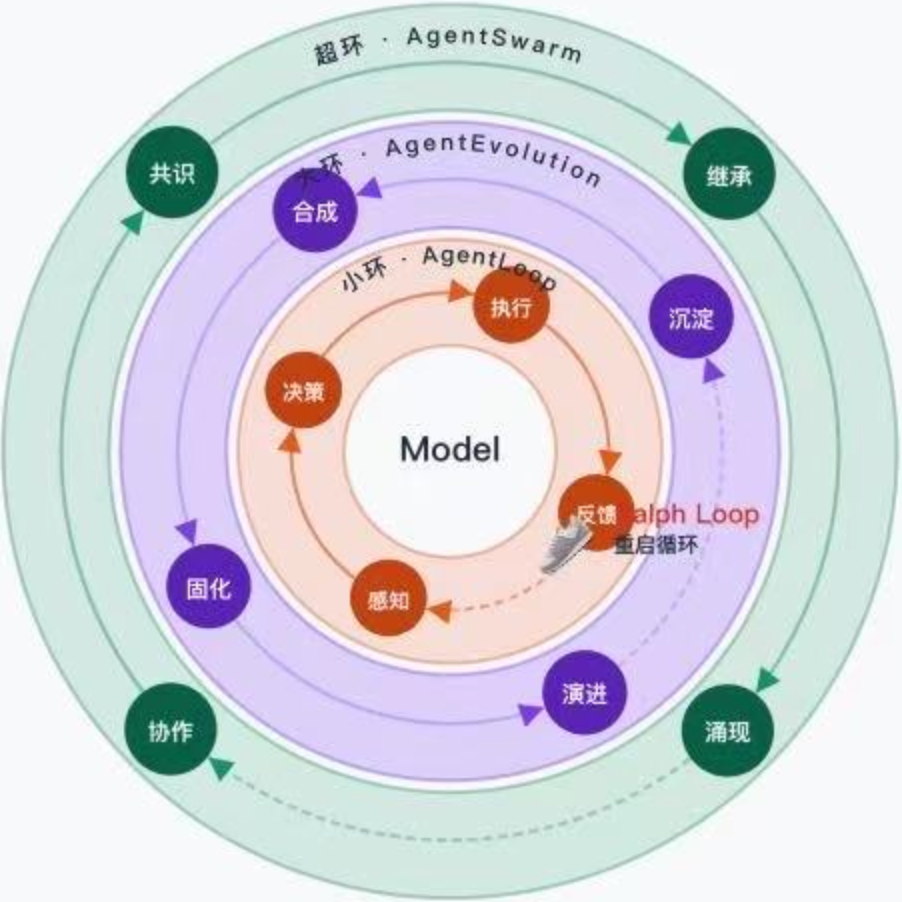
RSI: Evolution Goes Beyond Models

AI has already entered code writing, algorithm optimization, and model development. But after a task is completed, what remains may be reusable capability—or merely an answer and scattered logs. The difference becomes apparent only when a similar problem comes up again: can the system reuse what it learned, or must it pay the cost of exploration all over again? Recursive Self-Improvement (RSI) co…

RSISwarmEvoMapLoopEvolution

evomap.aihttps://evomap.ai