KLA at SEMICON Taiwan: AI turns chip race into a 'learning velocity' contest
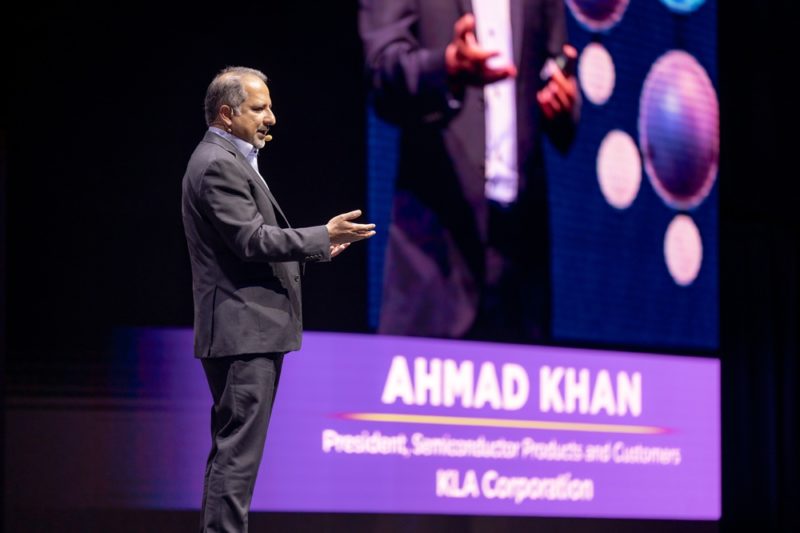
Ahmad Khan, president of KLA's Semiconductor Products and Customer Group, said in a CEO Summit keynote at SEMICON Taiwan 2026 that Moore's Law still matters but AI is changing how semiconductors innovate: transistor scaling alone can no longer carry performance gains, so innovation is widening from a single chip to system-level integration of logic, HBM and 3D DRAM, advanced packaging and high-speed interconnects. He noted that leading-edge GPU dies are so large that a wafer may yield only about five chips, so a single yield-critical defect costs far more, and once stacked DRAM becomes HBM integrated with the GPU on an interposer, "the final yield is the sum of all the parts." Beyond fatal defects, long, high-load AI training and inference runs make latent defects a growing concern; KLA's broadband plasma optical inspection systems generate roughly 125 TB of data per hour, nearly 3 PB a day, which must be sifted with GPU-based high-performance computing plus AI models and physics algorithms. Khan argued the next phase of competition depends on how fast the ecosystem turns faster innovation, richer information and deeper collaboration into "learning velocity."
It captures how equipment and inspection vendors frame the AI chip bottleneck: as chips become system-level assemblies, supply-chain collaboration and defect-data filtering may matter as much as any single process breakthrough.

AI 正在改寫半導體產業的創新規則。運算效能、記憶體頻寬與平行運算需求快速攀升,單靠電晶體微縮已不足以支撐效能躍升,創新正從單一晶片,擴大至邏輯、記憶體、先進封裝與高速互連共同推進的系統級整合。
科磊(KLA)半導體產品與客戶事業群總裁 Ahmad Khan 在 SEMICON Taiwan CEO 高峰會演講中指出,摩爾定律依然重要,但 AI 正在改變半導體創新的方式——晶片難再「單打獨鬥」,產業持續推動「把晶片特徵尺寸做小」,但同時也面臨「提升整體系統性能」的挑戰。