Satya Nadella said in The Pragmatic Engineer interview that Claude Code caught Microsoft off guard by moving coding toward the command line, while Cursor’s agent mode prompted Microsoft to respond. He argued that as AI-generated code becomes cheaper, verification becomes the harder part of software development, and described Microsoft’s “software factories,” slower junior hiring, changing team structures and voluntary exit program. Nadella also said Microsoft and Carnegie Mellon University launched the PRAISE mentoring program for AI-assisted software engineering.
A Juejin AI guide argues that project rules and system prompts are resent with conversation history on every model request, creating recurring input-token costs. It recommends keeping hard constraints resident, moving task-specific procedures into on-demand Skills, and merging duplicate or conflicting rules, while providing a reusable audit prompt and a Python script named rule_audit.py. In a seven-file example, the author estimates 23,721 resident tokens, but says this figure is an approximation based on 1.6 characters per token.
TechCrunch, as cited by Zhidx and 36Kr, reports that at least 13 prominent US AI applications or projects have stopped operating, undergone major adjustments, or entered difficulty. Cases include OpenAI shutting down Sora and Atlas, delays to Siri AI, continued privacy disputes around Microsoft Recall, Character.AI entering bankruptcy, and Humane ending AI Pin sales and cloud services. HFS Research data cited in the report says only 26% of Agentic AI projects at 100 large enterprises have reached production, while 43% remain in initial testing.
TechNews, citing Agence France-Presse, reports that Anthropic is preparing for a potentially record-setting IPO while its prospectus identifies model convergence, falling prices and rising compute commitments as major risks. Morningstar figures cited by TechNews show equivalent AI workloads falling from $17 to $0.5, while Vercel reportedly shifted more than half of its August text requests to open-source models. Anthropic says it has committed to paying at least $417 billion for chips and servers, regardless of operating conditions.
Microsoft plans to replace Phi Silica with Aion Instruct as Windows’ on-device language model, according to iThome. The 2.3-billion-parameter model expands the input context limit from 3,500 to 32,000 tokens, with phased Insider deployment starting November 20 and broader rollout to eligible release devices planned for late January 2027.
TechNews reported that uranium’s long-term contract price reached a record $96 per pound in early November 2026, as AI and data-center expansion strengthened demand for reliable baseload electricity. Purecore said reactor construction is outpacing new uranium supply, while the 10–15-year mine development cycle and constraints in conversion and enrichment create a potential timing mismatch. The report cited forecasts from third-party organizations that range from a 335-million-pound uranium deficit to larger scenario estimates, but the underlying analyses and price data were not independently verified in the supplied report.
Lattice reported fiscal 2026 third-quarter revenue of $291 million, up 118% year over year, and approximately 90% growth in FPGA revenue, which CEO Ford Tamer attributed partly to accelerating AI demand from data centers. Citing Semiconductor Industry Observation, 36Kr says AMD, Altera and Lattice are deploying FPGAs in server management, security, rack control and data-path functions as AI infrastructure grows more complex. The report frames this as a shift from competing with GPUs for core computation toward programmable infrastructure roles that require management and control.
A r/LocalLLaMA poster claimed that OpenAI’s weight-editing mechanism and a Microsoft patent for using idle GPUs overlapped with earlier community projects. The post argued for greater credit for community contributors and proposed drawing public attention to those projects. The supplied report does not include the referenced OpenAI paper, Microsoft patent, or earlier community posts needed to verify the alleged similarities or copying.
Xbox next-generation vice president Jason Ronald said Project Helix is designed as a console capable of playing PC games, not as a PC adapted for console games. Ronald also said the next-generation Xbox would leverage neural rendering to deliver higher visual fidelity more efficiently and innovatively. Reported efficiency and memory implications remain unverified: Microsoft has not disclosed the rendering implementation, performance metrics, final hardware configuration, price or release timing.
A Reddit user shared a blog post titled “Placing an implant into AI brain with Lazarus: Anatomy of a trojan.” The author said the post presented his thought process while researching a Lazarus technique associated with Microsoft and may be helpful to others. The supplied report does not independently verify the technique or its implementation.
A Reddit analysis by /u/vilnitskiy found that Claude was named in 37% of included AI-builder postings in January and 61% in October, while OpenAI declined from 83% to 63%. The author described October as a tie within the margin of error, though OpenAI led by raw company count, 1,802 to 1,576. Among 5,635 companies hiring for AI-assisted coding, 4,522 requested Claude Code, compared with 2,765 for Cursor and 2,566 for Copilot. The analysis included open roles focused on building software with a named model and excluded workplace ChatGPT use and skills-list mentions.
TechCrunch AI compiled a growing list of AI projects and startups that shut down, pivoted or missed expectations. It cites S&P Global Market Intelligence as estimating that about 42% of corporate AI initiatives are eventually abandoned, citing funding shortages, technical challenges, competition, scaling difficulties and weak user demand. Examples include Character.ai, Ollie, Relay, Yupp, Figgs AI, OpenAI products, Apple’s AI Siri rollout and Humane’s AI Pin business.
Microsoft said its services had been fully restored after an outage disrupted work for governments, traders and businesses across multiple regions. The company’s status page said all products were operating normally and that a backlog of Microsoft 365 emails had been processed. Outlook, Teams and the Copilot AI tool were among the affected services. Downdetector received reports from users in more than 70 countries, with complaint totals reaching hundreds of thousands; these figures were not an official count of affected users. The reports did not specify the technical root cause.
Microsoft design director Lucas Couto has published Nebula, an experimental open-source Windows 11 photo app that turns a library into an explorable 3D space. It uses Google SigLIP 2 with Windows ML, ONNX Runtime, and DirectML for local semantic search, while its developer claims the renderer can display up to 100,000 images in real time. The Apache 2.0 project remains an experiment rather than a replacement for the Windows 11 Photos app, and users must compile the source themselves.
NiCE launched its next-generation Cognigy platform with a redesigned Agentic Experience Studio, AI Assist, reusable skills, turn-by-turn tracing, native voice-to-voice support, and testing tools. SiliconANGLE reported that default speech and language models are included in per-conversation pricing, while premium models from Deepgram, ElevenLabs, and Anthropic are billed by usage. The release positions Cognigy as an operating layer for running enterprise AI agents reliably, although its performance claims were presented primarily by NiCE and the analyst outlet.
Microsoft said recovery work on its major software services had made progress, with service conditions improving and the email backlog falling substantially toward normal levels. More than 20 products and services could still produce errors, while users continued to report undelivered meeting invitations and unresponsive web pages. Microsoft attributed part of the disruption to a core server process becoming unresponsive under excessive load, but said the root cause remained undetermined. It planned to publish further technical details after the disruption ended and said there was no evidence of malicious activity, though the investigation was ongoing.
Microsoft attributed the Microsoft 365 disruption to a problem involving a network-capacity upgrade, saying it was unrelated to cyberattacks or AI agents. The company apologized, said the underlying problem had been resolved and reported broad recovery, while continuing to restore service for affected customers and regions. The outage disrupted Outlook, Exchange Online, Teams, SharePoint and Copilot as Microsoft Learn asked users about early AI habits, drawing criticism over the timing.
Israeli investors say Nvidia's leadership transition may create an opening for AI-chip and inference-software competitors, though TechCrunch AI reports that stronger economics—not the change alone—will determine whether they win business. Nvidia employs about 6,000 people in Israel, where it operates a major R&D facility following its $6.9 billion Mellanox acquisition and has planned a multibillion-dollar campus. Colette Kress is serving as interim CEO while the permanent succession remains tentative.
IT之家 reports that Xbox head Sarah Bond published a memo titled “Xbox 的 25 年,” outlining her vision for the platform’s next 25 years. She said game worlds that currently require hundreds of developers and hundreds of millions of dollars could eventually be built by a small team. IT之家 and Eurogamer associate this outlook with generative AI, but the memo did not publicly announce a specific AI-assisted development plan.
Microsoft said it had restored service to all remaining customers and regions about two days after a global Microsoft 365 outage disrupted Outlook, Teams, Copilot and other services, The Next Web reported. The company attributed the incident to a problem from an earlier network-capacity upgrade that surfaced after a later network change, while denying involvement by AI agents or malicious activity. The disruption affected government agencies, hospitals, businesses, airlines and financial institutions, and caused problems for the Microsoft 365 connectors used by OpenAI's ChatGPT and Anthropic's Claude.
Microsoft will seek to power its AI data centers without government subsidies or shifting electricity costs to other users, according to Bloomberg reporting relayed by IT之家 and AIbase AI新闻. Microsoft cloud operations and innovation president Noelle Walsh said the company would absorb the costs and plan to invest $117 billion in computing capacity this year. The company is also working with Chevron and Joulent on Project Kilby in West Texas, although a local pause on approving new data centers has delayed the project.
TechNews reported that Jensen Huang resigned as Nvidia’s chief executive on the 12th, with chief financial officer Colette Kress serving as interim CEO. Analysts cited by the outlet said the change would not immediately alter AI-chip supply and demand or customers’ existing AI training and inference needs. They expected the initial impact to center on valuation and market confidence, while potential effects on Nvidia’s competitive position, product cadence and industry outlook after 2028 remain uncertain. The report also raised questions about whether subsequent investigations involve national security, trade secrets or U.S. export controls.
36Kr reported that all three major U.S. stock indexes closed lower on November 12: the Nasdaq fell 0.39%, the Dow fell 0.36%, and the S&P 500 fell 0.35%. Nvidia fell more than 4%, with its market value reportedly shrinking by $182 billion. SK Hynix fell more than 3%, while Netflix and Intel fell more than 2%. Nvidia GPU competitors Broadcom and AMD gained more than 5%; Google and Tesla rose more than 1%, while Microsoft and Amazon posted modest gains.
Cerebras exceeded quarterly revenue expectations and raised its outlook after third-quarter revenue rose 55%, driven by cloud and services sales that more than tripled, Bloomberg reported. The company announced a new agreement with Microsoft after partnering with Amazon and Oracle. CEO Andrew Feldman also said demand and pricing power for fast AI inference were growing.
Nebius reported third-quarter revenue of $981 million, up 571% from a year earlier, but cut its 2026 revenue forecast by $200 million to $3 billion after delays at third-party data-center sites pushed some capacity into the first half of 2027. The company plans $40 billion to $45 billion of 2027 capital expenditure and forecasts $12 billion to $13 billion in revenue for that year, with pre-tax break-even expected by the fourth quarter. It says customer prepayments and asset-backed financing will cover 75% to 85% of 2027 spending, while a delayed Vineland, New Jersey site serving Microsoft is expected to deliver its remaining capacity in the second quarter of 2027.
Anthropic said its Microsoft 365 connector experienced elevated errors and slow responses, causing most mail, calendar and search requests to fail and disrupting Claude for Outlook. The company attributed the incident to a Microsoft 365 service event and later reported signs of recovery for both the connector and Claude for Outlook. Some SharePoint search requests were still returning errors, while Microsoft’s incident remained open. Separately, Anthropic investigated authentication issues affecting Claude.ai and Claude Code and degraded performance across Claude.ai, the Claude API and Claude Code on Nov. 13.
Microsoft will retire the Microsoft 365 Education A1 plan on January 1, 2028, removing free Microsoft Exchange email for students covered by the Student Use Benefit program. Existing A1 customers will receive a term-long extension. Users who need continued service must move to an eligible paid Microsoft 365 Education student or faculty edition at renewal, Microsoft said. The free Exchange Online for Alumni provision will also be cancelled, with a paid offer available for continued email service. Microsoft added a Microsoft 365 Education A7 tier that includes Microsoft Copilot and Microsoft Agent 365, and said pricing for Microsoft 365 Education plans will change from January 1, 2028.
Exponential View reports that Jensen Huang has resigned, while CFO Colette Kress will serve temporarily until Nvidia finds a replacement. The report says Nvidia had not established a succession policy and examines how Huang's departure could affect the company, its financing of AI infrastructure companies, and the broader AI boom.
36Kr reported on November 12, 2026, that most large US technology stocks were lower in premarket trading. As of publication, NVIDIA was down more than 7%, SanDisk nearly 6%, SK hynix and Micron Technology more than 4%, and Intel nearly 3%. The report did not state the cause of the declines, and the figures reflected a premarket snapshot.
The Next Web reports that GITEX GLOBAL 2026 will open with a one-day summit on 7 December at Dubai World Trade Centre, followed by a four-day expo from 8 to 11 December at Dubai Exhibition Centre in Expo City Dubai. The summit programme covers the compute economy, capital and future frontiers, while the expo includes AI infrastructure, physical AI, robotics and cybersecurity, with Huawei, Microsoft, AWS, AMD and other companies named as headline participants.
What problem it solves
Documents and office files often need to be transformed into a structured, text-friendly format before they can be processed by language models or text analysis tools. MarkItDown addresses this by preserving important document structures such as headings, lists, tables, and links during conversion to Markdown.
Key features
Broad format conversion — MarkItDown converts PDF, P…
What problem it solves
Editing text should not require extensive familiarity with terminal-based tools. The project aims to provide an accessible editor with a modern interface and input controls that are approachable for users who are largely unfamiliar with terminals.
Key features
Cross-platform installation — Installation options are documented for Windows, Linux, and macOS, including package-m…
What problem it solves
Generative AI systems and applications can contain security and safety weaknesses that require structured testing across models, endpoints, and complete applications. PyRIT addresses this with repeatable assessments, interactive exploration, and extensible workflows for red teaming these systems.
Key features
Repeatable command-line assessments — The scanner runs repeatable …
What problem it solves
Web automation and end-to-end testing often require coordinating browsers, interactions, assertions, and failure diagnostics. Playwright provides a unified API for driving Chromium, Firefox, and WebKit across tests, scripts, and AI-agent workflows.
Key features
End-to-end test runner — Playwright Test runs end-to-end tests across Chromium, Firefox, and WebKit with browser is…
What problem it solves
TypeScript adds optional types to JavaScript so tools can support large-scale JavaScript applications across browsers, hosts, and operating systems. It also compiles source into readable, standards-based JavaScript.
Key features
Optional types for JavaScript — TypeScript extends JavaScript with optional types, providing a typed language for application-scale development.
Sou…
What problem it solves
Go applications need a way to create, read, and modify spreadsheet documents produced by Microsoft Excel. They also need support for complex spreadsheet components and workflows involving large worksheet datasets.
Key features
Read and write spreadsheet files — Create and modify workbooks, set cell values, save files, and read cell values and worksheet rows through a Go API.…
What problem it solves
Knowledge workers need Claude to follow their organization’s tools, terminology, critical workflows, and preferred ways of working rather than provide only generic assistance. The repository provides customizable role-specific plugins that package this guidance with connectors, skills, commands, and sub-agents.
Key features
Role-specific plugin collection — The collection in…
What problem it solves
Products and agents need to communicate with users across multiple channels without rebuilding Inbox feeds, provider integrations, and channel webhooks. Novu addresses this with one API and a unified conversation model for product notifications and bidirectional agent conversations.
Key features
Unified multi-channel API — Send product notifications through Inbox/In-App, Pus…
What problem it solves
Applications need to run untrusted code while controlling its access to files, networks, user interfaces, and host capabilities. This requires an isolation approach that works across platforms, supports multiple containment mechanisms, and can be integrated without changing application architecture.
Key features
Cross-platform containment — MXC supports Windows, Linux, and m…
What problem it solves
Teams often have to move work into a separate AI tool, then repeatedly transfer context between that tool and the applications where collaboration happens. Switch addresses this by letting people and AI agents participate in the same conversations while keeping shared context with the work.
Key features
Shared rooms for people and agents — Each supported chat channel becomes…
What problem it solves
Speech recognition systems often lose global context when they divide continuous audio into short chunks, while speech generation must maintain speaker consistency, timing, and coherence across long recordings. The project addresses these needs with unified long-form ASR, streaming recognition, and text-to-speech models.
Key features
Long-form speech recognition — Process co…
What problem it solves
Company knowledge is distributed across business systems such as Slack, Google Drive, Jira, GitHub, and Microsoft 365. AI applications need a governed way to search this information, respect each user's access controls, and provide answers that can be traced to their sources.
Key features
Permission-aware enterprise search — Searches connected company systems while applying …
What problem it solves
Developers need support for their core edit-build-debug cycle. The project addresses this need with comprehensive code editing, navigation, and understanding support along with lightweight debugging, a rich extensibility model, and lightweight integration with existing tools.
Key features
Code editing and navigation — The editor provides comprehensive support for editing, na…
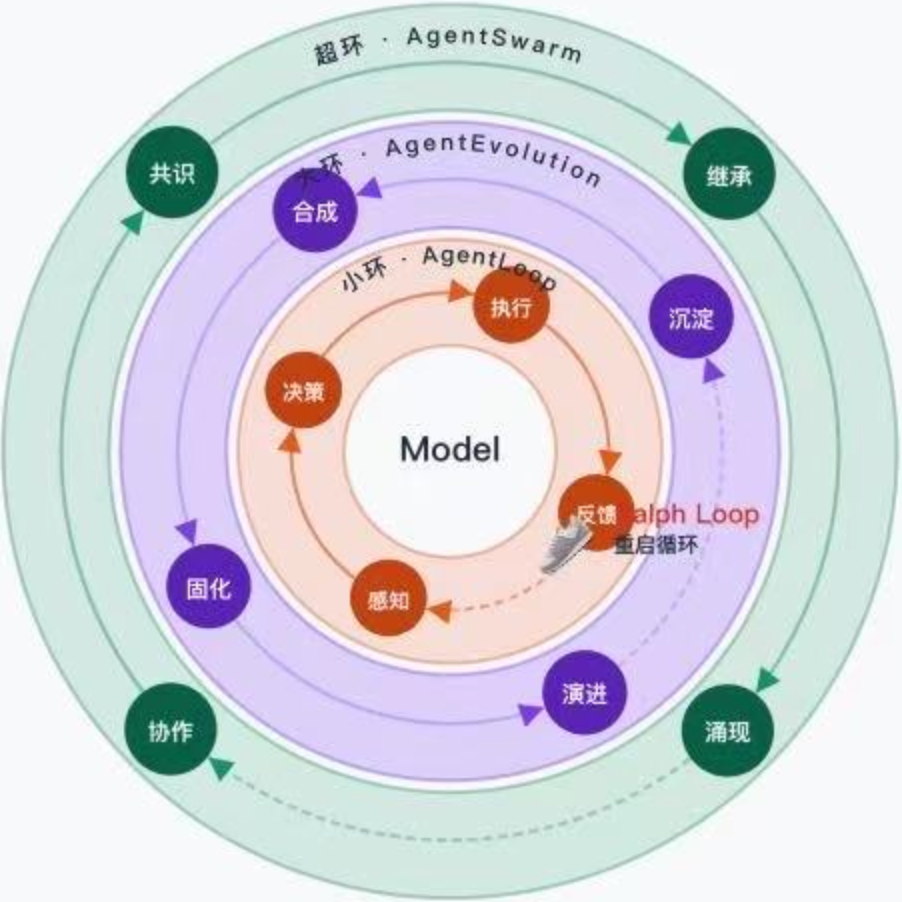
AI has already entered code writing, algorithm optimization, and model development. But after a task is completed, what remains may be reusable capability—or merely an answer and scattered logs. The difference becomes apparent only when a similar problem comes up again: can the system reuse what it learned, or must it pay the cost of exploration all over again?
Recursive Self-Improvement (RSI) co…
 markitdown• Pinned