Microsoft's Nebula experiment turns photo libraries into 3D spaces
Microsoft design director Lucas Couto has published Nebula, an experimental open-source Windows 11 photo app that turns a library into an explorable 3D space. It uses Google SigLIP 2 with Windows ML, ONNX Runtime, and DirectML for local semantic search, while its developer claims the renderer can display up to 100,000 images in real time. The Apache 2.0 project remains an experiment rather than a replacement for the Windows 11 Photos app, and users must compile the source themselves.
Nebula demonstrates a substantive combination of navigable 3D interfaces and on-device semantic photo search, although its performance, capacity, and local-processing claims have not been independently verified.
微软近期刚刚发布重新设计的Windows 11照片应用,为用户带来了更快的图库浏览体验、更丰富的编辑工具以及更多人工智能功能。不过,尽管新版照片应用在性能和功能方面获得提升,其整体仍然采用传统的网格式照片浏览方式。
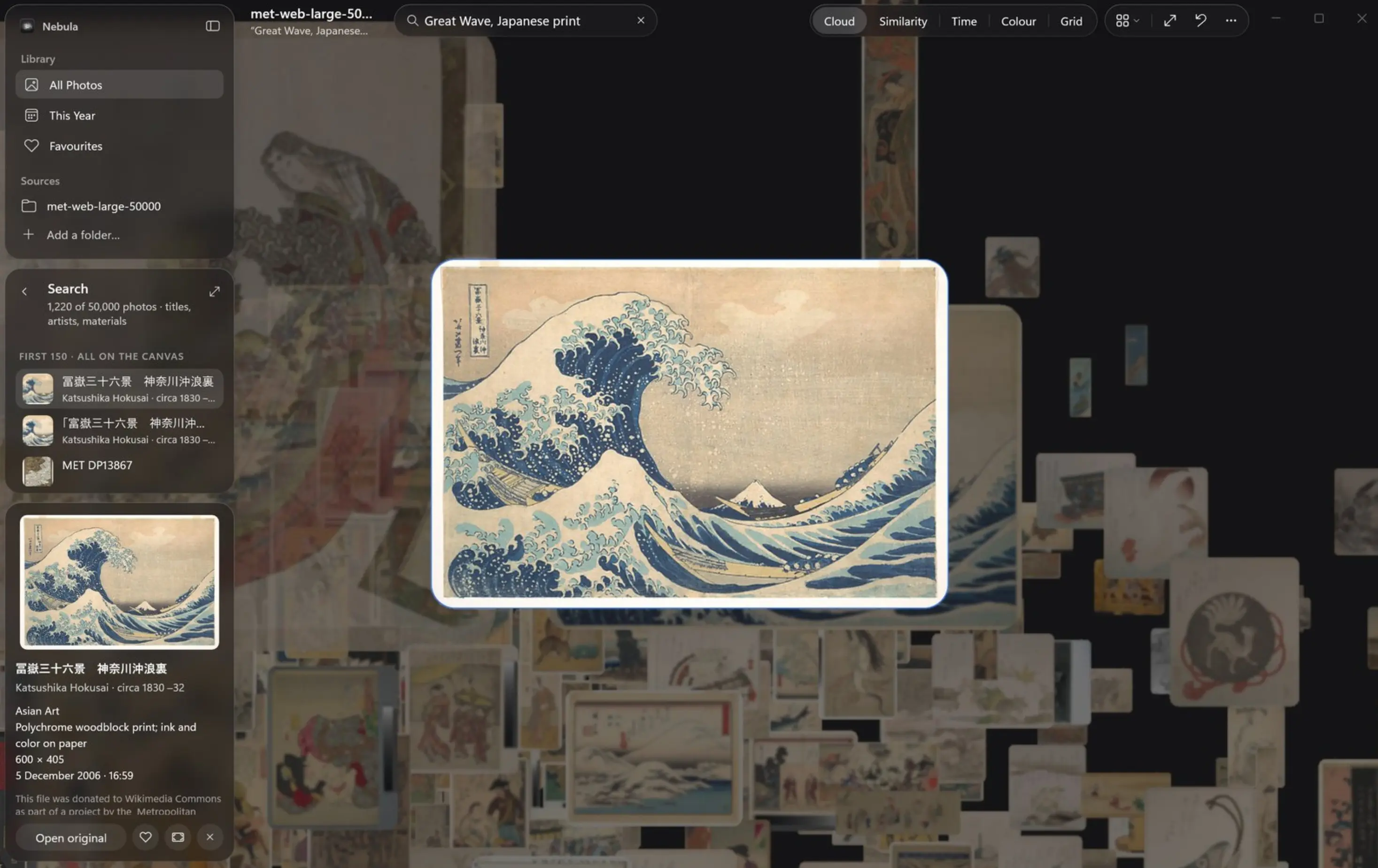
与此同时,一款名为Nebula的全新开源应用正在尝试彻底改变照片管理体验。该项目由微软设计总监Lucas Couto发起,最初只是一个个人实验项目,旨在探索WinUI框架以及Windows本地AI能力的潜力,并展示现代Windows开发技术能够实现怎样的创新体验。
与传统照片应用中不断滚动缩略图列表不同,Nebula会将整个照片库转化为一个可交互的三维空间。用户仿佛置身于由照片构成的数字宇宙之中,可以自由飞行、缩放、旋转视角,并从不同角度探索自己的照片收藏。
#Microsoft#Nebula#Lucas Couto#Windows 11 Photos#WinUI 3#Windows App SDK#Direct3D 11#Windows ML#ONNX Runtime#DirectML#Google SigLIP 2#Apache 2.0