Anthropic ended its first week of trading at a reported $1.6 trillion fully diluted valuation, citing CNBC. Its shares closed Friday at $88.91, down 8.5% for the day and about half the initial 17% debut gain, but still above the $83 IPO price. The company closed an offering that raised $93.5 billion, with several major technology companies buying another $26 billion at the same price.
TechRadar reviews the Surface Laptop Ultra, Microsoft's first laptop powered by Nvidia's RTX Spark chip. It is a premium work machine aimed at creative professionals and heavy AI workloads rather than general use. The base model has an Nvidia RTX Spark N1X chip, 24GB unified memory and a 512GB SSD, and starts at $2,599.99, £2,599 or AU$4,399. The reviewer considers 512GB limited for a costly device intended for large creative files. Against the 16-inch MacBook Pro with PROLED XDR Display (2026, M5 Max), the Surface Laptop Ultra scores lower in the reported Geekbench AI, PugetBench Adobe CC and 3DMark Steel Nomad comparisons. Its bright 4K mini LED display supports adaptive refresh up to 120Hz, and it includes a broad port selection and a relatively removable SSD.
A report states that Microsoft Copilot has added a capability to operate on users’ local files. The supplied report does not specify supported platforms, versions, rollout details, or how the capability works.
IT之家, citing Windows Latest, reported that Microsoft demonstrated Copilot performing local file operations at Ignite 2026 after users grant access. In the demo, Copilot identified eight analyst-report PDFs by their contents, created an “Analyst Reports” folder in OneDrive, moved the files, listed the changes, and offered an undo option; the permission interface allowed access only for the current session and relevant directories.
US technology stocks suffered a broad sell-off on November 20, with the Nasdaq Composite down 5.28%, the S&P 500 down 3.70%, and Nvidia falling about 14%, according to 36氪 and other reports. Anthropic closed down 8.5% at $88.91 on its second trading day, giving back most of its first-day gain despite a reported $119.5 billion raised through the IPO and concurrent private placement. Reports tied the pressure to questions about AI investment returns, Nvidia’s accounting review and higher interest rates, while noting that strong demand and financial results prevent the move from establishing an industrywide collapse.
Nvidia’s stock plunged 14%, extending its weekly losing streak to the longest run since the 2008 financial crisis. Once the world’s most valuable company, Nvidia now ranks third behind Apple and Microsoft.
CNET reports that Meta is re-evaluating the timeline and interim milestones for its 2030 net-zero goal and near-term emissions-intensity targets as AI infrastructure expands. Meta reported that 2025 net emissions rose 45% year over year to 11.8 million metric tons of carbon dioxide, while electricity consumption increased 35%. A Meta spokesperson said the company remains committed to net zero and will continue investing in emissions reductions.
CNET reports that AI is helping researchers find vulnerabilities across websites, connected appliances, cryptocurrency systems, and critical infrastructure more quickly and at lower cost. The National Vulnerability Database received more than 17,000 CVEs in October and over 10,000 in November so far, while Microsoft and security experts linked the growing volume of disclosures and compressed patching timelines to AI-assisted discovery and exploitation.
Signal is restricting screenshots in its iOS 27 app and enabling screen protection on supported Android devices when it detects an AI assistant trying to read Signal content. The app previously blocked Microsoft Recall on Windows 11, but Signal says the new measures remain incomplete because Android coverage varies and AI agents may access data through files, notifications, or other system frameworks. It also cannot reliably block screenshots on macOS and recommends excluding Signal from Siri access.
Nestlé announced a partnership with Microsoft, Boston Dynamics, and other technology companies to expand AI use in factory operations and consumer products. According to the company announcement, Microsoft and Boston Dynamics will provide hardware and AI technology for factory optimization and upgrades to products such as coffee machines. Nestlé also plans to conduct research combining AI, smart sensors, and robotics at a new deep-tech center in Orbe, Switzerland.
Microsoft and Salesforce announced Copilotforce, a service that combines Salesforce customer context and sales workflows with Microsoft Copilot, Teams and Fabric. According to the vendors, sellers can use information from Teams conversations, Outlook emails and shared documents across SharePoint and OneDrive to analyze opportunities, prepare for meetings, prioritize opportunities and take supported CRM actions. Microsoft Work IQ will combine Salesforce insights with relevant workplace context, and users will be able to ask natural-language questions.
Microsoft announced that embedded Edge browsing will become the default experience for enterprise Microsoft Copilot users in January 2027 across Windows and Mac, according to cnBeta. IT administrators can manage the feature or disable it by setting the BrowsingEnabled policy to Off in device management. The capability already offered side-by-side browsing, while Edge remains the only embedded browser available in Copilot.
Microsoft announced a developer preview of USB4-based RDMA that lets two or more compatible Windows 11 PCs pool memory and GPU capacity to run a shared AI model through supported inference frameworks, without dedicated RDMA adapters or switches. Microsoft reported round-trip latency of about 28–50 microseconds for small transfers. In separate vendor tests, Microsoft used three AMD mini PCs to run a four-bit-quantized 235-billion-parameter Qwen3 model at about 18.5 tokens per second; AMD reported about 22 tokens per second for Qwen3-235B-A22B, while Intel reported 54.2 tokens per second for GPT-OSS-120B on four Core Ultra Series 3 PCs.
At the Semafor Silicon Valley & World summit on November 17, Jeff Bezos and Vik Bajaj presented Prometheus, an AI company developing CAD, physics simulation and engineering agents. The report says Prometheus has about 250 employees, a $41 billion valuation and roughly $14.5 billion in cumulative funding. Blue Origin has privately tested the tools on two projects, but the company has not announced a public release timetable. Bezos said the system could complete complex engineering designs in 12 hours; the supplied reports provide no independent measurement of that claim.
Weibo and Sina News jointly hosted the 2026 Sina News Exploration Conference in Beijing on November 19, with discussions covering the intelligent-economy cycle, scaled agent deployment and the industrialization of embodied intelligence. The event also announced the “Exploration Heart 35” awards, whose 35 selected AI products included Linker Hand O6, Doubao Aixue App and RayNeo V4 AI camera glasses. Speakers from industry and academia discussed agents, cloud infrastructure, robotics and the social implications of AI, but the report is an authorized syndication of sponsor-provided material.
Intel announced on November 18 that Microsoft will use its Foundry EMIB advanced packaging technology for Azure's in-house chips, making Microsoft the first publicly named external customer of the technology, though specific products and production scale were not disclosed. Supply-chain reports cited by TechNews say Google did evaluate EMIB-T for next-generation TPU advanced packaging as a second packaging source, but testing yield fell short of expectations and Google has reportedly resumed seeking TSMC support, with any order shift still uncertain. Analysts note the Google arrangement concerns back-end packaging only, with front-end fabrication remaining at TSMC, and that TSMC's CoWoS-L keeps an edge in production maturity and yield.
Microsoft released Visual Studio Code 1.147 as a stable version, expanding its AI-agent capabilities. The preview Browser Use feature lets agents operate the computer's default Chrome or Edge browser and use existing login sessions, with user authorization required before accessing sites and users responsible for login and sensitive operations. It requires the GitHub Copilot browser extension, Node.js 22 or later, and a local Copilot agent session. The experimental Send Later feature allows one-time agent requests to be scheduled or modified and canceled before submission; it supports only local sessions with automation enabled, and a computer that is asleep or offline will send the request after resuming. The release also adds experimental Model Routers that let a decision model choose among user-configured models according to task type.
A commentary from the WeChat public account 着陆TouchBase examines how workplace AI adoption is changing hiring, job design and training. It says companies have moved from worrying about AI reliability to requiring employees to use it, while some have rediscovered that certain roles still require human expertise. The analysis cites Anthropic research on weaker skill development among AI-assisted programmers, Klarna’s 2025 shift toward hiring as it focuses more on products and services, and a JD.com customer-service worker who became an AI trainer. It also reports that cost cutting, job displacement, service-quality problems and workers’ anxiety can occur alongside efficiency gains and new roles.
Microsoft announced updates across Copilot, Windows, security and Azure at Ignite 2026. As of Nov. 19, Office editing in Copilot, the Windows Endpoint Security Platform, the Microsoft-Decision-1.1 model and Azure HorizonDB were generally available. Azure Cobalt 200 VMs were generally available in select regions. Copilot Autopilot and Agent 365 Business Analytics were rolling out through Frontier, while Windows Server 2028 was in insider preview and Power BI Pro data apps remained in preview.
Ann Berry, founder and managing partner of Threadneedle, said that turning user behavior into an investment opportunity creates a “different kind of buzz” for Anthropic. She also forecast that Anthropic and its Claude model will continue to take share from technology companies such as Microsoft and shift users away from traditional search engines.
Microsoft and NVIDIA announced broader access to NVIDIA Vera Rubin NVL72 systems in Azure, alongside Nemotron open models and customization capabilities in Microsoft Foundry. They also outlined confidential-computing and power-efficiency work, local deployment options, and Direct Stream for GPU-accelerated Windows 365 Cloud PCs, with a public preview planned for early 2027. NVIDIA reported that Azure scaled to 10,240 GB200 NVL72 GPUs on DeepSeek-V3 in MLPerf Training v6.1.
Acadian Asset Management portfolio manager Owen Lamont estimated in November 2026 that the probability of an AI bubble in US stocks had risen to as high as 70%, reversing his January view that one had not formed. He said his four warning indicators—elevated valuations, bubble belief, stock issuance and new-money inflows—were now present, although net issuance equaled 3.1% of market capitalization, below earlier technology-boom peaks. Lamont said he could not determine whether the issuance shift reflected companies viewing shares as overvalued or a need to finance AI infrastructure, and he did not assert that the market had already peaked.
The microsoft/onnxruntime GitHub repository reportedly returned a 404 error without a standard archive notice or visible migration announcement. According to 掘金 · 人工智能, PyPI packages, official documentation, and NuGet packages remained available, while the source repository and some releases, submodules, issue history, and security discussions were unavailable. Builds that rely on PyPI may therefore remain unaffected, but workflows that clone the repository or download GitHub releases could fail.
A Juejin AI analysis argues that AI agents, humanoid robots, energy demand and screenless smart glasses will define AI developments in 2027. It cites Gartner figures indicating broad enterprise-agent adoption alongside weak management readiness, while presenting most product timelines and market forecasts as reported or conditional claims. The article also argues that governance, power availability and deployment speed will matter more than isolated model breakthroughs.
TMTPost argues that AI is taking over increasingly standardized work such as retrieval, calculation, drafting and checking, making access to computing and information less differentiating. It compares Nvidia, Apple and Microsoft, then draws on management theory to argue that leaders’ problem framing, resource allocation, conflict handling and long-term objectives may matter more as technology becomes widely available. The analysis presents possible mechanisms, not proof that a particular leadership style determines business or wealth outcomes.
Microsoft believes agentic AI can serve an entire organization rather than only individual users. TechSpot reports that most attention has focused on individual use cases, with many stories of people completing impressive work alone; the supplied report does not identify a specific product, release, or deployment.
Microsoft research cited by TechRadar found that 71% of UK employees had used unapproved consumer AI tools at work, with more than half using them weekly. For 41% of respondents, these were tools they already used personally, while more than a quarter said their employer provided no approved alternative. The article argues that businesses can identify real demand through shadow AI and bring useful use cases into governed enterprise environments.
Anthropic priced its upsized IPO at $83 per share, above the marketed range of $70 to $78. The IPO and a private placement raised a combined record $107.3 billion. Seven companies, including Google, Nvidia and Microsoft, agreed to buy $26 billion of stock in the private placement at the IPO price. Shares were scheduled to begin trading on Nasdaq under the ticker ANT. Gray-market indications pointed to a roughly 20% to 27% opening gain, with estimates varying by venue and instrument.
Elastic Security Labs compared five open-source AI agentic attack frameworks—ARTEX, CyberStrikeAI, Cairn, PentAGI and HexStrike—following their reported misuse in real intrusions. The research says they can plan attack steps, invoke security tools, delegate work among agents and install required tools, while citing observations of Cairn in actual intrusions, a PentAGI-based reconnaissance platform and a CyberStrikeAI server found during an AWS investigation. Elastic recommends behavior-based detection because rapid project updates can quickly invalidate indicator-based rules.
Microsoft executive Judson Althoff said Nvidia’s leadership turmoil strengthened customers’ interest in AMD chips, cloud providers’ in-house processors and other alternatives, though most customers are still waiting for the situation to settle. Microsoft plans to launch Maia 300 in 2027 and, according to The Information as cited by TechNews, discussed reserving production capacity for more than 300,000 chips with TSMC; no completed reservation or measured customer adoption was confirmed.
What problem it solves
Documents and office files often need to be transformed into a structured, text-friendly format before they can be processed by language models or text analysis tools. MarkItDown addresses this by preserving important document structures such as headings, lists, tables, and links during conversion to Markdown.
Key features
Broad format conversion — MarkItDown converts PDF, P…
What problem it solves
Editing text should not require extensive familiarity with terminal-based tools. The project aims to provide an accessible editor with a modern interface and input controls that are approachable for users who are largely unfamiliar with terminals.
Key features
Cross-platform installation — Installation options are documented for Windows, Linux, and macOS, including package-m…
What problem it solves
Generative AI systems and applications can contain security and safety weaknesses that require structured testing across models, endpoints, and complete applications. PyRIT addresses this with repeatable assessments, interactive exploration, and extensible workflows for red teaming these systems.
Key features
Repeatable command-line assessments — The scanner runs repeatable …
What problem it solves
Web automation and end-to-end testing often require coordinating browsers, interactions, assertions, and failure diagnostics. Playwright provides a unified API for driving Chromium, Firefox, and WebKit across tests, scripts, and AI-agent workflows.
Key features
End-to-end test runner — Playwright Test runs end-to-end tests across Chromium, Firefox, and WebKit with browser is…
What problem it solves
TypeScript adds optional types to JavaScript so tools can support large-scale JavaScript applications across browsers, hosts, and operating systems. It also compiles source into readable, standards-based JavaScript.
Key features
Optional types for JavaScript — TypeScript extends JavaScript with optional types, providing a typed language for application-scale development.
Sou…
What problem it solves
Go applications need a way to create, read, and modify spreadsheet documents produced by Microsoft Excel. They also need support for complex spreadsheet components and workflows involving large worksheet datasets.
Key features
Read and write spreadsheet files — Create and modify workbooks, set cell values, save files, and read cell values and worksheet rows through a Go API.…
What problem it solves
Knowledge workers need Claude to follow their organization’s tools, terminology, critical workflows, and preferred ways of working rather than provide only generic assistance. The repository provides customizable role-specific plugins that package this guidance with connectors, skills, commands, and sub-agents.
Key features
Role-specific plugin collection — The collection in…
What problem it solves
Products and agents need to communicate with users across multiple channels without rebuilding Inbox feeds, provider integrations, and channel webhooks. Novu addresses this with one API and a unified conversation model for product notifications and bidirectional agent conversations.
Key features
Unified multi-channel API — Send product notifications through Inbox/In-App, Pus…
What problem it solves
Applications need to run untrusted code while controlling its access to files, networks, user interfaces, and host capabilities. This requires an isolation approach that works across platforms, supports multiple containment mechanisms, and can be integrated without changing application architecture.
Key features
Cross-platform containment — MXC supports Windows, Linux, and m…
What problem it solves
Teams often have to move work into a separate AI tool, then repeatedly transfer context between that tool and the applications where collaboration happens. Switch addresses this by letting people and AI agents participate in the same conversations while keeping shared context with the work.
Key features
Shared rooms for people and agents — Each supported chat channel becomes…
What problem it solves
Speech recognition systems often lose global context when they divide continuous audio into short chunks, while speech generation must maintain speaker consistency, timing, and coherence across long recordings. The project addresses these needs with unified long-form ASR, streaming recognition, and text-to-speech models.
Key features
Long-form speech recognition — Process co…
What problem it solves
Company knowledge is distributed across business systems such as Slack, Google Drive, Jira, GitHub, and Microsoft 365. AI applications need a governed way to search this information, respect each user's access controls, and provide answers that can be traced to their sources.
Key features
Permission-aware enterprise search — Searches connected company systems while applying …
What problem it solves
Developers need support for their core edit-build-debug cycle. The project addresses this need with comprehensive code editing, navigation, and understanding support along with lightweight debugging, a rich extensibility model, and lightweight integration with existing tools.
Key features
Code editing and navigation — The editor provides comprehensive support for editing, na…
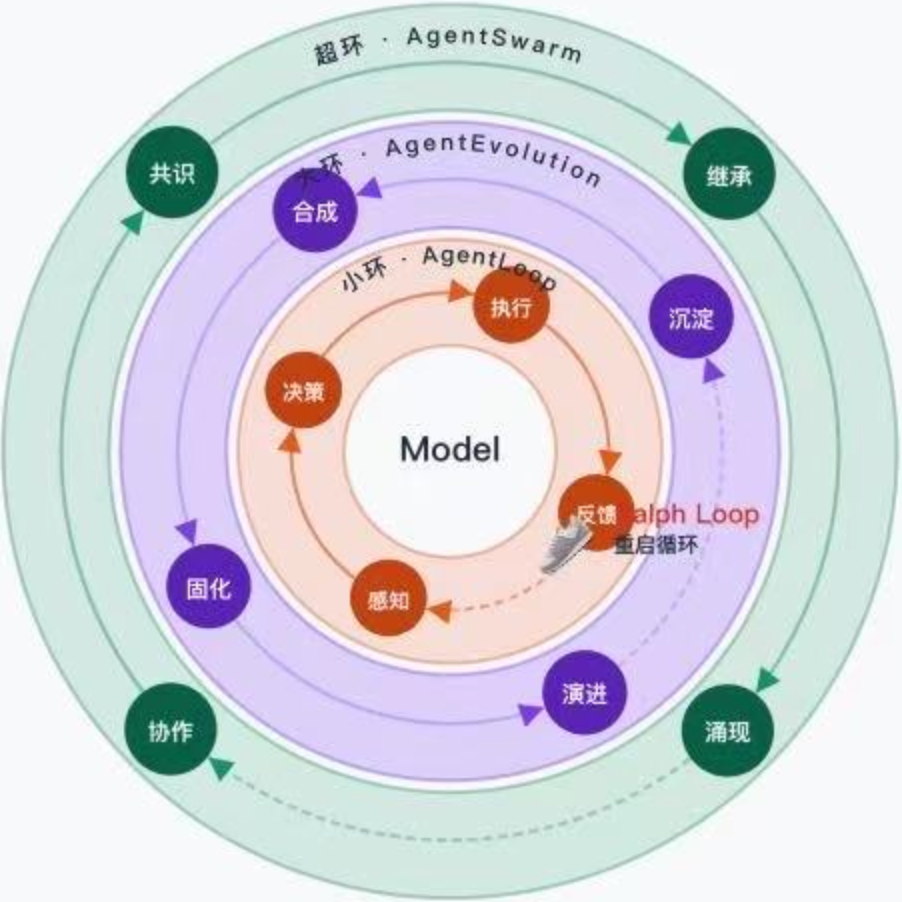
AI has already entered code writing, algorithm optimization, and model development. But after a task is completed, what remains may be reusable capability—or merely an answer and scattered logs. The difference becomes apparent only when a similar problem comes up again: can the system reuse what it learned, or must it pay the cost of exploration all over again?
Recursive Self-Improvement (RSI) co…
 markitdown• Pinned