A Reddit post reports that Maya-XS runs the 120.6 GB DeepSeek-V4.1-Flash model on a 128 GB Ryzen AI Max system, keeping all 384 experts resident in GPU memory. The post also says Maya-XS can use tensor parallelism across several GPUs and draft more quickly on a single GPU.
Sweden’s Government Offices blocked staff computers from reaching ChatGPT and Claude through a web browser, directing employees toward approved services such as Microsoft Copilot. The restriction is limited to direct browser access on government work computers, and some staff can still use the two assistants through the Intric platform, according to SVT and The Next Web. An internal review also strengthened Copilot’s security controls, although officials did not disclose the changes, Sveriges Radio reported.
DeepSeek open-sourced an AI model as China and the United States restricted each other’s technology. The supplied report does not identify the model or provide details about its capabilities, license, weights, or release materials.
According to foreign media, DeepSeek is advancing a funding round that has brought in Legend Capital, Stonebrook Capital, Geely and Lenovo-affiliated capital. The report also said that DeepSeek hired a new CFO in September and retained CITIC Securities as an IPO adviser, with an IPO process potentially beginning as early as early 2027. Lenovo has already integrated DeepSeek into its AI PCs, servers and enterprise AI solutions.
A headline states that DeepSeek completed a new financing round totaling RMB 100 billion and that Lenovo-affiliated investors participated. The available report contains only the headline, with no financing terms, investor details or corroborating information; the participation claim is also presented only as a report.
According to IT Home reports citing the joint publication, the China Academy of Information and Communications Technology's AI Research Institute, its Key Laboratory for Large Model and Software/Hardware Evaluation, and the China AI Industry Development Alliance released the 2026 LLM Token Service Performance Monitoring Report. Based on January-August monitoring data, it examines call success rate, throughput, time to first token, stability, price, context-window length and performance differences across official and third-party platforms. It reports that domestic daily token consumption reached about 500 trillion in June, while average domestic output throughput reached 78.23 tokens per second in August, compared with 38.25 for the 2025 average and 112.82 for typical foreign models.
The Wall Street Journal, citing people familiar with the matter, reported that DeepSeek completed a second private funding round raising US$15 billion, about RMB100.323 billion. Strong investor demand reportedly expanded the round to nearly twice its initial target. Before the round, DeepSeek was valued at about US$74 billion. CATL and Tencent reportedly invested again, while new participants included semiconductor-focused Shixi Capital, Lenovo-backed Legend Capital and automaker Geely. Unnamed sources also said DeepSeek is accelerating preparations for an IPO in Shanghai early next year.
A Juejin post by developer "程序员鱼皮" reviews REA (Reverse Engineer Anything), an open-source command-line tool plus MCP service that wraps established reverse-engineering utilities such as Ghidra, IDA and JADX so AI coding assistants like Cursor, Codex and Claude Code can drive them. The author reports that Codex with GPT-6 Astra successfully added a new character to an old Android game, while Claude Opus 5.5 refused to fully decompile a Flutter app on safety grounds and a switch to DeepSeek produced a working skeleton analysis. He concludes REA invents nothing new, that its roughly 170 tool definitions and 100k-plus tokens of context are heavy, and that models can reverse-engineer without it; the post also repeats anecdotal, unverified user stories and a claim that the project's GitHub stars jumped past 200,000 in early October.
DeepSeek is reportedly planning to raise about 100 billion yuan in a new funding round, with Tencent and CATL identified as its largest investors. GeekPark, citing multiple company- and investor-adjacent sources, says the reported amount would fund model training, computing infrastructure and talent recruitment. Neither DeepSeek nor the named investors has publicly confirmed the transaction, and the final amount remains uncertain.
Chinese state-linked media reported that DeepSeek and MiniMax completed registration procedures covering open-source releases and licensed overseas use of their AI models. The report came as China’s commerce and science ministries proposed adding 23 AI-related technologies, including large models, agents and computing clusters, to its export-control catalogue. Neither company confirmed the claim, and The Next Web said it had not independently verified the original post.
BroadLink founder and CEO Liu Zongru told Geek Park's Hardwire that the company's Huansi Hub is built from a set of very small expert models — each possibly under 10B parameters — with a large model moved to the background as a "grader." He said the system-1 layer only judges and executes rather than generating text, with a claimed hit rate above 95% and a 99% target, and that DeepSeek's latest model grades the previous day's interaction logs each night and distills its judgments back into the small models. Liu said the hub has already been deployed with B2B customers across several appliance categories, that AI cost can be compressed to roughly RMB1 per device per year, and that existing Wi-Fi plus Bluetooth appliances need only a module OTA upgrade so users can talk to them through a WeChat mini-program assistant; all figures are the company's own claims.
A Hong Kong University of Science and Technology team, including She Dongdong, Zhang Kaikai and Zhang Zihan, has proposed RedHerring, a defense that inserts plausible but unreachable vulnerability paths into source code to divert vulnerability-discovery agents from real flaws. The researchers analyzed 300 discovery trajectories and found that verification consumed 73.8% of total time, while verifying one hypothesis cost about 11.1 times as much as generating one. According to 新智元’s summary of the paper, tests across 33 open-source projects and five models, including Qwen, GLM, DeepSeek and Kimi, found 39%–60% fewer real vulnerabilities after RedHerring was added, with agents spending roughly 30%–50% of their compute on the decoys.
IT之家 reports that FAW-Volkswagen's Jetta M6 went on sale on October 22, 2026 in three trims: the 465 Pro at ¥79,800, the 555 Max at ¥89,800 and the 555 Ultra at ¥99,800. The car uses Horizon Robotics' Journey 6M chip for urban and highway NOA and cross-floor memory parking, with door-to-door navigation promised after an OTA, and its infotainment integrates Doubao, DeepSeek and Qwen assistants alongside HiCar, CarLink and CarPlay. Range options are 465 km and 555 km with 113 kW and 145 kW motors, and the company said first owners get lifetime powertrain warranty plus backing for automatic-parking and first-year driver-assistance incidents.
SemiAnalysis published an analysis of the mutual reliance between Huawei and DeepSeek, in which Huawei provides compute hardware while DeepSeek contributes model workloads and kernel optimization, according to a Techmeme summary of the piece. The analysis includes a deep dive and microbenchmarks of Huawei's Ascend 950PR, an analysis labeled DSv4.1 Flash, and coverage of DeepSeek's support for Ascend, AICPU and Tilelang Ascend. The supplied summary does not include the benchmark results themselves and the DSv4.1 Flash reference is truncated and unclear.
36Kr profiles Chinese creators who run short-video accounts built around AI-generated pets, including programmer 祝不二, whose AI-generated Chinese rural dog 阿黄 stars in 《阿黄和这个村》. The first episode launched in late August and the account reached about 60 million views across platforms in a month and a half, according to the creator's own figures, with income now nearly exceeding his day-job salary. The article describes a repeatable workflow — DeepSeek for scripts, Jimeng or Kling for visuals, CapCut for editing — and lists platform revenue sharing, brand placements, sales commissions and IP licensing as income streams, while noting that top accounts capture most of the money and that some viewers dismiss the format as traffic farming.
Qicore Technology has opened applications for the Oyscat beta, an AI-driven system for turning ideas into physical creations. According to founder Luo Shihao, Oyscat automates model design, control programming, and simulation, then transfers the validated program to standardized electronic modules; it currently uses public models including DeepSeek and GLM. The founder said ensuring that physical builds match virtual designs remains a major technical challenge.
A Reddit user who has been running models on Huawei Atlas 300I Duo cards says a Silver-rated Huawei partner gave them new information on the latest Atlas lineup, which they turned into an English comparison overview. The user says the Atlas 150 is brand new and uses 950 Ascend cores, and that the material on it existed only in Chinese and had to be translated; no further specifications or independent confirmation are offered. The same post describes getting QFN working across one to three 300I Duo cards in a vLLM fork, exploring GLM5.3-flash and DeepSeek models, and running a REAP pass to cut experts so Meta Muse would fit on the three-card setup, with the user saying Muse and GLM are not yet fast enough there.
DoNews reported that DeepSeek's latest funding round raised nearly 100 billion yuan, citing an unspecified report rather than named investors or company confirmation. The article provides no details on the round's terms, valuation, participating backers or timing. Neither DeepSeek nor any investor has been cited as confirming the figure.
MiniMax shares fell as low as HK$159.3 during intraday trading on October 22, below the HK$165 IPO offering price, according to IT之家. The stock had reached HK$1,330 in March, more than seven times its offering price, before the post-listing rally reversed. 虎嗅 AI commentary attributes the pressure to competition, commercialization challenges and a lower-margin shift toward business customers.
Bloomberg Technology reports that DeepSeek has raised about 100 billion yuan, or roughly $15 billion, in its latest fundraising round. The report describes the round as one of China's largest ever and as a sign of the startup's ambition to compete globally with Anthropic and OpenAI. The report does not name the investors or identify a source for the figure, and DeepSeek has not publicly confirmed the round.
Shenzhen market regulators reportedly fined a small GEO service provider 50,000 yuan for allegedly probing AI inclusion standards and fabricating rankings in bulk. The provider had developed a “GEO analysis system” that reportedly tested large-model response preferences to infer platform inclusion rules. The supplied reports do not include the penalty decision itself, and both 36Kr AI and Cyzone Tech published the same syndicated article from 三易生活.
A Reddit user posting as /u/Vladowski on r/LocalLLaMA reported running DeepSeek-V4.1-Flash-1017, a 748B-parameter model, on a used PC bought for under €2,000 with an RTX 3090 24 GB, 128 GB DDR4 and an Intel i9-9900X. The run used an Unsloth UD-IQ1_S GGUF taking 233 GB on disk and a llama.cpp build from open PR #30817 with CUDA 12.8, with the model's 110 GB Engram table kept on NVMe and read row by row on demand, which the user says is how it fit. The user reported generation at 7.2 tok/s and said the answer contained a physics error, adding that they saw little practical use for the setup while Qwen models work well on the same hardware.
A developer posting on r/LocalLLaMA reports running DeepSeek V4.1 Flash 1017 at Unsloth's UD-IQ1_S quantization in Basalt, an inference engine they are developing, on an RTX 5090 plus an RTX 5060 Ti 16 GB and 128 GB of DDR5. With all 107 GiB of experts held in RAM and the 5090 used as an expert cache, the setup reached 53.6 tok/s decode and about 610 tok/s prefill, versus roughly 20 tok/s for a llama.cpp PR #30817 baseline on the same hardware and quantization. Letting the 5060 Ti compute some experts raised decode to 63.5 tok/s, but the author reports no perplexity or KL-divergence quality measurements yet, only greedy-match agreement with llama.cpp on test prompts.
CrowdStrike researchers published details of attacks carried out between May and August by four previously unreported threat groups—operating in Chinese, Spanish and English, Indonesian, and Russian—that built agentic AI harnesses and let campaigns run autonomously over long periods. All four left their AI infrastructure openly accessible on web servers, letting researchers see that they largely used versions of Anthropic's Claude and open-weight DeepSeek models, and in almost all cases older versions rather than frontier models. Attackers circumvented safeguards by framing activity as authorized penetration testing, adding files to agent working directories, and using traditional jailbreaks; the Chinese-speaking group used a runtime patch tool called ClawGod to try to remove the CYBER_RISK_INSTRUCTION from the Claude Code system prompt. The Spanish- and English-speaking actor targeted Argentine health care entities, compromising at least 15 organizations and appearing to steal credentials and medical records from at least one, while the Chinese-speaking actor compromised government targets in Brazil and Colombia, according to the researchers.
The Decoder reports that the US Department of Homeland Security recently ordered civilian federal agencies to remove all DeepSeek products from their IT systems, with the ban also covering software from other vendors built on DeepSeek's open-source models and prohibiting future purchases. Washington says it is concerned that Beijing could access sensitive data through DeepSeek; China's Foreign Ministry accused the US of stretching the concept of national security, and the Commerce Ministry demanded that the ban be lifted and vowed resolute countermeasures. The Decoder notes that China does not approve ChatGPT, Claude or Gemini and that since 2023 the Cyberspace Administration has reviewed AI services for political compliance, and it characterizes Beijing's protest as mainly a political signal that lays the groundwork for future retaliation.
Zhidx reports that DeepSeek Harness has surpassed 250,000 GitHub stars, roughly two months after being open-sourced, and that a wave of community-built plugins has appeared around it. The outlet selected 12 third-party plugins and adaptation projects based on GitHub stars plus attention on X and Reddit, including OpenDesign (about 102,800 stars), the DSH Better Sidebar interface plugin (about 4,400 stars) and dsh-context (about 2,700 stars), the latter two noted by Cui Tianyi, described as head of DeepSeek's product division and of the Harness team. Other picks add capabilities such as ModLens for feeding screenshots to text-only models, ModSearch for web search, dsh-browser for browser control, file-based long-task planning, Volcano Engine's OpenViking memory system and Reactive Resume integration. The report says DeepSeek has offered an experimental Discover-based plugin market and that the Harness team has said it will keep supporting third-party plugins, improve discovery and management, and build an official marketplace; it also notes that host-version upgrades, varying install requirements and permission risks remain open problems.
Ahead of China's Double 11 shopping festival, Alibaba's Qianwen Office released an e-commerce edition agent, pitched as an independent third party serving merchants on any platform; switching to an "e-commerce operations" mode inside Qianwen Office gives four initial functions: a cross-platform operations dashboard, trend and selling-point analysis, batch generation of promotional material, and cross-platform ROI optimisation. Separately, Douyin E-commerce said on October 15 that it will distribute shopping coupons in batches through Doubao, Hongguo Short Drama and Toutiao during Double 11, extending promotions beyond the Douyin app, and Doubao added a dedicated "Double 11: ask Doubao" navigation bar with product comparison and budget-based picking. The account comes from a single authorised trend feature by Tingtong Tech published via TMTPost, so the product details and merchant uptake remain reported rather than independently confirmed.
OpenAI's API will offer a 12-hour cache-retention option, announced by Tibo, who leads ChatGPT and Codex, according to a 智东西 report. The option applies to GPT-5.6 and later models and sits alongside the default 30-minute retention; choosing 12 hours raises cache-write pricing from 1.25x to 2.5x the uncached input token price while cache-read pricing is unchanged. Tibo also said cache retention for logged-in Codex and Work users would be permanent, but 智东西 notes that no formal announcement had been published and that the implementation and billing treatment remain unclear. OpenAI's API documentation states the 12-hour setting defines the minimum lifetime for cache-read billing eligibility and does not guarantee cache reuse or lower latency, the report said.
Kapitsa, an open-source inference engine for Apple Silicon aimed at Qwen and Nemotron models, released version 0.2 with a new speculative decoding method its developer calls KFlash, announced in a r/LocalLLaMA post. KFlash checks a best-first tree of the draft model's candidate tokens in one pass, whereas the comparison DFlash2 method checks a single chain and stops at the first wrong guess. In the developer's own benchmarks on a MacBook Pro M4 Pro with 48GB, Kapitsa reported 63 tokens/s on Qwen3.8 27B versus 53 tokens/s for Splash 1.4.0 with DFlash2, and 95 versus 62 tokens/s on Qwen3.5 4B on an M1 Pro 16GB machine; the author cautioned readers not to trust benchmarks and to run their own.
What problem it solves
Stock analysis often requires users to gather market quotes, news, technical indicators, financial information, and AI-assisted interpretation across multiple sources. The project addresses this by bringing supported-market data, analysis tools, AI agents, alerts, and review workflows into a locally focused desktop application.
Key features
Multi-market market data — The app…
What problem it solves
AI coding tools often expect particular provider protocols, making it difficult to use the models and providers a user prefers. A local gateway can translate between supported client APIs and provider APIs while preserving capabilities such as streaming, tool calls, reasoning, and images.
Key features
Provider protocol translation — The gateway translates Responses, Chat Com…
What problem it solves
The hidden system instructions that shape AI product behavior are difficult to inspect and change across models, products, and versions. This repository makes collected prompts available in a structured, product-oriented archive for study and comparison.
Key features
Broad product coverage — The archive covers prompts from major AI providers and products, including Anthropic…
What problem it solves
Image creation often requires switching between separate tools, manually translating visual ideas into parameters, and losing the context of an ongoing conversation. This project brings generation, editing, reference workflows, model comparison, and asset management into a DeepSeek Harness conversation and canvas.
Key features
Chat-Based Image Creation and Editing — Describe…
Optimizing a GPU kernel or completing a set of formal proofs often requires repeated trial and error: try a different implementation, run an evaluation, and keep iterating in whichever direction proves effective. When giving a model more test-time compute, the most direct approach is to let more agents try simultaneously; if the task only needs one best result, the value of the other attempts lies…
What problem it solves
Complex trading decisions require evaluation across financial fundamentals, market sentiment, news, technical indicators, portfolio holdings, and risk. TradingAgents addresses this by decomposing trading tasks into specialized LLM-powered roles that discuss findings and assess proposed transactions.
Key features
Parallel analyst research — Fundamental, sentiment, news, and t…
What problem it solves
DeepSeek Harness workspaces, tools, and project setup normally remain tied to the computer running the Harness instance. The project addresses the need to continue using that environment from another computer, phone, or browser without requiring a public listening port or public IP on the Host.
Key features
Remote workspace access — Open local workspaces from a web browser, …
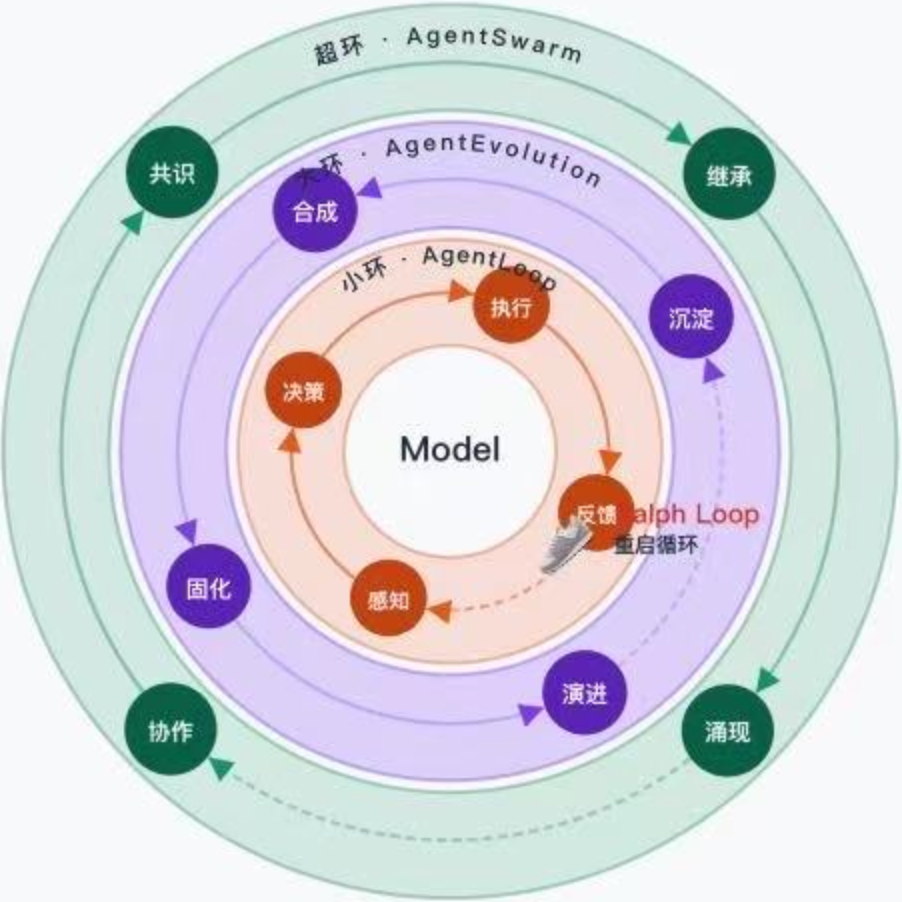
After an Agent completes a task, what it leaves behind is often more than an answer. There is also an expensive exploration path: which files it read, which tools it tried, where it failed, and what checks it used to confirm the result. The problem is that the next execution may not be able to use those experiences. The model parameters have not changed, and a new session will not naturally inheri…
0x01
At the end of 2022, ChatGPT exploded onto the scene, triggering the first wave of excitement in the tech industry. But traditional state-owned enterprises did not act immediately. The real action began in 2023. Domestic large models were open-sourced one after another, and integrated hardware-and-software delivery formats such as “large-model all-in-one machines” became the default option. Mo…
AI has already entered code writing, algorithm optimization, and model development. But after a task is completed, what remains may be reusable capability—or merely an answer and scattered logs. The difference becomes apparent only when a similar problem comes up again: can the system reuse what it learned, or must it pay the cost of exploration all over again?
Recursive Self-Improvement (RSI) co…
My current development workflow for my own projects is to use agent tools like deepseek harness locally to write code and make git commits, then install deepseek harness on the server and connect to it through a tunnel, allowing the server-side deepseek harness to handle deployment. The server is Ubuntu, and the local Mac establishes the tunnel connection. Deployment only requires sending a deploy…
First, the result: over the course of four months, on and off, I built a WeChat Mini Program called “随了么小管家” for keeping track of gift-giving and reciprocity. It currently has about 40 pages, with roughly 29,000 lines of frontend code and 14,000 lines of backend code, 85 commits, and a version number that has reached 1.1.9.
The tech stack is pretty ordinary: uni-app + Vue 3 + Pinia on the fronten…
 go-stock• Pinned