Amazon introduced the $74.99 Bee Frontier, a clip-on AI recorder with seven-day battery life, while the $99.99 Bee Eclipse magnetically attaches to phones and is due for release “soon.” Both devices use AI to turn conversations into summaries, to-dos, reminders and insights; Bee says audio is processed and deleted in real time, while transcripts are encrypted with device-controlled keys. A free tier includes summaries, recaps and 14 days of memory, while Bee Pro costs $11.99 monthly and adds integrations with services including Alexa+ and Amazon.com.
Tech Planet reports that Chinese internet giants are racing to field personal AI agents: Ant Group is testing "Lingguang 2.0", Alibaba unveiled Qwen Go on October 13 for limited beta, ByteDance has been reported to be preparing a personal agent called Xiaodou, Tencent is running LightVela, Yuanbao and a WeChat-native agent Xiaowei, and Manus, fresh off a 3.3 billion yuan funding round, launched Cue. The piece traces the wave to Meta's Muse, released September 8; Sensor Tower data cited says Muse passed 2.5 million downloads in 13 days and 5 million in 22 days. But TickerTrends data cited shows Muse's average daily net new users fell from a September peak of 198,000 to 74,000, a 62.4% drop, with daily actives staying below 3 million a month after launch; the report also cites Amazon blocking Muse from placing orders, 155 apps refusing Doubao Phone Assistant's automation, and unresolved problems around trust, permissions, walled platforms and monetization.
A 市值榜 article republished by TMTPost and 36Kr says agent competition is shifting from single-task execution to continuous personal service: after Meta launched Muse in September, ByteDance was reported in late September to be accelerating its personal agent project Spell (named “小豆”, planned as a standalone app, with the final form undecided), Tencent's Yuanbao was reported to plan a similar product, Ant Group's Lingguang began small-scale testing of a new version on October 11, and Qwen had earlier announced at its Yunqi conference that it is accelerating a Personal Agent. The article cites The Information as saying that about three weeks after launch Muse had more than 3 million users sending at least one instruction a week and over 1 million daily, and notes Amazon began blocking Muse from its shopping site on September 20, while on September 25 an outside security researcher reported a flaw that could expose emails and files in users' dedicated cloud VMs. It also cites The Wall Street Journal and Sensor Tower data saying Muse's global downloads approached 9 million but growth was slowing, with 22.5% 14-day retention versus ChatGPT's 26.8%.
An analysis by Jingzhe Research Institute, republished by TMTPost and 36Kr, traces the recent personal-agent boom: Meta launched its personal agent Muse on September 8 and, per the article, topped the US App Store free chart within 13 days; Instinct then announced a $1 billion round at a $10 billion valuation; OpenAI unveiled its agent Dots at its September 29 developer conference, and Manus parent Butterfly Effect announced over $500 million in new funding on October 8. The piece argues that cloud PCs, persistent memory and layered permissions are now standard, with Muse handling calendars, email, restaurant bookings and price comparisons. In China, Alibaba's Qwen said on October 13 it would release a personal agent, Qwen Go, and opened an experience waitlist; Tencent's LightVela is in free trial, while ByteDance's Doubao was reported to have an internal personal-assistant project called Spell. The article also notes Amazon confirmed blocking Muse from its shopping site, framing cross-app execution as a conflict between agents and platforms that control data, identity and transactions.
A commentary republished by TMTPost says Meta's personal agent Muse, about a month after launch, topped the free iOS charts in the US and Canada and prompted Chinese players including ByteDance, Tencent, Alibaba, Ant Group and Manus to accelerate consumer-facing personal agents. It cites ByteDance's project codenamed Spell, Tencent's cloud personal assistant LightVela launched in late September in developer preview, Alibaba's upcoming Qwen Go, Ant's new Lingguang internal test and Manus's Cue, saying the focus is shifting from enterprise office agents to consumer life scenarios. It also says privacy and safety and super-app cross-app barriers remain major obstacles, pointing to Amazon blocking Muse from shopping for users and Doubao phone assistant facing more than 150 apps that refuse automated operation, while Muse's subscription-plus-transaction-fee approach is seen as a new commercialization direction.
Investor Dan Bin has flipped his long bullish stance on the memory sector, arguing the AI boom requires steadily falling token costs while rising memory prices push compute costs in the opposite direction. Citing estimates from Goldman Sachs, CICC and RBC, the column says memory inflation is eating into hyperscaler profits — CICC calculates that under a 170% memory price increase, token-generation efficiency per dollar on GB300 deployments is 37% lower than on GB200, and about $25bn of Microsoft's $190bn capex comes from memory price increases that add no new compute. It also says the four big cloud providers' combined free cash flow fell from roughly $60bn in Q4 2025 to about $7bn in Q2 2026, operating cash flow coverage of capex dropped from 1.79x to 1.06x, and tech giants have issued nearly $220bn of bonds in 2026 amid rising financing costs. The conclusion: whether the AI investment cycle can continue depends on costs falling and AI revenue catching up with both spending and financing costs. (Opinion and third-party estimates, not official figures.)
TechNews, citing a new J.P. Morgan report, says Microsoft, Google, Meta and Amazon have seen free cash flow fall sharply as they spend heavily on AI infrastructure, with more than 100% of the lost cash flow converted into Nvidia's incremental free cash flow. The report attributes Nvidia's capture to gross margins normally above 70% and pricing power, and notes its customers also include CoreWeave, Lambda, sovereign AI projects and enterprises. It also cites Jensen Huang reiterating a forecast of $3 trillion to $4 trillion in global AI infrastructure spending by 2030, and describes Nvidia's Vera Rubin platform combining Vera CPU, Rubin GPU, HBM and high-speed interconnect, while flagging that downstream monetization has not caught up and rivals such as AMD and Cerebras are competing.
Bloomberg reported that Anthropic told prospective investors its third-quarter revenue reached $16.8 billion as it moves ahead with plans to go public. Reuters, citing four people familiar with the matter, then reported that after an investor day in San Francisco some current and prospective investors discussed a valuation of about $1.5 trillion, below the roughly $2 trillion previously expected. Anthropic disclosed quarter-over-quarter revenue growth of about 45% and adjusted profitability, a marked slowdown from the 147% growth reported for the second quarter.
Security researcher Jeremiah Fowler found an unauthenticated, publicly accessible database holding 13.7 million records drawn from past breaches and cyberattacks, including names, phone numbers, email addresses, passwords and bank account details. According to TechRadar, the archive was sorted by company name, with almost eight million records from an AT&T leak plus Amazon (1.2 million), Walmart (420,000), BluBank Digital Bank (24,000) and PayPal (18,000), along with smaller sets from an FBI Employee Directory (4,084) and Interpol (929). Fowler traced the database's IP address to a data intelligence platform operated or developed by Indian software development platform Vibetech, which he speculates collected the breach datasets and left them accessible without authentication; after he notified the company and its hosting provider, the database was restricted.
Baseten said on October 14 that it has partnered with Runway so enterprises can deploy Runway's Gen-4.5 and Aleph 2.0, including fine-tuned versions, in single-tenant environments through Baseten Dedicated Inference. Gen-4.5 turns text and image inputs into video with scene direction, camera movement and varied visual styles, while Aleph 2.0 edits generated or existing footage, changing specific elements or restyling scenes across shots and supporting multi-scene videos up to 30 seconds at 1080p. Customers license Runway model weights directly from Runway, with Baseten providing isolated GPU capacity, the control plane and fine-tuning infrastructure, backed by what Baseten describes as a 99.99% uptime SLA. Baseten also says Amazon, Robinhood, Dolce & Gabbana and Microsoft are among enterprise creative teams already using Runway in production.
A 36Kr analysis uses Ulanqab as a model for how AI compute capacity is shifting from technology centers toward energy-producing regions, citing cheap power, natural cooling and low latency to Beijing as factors behind roughly 12.5 GW of data-center capacity commitments as of June 2026. It compares candidate locations including Spain’s Aragon, Malaysia’s Johor, Japan’s Chiba, Kazakhstan and Uzbekistan, and the UAE on electricity prices, permitting speed, network latency, geopolitical risk and supporting infrastructure. The article also outlines where Chinese compute-chain companies are already positioned, including Johor and Central Asia, arguing that their overseas role is often to fill gaps in local delivery and operations.
TechRepublic compared Apple's HomeView and Amazon's Echo Show 11 across price, display, AI assistant, smart-home support and privacy. HomeView, unveiled October 13 at $299, pairs a 7-inch screen and A18 chip with Siri AI and facial recognition for up to six household members, and ships November 13 in eight markets including the US and UK but not the European Union. Echo Show 11 has been available since November 2025 at $219.99 with an 11-inch screen, Alexa+ and Zigbee hub support, while wall-mounting HomeView adds a mount starting at $59.95, and the report says HomeView's reliability and audio still need independent testing after November 13.
TMTPost reported that Tencent launched a $5 billion offshore bond issuance on October 13, its second overseas fundraising this year after a nearly $4.7 billion bond sale in June. In early September, ByteDance finalized a $29.6 billion syndicated loan, which the article describes as Asia's second-largest dollar loan deal this year. The TMTPost author argues both companies are using the proceeds to support AI operations, citing Tencent's negative free cash flow of 13.8 billion yuan and 52.78 billion yuan of capital expenditure in the second quarter, and frames long-term bonds as matching long-term AI capex.
TechNews cites new analyses from investment bank Jefferies and consultancy Bain warning that the rapid rise of low-cost Chinese and open-source models is pushing down large-language-model token prices, putting US cloud providers' trillion-dollar data-center investments at risk of not being recovered. Jefferies says about half of roughly $2.3 trillion in contracted backlog at Microsoft, Alphabet, Amazon and Oracle comes from OpenAI and Anthropic, while Chinese models now process 76.12 trillion tokens per week, up more than 17-fold from 4.37 trillion before the end of April, versus 14.2 trillion for the top four US providers. The report also cites a Jefferies estimate that Moonshot AI's open-source Kimi K3 reaches about 95% of Anthropic's flagship Claude Fable 5, and Bain's estimate that the AI industry must generate $6 trillion in annual revenue by 2031, leaving a $4.2 trillion gap against roughly $1.8 trillion today.
TrendForce's latest AI server industry research forecasts that the top nine cloud service providers — Google, Amazon, Meta, Microsoft, Oracle, ByteDance, Tencent, Alibaba and Baidu — will spend more than $957 billion on capex in 2026, up 106% year over year, and a further 60% in 2027 to roughly $1.5 trillion. TechNews reported the 2027 figure as above $1.5 trillion with 60% growth, while IT之家 put it at $1.531 trillion and said TrendForce had raised its 2027 growth forecast from 50% to 60%. TrendForce attributed the upgrade to higher server system prices, component shortages pushing quotes up, and some suppliers demanding prepayments that force CSPs to spend cash earlier. It also expects AI server shipments to grow 32.2% in 2026 with about $479 billion in output value, nearly 75% of total server value, then rise nearly 36% in 2027 to close to $920 billion, up over 90% and about 81% of total server value, which is seen crossing $1 trillion for the first time.
An analysis republished by 36Kr (originally from Yuanchuan Research Institute) argues AI infrastructure is being financed heavily with borrowed money: Tencent is reportedly weighing up to $5bn in offshore bonds, ByteDance has a $29.6bn syndicated loan from 30 banks, and Alphabet and Amazon issued tens of billions in bonds this year. It says Anthropic must spend $125.2bn leasing compute over five years, with Broadcom lending up to $42bn to fund it, and cites Morgan Stanley's estimate that roughly $450bn of AI-related debt was issued by September, more than double all of last year. The piece also cites FT-reported OpenAI internal roadshow materials projecting $840bn cumulative 2026-2030 revenue against $856bn of spending and negative $278bn cumulative free cash flow, while SoftBank raised $11.1bn in high-yield bonds (up to 9.75% coupon) and has invested $64.6bn for a 13% OpenAI stake.
Microsoft shares rose 0.4% to close at $543.45 on Tuesday, the first record close in nearly a year, surpassing a previous peak set in October 2025, IT之家 reported citing Bloomberg. The stock has gained more than 54% from its June low, adding about $1.4 trillion in market value, which the report ties to growing investor confidence in Microsoft and its position in AI. TechNews said Microsoft's market value returned above $4 trillion and cited a foreign brokerage target of $600, while Bloomberg-tracked analysts had an average target of $584.
Shopify announced Tuesday that shoppers can configure their own AI agents to buy products on their behalf, giving more agents access to more than a billion listings in its catalog, which includes items both on and off Shopify storefronts. Customers connect an agent to their Shop account — Shopify's platform for consolidating orders, tracking packages and recommending products — and check out through one-click Shop Pay inside the conversation, with orders funneled back to the Shop app. Shopify markets the feature as a "personal shopper" that users can give rules such as budget guardrails or fast-shipping-only filters, and buyers must approve each purchase. In September, Shopify announced a partnership with Meta to let its Muse agent browse and buy for a human; now shoppers can use any agent without a partnership integration.
Fortune's 2026 “Change the World” list includes AI players Alphabet and Anthropic, and Envision Group appears for a third time on the strength of its “Mission Gobi” plan and its Ulanqab Star River AI compute base, according to a Zhidx analysis. The piece contrasts two common approaches: Alphabet buys clean power through long-term PPAs and agreed to acquire Intersect Power for $475 million in cash plus assumed debt, while Anthropic locks in gigawatt-scale compute through infrastructure partners. Envision proposes planning generation, storage, power distribution and compute as one system, and says its Ulanqab site delivers more than 80% green power directly to the facility year-round; claims such as the “world's largest single AI compute unit” and 10x output versus a conventional data center of the same area are the company's own and were not independently verified.
The IMF’s latest Global Financial Stability Report warns that high AI valuations, rising debt and circular financing could amplify a market correction, naming an AI asset-price correction, higher government borrowing costs and a major cyber-attack as three salient near-term risks. It reviewed 14 publicly disclosed deals since 2023 in which hyperscalers and other investors put about $300bn of equity and $650bn of debt into financially weaker AI firms in exchange for $1.4tn in future revenue commitments; hyperscalers now account for about 10% of investment-grade bond issuance, up from under 1% in 2024. The IMF’s bank stress test found lenders broadly resilient but said banks holding 22% of global banking assets would be weak, and it sketched a hypothetical scenario in which global GDP, investment and consumption fall 0.4%, 1.3% and 0.6% by 2028; at the Bangkok annual meetings, Managing Director Kristalina Georgieva said AI is a key growth driver but over-reliance on one engine carries risks.
TechRadar reports that a 32GB/1TB configuration of the HP OmniBook 16 AI laptop is selling for $1,299.99 at Amazon. The machine has a 16-inch 2K (1920 x 1200) IPS touchscreen, a six-core AMD Ryzen AI 7 445 with a 50 TOPS NPU, Radeon 840M integrated graphics, 32GB of DDR5, a 1TB NVMe SSD, two USB-C and two USB-A ports, HDMI 2.1, a 1080p IR camera with privacy shutter, Wi-Fi 6 and Windows 11 Pro. The article notes that Amazon's $2,399.99 "typical price" comes from a third-party seller and may not reflect what the laptop usually costs, and that TechRadar has not tested this model itself.
A Bloomberg analysis by Lynn Doan estimates that building and equipping a 1GW AI data center in Abilene, Texas, could cost roughly $30 billion, including about $17 billion for chips, $3 billion for power and $2.4 billion for construction. TechNews, citing aggregated data, reports that Meta, Amazon, Microsoft and Alphabet are expected to spend nearly $750 billion in combined capital expenditure this year, more than the annual GDP of Ireland or Belgium. It also reports that the hyperscalers' bond issuance rose from about $20 billion in 2024 to $121 billion in 2025, with roughly $65 billion of off-balance-sheet financing routed through special purpose vehicles.
Amazon now runs more than 1 million robots around the clock in warehouses worldwide to support tens of millions of same-day and one-day deliveries daily, and it is building new factories in Austin, Texas and Greenwood, Indiana to expand the fleet further; according to its 2025 annual report it still employs more than 1.5 million full-time and part-time human workers. Amazon executives say robots absorb the toughest, highest-injury-risk fulfillment tasks, and a spokesperson said the company's global recordable incident rate improved 43% and its lost-time incident rate 70% since 2019, but the Strategic Organizing Center union coalition, a 2024 Senate HELP Committee investigation led by Senator Bernie Sanders and an April 2025 ILR Review study paint a more mixed picture: severe injuries fell 40% at robot warehouses while lighter repetitive-strain injuries rose 77%. The report also details Sequoia, Proteus and the DeepFleet coordination models plus the Robin, Cardinal, Sparrow and Vulcan arms — Vulcan being the first to combine vision with force-feedback touch, running in Spokane and Hamburg since 2025 with wider rollout expected in 2027.
After President Donald Trump pushed for replacing "artificial intelligence" with "Super Intelligence" — two words, title case — and called those still using the old term "THE ENEMY," Gizmodo catalogued how major AI CEOs now talk. Following the September 29 White House meeting, attendees signed a document that Trump later said meant they had agreed to use the phrase: Musk has been the most enthusiastic, renaming SpaceX's AI division from SpaceXAI to SpaceXSI, while Salesforce's Marc Benioff recast AIForce as "SIForce" and Jensen Huang, Satya Nadella and Jeff Bezos have used the term publicly. OpenAI's Sam Altman and Amazon's Andy Jassy continue to say "AI," and Dario Amodei, Sundar Pichai and Mark Zuckerberg are listed as uncertain — Zuckerberg has long used "superintelligence" aspirationally but has not adopted Trump's two-word spelling.
This 36Kr-republished feature frames 15 years of AI assistants as five eras: Siri (2011) understanding spoken commands, Amazon's Echo/Alexa (2014) making computing ambient in the home, Microsoft 365 Copilot (2023) bringing LLMs into knowledge work, OpenAI's Codex CLI (April 2025) taking on whole engineering tasks, and Meta's personal agent Muse, unveiled at Connect in September 2026, which aims to act on a user's long-term intent. It says Meta negotiated a Manus deal in late 2025 worth more than $2 billion that did not close after roughly half a year of review, and that Muse is meant to remember context, run in the background and extend into WhatsApp, Meta's social apps and AI glasses. The author also describes China's 2026 office-AI race — Tencent WorkBuddy, Alibaba's Qwen Office and ByteDance's Doubao Work — as shifting from "embedding" AI to "taking over" tasks, and cites OpenAI figures that Codex could run roughly 25-hour tasks producing about 30,000 lines of code by late 2025.
According to TechCrunch, Amazon said it will no longer use non-disclosure agreements when negotiating with local governments over AI data center construction. The move is presented as a response to controversy over AI infrastructure. The report did not specify which regions are covered or when the change takes effect.
Gold Circuit Electronics said on Sept. 29 that Amazon was the sole subscriber to a NT$1.589 billion private placement, buying 1,856 lots at NT$856 per share — the first time a cloud service provider has directly invested in a Taiwan PCB maker. The same day, the board material maker announced a NT$7.9 billion new plant investment. Analyst Cathay United Securities said the deal locks in Gold Circuit's order visibility for Amazon's next-generation Trainium 4 chip platform and helps it move to higher-end HDI production. Analysts at Taiwan Institute of Economic Research said Amazon's core aim is smooth next-generation AI server shipments, gaining supply priority and flexibility, plus indirect visibility into upstream materials such as copper-clad laminate and low-dielectric glass fabric.
Engadget compared Meta's Muse, released September 8, with OpenAI's always-on agents in ChatGPT, launched three weeks later. Both keep working after you leave, run their own cloud computers and connect to outside services; Dots live inside ChatGPT and are powered by GPT-6 Astra, while Muse runs on a dedicated secure VM and is reachable via its apps, the web or WhatsApp. On price, Muse's free tier has a usage cap, with Power at $20 and Maximum at $100 per month; the cheapest individual option for Dots is Pro 100 at $100 per month, and a Business Premium seat costs $100 per user per month billed annually or $125 monthly. Dots are rolling out to eligible Pro users outside the EEA, Switzerland and the UK, with Business Premium in supported ChatGPT regions and Enterprise in beta; Muse is available only in the US and Canada, and Amazon has blocked it from shopping on its site.
A commentary piece by 刺猬公社 (republished by Huxiu and 36Kr) examines how AI FOMO is reshaping workplaces: Layoffs.fyi data shows 33% of 2026 layoff events were AI-related versus 1% in 2024, and Crunchbase figures cited in the piece attribute 92,913 tech layoffs this year to AI — 72% of the total — with Layoffs.fyi tracking more than 130,000 cuts, including at Amazon, Meta, Oracle, Microsoft and PayPal. The article also cites a Howworks.ai survey saying 51% of U.S. workers fear losing their jobs to AI, 72% of professionals lack confidence in adapting to it, and 16% of employees pretend to use AI to please their bosses, while 60%–70% of tech leaders name FOMO as a key reason for AI investment. It further references a 2026 meta-analysis framing AI anxiety through terror management theory, a Nature survey of 1,907 researchers across 75 countries (48% negative, 30% positive, 22% neutral), and a joint statement by 26 Fields Medalists including Terence Tao, arguing the anxiety touches deeper questions about human worth.
The Information argues that investor enthusiasm for semiconductor stocks and blue-sky vision companies like SpaceX appears to have pulled money out of long-established tech stocks, leaving Amazon looking cheap. The outlet notes Amazon is spending $220 billion this year on capital expenditures to build out AI data center capacity, a risk that it says still does not justify Amazon trading at a discount to Walmart. Citing Koyfin data, it puts Amazon at about 29 times forward earnings versus 37 times for Walmart, while Walmart's revenue is expected to grow about 5.6% this year, roughly a third of Amazon's estimated growth rate.
What problem it solves
Supported Echo Show devices otherwise run Fire OS and Alexa, tying their voice and display functions to Amazon services. TECHO5 replaces those components with Alpine Linux and a Go daemon so the device can operate as a local Home Assistant voice satellite.
Key features
Home Assistant voice satellite — The firmware connects supported displays to Home Assistant as voice satell…
The common approach to RAG is to first collect documents into a vector database, then retrieve context from it in response to a query. This workflow is smooth, but it has an organizational prerequisite: data owners are willing to hand their materials to the same infrastructure. In cross-organizational collaboration, this is often the hardest step to coordinate. Hospitals, research institutions, an…
What problem it solves
Files and directories must be synced to and from different cloud storage providers, with file integrity and timestamps handled consistently across them. Rclone addresses this with a single command-line program that checks MD5/SHA-1 hashes for file integrity and preserves timestamps on files.
Key features
Broad storage provider coverage — The README lists a long set of cloud …
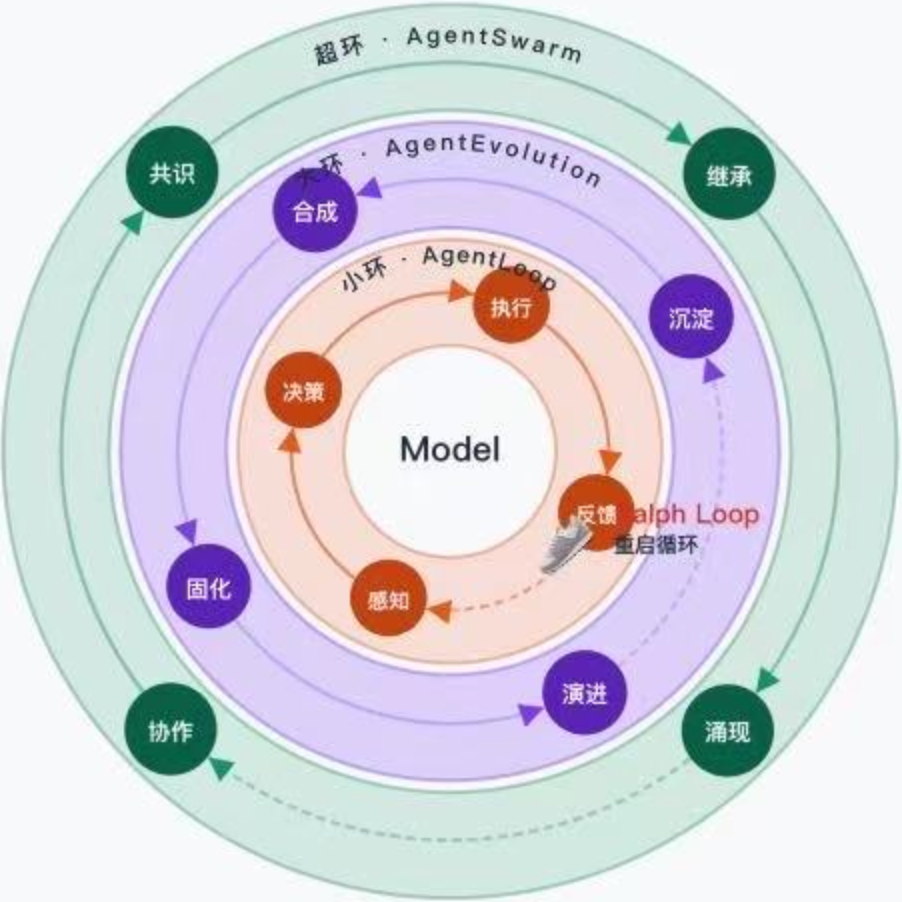
AI has already entered code writing, algorithm optimization, and model development. But after a task is completed, what remains may be reusable capability—or merely an answer and scattered logs. The difference becomes apparent only when a similar problem comes up again: can the system reuse what it learned, or must it pay the cost of exploration all over again?
Recursive Self-Improvement (RSI) co…
 techo5• Pinned