SenseTime study: GPT-6 Astra aces simulated embodied tests, stumbles on real robots
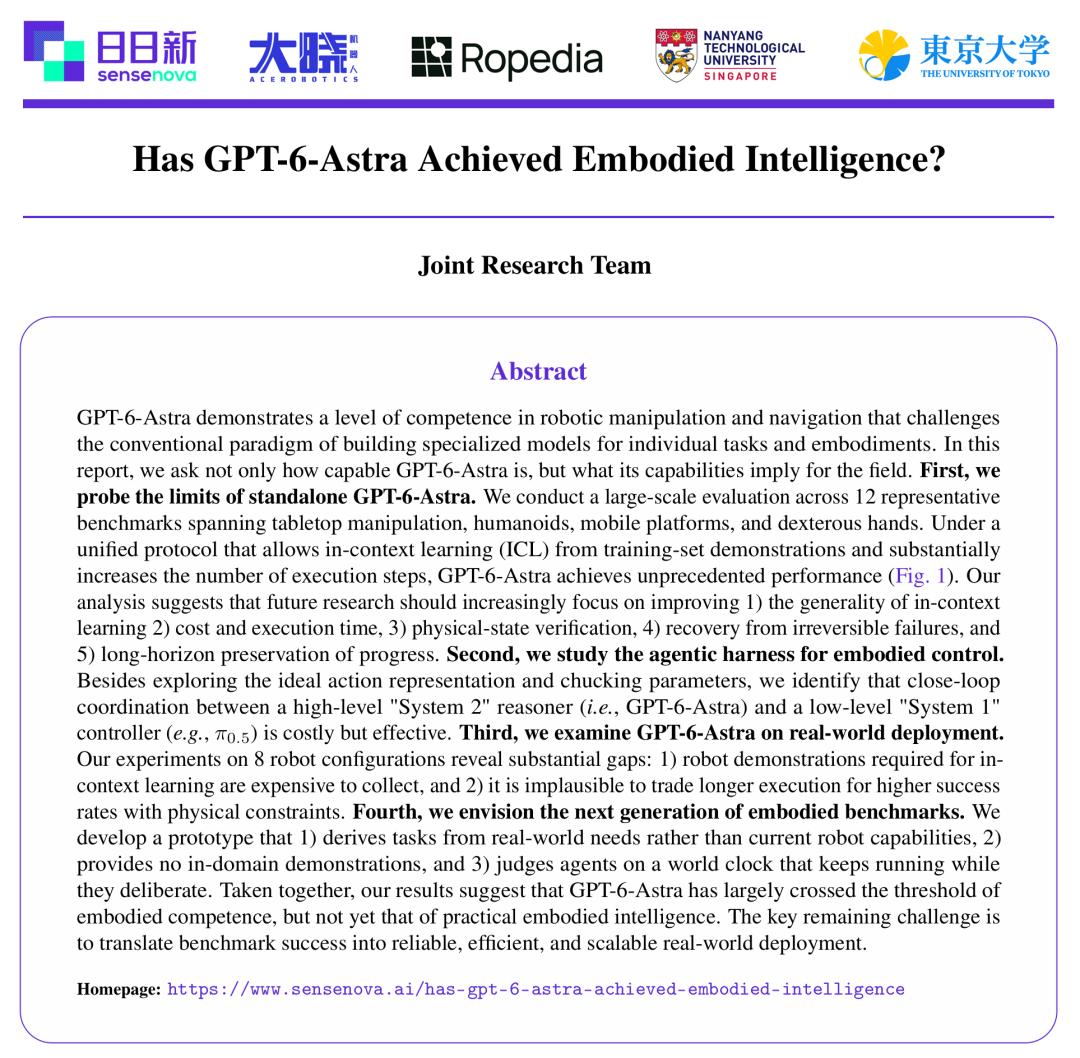
A SenseTime SenseNova team, with Daxiao Robotics, Ropedia, NTU and the University of Tokyo, published "Has GPT-6-Astra Achieved Embodied Intelligence?", a systematic evaluation of OpenAI's GPT-6 Astra across 12 simulated benchmarks and 8 real robot platforms. With in-context learning and up to a 10x action-step budget, the model scored 100% on LIBERO-Long++, 99.3% on LIBERO-Pro, 98.8% on SIMPLE and lifted RoboDojo from 27.6% to 81.9%, but reached only 37.0% on the long-horizon BEHAVIOR benchmark and 28.9% on LHPR-VLN navigation. On real hardware it succeeded 17 of 18 times at rigid pick-and-place, yet failed all 11 plug-insertion attempts across three platforms; placing a pen in a holder took over four hours and cost $55, and in a cooking task it decided an egg was done but turned off the stove about 90 seconds later, burning it. The report concludes GPT-6 Astra has largely crossed the embodied-intelligence threshold but remains far from practical deployment, and presents SenseNova-RoboRSI, a harness that improves from execution feedback without updating model weights.
The report argues that high scores on conventional embodied benchmarks do not translate into reliable physical execution, with misjudged task success and hard-to-reverse mistakes as key bottlenecks, and notes its RoboRSI approach has so far been validated mainly in simulation.
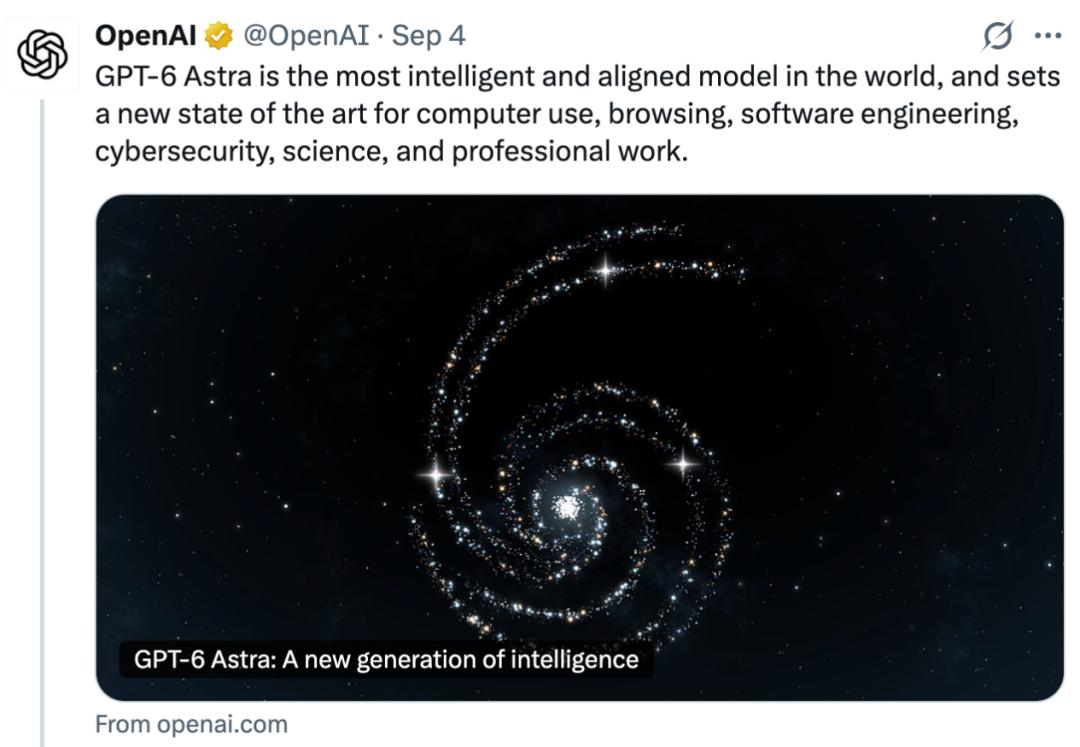
上月发布 GPT-6-Astra 时,OpenAI 称它为「全球智能程度最高且最符合人类意图的模型」。具身社区则是惊讶的发现,VLA vs WAM 的路线之争,被通用大模型用文字模态「降维打击」了,大家不禁想问:
「GPT-6-Astra 的具身能力上限到底在哪?具身社区下一步最值得做的是什么?」
近日,商汤联合大晓机器人、Ropedia、新加坡南洋理工大学和东京大学的研究团队在《Has GPT-6-Astra Achieved Embodied Intelligence?》中,给出了覆盖 12 项仿真评测、8 个真实机器人平台的系统分析。
他们还分析了 GPT-6-Astra 与底层机器人控制系统的协作方式,搭建了一套更贴近真实家庭需求的具身评测原型。
#OpenAI#GPT-6 Astra#SenseTime#SenseNova#SenseNova-RoboRSI#Unitree G1#Franka 3#AgiBot G2#LIBERO-Long++#DexJoCo#RoboDojo#NVIDIA Isaac Sim