Microsoft released Windows App SDK 2.6.4 with easier Language Model API access, ONNX Runtime 1.27.1, and reliability fixes across WinUI 3, app lifecycle, notifications, Composition, and Windows AI. The version also fixes a shutdown access violation involving surviving TextBox and RichEditBox controls. IT之家 reported separately that the earlier experimental Windows App SDK 2.5.4 introduced TableView, Chart, InkCanvas, and InkToolbar for trials through WinUI Gallery 3.0, though Microsoft says they were not mature enough for production use.
According to TMTPost, Horowitz Andreessen Academy (HAA), backed by Andreessen Horowitz (a16z), plans to enroll about 50 high-school graduates and first- or second-year university students in a free one-year program. The program does not award a diploma or university credit. Students would receive project budgets, compute credits and short courses from leaders including Jensen Huang, Sam Altman, Satya Nadella and Fei-Fei Li, followed by at least three months of full-time work at partner companies. HAA is not currently accredited, and TMTPost says the program’s ability to improve student outcomes remains uncertain.
Bloomberg reporting cited by The Next Web and IT之家 says Alphabet, Meta, Microsoft, Amazon and Oracle have committed more than $3 trillion to future spending connected to AI infrastructure. Alphabet leads with more than $1 trillion, followed by Meta with more than $800 billion. The total includes $1.3 trillion in future lease payments and $1.9 trillion in other purchase commitments. These commitments cover data centers, buildings, energy, equipment, hardware and content deals, with some leases running for as long as 30 years. The figures mix short-term orders with long-term leases and include spending not directed to data centers, so they do not represent spending alone.
A Reuters analysis of LSEG data and company reports found that Microsoft, Alphabet, Amazon, Meta, and Oracle returned 9.3% of their cash to shareholders in the first three quarters of 2026, the smallest share in at least 15 years. Their operating cash flow rose 29% to a record $542.9 billion, but capital spending doubled to $556.9 billion and exceeded operating cash flow for the first time since 2011. Buybacks consequently fell 83% to $13.6 billion, while dividends rose to $37 billion.
U.S. technology shares fell sharply as investors questioned the returns on enormous AI infrastructure budgets, weaker free cash flow and rising financing needs. According to BBC Technology, TechCrunch AI and IT之家, Alphabet lost more than $500 billion after a 12% plunge, Intel dropped nearly 30%, and the Nasdaq fell about 3.5%, while Nvidia, Broadcom and Qualcomm also declined. Alphabet, Amazon, Meta and Microsoft outlined more than $740 billion in 2026 capital expenditures, although some investors described the selloff as an ordinary correction after unusually large gains.
a16z said public and media concern about AI-driven job loss has eased from its May peak, while news coverage of AI and job loss returned to roughly its level a year earlier. Explicit AI-related layoff announcements in August and September were the lowest of the year. Indeed data cited by a16z showed that, since October of the previous year, postings for engineers, software engineers and manufacturing roles had risen by about 30%, 26% and 13%, respectively. Microsoft separately offered buyouts to 60,000 employees, but it did not explicitly attribute the offer to AI.
Developer FORZGC announced a series of applications for the long-discontinued Windows Phone platform, according to IT之家. The developer said AI was used to extract website APIs and package them into Windows Phone applications for the Lumia 640. FORZGC described the implementation as simple and limited to browsing, while saying more functions could be added through further work.
Microsoft says it built the Industry Evaluation Data Generation Platform to evaluate Microsoft Copilot through synthetic enterprise environments without using customer data. The system creates simulated users, meetings, emails, documents and organizational structures based on public sources such as O*NET occupational data, online job postings and SEC filings. It combines those environments with automated pipelines for generating industry-specific queries and structured quality frameworks. Microsoft says it published the platform to an internal shared catalog and established it as a standardized evaluation baseline.
A Reddit poster synthesized 57 publications on harnesses for software-development and coding agents, arguing that effective harnesses are small, evidence-based and continually pruned. The poster recommended deriving rules from past sessions and failures, keeping instruction files concise, using fewer tools, enforcing rules with executable checks, and removing rules that cannot be shown to help. The post also cited University of Toronto research reporting performance gaps of up to sixfold for the same model under different harness designs, but the underlying studies and figures were not independently verified in the report.
The Verge reports that opposition to resource-intensive AI data centers has become a major issue in Maine’s closely contested Senate race. A September UMass Lowell and YouGov poll found that 76% of respondents opposed building a data center in their community, while towns have adopted temporary restrictions and local ballots. Technology and data-center interests have also funded extensive outside spending, while Collins has received $325,644 from AI and crypto donors, according to the report.
TMTPost reported that Anthropic filed an S-1 with the US Securities and Exchange Commission on October 26, 2026, seeking more than $100 billion at a $2 trillion valuation. The filing reportedly showed revenue of $4.585 billion in 2025 and $16.286 billion in the first half of 2026, with operating cash flow of $3.929 billion. Anthropic also disclosed more than $650 billion in long-term compute contracts with eight suppliers, including Broadcom, SpaceX, Google, Amazon, Microsoft, Nscale, Lambda and AMD.
An analysis by 寻空的营销启示录, published by TMTPost with authorization, reports that Alphabet, Meta and Microsoft’s combined revenue rose 147.1% from 2019 to 2025, while combined sales and marketing expenses increased 42.5%. Their weighted marketing expense ratio fell from 13% to 7.5%, although absolute marketing spending rose from $46.55 billion to $66.34 billion. The report says data centers, chips, model development and AI talent are receiving more investment and links the lower relative marketing intensity to established brands and in-product distribution.
Google, Microsoft, OpenAI and Anthropic will support a common robots.txt signal that lets websites state whether their content may be used for generative AI training. The __usage_ai-training token is based on an IETF Internet-Draft from Anthropic engineer Kevin Kelley and remains a voluntary usage preference rather than a finalized standard or a direct crawl prohibition. Anthropic has begun implementation, OpenAI plans to support the signal within months, Microsoft plans to honor it from February 1, 2027, and Google targets 2027.
The Wikimedia Foundation filed an amicus brief in the consolidated New York Times copyright litigation against OpenAI and Microsoft, arguing that general-purpose model training may qualify as fair use while chatbot reproduction of source passages should follow publishers’ licensing terms. The filing favors neither side outright and says fair-use analysis should distinguish model training from retrieval-augmented generation that reproduces expressive content.
科技新报, citing Reuters and other foreign media reports, says Microsoft plans to issue about $25 billion in investment-grade corporate bonds to fund AI infrastructure, potentially in ten tranches with maturities from two to 40 years. Reported orders exceeded $100 billion, more than three times the proposed issuance, but the final amount remains unsettled and may be adjusted to market demand. CFO Amy Hood said Microsoft would seek other funding sources when appropriate to preserve cash flow and financial flexibility.
Bloomberg’s Odd Lots podcast described a mixed market reaction to Anthropic’s IPO filing and Microsoft beating earnings estimates, as concern about the AI boom grew. Barclays’ Alexander Altmann joined the podcast to discuss what Wall Street thinks about the AI trade. A separate report said steep losses for technology stocks on Friday reversed optimism earlier in the week prompted by Anthropic’s IPO filing.
Microsoft plans to raise $25 billion in debt as it pursues an AI buildout, according to the supplied report. The report also says Microsoft has a strong credit rating and has maintained positive free cash flow, unlike Meta, Alphabet and Amazon. It does not specify the debt terms or timing.
DeepGreen Holdings filed a preliminary permit application with the Federal Energy Regulatory Commission for underwater data centers in Cook Inlet, Alaska, and the Gulf of Maine. TechSpot reports that the Cook Inlet proposal includes 66 modular compute pods and 330–350 tidal turbines, while TechRadar cites 300 turbines; a separate Maine proposal would use 50 turbines and provide 51 megawatts. The projects have not begun construction, and researchers and local communities have raised concerns about construction noise, heat, and the habitats of Cook Inlet belugas and North Atlantic right whales.
The Information reports that electricity shortages, multiyear grid-connection waits and rapidly fluctuating AI workloads are becoming material constraints on data-center expansion. Infrastructure leaders discussed microgrids as a bridge until grid connections arrive, developing powered sites around spare grid capacity, and rack-level power conversion that can reduce conversion steps and potential failure points. Brian Janous said the grid is underused by about 45% on average, while Allan Schurr said a 350 MW microgrid was being built in 16 months.
Bloomberg reports that Microsoft’s Azure growth is beating expectations as the company’s AI spending and returns were discussed on Bloomberg Open Interest. Stifel Managing Director Brad Reback said Azure growth could exceed 50% in the near term, while also assessing Oracle’s greater risk and the potential value of public AI lab results.
A Microsoft Cloud Blog post presents enterprise examples of AI reshaping broader workflows, including Advania UK’s RFP agent and Stanwell Corporation’s AI-assisted energy-price forecasting on Microsoft Azure. Advania UK says its agent reviews thousands of past proposals and assembles structured responses in less than half the time previously required. Stanwell says its forecasts help inform trading decisions, portfolio-risk management and financial forecasting. Grant Thornton Australia also reported that employees with Microsoft Copilot licenses took 10% more recharge time, but the source explicitly says the association does not establish that Copilot caused the difference.
DoNews reported that Microsoft plans to issue $25 billion in bonds to finance AI-related spending. The proposed issuance would end the company’s nine-year gap between bond-market offerings, according to the report.
A report says Microsoft compressed VibeVoice-ASR-BitNet from 4.62GB to 1.58GB and that AIGCPanel offers the model in a one-click package. The hands-on test reported real-time Chinese transcription through CPU inference, and the model was described as supporting Chinese, English, French and Italian.
Bloomberg, citing people familiar with the matter, reported that Microsoft is looking to raise at least $25 billion through a US high-grade bond sale, its first such US offering since 2017. The deal may include up to 10 tranches with maturities ranging from two to 40 years, and Wells Fargo, JPMorgan Chase and UBS are managing the sale. The final size depends on investor demand. Another report described the target as raising as much as $25 billion.
Microsoft is seeking at least $25 billion in its first US investment-grade bond sale since 2017, when it raised $17 billion, Bloomberg reported. Bloomberg linked the proposed proceeds to AI-related capital expenditures. The final amount raised and the offering’s completion status were not independently confirmed by the supplied reports.
According to a 9to5Google newsletter, Alphabet reported 25% revenue growth and $26 billion in net income for Q3, but analyst disappointment sent shares down as much as 11% in after-hours trading. Cloud revenue doubled year over year to $30 billion as the business attracted frontier AI labs, while advertising revenue missed expectations. The newsletter also said Alphabet was expanding advertising in AI Mode to 10 new markets.
In a commentary, TechRadar argues that AI-agent incidents, sensitive-data processing and foreign legal jurisdiction make UK dependence on US-controlled cloud infrastructure a digital-sovereignty risk. Citing the UK Competition and Markets Authority, the article says Amazon and Microsoft control 70–90% of the UK cloud-computing market. It calls for more domestic procurement, open standards and open-source infrastructure. The commentary also says recent agent incidents prompted the Trump administration to consider greater control over AI tools.
A King & Wood Mallesons Research article by Jiao Chen’en and Zheng Hanrui examines Chinese copyright, interface-design, trade-secret, invention-patent and anti-unfair-competition law in the context of AI-assisted software imitation. It reports that, in October 2026, the ArtCraft team released 13 open-source applications built with AI coding tools and Rust that reproduced functions and familiar workflows associated with Adobe creative software, Microsoft Office products, design software and CAD tools. The article also cites Luckey Faraday’s use of AI coding agents to create browser games modeled on multiplayer modes from Call of Duty 2 and a classic zombie map. These details come from a single published analysis, not a judicial ruling or official legal determination.
Microsoft is restructuring teams led by Charles Lamanna, with Business Insider reporting that some management layers were removed and selected senior employees must spend four days a week in the office. Lamanna, who took over Office and Teams after Ryan Roslansky announced his year-end departure, said changing the teams’ working methods was his priority this year. A Microsoft spokesperson linked the flatter structures to agentic programming, saying some coordination and handoff tasks have become less important.
A TMTPost analysis drawing on Stanford HAI, McKinsey, Gartner and other research finds that enterprise AI use is widespread, but scaled AI-agent deployment remains limited. A 2025 survey of 68 Chinese mid-sized and large companies finds relatively shallow adoption, with only 7.4% saying AI agents had improved overall organizational efficiency and translated that improvement into operating value. The article argues that stable human-AI teams depend on exception handling, quality safeguards and explainable judgment criteria rather than model capability alone.
What problem it solves
Documents and office files often need to be transformed into a structured, text-friendly format before they can be processed by language models or text analysis tools. MarkItDown addresses this by preserving important document structures such as headings, lists, tables, and links during conversion to Markdown.
Key features
Broad format conversion — MarkItDown converts PDF, P…
What problem it solves
Editing text should not require extensive familiarity with terminal-based tools. The project aims to provide an accessible editor with a modern interface and input controls that are approachable for users who are largely unfamiliar with terminals.
Key features
Cross-platform installation — Installation options are documented for Windows, Linux, and macOS, including package-m…
What problem it solves
Generative AI systems and applications can contain security and safety weaknesses that require structured testing across models, endpoints, and complete applications. PyRIT addresses this with repeatable assessments, interactive exploration, and extensible workflows for red teaming these systems.
Key features
Repeatable command-line assessments — The scanner runs repeatable …
What problem it solves
Web automation and end-to-end testing often require coordinating browsers, interactions, assertions, and failure diagnostics. Playwright provides a unified API for driving Chromium, Firefox, and WebKit across tests, scripts, and AI-agent workflows.
Key features
End-to-end test runner — Playwright Test runs end-to-end tests across Chromium, Firefox, and WebKit with browser is…
What problem it solves
TypeScript adds optional types to JavaScript so tools can support large-scale JavaScript applications across browsers, hosts, and operating systems. It also compiles source into readable, standards-based JavaScript.
Key features
Optional types for JavaScript — TypeScript extends JavaScript with optional types, providing a typed language for application-scale development.
Sou…
What problem it solves
Go applications need a way to create, read, and modify spreadsheet documents produced by Microsoft Excel. They also need support for complex spreadsheet components and workflows involving large worksheet datasets.
Key features
Read and write spreadsheet files — Create and modify workbooks, set cell values, save files, and read cell values and worksheet rows through a Go API.…
What problem it solves
Knowledge workers need Claude to follow their organization’s tools, terminology, critical workflows, and preferred ways of working rather than provide only generic assistance. The repository provides customizable role-specific plugins that package this guidance with connectors, skills, commands, and sub-agents.
Key features
Role-specific plugin collection — The collection in…
What problem it solves
Products and agents need to communicate with users across multiple channels without rebuilding Inbox feeds, provider integrations, and channel webhooks. Novu addresses this with one API and a unified conversation model for product notifications and bidirectional agent conversations.
Key features
Unified multi-channel API — Send product notifications through Inbox/In-App, Pus…
What problem it solves
Applications need to run untrusted code while controlling its access to files, networks, user interfaces, and host capabilities. This requires an isolation approach that works across platforms, supports multiple containment mechanisms, and can be integrated without changing application architecture.
Key features
Cross-platform containment — MXC supports Windows, Linux, and m…
What problem it solves
Teams often have to move work into a separate AI tool, then repeatedly transfer context between that tool and the applications where collaboration happens. Switch addresses this by letting people and AI agents participate in the same conversations while keeping shared context with the work.
Key features
Shared rooms for people and agents — Each supported chat channel becomes…
What problem it solves
Speech recognition systems often lose global context when they divide continuous audio into short chunks, while speech generation must maintain speaker consistency, timing, and coherence across long recordings. The project addresses these needs with unified long-form ASR, streaming recognition, and text-to-speech models.
Key features
Long-form speech recognition — Process co…
What problem it solves
Company knowledge is distributed across business systems such as Slack, Google Drive, Jira, GitHub, and Microsoft 365. AI applications need a governed way to search this information, respect each user's access controls, and provide answers that can be traced to their sources.
Key features
Permission-aware enterprise search — Searches connected company systems while applying …
What problem it solves
Developers need support for their core edit-build-debug cycle. The project addresses this need with comprehensive code editing, navigation, and understanding support along with lightweight debugging, a rich extensibility model, and lightweight integration with existing tools.
Key features
Code editing and navigation — The editor provides comprehensive support for editing, na…
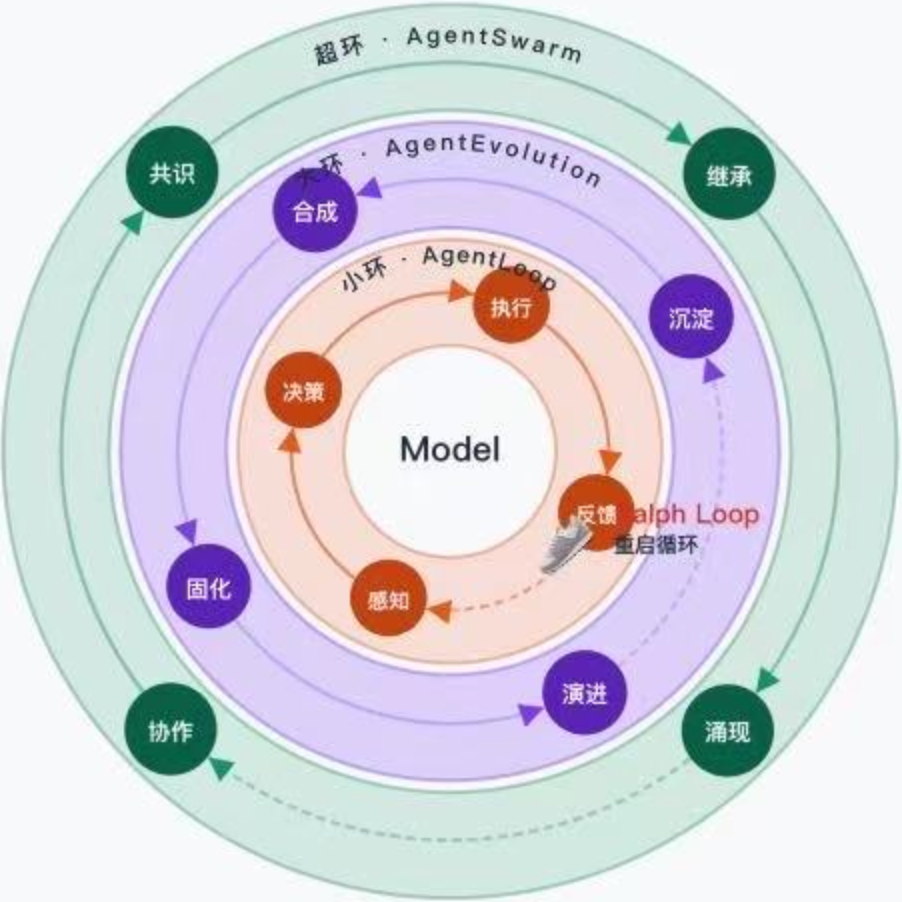
AI has already entered code writing, algorithm optimization, and model development. But after a task is completed, what remains may be reusable capability—or merely an answer and scattered logs. The difference becomes apparent only when a similar problem comes up again: can the system reuse what it learned, or must it pay the cost of exploration all over again?
Recursive Self-Improvement (RSI) co…
 markitdown• Pinned