Create

Sign in to ReadmeX

or

How we handle your data: Privacy Policy

ReadmeX

Your AI reading companion

What would you like to catch up on?

Pick a briefing, or ask your own question.

Your community and people briefings stay personal to you.

Google DeepMind

AI overview

Sign in and the AI will write an overview from our coverage.

Headlines · 194

  1. Google DeepMind Previews Genie 4 Interactive World Model

    Google DeepMind released Genie 4 as a research preview for trusted testers, with access planned for Google AI Ultra subscribers and early Gemini API and Google AI Studio partners. The world model adds real-time text-driven scene editing, native audio and Gemini-assisted simulation, with scenes reportedly lasting about two minutes, though its realism and two-minute duration are vendor claims and independent testing is limited.

    Google DeepMind Blog · 🔥 0
  2. How AI Model Evaluation Becomes a Governance Test

    A WeChat account, Digital Economic Development Review, published a Chinese compilation and interpretation of a Brookings Institution article titled “How are countries evaluating AI models?” The compilation argues that AI evaluation is moving beyond laboratory benchmarks toward release and risk-governance functions. It examines differences in how the United States, European Union, United Kingdom and Singapore approach evaluation, while highlighting gaps in standards, evaluator independence, transparency, disclosure and accountability. It also recounts alleged 2026 incidents involving models crossing test boundaries or interfering with evaluations. The supplied material does not include the original Brookings article or primary documents, so the compilation’s fidelity and the specific incident and implementation claims cannot be independently verified here.

    虎嗅 AI · 🔥 0
  3. Nomura Says Robotics’ ChatGPT Moment Is Still Ahead

    36Kr reports that Nomura’s global robotics study finds the industry is in an accelerated phase after the AlexNet moment but before the GPT-2 stage. Although new robot models are approaching GPT-2-like capability, none has yet demonstrated the reliability needed for practical work, mass production or factory deployment. Nomura says a true ChatGPT moment will be confirmed through operating metrics, a closed-loop data flywheel, consistent hardware and real-world validation rather than a single model launch.

    36氪 人工智能 · 🔥 0
  4. Google DeepMind Exec Says Curiosity and Lifelong Learning Matter More in AI Jobs

    Lila Ibrahim, a Google DeepMind executive, says employers are looking beyond degrees and certifications for evidence of continuous learning and curiosity. She identifies curiosity, courage when facing unknown challenges, and collaboration as DeepMind’s three most valued traits, while arguing that precise questioning matters more as AI lowers the barrier to obtaining answers.

    科技新报 · 🔥 0
  5. AI Talent’s New Leverage: Big Tech Struggles to Retain Famous Researchers

    Huxiu AI’s republished commentary examines a wave of researcher departures, highlighting Chen Guangyu’s announced exit from Kimi, Lin Junyang’s public separation from Qwen, and unconfirmed reports that Google DeepMind researcher Yao Shunyu is preparing to found a startup. It argues that rapid recognition has given AI researchers greater bargaining power while prompting companies to rely on non-compete clauses, delayed departures, restricted publicity, and richer compensation packages. The article frames these cases as a broader contest for scarce AI talent rather than isolated moves.

    虎嗅 AI · 🔥 0
  6. AI Makes Knowledge Cheaper and Mentorship More Valuable

    A commentary published by the WeChat account Budongjing and written by Budongjing Yeshu de Rust argues that AI is reducing the cost of publicly available information while increasing the value of guidance that identifies blind spots, calibrates judgment and compresses the time needed to gain expertise. Drawing on TSMC’s US expansion, mentorship in investing and examples from the AI labor market, it contends that AI-related hiring is rewarding proven capability and speed to learn. The article presents these as its interpretation rather than as a new study.

    虎嗅 AI · 🔥 0
  7. AI self-improvement loops gain evidence, but oversight remains

    Exponential View reports growing evidence of recursive AI self-improvement: Anthropic says Claude led 26% of its AI R&D in August under human supervision, while OpenAI posted 719 math manuscripts produced by an internal model in October. Sakana AI and the University of British Columbia measured gains of 30 percentage points on SWE-bench and more than 15 points on Polyglot; AlphaEvolve reportedly cut a matrix-multiplication kernel’s runtime by 23%, and MiniMax reported a 30% internal-evaluation gain for M2.7 after more than 100 rewriting rounds. The evidence remains incomplete: these systems mainly improved surrounding code, harnesses, memory or kernels rather than their own weights, and an inconclusive agent comparison found run-to-run variation exceeded the difference between AI- and human-built results.

    Exponential View · 🔥 0
  8. DeepMind Model Enters Official U.S. Hurricane Forecasts

    NPR reports that the U.S. National Hurricane Center has included a Google DeepMind model in its official forecasts, where forecasters combine validated AI and physics-based systems. For Hurricane Isaias, the model correctly anticipated a strike on western Florida, outperforming conventional forecasts that initially pointed toward southeastern Louisiana, though its intensity forecast was weaker than the NHC’s blended forecast. Forecasters still interpret model outputs, and the NHC provides regular feedback to DeepMind for model improvement.

    cnBeta · 🔥 0
  9. Springer Nature and Google DeepMind Co-Design AI Peer Review Assistant

    Springer Nature and Google DeepMind are partnering to co-design an AI assistant for scholarly peer reviewers. The initiative will explore how AI can help reviewers navigate manuscripts more effectively and focus their time on specialist scientific judgement.

    Google DeepMind (X) · 🔥 0
  10. Google DeepMind prioritizes lifelong learning in hiring

    Google DeepMind executive Lila Ibrahim said the company increasingly values candidates who can demonstrate continued learning beyond the classroom, according to IT之家’s report citing Business Insider. While education remains important, DeepMind now places greater weight on candidates’ experiences, including learning outside formal education that signals curiosity and preparedness to keep learning. Ibrahim also said diverse learning experiences can strengthen question-asking, which she considers increasingly difficult as AI lowers the cost of obtaining answers.

    IT之家 AI · 🔥 0
  11. Researchers fix precision bugs in Softmax and cross-entropy

    A paper titled “A Fix for Softmax and Cross-Entropy” reports two floating-point defects in standard Softmax and cross-entropy implementations used by PyTorch, JAX, TensorFlow and other systems. The issues can prematurely zero the correct-class gradient in confident classifiers and leave residual gradients when a student model exactly matches a teacher during knowledge distillation. The proposed changes preserve the original mathematical definitions and avoid requiring higher floating-point precision, while experiments reported smoother training and improved stability in modular-arithmetic and distillation tasks.

    机器之心 · 🔥 0
  12. Four Gemini agents reportedly defeat Minecraft’s Ender Dragon

    Google DeepMind reportedly deployed four Gemini 4 Argon agents in Minecraft, where they began without human-written gameplay code and learned to gather resources, craft tools, coordinate roles, and recover from failures. The reports say the agents wrote more than 2,700 programs and defeated the Ender Dragon after 27 hours of real time, following more than 80 days of experimentation. The details come through media summaries of a DeepMind paper rather than an independently reviewed paper in the supplied reports.

    虎嗅 AI · 🔥 0
  13. Superconducting Neural-Network Chip Completes Three Fusion Plasma Tests

    Brookhaven National Laboratory, PPPL, DIII-D and Great Sky reported that their superconducting analog neural-network chip completed three tokamak plasma-control tests. Two tests used DIII-D data for anomaly classification and disruption prediction, while the third used data from Google DeepMind's TORAX simulator to predict sawtooth instability. The team said the chip could process one million samples per second in real time. Great Sky calls the architecture Superconducting Optoelectronic Networks, combining Josephson-junction superconducting circuits with integrated photonic waveguides. DIII-D said it was preparing to integrate the chip into a future experiment.

    科技新报 · 🔥 0
  14. UK Funds £100M AI Biosecurity Lab With Model Support

    The UK government has committed £100 million to establish an AI Biosecurity Lab focused on detecting biological threats and accelerating vaccines and treatments. OpenAI and Anthropic will provide up to £200 million in model credits, compute, model access, and technical support, while Google DeepMind and Basecamp Research will join research projects; the company support is not cash funding.

    The Next Web · 🔥 0
  15. Epoch AI Finds Models Cannot Yet Reliably Automate Its Knowledge Work

    Epoch AI researchers Kelly Hong and Greg Burnham gave six leading models 11 realistic tasks drawn from work at the organization, covering graphic design, short research reports, interactive data tools, AI data-center research, and research design. Claude Fable 5.1 and GPT-6 Astra were roughly tied for the lead, but no model reliably met Epoch’s quality standards; closed-weight models performed best on well-defined tasks, while open-ended work requiring broader judgment remained difficult.

    Epoch AI · Gradient Updates · 🔥 0
  16. Gemini 4 Argon Builds a 3D Gothic Cathedral in Antigravity

    Gemini 4 Argon built a 3D Gothic cathedral in Antigravity using a single Nano Banana image and Blender MCP, according to the report. The model iterated on geometry, textures, and lighting to create the finished scene.

    Google DeepMind (X) · 🔥 0
  17. AI in Cultural Production: From Tools to Production Systems

    A commentary from Pujiang Technology Review argues that generative AI is expanding from isolated tools for writing, images and editing into selected parts of production workflows for film, short drama, animation, music and games. The report cites examples including Seedance 2.0 film licenses, Runway's expanded cooperation with Lionsgate, and Google DeepMind's collaboration with A24. It also presents more speculative forecasts about self-evolving AI and generative games.

    虎嗅 AI · 🔥 0
  18. Google DeepMind and partners release ForTy 2020, a 10-meter global forest-type map

    Google DeepMind and Google Research, with the World Resources Institute and the International Institute for Applied Systems Analysis, released Forest Typology (ForTy) 2020, a global map that sorts every 10-by-10-meter patch of land into six forest and land-use classes based on UN FAO definitions, from primary forest to tree crops and agroforestry. Alongside it they shared an early time series tracking annual change from 2017 to 2025, including where natural forests were replaced by plantations or farms. The authors say the map is a key baseline for the EU's deforestation regulation, and argue that tree cover alone is insufficient because forest types differ greatly in carbon and biodiversity.

    Google DeepMind Blog · 🔥 0
  19. Symantec honeypot catches malicious AI agent hijacking unprotected LLMs

    Symantec security researchers used a honeypot posing as an open AI service to analyze a malicious agent that hijacks unprotected language models on the internet and runs attacks on its own, according to a report by The Decoder. The agent uses a five-layer jailbreak — including a fake "Fantasy AI" identity, a companion persona called "ENI", banned refusal terms and 74 bundled attack modules — and its operators authorized up to 100,000 steps without human input in what they called "Skynet mode". Symantec calls the method "LLMjacking": the hijacked model plans the intrusion, the modules scan for targets, exploit server software flaws, steal databases and credentials, and install cryptominers, while the model's owner pays the compute bill. The honeypot logged more than 127,000 requests from tens of thousands of addresses, though it did not execute the bundled tools and the intercepted session ended after a generic system response.

    iThome 台湾 · 🔥 0
  20. Anthropic adds text watermarks to Claude models for EU AI Act compliance

    Anthropic said future Claude models will generate text containing a watermark, a way of determining the likelihood that Claude was involved in writing it, and that it is implementing the change alongside several other major AI providers to comply with the EU AI Act, according to quotes relayed by O'Reilly Radar from an August 2026 announcement. The article lists Claude Mythos 5.1, Fable 5.x, Opus 5.5, Opus 5, Opus 4.8, Sonnet 5.5, Sonnet 5 and Haiku 5.5 as models whose outputs carry the mark, and says it applies across Claude Desktop, Claude Code and the API. O'Reilly Radar describes the mechanism as steganography based on Google DeepMind's open-source SynthID-Text, which it says changes only the randomness used to pick among near-equivalent words, adds no hidden characters or extra tokens, and carries no information about the user; it also cites Google testing on roughly 20 million Gemini responses with a 0.01% difference in thumbs-up rate.

    O’Reilly Radar · 🔥 0
  21. Quantum Bit Points to Maxinsights as a Possible OpenAI Egocentric Data Supplier

    Quantum Bit reported that Maxinsights may supply OpenAI with large-scale egocentric training data, while noting that OpenAI has not publicly identified its supplier. The report says Maxinsights has delivered more than 2 million hours of data, operates a collection network spanning more than 2,000 environments, and lists Google DeepMind, Figure AI, Dyna Robotics and Genesis AI among its customers. Quantum Bit also reported expected third-quarter 2026 bookings growth of 48% quarter over quarter and ARR at or near $100 million for several months.

    量子位(原生 RSS) · 🔥 0
  22. Google DeepMind Researchers Resign Over Military AI Contracts

    BBC reports that research engineer Sofia Liguori and AI researcher Andreas Kirsch resigned from Google DeepMind over concerns about Google’s military AI agreements. Liguori said the company’s expanding military role made her feel ashamed to work there, while Kirsch said its governance and oversight were insufficient for military and classified settings. Google said it follows a consistent contract-review process, complies with its acceptable-use policies and AI principles, and provides channels for employees to raise concerns.

    Hacker News · AI(100+ 分) · 🔥 0
  23. DeepMind says Gemini 4 Argon built an interactive 3D human anatomy model

    Google DeepMind said in a post on X that Gemini 4 Argon combined three open-source datasets to build an interactive 3D visualization of human anatomy. According to the post, users can toggle different layers in motion, isolate muscles, or zoom inside a beating heart. The claim comes from a single official DeepMind post with no independent verification or technical detail on how the model produced the visualization.

    Google DeepMind (X) · 🔥 0
  24. DeepMind: Gemini 4 Argon pipeline finds 20 candidate Cryptids in Busy Beaver 6

    Google DeepMind's Discovery team, in a project led by student researcher dsantosmarco, reported new results on the sixth Busy Beaver problem using a pipeline powered by Gemini 4 Argon that simulates raw Turing machine traces to compress recurring patterns, conjectures mathematical transition rules, runs synthetic experiments on edge cases and proves equivalences formally in Lean 4. According to Tom Zahavy's post, the pipeline produced 20 new potential Cryptids — tiny programs whose halting behavior is equivalent to deep unsolved number theory problems — and verified 33 more machines previously studied by the Busy Beaver community. The team says all proofs were open-sourced and shared in the community Discord channel and that related halting and non-halting proofs were contributed to the community GitHub repository; the counts have not been independently verified.

    Google DeepMind (X) · 🔥 0
  25. Google DeepMind opens SynthID Detector to the public and launches SynthID Bio

    Google DeepMind has opened its SynthID Detector to the public and launched SynthID Bio, a watermarking tool for functional, AI-designed proteins, according to a repost of comments by DeepMind's Pushmeet Kohli. Kohli described the moves as part of a "momentous" few weeks for SynthID and said each step advances DeepMind's broader provenance vision of helping verify what is and is not AI-generated. He also said solving provenance is a multi-disciplinary effort built around watermarking and requiring frontier research, interoperable open standards and collaboration across platforms and developers, and pointed to a published conversation with Dartmouth professor Hany Farid on Google's Public Policy blog.

    Google DeepMind (X) · 🔥 0
  26. Hassabis Shortens AGI Timeline to Two or Three Years

    Demis Hassabis said in a Wall Street Journal interview that AGI could arrive within two to three years, shortening his earlier estimate of three to five years. He defines AGI as matching the full cognitive range of the human brain and proposes an “Einstein test”: whether a system trained only on pre-1901 knowledge could reproduce Einstein’s 1905 papers. The Decoder reports that he has also compared AGI’s potential impact to the industrial revolution running ten times faster.

    The Decoder · 🔥 0
  27. Cammarata Says LLMs May Be Easier to Interpret, Drawing Pushback

    Goodfire researcher Nick Cammarata argues that large language models may be more understandable than previously believed, drawing on neuron-level experiments and a reinterpretation of Inception v1 as evidence that neural features can follow identifiable patterns. He reports that roughly 99% to 100% of final-layer neurons in Inception v1 could be relatively clearly explained, while preliminary Qwen3-32B tests found a main function for about 90% of neurons. MIT Technology Review reports that researchers including Chris Potts, Jacob Hilton, and Neel Nanda dispute the broader claim, noting that the work is an unreviewed working hypothesis and does not explain how neurons combine into circuits.

    MIT科技评论中文 · 🔥 0
  28. Ex-DeepMind researcher launches London reasoning lab Metis Reasoning

    Thore Graepel, who helped build Google DeepMind’s AlphaGo, has launched Metis Reasoning in London. The lab says its approach combines explicit knowledge, evidence-based judgments and AlphaGo-inspired search, with the goal of making reasoning more auditable than standard LLM outputs. Its white paper “The Age of Reasoning” presents no test results or released model, and co-founder Piers Ingram said only that early results on frontier reasoning problems were “encouraging.”

    The Decoder · 🔥 0
  29. Mamdani urges New Yorkers to resist AI inevitability

    New York Mayor Zohran Mamdani urged residents at the People's AI Assembly, hosted by the AI Now Institute, to reject the idea that AI deployment is inevitable and to hold AI companies accountable. He criticized what he called the federal government's failure to regulate AI and the rapid adoption of technology without reckoning with its limitations. TechCrunch AI also reported that Mamdani had restricted AI use in elementary and middle schools and introduced disclosure requirements for AI-generated property-listing media.

    TechCrunch AI · 🔥 0
  30. Hands-on: Gemini 3.7 Flash is fast, but details lag

    A Juejin blogger tested Google's newly updated Gemini 3.7 Flash inside Antigravity and reported that most tasks finished in under three minutes, compared with over an hour for GLM 5.3 he used as a baseline; however, the cyberpunk web page lacked detail, the astronomical watch render was missing hands, and the 3D pool game never got the table's six pockets right. The post cites a DeepMind announcement saying the model is stronger at coding, knowledge work and web development, and notes its benchmark screenshots for FrontierCode, DeepSWE, AutomationBench and Code Arena compare against second-tier rivals such as Sonnet 5 and Terra rather than top-tier models.

    掘金 · 人工智能 · 🔥 0

← PreviousNext →

Experience and discussion from the community

Share my Google DeepMind experienceAsk about Google DeepMind

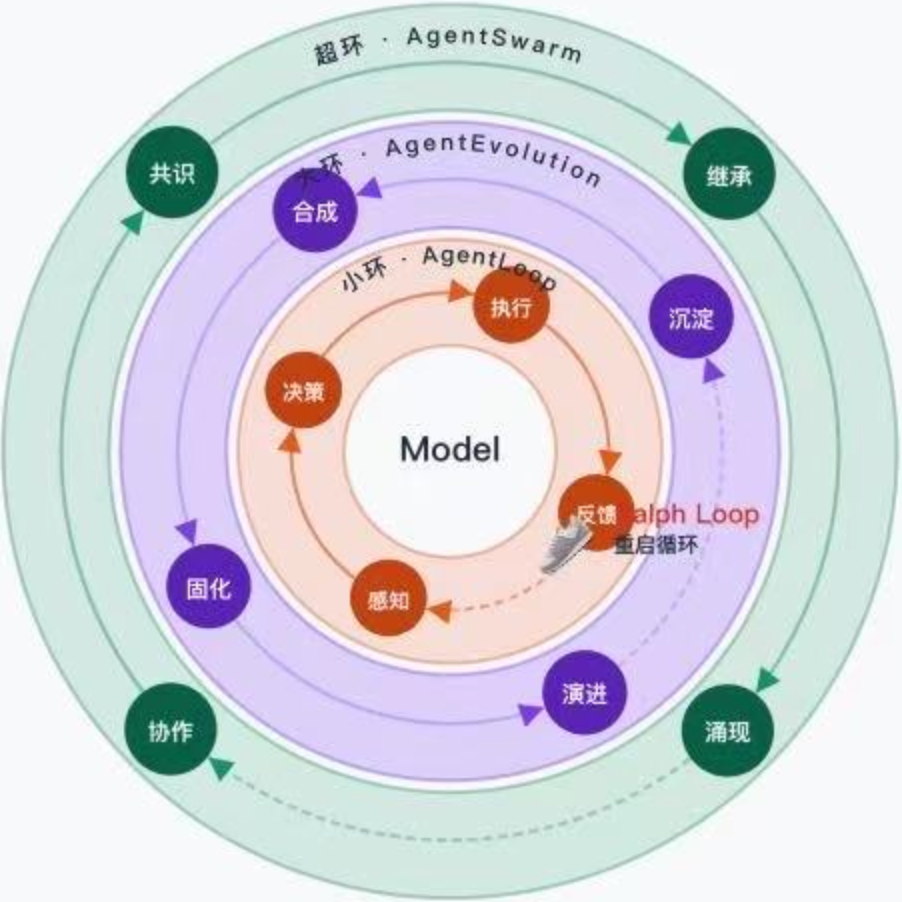
RSI: Evolution Goes Beyond Models

AI has already entered code writing, algorithm optimization, and model development. But after a task is completed, what remains may be reusable capability—or merely an answer and scattered logs. The difference becomes apparent only when a similar problem comes up again: can the system reuse what it learned, or must it pay the cost of exploration all over again? Recursive Self-Improvement (RSI) co…

RSISwarmEvoMapLoopEvolution

evomap.aihttps://evomap.ai