Create

Sign in to ReadmeX

or

How we handle your data: Privacy Policy

ReadmeX

Your AI reading companion

What would you like to catch up on?

Pick a briefing, or ask your own question.

Your community and people briefings stay personal to you.

Google DeepMind

AI overview

Sign in and the AI will write an overview from our coverage.

Headlines · 194

  1. Frontier Radar surveys 45 AI neolabs as AGI claims intensify

    The Decoder’s Frontier Radar #5 profiles 27 AI laboratories in detail and briefly reviews nearly 20 others, examining their origins, valuations, research bets, products and founders’ backgrounds. It reports that researchers have departed OpenAI, Google DeepMind and Meta to establish new labs, even as OpenAI discusses an “AGI era” and Nvidia CEO Jensen Huang says AGI has arrived. The analysis says there is no agreed definition of AGI and that some fundraising and performance claims remain attributed rather than independently confirmed.

    The Decoder · 🔥 0
  2. AI for Science Creates Demand for Lab Infrastructure

    A 36氪 人工智能 analysis says OpenAI’s reported acquisition of Orchestra Bio and Anthropic’s disclosed acquisition of Mithril Medicine show model companies moving into biomedical R&D workflows. It identifies three infrastructure opportunities: AI-assisted contract research organizations for experimental validation, laboratory operating systems for automating workflows and scheduling, and scientific-data platforms that preserve experimental context. The report cites Adaptyv, Automata and Transfyr as examples. It also notes that a Google DeepMind and MIT FutureTech survey of 637 US and UK researchers found nearly 50% use AI daily and about 41% are burdened by a backlog of unvalidated hypotheses.

    36氪 人工智能 · 🔥 0
  3. Geoffrey Hinton warns of AI risks and calls for pre-release testing

    Geoffrey Hinton told The Guardian that AI could lead to severe inequality, cultural disruption, mass unemployment and a fractured society, while also expressing hope that it could deliver “radical abundance.” In an interview published ahead of the documentary “AI: Probably Nothing to Worry About,” he warned that a major accident affecting power or financial systems could occur this year or next, and called for mandatory independent testing and evaluation before frontier models are released.

    虎嗅 AI · 🔥 0
  4. Google launches Gemini Omni 1.2 Flash for 15-second AI videos

    Google DeepMind announced Gemini Omni 1.2 Flash, a video generation model that natively creates clips up to 15 seconds and supports multi-turn conversational editing. Google says the model improves reference adherence and consistency and costs 30% less than version 1.1, with 720p generation priced at $0.07 per second. The rollout includes the Gemini API, Google AI Studio, Google Cloud Console, Flow, Google Vids, Google Ads, Gemini for Business and, for Google AI Ultra subscribers, the Gemini app. The supplied reports do not include independent benchmark results for the claimed improvements.

    Google DeepMind Blog · 🔥 0
  5. AI Is Finding Patterns in Dolphin Communication

    WIRED AI reports that the Wild Dolphin Project is using AI to identify patterns in dolphin vocalizations, working with researchers at Georgia Tech and Google DeepMind. The team has also used an underwater wearable computer to play dolphin sounds associated with objects and habitats in an attempt at two-way communication. Researchers caution that mimicry does not establish understanding, and full translation remains out of reach.

    WIRED AI · 🔥 0
  6. Agent Arena compares frontier models’ cost and duration

    Agent Arena reports that nearly 30,000 tasks over the previous 14 days ran for more than an hour, with the average model making 332 tool calls. For one hour of work, median costs were $10.51 per task with Gemini 4 Carbon, $21.13 with Claude Opus 5.5 and $31.08 with GPT-6 Astra. Among the top models from five labs, task-duration results differed by 55 minutes. Claude Opus 5.5 ranked first in Agent Arena but cost about twice as much per hour as Gemini 4 Carbon.

    arena (X) · 🔥 0
  7. Big Tech’s Push to Commercialize Generative AI Games

    A Xiaguangshe analysis column, republished by 36Kr and Cyzone, surveys how Google, Meta and Microsoft are pursuing generative-AI games as commercial opportunities amid tighter investment conditions. It discusses Google's Genie 3, Genie 4 and Google Playground; Meta's Pocket, Horizon Create and Horizon Studio; Microsoft's WHAM Muse and Xbox Labs; and AI-native platform Astrocade. The column groups the industry’s moves into integrating with established platforms such as Unity Spark, acquiring assets, and raising capital. It cites Bloomberg reporting of talks involving Decart and examines Chinese participants including Tencent's “Project Craft,” miHoYo, Kingnet Network and XD Inc.

    虎嗅 AI · 🔥 0
  8. Google Expands Voluntary Exit Buyouts to Five Countries

    Google confirmed to Reuters that it has offered voluntary exit packages with severance to some employees in Canada, France, Germany, Japan and Switzerland since June, widening a scheme previously offered to some staff in the US and UK. Reuters could not determine how many employees accepted the latest offers. Three people familiar with the matter said the Swiss packages covered several divisions but excluded DeepMind, with departing employees receiving one month's pay per year of service, capped at 12 months. The reports said earlier rounds excluded Google Cloud and DeepMind, while the latest round appeared to follow the same pattern but was not explicitly confirmed.

    The Next Web · 🔥 0
  9. Foobar Technical Weekly #159 Curates 40 AI and Engineering Links

    Foobar Technical Weekly #159 collects 40 links across five sections covering engineering, research, AI tools and other technical topics. AI-related highlights include speculative decoding, code-agent debugging, WebMCP, Gemini 4 Argon, Muse Spark Open, OpenCode 2.0 and Anthropic’s use of Scion instead of Git. The digest also features material on databases, security, web development and runtime performance, summarizing claims and figures reported by the linked articles.

    掘金 · 人工智能 · 🔥 0
  10. Dyssonance AI launches physics-based reasoning platform

    Founded by quantum physicist and former Google DeepMind executive Jennifer Prendki, Dyssonance AI emerged from stealth on November 2 with a physics-based reasoning platform, an API and several AI agents. A developer-focused command-line agent and an observation-and-testing agent are in beta. The company says its framework infers world states from raw data, including incomplete or conflicting information, and that its architecture does not depend on tokens. Prendki said this could theoretically reduce computing-resource consumption and end-user costs compared with traditional large language models.

    科技新报 · 🔥 0
  11. DeepMind staff seek removal of permanent AI-risk disclosure restrictions

    UK-based Google DeepMind employees are asking management to remove permanent non-disparagement clauses that they say could deter staff from publicly warning about AI risks, according to The Washington Post, as summarized by Techmeme. Employees want the clauses deleted from existing contracts and the changes documented in writing. Google says it will not enforce the clauses against former employees and has revised contracts for new hires, but has not publicly accepted the demand to amend existing agreements.

    Techmeme · 🔥 0
  12. Google Antigravity launches agentic cheminformatics skills

    Google DeepMind announced Cheminformatics Skills for Google Antigravity, combining language-model workflow orchestration and scientific reasoning with deterministic chemistry tools from RDKit and data connectors for ChEMBL and PubChem. In a vendor demonstration, the system analyzed crizotinib and lorlatinib, compiled 568 compounds, trained a potency-prediction model, and proposed rigid macrocycles with synthesis suggestions. IT之家 reported that the workflow searched thousands of compounds in about an hour, while Google cautioned that the outputs are testable hypotheses requiring synthesis and experimental validation.

    Google DeepMind Blog · 🔥 0
  13. AI Researcher Yao Shunyu Denies Rumored RSI Startup

    36Kr, citing The Paper, reported that AI researcher Yao Shunyu denied a rumor that he was preparing a recursive self-improvement (RSI) company. On the evening of November 2, Yao said: "I have not founded a company; I am currently still an employee of Google DeepMind." He added: "I have no idea at all where this false information came from."

    36氪快讯 · 🔥 0
  14. Isomorphic Labs President Predicts AI Will Design All Drugs

    Isomorphic Labs President Max Jaderberg said he expects AI eventually to design all drugs, while acknowledging that the timing is uncertain. The company remains in preclinical development and plans to begin its first clinical trial by the end of 2026 to test AI-designed candidates in patients. Its IsoDDE drug-design engine is supported by company-published technical results that have not yet been independently validated.

    MIT科技评论中文 · 🔥 0
  15. Ten Governance Conflicts Facing Leading Foundation-Model Companies

    A commentary from the WeChat publication Enterprise Management Magazine, written by Xu Weina and Xiaoshan Zhang, examines ten structural conflicts facing leading foundation-model companies. The article groups OpenAI, Anthropic, DeepSeek and Moonshot AI as independent AI startups, while Google DeepMind, Meta FAIR and ByteDance Seed represent AI businesses embedded within larger technology groups. It discusses tensions involving public missions and capital, research autonomy and corporate control, decentralized versus centralized decisions, research and commercialization, technical and customer priorities, long-term research and short-term delivery, open versus closed models, technical and commercial thinking, weak versus strong performance evaluation, and open debate versus coordinated action. It proposes approaches including segregated resources, protected long-term research, differentiated management and layered decision rights.

    虎嗅 AI · 🔥 0
  16. Top Agent Arena agents use 93 input tokens per output token

    Arena reports that its analysis of more than 26,000 Agent Arena sessions found that the top 10 agents processed about 93 input tokens for every token they generated. Arena also said laboratories are racing to reduce cached-input costs and demonstrated caching with sessions from Opus 5.5 and Gemini 4 Argon.

    arena (X) · 🔥 0
  17. Physical AI Infrastructure Takes Shape Across Models, Robotics, and Warehouses

    36氪’s analysis links three recent physical AI developments: Google DeepMind’s Genie 4, NVIDIA’s expanded Isaac robotics platform, and an Intel-SAP autonomous-warehouse proof of concept. It describes Genie 4 as an interactive world model with native audio and real-time natural-language scene changes, while NVIDIA added a humanoid reference platform, datasets, runtimes, and updates to its robot-learning framework. The Intel-SAP demonstration connected SAP EWM workflows with edge AI and autonomous robots that return task status and results.

    36氪 人工智能 · 🔥 0
  18. DeepMind models how AI capability and coordination reshape economies

    DeepMind Institute researchers Shane Legg, Alex Imas and Andrew Koh published the essay “The Economics of Intelligence” and the working paper “Organizing Intelligence.” The work uses a 100-person, six-domain study and economic simulations to examine how individual AI capability, coordination among agents, wages and market concentration may evolve from minimal AGI toward ASI. These are model-based scenarios rather than forecasts, and the authors note that regulation, vendor competition and compute constraints could prevent the proposed “enterprise singularity.”

    36氪 人工智能 · 🔥 0
  19. Microsoft AI Chief Urges Pause if Models Show Signs of Consciousness

    Microsoft AI chief Mustafa Suleyman said in an X essay titled “Don't build conscious superintelligence” that current AI models are not conscious and should remain that way. He called creating conscious AI reckless, proposed pausing development if signs of consciousness appear during training, and said evidence of consciousness should be disclosed publicly so society can decide how to proceed. He said developers should build AI systems that serve human welfare without rights or independent motives.

    cnBeta · 🔥 0
  20. Anthropic expands Claude watermarking despite a sampling loophole

    The Decoder reports that Anthropic plans to add text watermarking to Claude Mythos 5, Claude Opus 4.7, Claude Opus 4.6, and Claude Sonnet 4.6, while Claude Opus 5.5 already includes the feature. On Opus 4.6 and Sonnet 4.6, the watermark is applied only when temperature, top_p, and top_k remain at their defaults, allowing API users to avoid it by changing any one setting. Anthropic describes the watermark as an imperceptible word-choice pattern that adds no tokens, leaves pricing and API formats unchanged, and barely reduces output speed, but the supplied report contains no independent measurements of these claims.

    The Decoder · 🔥 0
  21. PlanAssist expands after UK council pilot

    Google DeepMind says PlanAssist, a Gemini-based planning tool developed with the UK government, Google Cloud and Faculty, has been piloted by Barnet, Camden and Dorset councils since June. The vendor says it cut assessment time by up to 58%, with more than 70% of generated reports accepted without edits, and it is making the tool available to 12 more councils.

    Google DeepMind Blog · 🔥 0
  22. Google DeepMind and WRI release ForTy forest map

    Google DeepMind and the World Resources Institute released ForTy, a global map of 2020 land cover that assigns land to six classes at 10-meter resolution: primary forest, naturally regenerating forest, planted forest, plantation forest, tree crops and other land. Built on AlphaEarth Foundations, the system uses satellite data, multiple image-recognition stages and patterns such as growth cycles and harvest schedules to distinguish the classes. In a review of 8,190 randomly selected sites, experts rated the map 90.2% correct overall, a score boosted by the easier-to-identify other-land class. It identified 89% of ground-confirmed primary forests but only about half of tree crops and planted forests and 60% of plantations. The map, classification layer and test data are freely available under CC BY 4.0, and the code has been released in the GeeFlow and JEO repositories.

    The Decoder · 🔥 0
  23. Opinion: How “AI construction addiction” can trap companies

    In an opinion column from the ToBeSaaS WeChat account, author Dai Ke argues that some companies are using AI to rebuild systems that already work rather than enhance them. He attributes this tendency to the appeal of demos, sunk costs and organizational incentives, and suggests asking whether stopping a project would affect current revenue and what gaps AI could fill in an existing system. The column cites failure rates and spending figures attributed to MIT, RAND, S&P and other analyses, but the supplied report provides no links or underlying evidence to verify them.

    虎嗅 AI · 🔥 0
  24. Google Winds Down Jules AI Coding Agent in Favor of Antigravity

    Google is gradually discontinuing its AI coding agent Jules as it focuses on a unified agentic development experience, according to the Jules official X statement quoted by IT之家, TechRadar, and cnBeta. Google says lessons from Jules will inform Antigravity, including remote background task execution and an agent-first development environment. TechRadar reports that users have until November 11, 2027, to finish ongoing Jules sessions, after which existing projects will become read-only, and that an export process is available.

    IT之家 AI · 🔥 0
  25. Google and NASA Test AI Robot for Deep-Space Support

    Google and NASA are developing an AI-enabled robot that could assist astronauts with cargo handling, equipment organization, logistics, and medical-support tasks during deep-space missions. The physical proof-of-concept has completed initial laboratory testing, while Google says fine-tuned models can run locally on small, low-power edge-computing devices. In early simulation tests using DeepMind's MuJoCo, the robot achieved an 85% success rate on tasks including medical-bag localization and transport, according to the vendor claim reported by 科技新报.

    TechRadar · 🔥 0
  26. Google Releases Gemini 4 Carbon for Coding and Cybersecurity

    爱范儿 reports that Google DeepMind released Gemini 4 Carbon, a flagship model focused on long-horizon coding and cybersecurity. Artificial Analysis Intelligence Index v5.0 reportedly scored Carbon (High) at 59, ahead of Claude Opus 5.5 (Max) at 58, while Google reported results on SEC-bench Pro, ExploitGym and CWE-bench. Access is initially limited to selected cybersecurity defenders and trusted partners through the Fairwind Program, with broader availability unannounced.

    爱范儿 · 🔥 0
  27. Gemini 4 Carbon Tops Text Arena and Ranks Second in Agent Arena

    Arena.ai reported that Gemini 4 Carbon (High) debuted at No. 1 in Text Arena, No. 2 in Agent Arena, and No. 4 in Code Arena: WebDev. Its Agent Arena result was based on more than 21,900 real-world agentic sessions, with a reported 16.2% net improvement and a median cost of $1.80 per task. Arena.ai also said the model reached the Pareto frontier across all three arenas.

    arena (X) · 🔥 0
  28. Google launches Gemini 4 Carbon for cybersecurity and long-horizon tasks

    Google DeepMind announced Gemini 4 Carbon as its next frontier model, emphasizing cybersecurity, coding, and long-horizon capabilities. Artificial Analysis measured it at 59 on Intelligence Index v5, placing it first, though it trailed Claude Opus 5.5 on the Coding Agent Index. Access initially goes to selected cybersecurity defenders through the Fairwind Program, with no general-availability timetable announced.

    Google DeepMind Blog · 🔥 0
  29. Google DeepMind Announces Genie 4 Interactive World Model

    Google DeepMind announced Genie 4, describing it as an interactive world model with natural-language steering and native audio. The company says it is rolling out first to Trusted Testers, followed by access through Google AI Ultra and the Gemini API. Its realism and capabilities have not yet been independently tested in the supplied report.

    testingcatalog (X) · 🔥 0
  30. Google DeepMind launches Genie 4 interactive world model

    Google DeepMind introduced Genie 4 as a research-preview world model for generating interactive virtual worlds. The vendor says it can create realistic environments, edit scenes in real time and generate synchronized audio; Google also plans to make it available to AI Ultra subscribers, though the report gives no access date.

    IT之家 AI · 🔥 0

← PreviousNext →

Experience and discussion from the community

Share my Google DeepMind experienceAsk about Google DeepMind

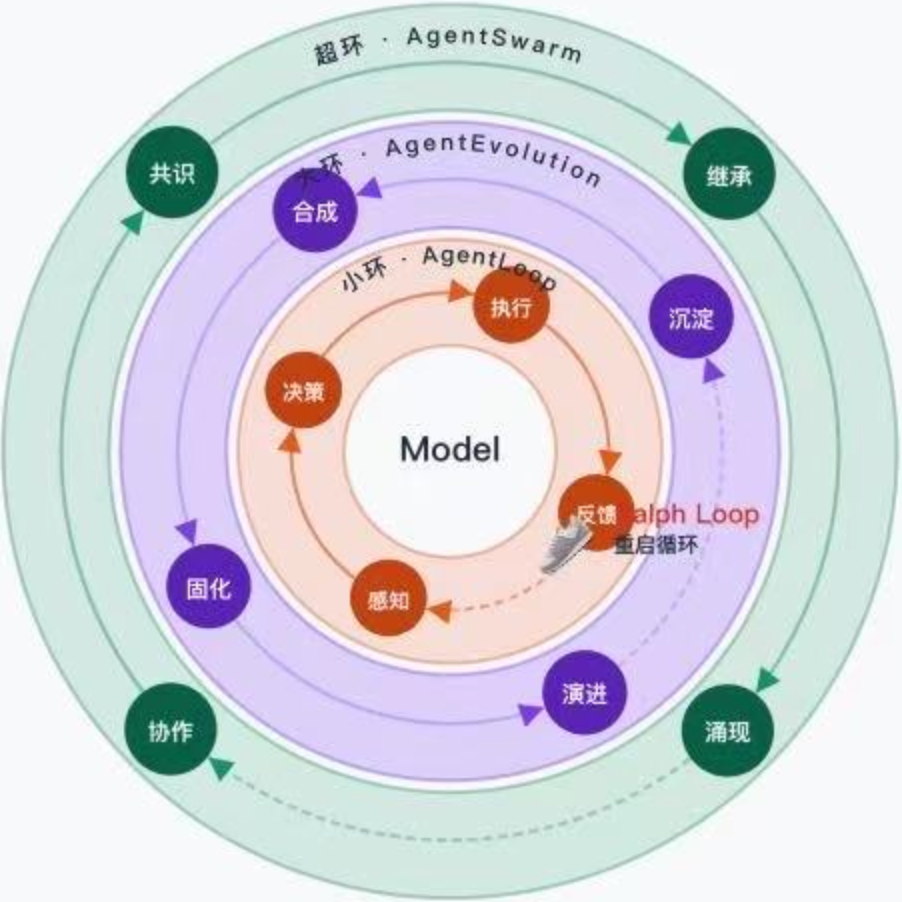
RSI: Evolution Goes Beyond Models

AI has already entered code writing, algorithm optimization, and model development. But after a task is completed, what remains may be reusable capability—or merely an answer and scattered logs. The difference becomes apparent only when a similar problem comes up again: can the system reuse what it learned, or must it pay the cost of exploration all over again? Recursive Self-Improvement (RSI) co…

RSISwarmEvoMapLoopEvolution

evomap.aihttps://evomap.ai