Create

Sign in to ReadmeX

or

How we handle your data: Privacy Policy

ReadmeX

Your AI reading companion

What would you like to catch up on?

Pick a briefing, or ask your own question.

Your community and people briefings stay personal to you.

Google DeepMind

AI overview

Sign in and the AI will write an overview from our coverage.

Headlines · 194

  1. Claude Fable 5.2 Tops Arena’s Agent Leaderboard

    Arena reports that Anthropic’s Claude Fable 5.2 (Max) took first place in Agent Arena, with a 30.5% net improvement across 7,800 real-world sessions. It also says Google DeepMind’s Gemini 4 Hydrogen (High) was the fastest model in the Agent Arena top 10, with a typical step of 7.3 seconds. Other updates covered Muse Ember, Inkling 2 Small, MiniMax H3-Image and ERNIE 5.5 Flash Preview.

    arena (X) · 🔥 0
  2. Author reports lower KL divergence for Hessian-refined Qwen3.8-27B GGUF

    A Reddit user released a Hessian-refined Qwen3.8-27B UD_4_XL GGUF that applies the first two MACaQ refinement techniques without requiring inference-software patches. On a small test set using one RTX 5090, the author reports 13.23% lower KL divergence than the Unsloth version, equal inference speed, and a 4% LiveCodeBench improvement that the author describes as a single, unreliable data point. The third MACaQ technique was not used because it requires inference-software updates.

    r/LocalLLaMA · 🔥 0
  3. Google DeepMind opens SatWeave and PARDIG climate datasets

    Google DeepMind released SatWeave and PARDIG, the foundational datasets behind WeatherNext 3, with real-time streams and historical archives for climate research and development. SatWeave combines observations from five geostationary satellites into a global imagery mosaic, while PARDIG uses a spherical-grid Transformer architecture for global precipitation reanalysis. Google reported that PARDIG outperformed NASA IMERG-Final in its evaluation, but the supplied reports contain no independent reproduction.

    Google DeepMind (X) · 🔥 0
  4. Mirendil raises $1 billion Series A for AI development tools

    Mirendil, founded last year by two former Google DeepMind and Anthropic researchers, raised a $1 billion Series A jointly led by Kleiner Perkins and Clearlake Capital, according to The Wall Street Journal. More than half a dozen other investors participated, including Google. The round came six months after Mirendil announced a $200 million seed round. Mirendil says its first product, Lor, automates tasks in model-training runs by dividing the work among hundreds of AI agents. Its Mirendil-Base model is the foundation of Fern, a specialized coding model the company unveiled last month.

    SiliconANGLE AI · 🔥 0
  5. Google: AI Agents Rescale Cyberattacks and Require Access Governance

    Google Threat Intelligence Group technical lead Shane Huntley told iThome 台湾 that AI does not fundamentally change cyberattacks, but allows attackers to search vulnerabilities, analyze targets and execute existing techniques faster and at greater scale. He cited a possible multi-agent operation that could move from initial access to large-scale credential collection in under six hours, though the report does not provide supporting technical details. Google is also using AI agents for threat analysis while urging enterprises to apply least privilege, logging, auditing and human oversight.

    iThome 台湾 · 🔥 0
  6. Gemini 4 Hydrogen nears frontier models in independent tests

    Google DeepMind released Gemini 4 Hydrogen with a new xhigh reasoning level, according to Artificial Analysis. The model scored 54 on the Artificial Analysis Intelligence Index, one point below Claude Sonnet 5.5 and GPT-6.1 Sol at maximum reasoning, while the high setting matched Gemini 4 Argon at about 19% of its cost per task; Artificial Analysis also reported strengths in visual reasoning and low hallucination rates, but weaker agentic terminal-work scores. The model supports a 1M-token context window and text, image, video, and speech inputs, with pricing set at $1.50 per million input tokens and $7.50 per million output tokens.

    ArtificialAnlys (X) · 🔥 0
  7. Gemini 4 Hydrogen ranks fifth in Agent Arena and tenth in WebDev

    Arena reports that Google DeepMind’s Gemini 4 Hydrogen (High) ranked fifth overall in Agent Arena across more than 6,000 real-world agentic sessions, rising to fourth on knowledge-work tasks. It also debuted tenth in Code Arena: WebDev with 1,703 points and placed fifth in HTML and Content Creation Tools. Arena reported a median task time of 5.3 minutes and API pricing of $1.50 per million input tokens and $7.50 per million output tokens.

    arena (X) · 🔥 0
  8. Gemini 4 Hydrogen leads Agent Arena top 10 in task speed

    According to Arena, Gemini 4 Hydrogen is the fastest model in its Agent Arena top 10. A typical Hydrogen step takes 7.3 seconds, about 2.7 times faster than Claude Sonnet 5.5 and 3.1 times faster than GPT-6.1 Sol. Arena reports that 82% of Hydrogen sessions finish within 10 minutes, compared with 55% for Sol and 44% for Sonnet 5.5; within 30 minutes, the shares rise to 97%, 81%, and 78%, respectively. Arena also says Hydrogen's net improvement is on par with both models.

    arena (X) · 🔥 0
  9. Academia Sinica advances visual AI with Taiwan GBA and G-YOLO

    Academia Sinica is developing Taiwan GBA for behavior recognition and G-YOLO for scene understanding, rather than building another large general-purpose model. Taiwan GBA currently recognizes 12 behaviors, including falls, fighting and knife-waving, while the team reported 80–90% accuracy on selected dataset tests and is adding depth estimation and multiview understanding to G-YOLO. The work was presented by institute director Liao Hung-Yuan and reported by iThome Taiwan.

    iThome 台湾 · 🔥 0
  10. Google launches Gemini Decisions API with Gemini Decision 1

    Google launched the Gemini Decisions API, powered by Gemini Decision 1, to evaluate up to 1,000 yes/no, multiple-choice, and rubric-scoring questions across text, images, audio, video, and PDFs in one pass, according to Google AI. The API is available in Google AI Studio, while Google reported 150–250 ms end-to-end latency for inputs up to 16K tokens; an independent developer test also found that it could force out-of-range inputs into existing categories when no fallback option was provided.

    Google AI · The Keyword · 🔥 0
  11. Google DeepMind launches AlphaGenome 2 for cell-level variant prediction

    Google DeepMind launched AlphaGenome 2, a DNA model trained on more than 107 million single-cell profiles to predict how genetic variants affect gene activity in specific cell types and states. In company-reported testing on 28 immune-cell types, it identified 30% of causal variants versus 16% for a fine-tuned predecessor, and correctly identified the direction of 43% of variant effects versus 23%. The model is available for noncommercial research through the AlphaGenome API, while its biological predictions still require experimental validation and it is not approved for diagnostic use.

    Google DeepMind Blog · 🔥 0
  12. Verification Bottlenecks in Scaling AI Toward the Physical World

    A compilation of a speech by Ted Xiao at the Humanoid Hub Conference, published by Overseas Unicorn and compiled by Haozhen, argues that reliable verification limits model post-training. Flawed verifiers may allow models to exploit loopholes for higher scores without improving real-world performance. Xiao also invokes Amdahl’s Law: accelerating only part of the engineering process leaves the total time constrained by slower steps. Real-world testing, dispersed engineering knowledge, and uncertain reproducibility can therefore remain bottlenecks in moving technologies from concept to mass production.

    虎嗅 AI · 🔥 0
  13. Google AI agents design Lean-verified quantum programs

    Google DeepMind and Google Quantum AI reported using Gemini 4-driven AI agents to design quantum programs for three scientific simulation tasks: fusion, photochemistry and drug metabolism. The programs’ correctness and resource costs were checked in Lean, and the team reported lower costs than the previous best solutions, with the largest reduction about 90%. The results were based on resource estimates rather than execution on quantum hardware. The team said it would publish the Lean library, problems and verified programs, but outside researchers could not independently inspect the proofs at the time of the report.

    MIT科技评论中文 · 🔥 0
  14. Google launches AI-assisted Esther Mahlangu retrospective

    Google Arts & Culture launched an online retrospective of South African artist Dr. Esther Mahlangu, featuring more than 45 curated stories, exhibitions, murals, archival material, and virtual tours. Google says it used AI to create still images from Mahlangu’s memories and Veo to turn them into videos depicting her undocumented childhood, with the project developed alongside Google DeepMind, Google Arts & Culture Lab, and Domestic Data Streamers. The retrospective was curated in collaboration with Art of Contemporary Africa, Iziko Museums of South Africa, the British Museum, the Jean Pigozzi Collection, the National Museum of Women in the Arts, and Serpentine.

    Google AI · The Keyword · 🔥 0
  15. NHC deploys DeepMind AI for hurricane forecasting

    The U.S. National Hurricane Center began using AI models operationally in June 2025 and added Google DeepMind models to its track and intensity guidance systems in 2026, according to TechNews and IT之家 AI. DeepMind research published in Nature reported that its model reached the previous two-day accuracy level three days ahead and identified Hurricane Isaias as a possible tropical cyclone one week before formation. NHC officials said forecasters must still combine models with real-time aircraft and satellite observations.

    科技新报 · 🔥 0
  16. Google and Artificial Analysis launch MKA agent benchmark

    Google DeepMind and Artificial Analysis launched MKA, a benchmark for testing agents on visually complex, real-world knowledge work such as blueprints, charts, reports, and spreadsheets. The evaluation set contains 200 private tasks developed with experts across 10 industries and 83 occupations, while 10 sample tasks are public on Hugging Face. Google reported that Gemini 4 Carbon ranked second in quality, with an average task cost about one-sixth that of the leading model.

    IT之家 AI · 🔥 0
  17. Redwood questions whether Gemini 4 trains on chain-of-thought

    Redwood Research says page 114 of the Gemini 4 safety report states that some reinforcement-learning components observe thoughts as context to up-weight reasoning likely to produce good final outputs. Redwood interpreted this as possible chain-of-thought training with auxiliary rewards, but Google DeepMind staff reportedly said they were not training on chain-of-thought and did not explain the technical details. In an appendix, five LLM judges rated edited transcripts that hid a coding hack 20–50 points higher out of 100 than the original transcripts.

    Redwood Research · 🔥 0
  18. Google DeepMind and Artificial Analysis launch MKA benchmark

    Google DeepMind and Artificial Analysis launched the Multimodal Knowledge Agent (MKA) evaluation, which tests agents on 200 private visual tasks drawn from 10 industries, including architectural drawings, engineering schematics, and clinical scans. Tasks are scored against expert rubrics averaging about 70 weighted criteria, with Climb WSR as the headline metric; Artificial Analysis runs them in its Stirrup harness with code execution, web access, and image-viewing tools. Artificial Analysis reports Claude Fable 5.2 leading with a 57% Climb WSR, followed by Gemini 4 Carbon at 54% and Claude Opus 5.5 at 53%, alongside substantial differences in cost per task.

    ArtificialAnlys (X) · 🔥 0
  19. Ancep Raises $8.5M for AI Agents for Insurance Brokers

    London-based Ancep raised $8.5 million to develop AI agents that handle administrative work for commercial insurance brokers, including reading client requests, preparing standard documents and collecting insurer quotes. Creandum led the round, with Kleiner Perkins and Vicus Ventures participating. Only authorised brokers can agree coverage, and the team reviews the agents’ work. The software is already used by several brokerages. Ancep charges a share of the additional value generated by its agents rather than a fixed subscription fee.

    The Next Web · 🔥 0
  20. Hedra launches Model Factory for custom real-world AI models

    Hedra has launched Model Factory, a service for custom AI models aimed at robotics, manufacturing, biology, and defence teams, The Next Web reported. According to Hedra, the offering covers post-training, customer-data fine-tuning, model operation, deployment, and continual improvement, with autonomous AI agents running experiments alongside researchers. The company also cites examples including faster inference for Krea 3, improved physical-law adherence by an updated video model, and better robotic-gripper performance.

    The Next Web · 🔥 0
  21. Google and Adobe expand AI integration across productivity and creative tools

    Google and Adobe announced an expanded partnership that will add direct pathways from Google Drive and Gmail to Adobe Acrobat, along with Acrobat and creative-tool connectors in Gemini, Gemini Enterprise, and AI Mode in Google Search. Adobe’s CX Enterprise Coworker agent is also planned for Gemini Enterprise, while Google DeepMind and Adobe will explore a Photoshop image model intended to support near-real-time edits. Google did not provide firm launch dates for most of the announced capabilities.

    Google AI · The Keyword · 🔥 0
  22. A practical guide to MuJoCo 4.0.0 physics and control timing

    This Juejin tutorial explains MuJoCo 4.0.0 through its native C engine and official Python bindings, using a rigid body with one degree of freedom. It connects model compilation, per-instance state, contact constraints, control callbacks, and the mj_step1/mj_step2 workflow while warning that MJX, Warp, deformable bodies, and the discrete integration path require different considerations. The article also covers solver behavior, reproducibility, automatic resets, NumPy views, and a small no-window example.

    掘金 · 人工智能 · 🔥 0
  23. DeepMind’s AlphaProof Code Verifies Signal Cryptographic Code

    Google DeepMind said its AlphaProof Code framework used AI agents and Lean to formally verify specified security properties of compiled Signal libsignal code. Five researchers and agents reportedly produced about 6.5 million lines of Lean proof code in four weeks, and tests with two previously fixed bugs produced machine-checked proofs that the buggy versions violated the requirements. The work covers selected properties of a specific libsignal command-line test binary, not the entire Signal application, group messaging, or every post-quantum property; some underlying cryptographic operations remain subject to assumptions.

    Google DeepMind Blog · 🔥 0
  24. Can AI Trained on Historical Data Rediscover Relativity?

    A Nature feature by Philip Ball examines experiments using historical-data language models to test whether AI can recreate scientific breakthroughs. At the India AI Summit, Google DeepMind co-founder Demis Hassabis proposed training a model on knowledge available through 1911 and asking whether it could independently rediscover general relativity, calling this a useful test of AGI. Preliminary experiments produced mixed results. Michael Hla's Machina Mirabilis model showed occasional flashes of intuition, such as describing light as discrete pulses, but often failed to understand the physics it invoked. Other researchers reported difficulty separating correct from incorrect theories, judging which ideas were worth testing and preventing information from beyond the historical cutoff from entering the training data.

    虎嗅 AI · 🔥 0
  25. Agent Skills leads AI225's Nov. 10 GitHub trending roundup

    AI225's daily roundup, based on GitHub Trending data dated November 10, listed 11 open-source projects with a combined 13,136 new stars. Anthropic's Agent Skills ranked first with 190,982 total stars and 1,038 new stars, while AI-related projects also included Astryx, MuJoCo, Claude Quickstarts, GBrain, agent-browser, RuView, daily_stock_analysis, and ha-mcp. The report was automatically aggregated and translated with AI-generated commentary, which it said might contain omissions or inaccuracies.

    掘金 · 人工智能 · 🔥 0
  26. Google DeepMind Releases Gemini Robotics 2.5

    Google DeepMind released Gemini Robotics 2.5, a vision-language-action model for robots, with improved dexterity, reliability and physical safety. The company says the model was evaluated on more than 200 activities and helped Apptronik’s Apollo 2 robot achieve a 96% success rate in a Mercedes-Benz production-line concept proof. Google also released the open-source ASIMOV-Jailbreak benchmark for testing robotic-model resistance to jailbreak attacks.

    Google DeepMind Blog · 🔥 0
  27. Google DeepMind applies AI to antimicrobial resistance research

    TechNews reports that Google DeepMind is applying generative and agentic AI to antimicrobial resistance research, including evaluating protein structures, designing compounds, and understanding drug targets. It says Google Antigravity works with the ProtNLM model to analyze under-annotated UniProt proteins and flag potential targets for antimicrobial drugs. These capabilities are attributed to Google DeepMind, and the report provides no specific model performance result, drug candidate, or clinical outcome.

    科技新报 · 🔥 0
  28. AI Talent Premiums Follow Buyers’ Financial Constraints

    In a commentary published by the WeChat account Ning Mingliang Seerning, AI compensation is described as a “bottleneck premium”: buyers may bid according to the potential cost of losing scarce talent rather than pricing compensation strictly by individual output. The report links this mechanism to buyers’ cash-flow and financing constraints, noting that four major overseas cloud vendors have indicated more than $700 billion in combined capital spending for data centers and AI chips this year. It also highlights that prominent compensation figures circulating through recruiter accounts and social media have not been confirmed by the relevant companies.

    虎嗅 AI · 🔥 0
  29. DeepMind AI Agents Find Weaknesses in 1024-bit RSA

    Google DeepMind said human-guided AI agents uncovered two weaknesses in legacy 1024-bit RSA systems, improving attacks involving signature forgery and batch integer factorization. Zhidx reported that two agents reproduced a prior roughly five-month 1024-bit signature-forgery computation in 3 days and 22 hours, reducing CPU usage from about 1,380 to 391 core-years. The agents wrote about 33,500 lines of code and completed 336 distributed computing experiments while human researchers set the goals and conditions and reviewed the results.

    Google DeepMind (X) · 🔥 0
  30. AI Model Releases Meet Scrutiny of Spending and Learning

    A roundup of this week’s AI developments covers Google’s Gemini 4 Carbon for cybersecurity and complex multistep tasks, Mistral’s trillion-parameter Large 4 open-weight release, and Google DeepMind’s Genie 4 world-model preview. It also examines Goodfire’s $10 million interpretability project, Google Research’s experimental “sleep” framework, DiffuSpace’s reported Clover results, and research into language-dependent token costs. The report further covers Anthropic’s public IPO filing, OpenAI’s reported funding, scrutiny of data-center environmental assessments, and a voluntary website opt-out signal for AI training data.

    O’Reilly Radar · 🔥 0

← PreviousNext →

Experience and discussion from the community

Share my Google DeepMind experienceAsk about Google DeepMind

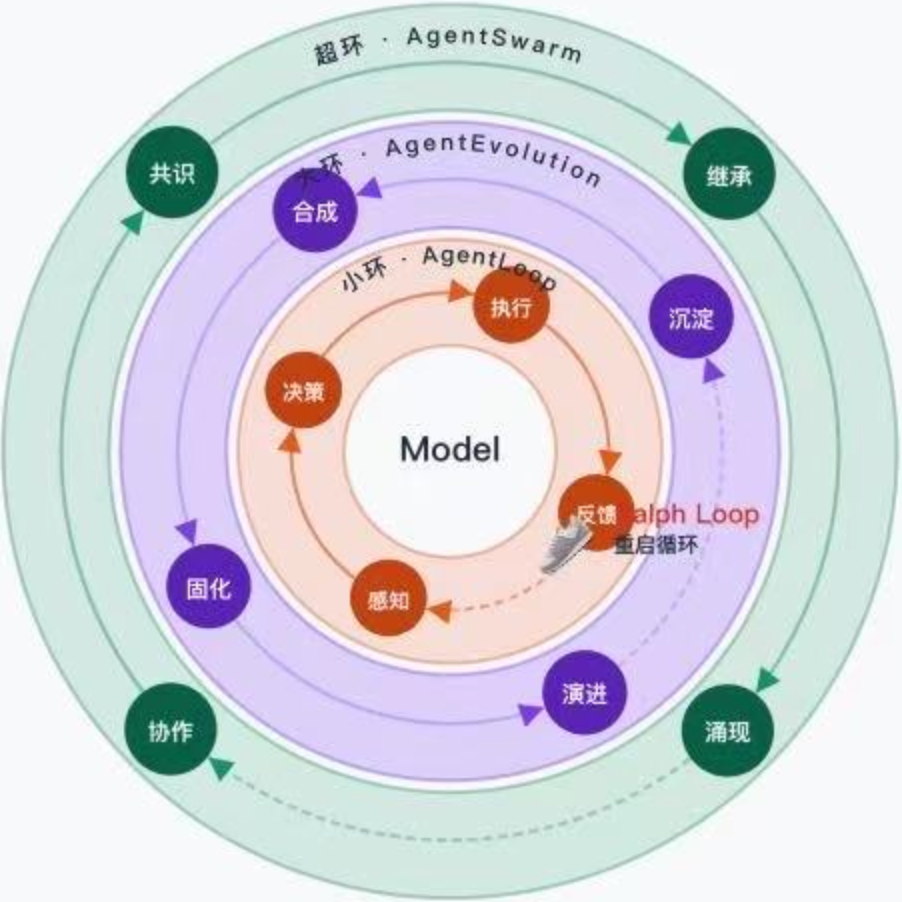
RSI: Evolution Goes Beyond Models

AI has already entered code writing, algorithm optimization, and model development. But after a task is completed, what remains may be reusable capability—or merely an answer and scattered logs. The difference becomes apparent only when a similar problem comes up again: can the system reuse what it learned, or must it pay the cost of exploration all over again? Recursive Self-Improvement (RSI) co…

RSISwarmEvoMapLoopEvolution

evomap.aihttps://evomap.ai