Anthropic warns small AI models could enable self-replicating botnets
Engadget reports that Anthropic's Frontier Red Team found small AI models may be only months away from replicating and spreading across insecure devices, creating slow, hard-to-kill autonomous botnets. Experts broadly agreed that such capability could emerge in the near future, but Georgia Tech professor Michael Bailey disputed the characterization of the emulation as full self-replication. He said it demonstrated sharding and device hopping in a network where the exploit was trivial, rather than worm-like propagation, and that Anthropic did not attempt model retraining. Anthropic suggested that internet service providers notify customers of infections and limit infected devices to a safe list of websites, as well as possible regulation. Bailey separately emphasized patching, device isolation, strong passwords and security hygiene.
Bailey said more capable AI models could redistribute the work of creating botnets and change attacker-defender economics by automating some adaptation across unfamiliar devices. He also cautioned that Anthropic had not demonstrated this capability convincingly and that the attack's exact form and consequences remain open questions.
What happens when AI starts self-replicating?
Anthropic warns that future is soon, but the threat is less novel than it seems.
By Igor Bonifacic Oct. 31, 2026 8:30 am EST
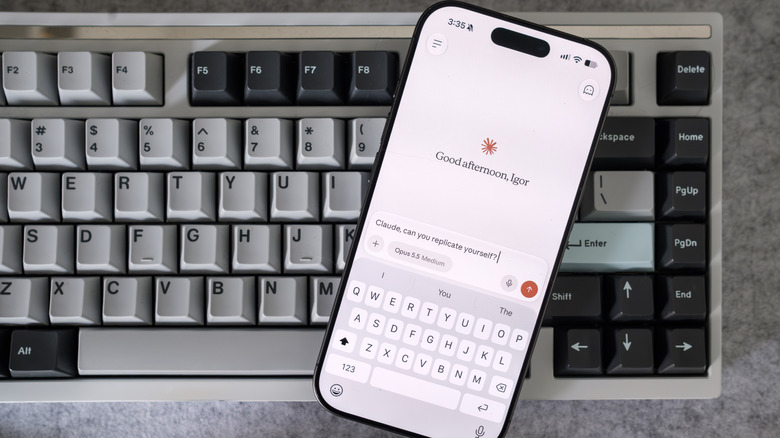
Igor Bonifacic for Engadget
#Anthropic#Anthropic Frontier Red Team#Michael Bailey#Georgia Tech#Chris Canal#EquiStamp#FAR.AI#Mirai#Kimwolf#PlayStation Network#Dyn#Sony