Microsoft’s MAI-DxO outperforms generalists in simulated diagnosis
Microsoft’s multi-agent MAI-DxO asks sequential questions, selects tests and debates diagnoses, according to a peer-reviewed Science study reported by The Next Web. It achieved 83.2% accuracy on 304 complex cases derived from New England Journal of Medicine reports, compared with 36.1% for generalist physicians with reference materials and about 22% without them. On 325 emergency-department cases, it scored 80.3%, versus 46.8% for generalist physicians. Microsoft acknowledged that the evaluations used retrospective text cases and had no physical examinations or medical imaging. Specialists and multidisciplinary teams were not included, and the system has not been validated in live clinical care. Microsoft researchers plan to work with Beth Israel Deaconess Medical Center on testing.
The results show that coordinated AI agents performed strongly on retrospective, text-based diagnostic evaluations. However, the lack of specialist comparisons and live clinical validation limits conclusions about real-world performance.
微软宣布,其人工智能医疗诊断系统Diagnostic Orchestrator在复杂病例测试中取得了优于人类医生的成绩。微软AI首席执行官穆斯塔法·苏莱曼表示,公司正在朝着医疗超级智能的目标迈进,并预计未来几年内,人工智能系统在医学领域的表现有望达到与人类专家难以区分的水平。
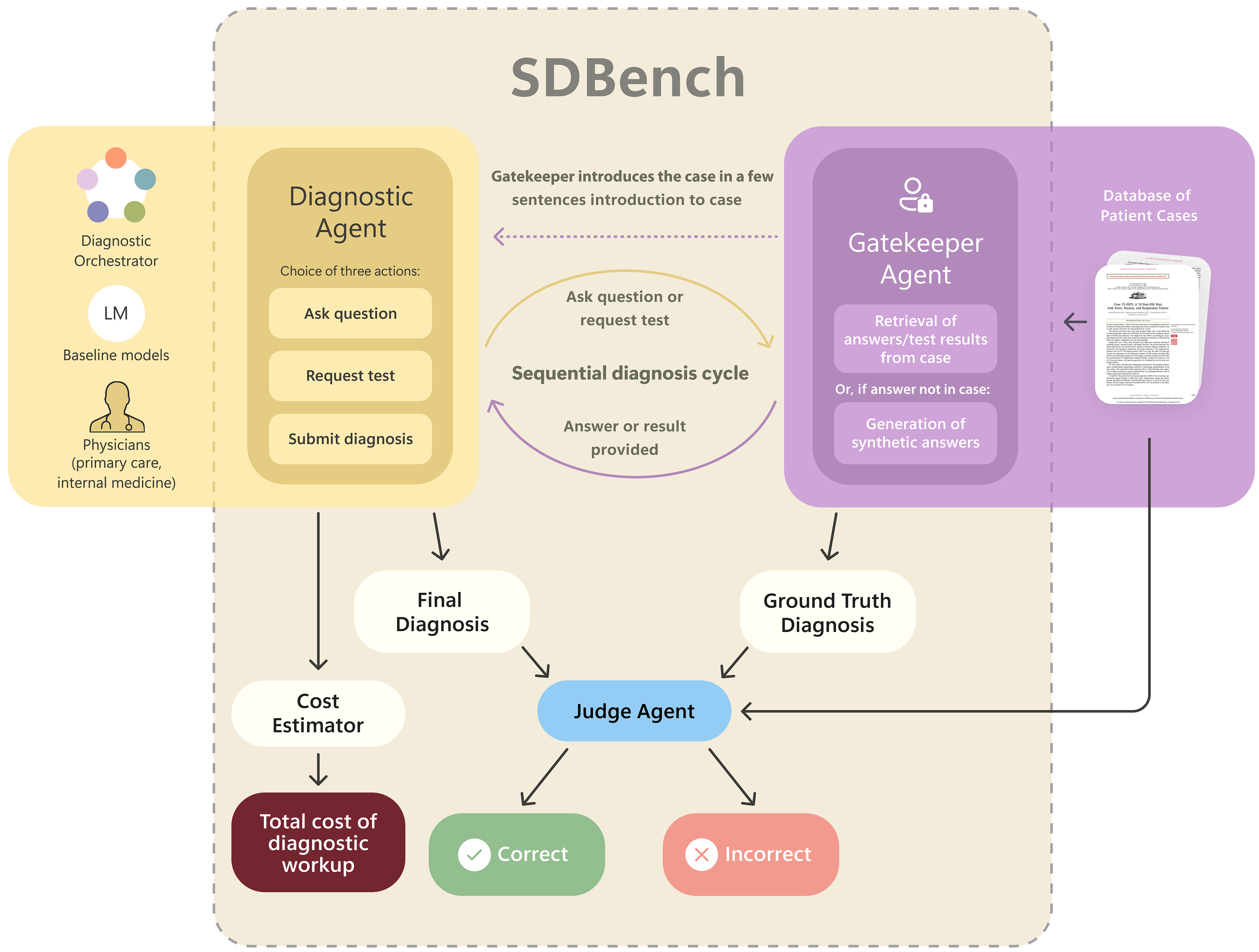
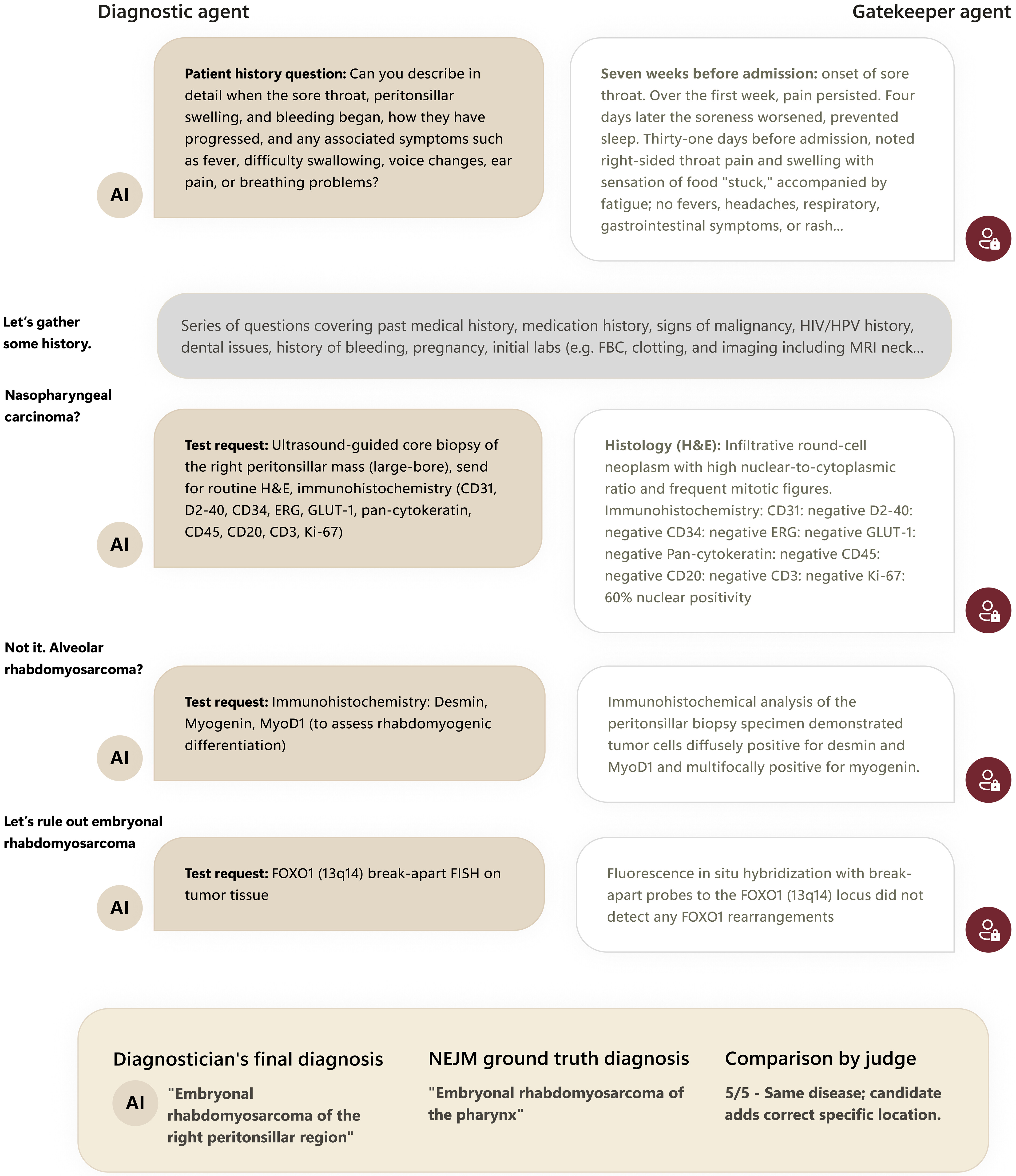
这项研究成果于10月22日发表在国际学术期刊《科学》上。微软通过一系列医疗病例和急诊科数据,将自研AI诊断系统与人类医生进行比较,并建立了名为SDBench的评估基准。与只需要回答一道医学选择题的传统测试不同,该基准要求参与者逐步分析病情、提出问题、选择检查项目,最终给出诊断结果,试图更真实地模拟临床医生的诊断过程。
#Microsoft#MAI-DxO#SDBench#OpenAI#GPT-5#GPT-5.5#Science#Beth Israel Deaconess Medical Center#New England Journal of Medicine