Joint survey defines a 6A framework for proactive AI agents
Researchers from UIUC, Google, Stanford, UC Berkeley and CMU presented the survey “Proactive AI for Superintelligent Agents,” which organizes proactive behavior around Awareness, Anticipation, Agenda, Arbitration, Action and Adaptation. 新智元 reported that the survey reviews evaluation methods and applications across 13 domains, while 36氪 人工智能 published an authorized syndication of the same article. The reports also cite Meta Muse, OpenAI dots, Proactive Agent and ProAgent as ongoing explorations of assistants that initiate useful work without waiting for a new instruction.
The survey gives AI-agent builders a structured way to examine how systems detect needs, select work, decide when to intervene and adapt over long-horizon tasks.
1995年,Michael Wooldridge和Nicholas Jennings在《Intelligent Agents: Theory and Practice》中,将自主性(Autonomy)、交互能力(Social Ability)、反应性(Reactivity)和主动性(Proactiveness)列为智能体的四项基本特征。
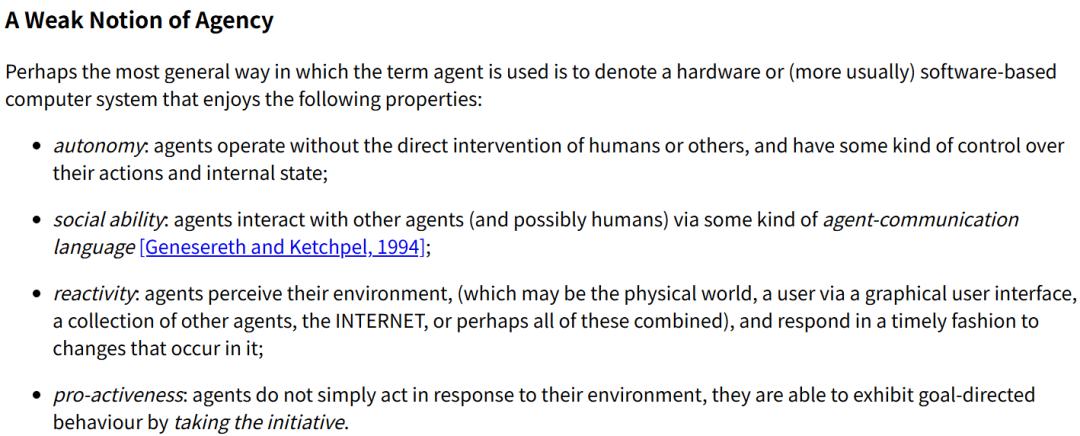
主动性意味着智能体能够围绕目标主动开展工作。
这个要求,在三十年前就已经进入了智能体研究的基本讨论。
今天,大模型智能体已经能够理解指令、调用工具,并独立完成包含多个步骤的任务。许多系统仍然需要人来发现问题、提出任务,再交给AI处理。人们对智能助手的期待还包括另一项能力:在新的指示到来之前,发现值得做的工作,并主动着手处理。
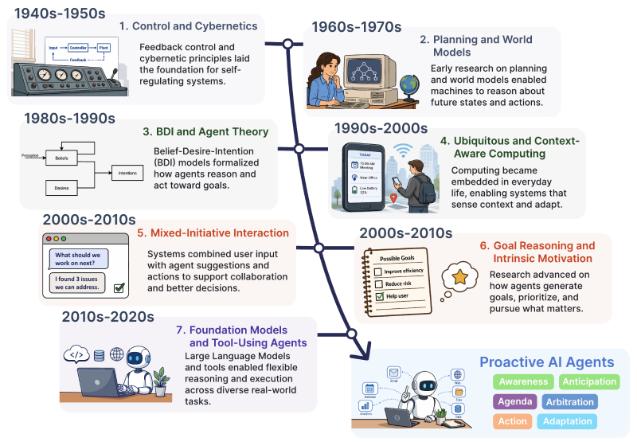
#Proactive AI for Superintelligent Agents#6A Framework#Meta#Meta Muse#OpenAI#OpenAI dots#Google#Stanford University#UC Berkeley#Carnegie Mellon University#Proactive Agent#ProAgent