Open-weight models dominate tokens, not OpenRouter spending
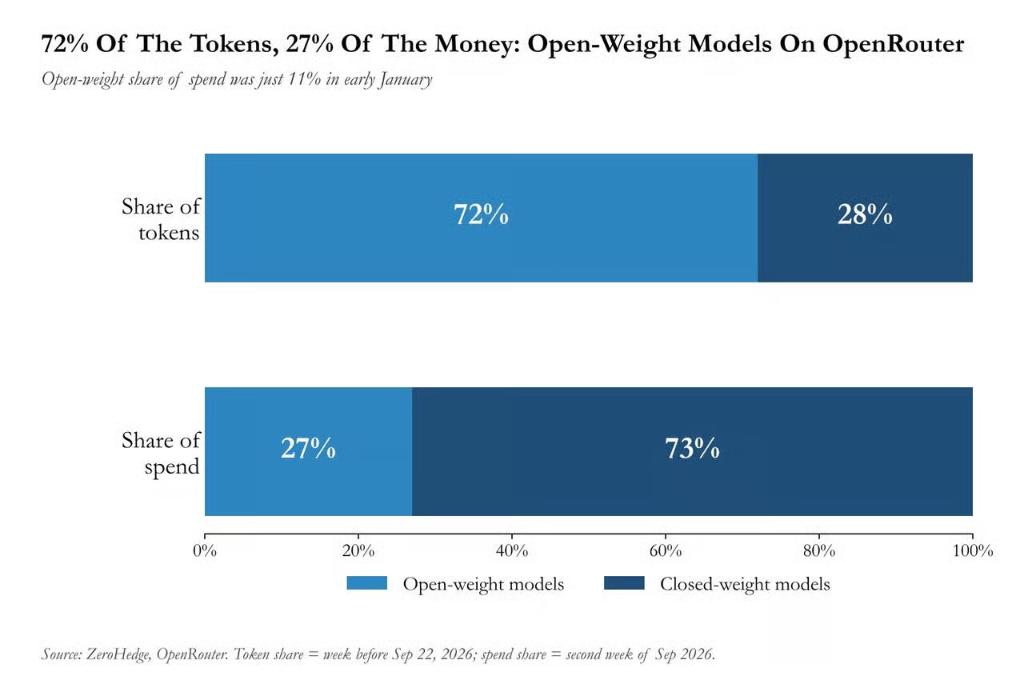
OpenRouter data cited by Goldman Sachs’ Bobby Molavi shows open-weight models handled 72% of tokens in the second week of September but received only 27% of platform spending. The report also says token demand rose sharply while GPU rental prices increased and token prices fell, creating a disputed divide between infrastructure revenue and model monetization. It further cites roughly 69% of mid-September tokens as coming from Chinese AI laboratories and reports that Meta sought up to $95 billion from shareholders for AI capital expenditure.
The figures highlight a central tension in AI’s economics: usage can expand rapidly while spending concentrates among higher-priced models and rising GPU costs strain buyers’ returns.
AI需求数据正在制造一场罕见的市场分歧:同一组数字,多头和空头各取所需,双方都宣称胜利。这场争论的核心,是一个令人不安的结构性矛盾——Token消耗量爆炸式增长,但绝大多数增量流向了收费最低的模型,而服务这些Token的GPU成本却在同步攀升。
据高盛Bobby Molavi在其最新报告中披露,OpenRouter数据显示,开源权重模型(open-weight models)在9月第二周处理了72%的Token流量,却仅获得27%的平台总支出;与此同时,闭源模型虽然份额从1月初的89%降至73%,仍牢牢掌控着绝大部分货币化收益。
更值得关注的是,OpenRouter平台9月中旬约69%的Token来自中国AI实验室。Molavi将当前市场定性为“无法操作”(unplayable),并指出AI生产力红利迄今尚未在科技行业以外留下可量化的痕迹。
#OpenRouter#Goldman Sachs#Meta#Epoch AI#YipitData#OpenAI#GPT-5.6 Luna