Create

Sign in to ReadmeX

or

How we handle your data: Privacy Policy

ReadmeX

Your AI reading companion

What would you like to catch up on?

Pick a briefing, or ask your own question.

Your community and people briefings stay personal to you.

glm-5.3-flash

AI overview

Sign in and the AI will write an overview from our coverage.

Headlines · 21

  1. Probe finds GLM-5.3-Flash added real web retrieval over GLM-4-Flash

    A Juejin author’s Python probe found that GLM-4-Flash answered a current-product question from training memory despite receiving a valid web_search tool, with no search-result fields in the response. After the author switched the same Zhipu AI engine to GLM-5.3-Flash on November 2, the test returned search citations and a currently available model. The report also documents a separate Java binding bug and says cross-implementation checks ruled it out as the cause of the earlier behavior.

    掘金 · 人工智能 · 🔥 2
  2. RunAnywhere opens Trainium2 engine for GLM-5.3-Flash

    RunAnywhere developer said the company open-sourced an inference engine that serves the 320B-parameter, 1M-context GLM-5.3-Flash model on one AWS Trainium2 trn2.48xlarge. The project uses fused NKI layer megakernels to reduce a batch-8 decode step from 32.2 ms to 24.2 ms on the author's layout, with reproduction instructions and detailed profiles included. RunAnywhere also reported up to 28.9 agent requests per minute on the self-run SemiAnalysis AgentX benchmark, but the post provides no stock-AWS or GPU baseline.

    r/MachineLearning · 🔥 0
  3. GLM-5.3 leads AA-PersonalityBench in em-dash usage

    ArtificialAnlys counted the em dashes in every response produced by each model in AA-PersonalityBench. GLM-5.3 averaged 7.4 per response, the highest rate measured, while Claude Opus 5.5 averaged 0.02 and Claude Haiku 5.5 and Claude Sonnet 5.5 averaged nearly none.

    ArtificialAnlys (X) · 🔥 0
  4. WorkBuddy Case Study: Two Browser Games, One Published

    A Juejin author used Tencent’s WorkBuddy to build two browser games from natural-language requests, producing single-file HTML applications with Canvas-based logic, graphics and sound. According to the author’s local session and credit records, the deep-sea fishing project took 43 conversations and 301.46 credits, while the forest combat game took 16 conversations and 107.59 credits. The fishing game was published through WorkBuddy’s sharing feature; the forest game remained local. The author reported that gameplay and visual changes required repeated instructions, automated submission of a webpage form failed and was completed manually, and mobile landscape support required rotating the display with CSS and converting touch coordinates.

    掘金 · 人工智能 · 🔥 0
  5. EPYC 7443 upgrade boosts local MoE inference in one system

    In a field report, an r/LocalLLaMA user replaced a Core Ultra 7 265KF and MSI Z890 with an EPYC 7443 and Supermicro H12SSL-NT while retaining the same GPU inventory. The upgrade also increased memory from 64 GB DDR5 to 256 GB DDR4 ECC RDIMM and widened PCIe links. After tuning BMC fan thresholds, RAM overclocking, IOMMU and BIOS settings, the author reported GLM-5.3-Flash and DeepSeek-V4.1-Flash decode speeds increasing by roughly fourfold, while Qwen3.8-27B dense-model performance was broadly unchanged. The author attributes the large MoE gains mainly to the models fitting in VRAM and RAM, with less data being read from NVMe storage. These are results from one user's system. One GPU was unavailable during the post-change MoE tests, so those runs used three GPUs rather than four, and Maya was updated from versions 1.0.34 or 1.1.20 to 1.1.42 during testing.

    r/LocalLLaMA · 🔥 0
  6. Reddit user pairs local GLM-5.3-Flash with GPT-6.1 Sol for coding

    A Reddit user reports deploying GLM-5.3-Flash on four local H200 GPUs and using it as the primary coding model in an OpenCode workflow. The user says GPT-6.1 Sol handles orchestration while GLM-5.3-Flash serves as a subagent model that explores, writes and implements code. They preferred OpenCode because it allows agents in one session to use models from different providers, unlike Claude Code or Codex as they had used them. The poster describes GLM-5.3-Flash as a MoE model with 320 billion total parameters, 18 billion active parameters and a 512K context window. They aimed to cut subscription and API costs but did not provide a cost comparison.

    r/LocalLLaMA · 🔥 0
  7. UkisAI releases two Swift 1.5 reasoning-efficiency models

    UkisAI announced Swift 1.5 GLM-5.3-Flash and Swift 1.5 Ornith-9B, with GGUF and other quantized weights available for local inference. The company says GLM-5.3-Flash cut thinking-token usage by 61.4% on MMLU-PRO with a 0.46% average accuracy loss, while Ornith-9B reduced thinking-token usage by 33.5% without an accuracy loss. These results are vendor claims based on UkisAI's own benchmarks and have not been independently verified.

    r/LocalLLaMA · 🔥 0
  8. WhisperNow releases locally fine-tuned transcription cleanup models

    Developer stephan273 released WhisperNow, an MIT-licensed voice-to-text app for Windows, macOS, and Linux, together with three locally fine-tuned models, a 66,557-row dataset, and training documentation. The LFM2.5 1.2B, LFM2.5 2.6B, and Qwen3.5 4B models were trained to remove fillers, false starts, and self-corrections and to format lists locally. The author reports that they outperformed several cloud models in factual-error tests, although those performance results have not been independently verified.

    r/LocalLLaMA · 🔥 0
  9. MEMCUT tests whether AI agents truly forget deleted secrets

    Researchers from Hong Kong University of Science and Technology (Guangzhou), the University of Science and Technology of China, and Hong Kong University of Science and Technology built MEMCUT to evaluate user-requested forgetting in AI agent memory. Across five memory architectures and four large language models, 85%–99% of secrets remained recoverable after only direct disclosures were deleted, while LLM-assisted cleanup still left 39%–76% derivable from residual evidence. The benchmark distinguishes native recovery through a system’s retriever from residual recovery when all surviving memory records are provided.

    36氪 人工智能 · 🔥 0
  10. Coding-Agent Harness Changes Raise Costs Without Reliable Gains

    Shandong University researchers Liu and Han compared Claude Code, OpenCode, and mini-SWE-agent while holding the language model constant. Most performance differences were similar to rerun noise, while the harnesses consumed two to three times as many tokens as the leanest option; OpenCode showed a significant deficit on the larger task pool. A small cross-check on Terminal-Bench 2.1 showed the same pattern.

    The Decoder · 🔥 0
  11. FlagOS 2.2 expands cross-chip AI optimization

    智源众智 released FlagOS 2.2 on September 30, 2026, and presented it at the AI Open Computing Conference in Beijing on October 17. The release adds nine operator libraries covering 1,454 public operators, including FlagGems-SGLang, FlagOS-Compressor, KernelGen and FlagPrism; vendor-reported tests showed about 27% higher cross-chip operator performance across more than 1,000 operators and 10 heterogeneous AI chips. In a GLM-5.3-Flash deployment, the optimized Ascend 910B service reached 2.04 times the prior logical throughput, while a scenario-based rental calculation placed its compute cost 19.4% to 27.6% below the corresponding commercial API pricing reference.

    InfoQ 中文 AI&大模型 · 🔥 0
  12. Zhipu Compensates Coding Plan Users and Teases Next GLM Model

    Zhipu reportedly sent affected GLM Coding Plan users three quota-reset cards after some encountered model degradation, according to 36Kr, which republished QbitAI. A compensation notice also promised another quota reset after a new model launches. Reports circulated about a possible GLM-5.5 model, including unverified estimates of 2.5–3.5 trillion total parameters and the possible use of a recurrent Transformer, but Zhipu has not confirmed its name, release date, specifications, or architecture.

    36氪 人工智能 · 🔥 0
  13. REMORY Uses Soft Memory Tokens for Agent Context Compaction

    The REMORY paper introduces a neural memory network that appends bounded soft memory tokens after a textual summary, helping a frozen LLM approximate continuation from the full history. Its authors report that the approach approaches the full-context joint score on SummHay using 5.2% of input positions, while Qwen3.8-27B and GLM-5.3-Flash show fewer repeated tool outputs and tool errors on long-horizon agent benchmarks.

    r/LocalLLaMA · 🔥 0
  14. MiniMax releases M3.1 Flash, confirms Space Bunny identity

    MiniMax released M3.1 Flash on October 19 and confirmed that Space Bunny, an anonymous model that had drawn attention in developer communities, was an early version; MiniMax said Space Bunny processed more than 200 trillion tokens while unnamed. The company describes M3.1 Flash as a reasoning model with a one-million-token context window that accepts text and images, and says it runs nearly three times faster than M3 while cutting agent task costs by 70%. Reported results include first place on Zapier's Automation-Bench v1.0.6, 76.2% on BankerToolBench (tied with Claude Opus 5), 82.2% on CyberGym and 29.6% on Agents' Last Exam. The Decoder reported a 42-point Artificial Analysis Intelligence Index score, 13 above M3, while Chinese outlets reported 43. The Decoder listed API pricing at $0.15 per million input tokens and $0.60 per million output tokens; Chinese reports listed 1 yuan input and 4 yuan output per million tokens. MiniMax said it plans to release open weights on October 23.

    The Decoder · 🔥 0
  15. Xolotl engine runs 552B DeepSeek-V4.1-Flash on a single RTX 4090, developer reports

    Reddit user indrasmirror released Xolotl, a Strata-based inference engine, claiming it runs the full 552B DeepSeek-V4.1-Flash on one gaming PC: a single RTX 4090 (24GB), a Ryzen 7 5700X, 90GB of DDR4 and an NVMe drive, with weights spread across VRAM, pinned RAM and NVMe and only the experts each token needs pulled in. The developer self-reports about 27 tok/s decode, 180–320 tok/s prefill, 512K context, and 21/21 HumanEval, 10/10 tool calls and 3/3 agentic bug-fix loops through the real server with thinking on; none of these figures has been independently verified. The post also says the same engine runs GLM-5.3-Flash, Qwen3.8-Flash-Next and Qwen3.8-27B, that a 152 GiB uncensored V4.1 quant is on Hugging Face, and that the 510GB DeepSeek-V4.1-Flash-1017 update will be abliterated and requantized within a couple of days.

    r/LocalLLaMA · 🔥 0
  16. Mistral Large 4 preview tops non-Chinese, non-US models on Intelligence Index

    The Batch reports that Mistral trained Mistral Large 4 on 3,800 GPUs in its own data centers, using data spanning more than 160 languages, and mixed many task types — single-turn chat, science problems, safety, factual accuracy and long-running tool use — into one reinforcement learning run with rewards from unit tests, reward models, LLM judges and code inspection without execution. On Artificial Analysis' Intelligence Index, the API preview in reasoning mode scores 38 at $1.13 per task, tying GPT-6 Luna and trailing MiMo-V2.6-Pro (46), GLM-5.3-Flash (42) and DeepSeek V4.1 Flash (39). On Artificial Analysis' Cyber Index, which measures finding and fixing vulnerabilities in code repositories, the preview reaches 50 percent, tying GLM-5.3-Flash. The Batch notes the RL run that produced the preview is still in process.

    The Batch · DeepLearning.AI · 🔥 0
  17. Z.ai releases GLM-Legal, a legal-specific open-weight model

    Z.ai (Zhipu) has released GLM-Legal, a legal-specific model built on the lightweight GLM-5.3-Flash base and positioned as open-weight. According to Vals AI results relayed by Z.ai and Quantum位, GLM-Legal scored a 19.2% full-task pass rate and 86.23% accuracy on Vals AI legal evaluations, topping the open-weight rankings on Harvey's Legal Agent Benchmark and LegalBench; the ranking is vendor-relayed and has not been independently replicated. The model is designed for contract review, evidence analysis and cross-border compliance, and Z.ai is inviting law firms, legal-tech companies and corporate legal teams to apply for a beta while planning to connect the capabilities to AutoClaw; Quantum位 also reported that, at similar scores, GLM-Legal was nearly 30 minutes slower than Gemini 4 Argon, while Gemini's cost per test was about 70 times higher.

    Z.ai(智谱) · 🔥 0
  18. Z.ai releases open-weight GLM-5.3 and multimodal GLM-5.3-Flash

    Z.ai published GLM-5.3 on Hugging Face, saying it uses the same base model as GLM-5.2 and that all gains come from post-training, with stronger complex coding and long-horizon task performance. The model card claims a 50% improvement over GLM-5.2 on the in-house Z.ai Code Bench and says GLM-5.3 achieves open-source state of the art on public benchmarks including Terminal Bench 3.0 and Agents' Last Exam; the card's own table shows GPT-5.6 Sol and Fable 5 scoring higher than GLM-5.3 on Terminal Bench 3.0. It also claims state of the art on CyberGym for vulnerability discovery and more than double GLM-5.2 on exploitation benchmarks. All benchmark figures are vendor-reported. A companion release, GLM-5.3-Flash, is described as the first natively multimodal model in the GLM-5 series, with 320B total parameters (the Hugging Face listing shows 321B) and 18B active, a hybrid sparse-plus-linear attention architecture, manifold-constrained hyper-connections and a 30T-token multimodal pre-training corpus. It is released under an MIT license and offered through the Z.ai API platform. GLM-5.3 uses a custom 'other' license rather than a standard open-source license.

    智谱 GLM · Hugging Face · 🔥 0
  19. Zhipu AI grey-tests GLM-5.3 HighSpeed in ZCode at over 490 tokens/s

    Zhipu AI has quietly started a limited grey test of its GLM-5.3 HighSpeed model inside its AI coding tool ZCode, according to 智东西 and 36氪 人工智能, which republished the same report. AI coding blogger Leo said his grey-test instance exceeded 490 output tokens per second, while the AI Ping platform cited in the report measured the standard GLM-5.3 API at 70.84 tokens/s and DeepSeek V4.1 Flash's official API at 121.34 tokens/s. The variant is randomly opened to ZCode subscribers with no application entry point, and it had already appeared on the open-source coding agent Pi harness site about a month earlier with pricing undisclosed. Separately, a Reddit user reported that the open-source Project Maya runtime raised their local GLM-5.3-Flash throughput from about 10 to 30 tokens/s.

    智东西 · 🔥 0
  20. Mistral releases trillion-parameter Large 4, the best model outside the US and China

    European AI lab Mistral has released Large 4 (also called ML4 and nicknamed "Le Chonk" on social media), a trillion-parameter model. Testing lab Artificial Analysis scored it 38 on its overall intelligence index, according to Tom's Hardware, leaving it behind Chinese models such as Kimi K3 (max), GLM-5.3-Flash and MiMo-V2.6.Pro, though it performs strongly on cybersecurity tasks. Tom's Hardware reported that independent tests rank ML4 as the best AI model outside the U.S. and China, and said Mistral expects the exact weights to be released before the end of October.

    Tom’s Hardware · 🔥 0
  21. vLLM v0.31.0 expands serving, speculation, and model support

    vLLM v0.31.0 adds broad serving and model-support updates, including DeepSeek-V4.1-Flash optimizations, Model Runner V2 speculative decoding, larger-scale expert parallelism, and improved multimodal support. It also introduces the `vllm preload` weight-cache daemon for faster engine restarts and experimental CRIU-based initialized-engine snapshots, alongside several security and breaking changes.

    vLLM Releases · 🔥 0

Experience and discussion from the community

Share my glm-5.3-flash experienceAsk about glm-5.3-flash

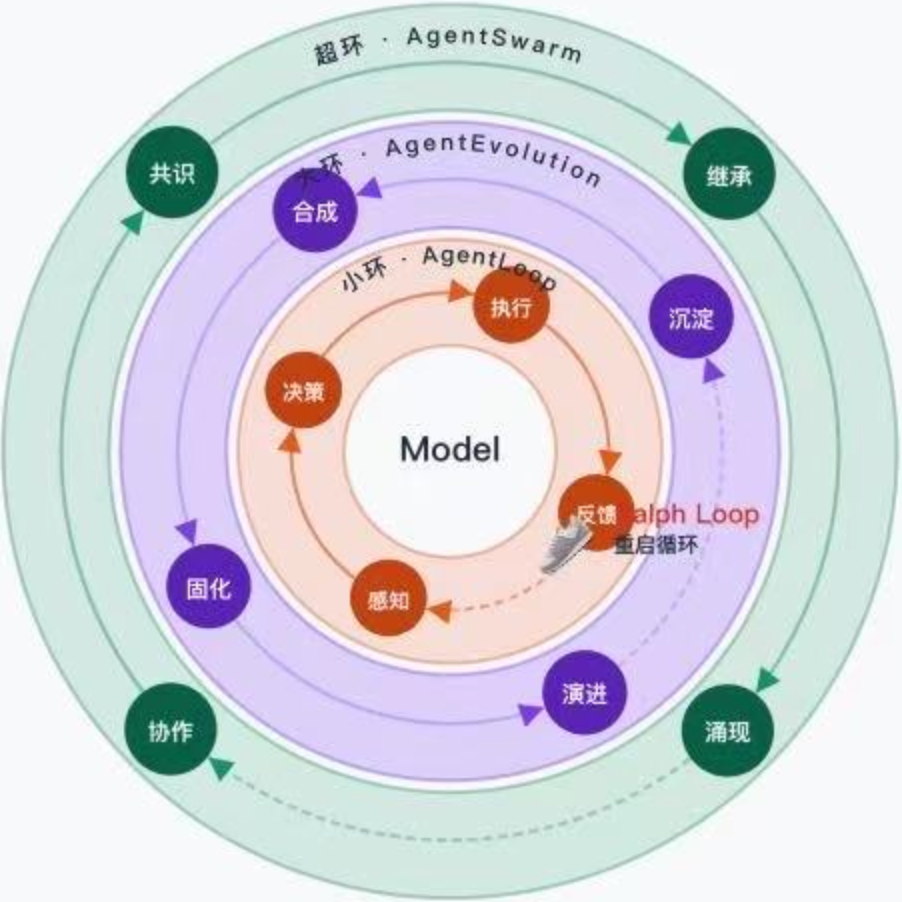
RSI: Evolution Goes Beyond Models

AI has already entered code writing, algorithm optimization, and model development. But after a task is completed, what remains may be reusable capability—or merely an answer and scattered logs. The difference becomes apparent only when a similar problem comes up again: can the system reuse what it learned, or must it pay the cost of exploration all over again? Recursive Self-Improvement (RSI) co…

RSISwarmEvoMapLoopEvolution

evomap.aihttps://evomap.ai