Researchers from Lehigh University and other institutions proposed Lev, a decision model that uses repeated computation rather than token generation to increase reasoning depth. According to the researchers, the same weights support multiple depths, with a lightweight stopping mechanism determining how many rounds to run. The model reads option probabilities after each round, and its rounds are jointly trained. On the 231-question public JevBench, project records for the same Lev-2.6B checkpoint show accuracy rising from 63.2% after one round to 76.2% after four rounds, a 13.0 percentage-point increase without changing the checkpoint weights. The report notes that these figures are replayed project-homepage records rather than live inference results.
What problem it solves
Software work often needs several agents to handle independent tasks while preserving clear model routing, file ownership, and verification. It is also important to distinguish work that was planned or reported complete from work supported by observed test, review, or CI results.
Key features
Model routing by work category — Each lane receives a work category, model chain, a…
What problem it solves
AI agents need relevant design context from Figma files to generate code that follows a design system and reflects design intent. This project documents how to connect the Figma MCP server to supported clients, use its tools and skills, and apply practices for more consistent results.
Key features
Connect supported MCP clients — Setup instructions cover the Figma MCP server …
What problem it solves
AI coding agents often take the shortest path, skipping specifications, tests, security reviews, and other practices needed for reliable software. This project packages structured workflows, verification gates, and engineering practices so agents apply the same discipline consistently throughout development.
Key features
Lifecycle commands — Nine slash commands map the devel…
What problem it solves
Personal AI agents need to connect language model providers, communication channels, and tools while remaining under the user's control. They also need configurable autonomy, security boundaries, and operational features such as background services, approvals, and persistent workflows.
Key features
Multiple channels and providers — The agent can receive messages through conf…
What problem it solves
AI coding agents produce plans, documents, messages, and code changes that need human review before the agents proceed. The README describes a workflow for marking up those artifacts, commenting on diffs, and returning structured feedback directly to the agent session.
Key features
Annotate agent artifacts — Review plans, specifications, Markdown, HTML, messages, files, fold…
What problem it solves
Turning videos and image sequences into 3D Gaussian Splats involves frame preparation, camera reconstruction, model training, and publishing the result. OOOSplat aims to make this workflow accessible through a desktop interface while keeping source material and generation work on the local computer.
Key features
One-click local generation — Select a video or image sequence, …
What problem it solves
VPN traffic can expose protocol characteristics that are examined during network inspection. The project addresses this by encrypting UDP tunnels, applying configurable traffic masks, and rotating session keys while providing bounded packet handling and live traffic-quality checks.
Key features
Encrypted and forward-secret sessions — The InitialV2 exchange confirms a fresh s…
What problem it solves
Coding and research tasks often require tools that can understand a project, make changes, run checks, and investigate external information. Freebuff addresses this with specialized agents available across terminal, desktop, browser, and GitHub repository workflows.
Key features
Specialized coding agents — Agents are selected for different task stages rather than sending eve…
What problem it solves
AI agents need a durable memory that records facts with provenance, supports corrections and withdrawal, and remains available across different agents. Conventional retrieval may surface relevant pages without synthesizing them into a sourced answer or identifying gaps in the available knowledge.
Key features
Portable agent memory — Store explicit facts with sources and make…
What problem it solves
Investors need to combine market data, news, technical information, and analysis across multiple markets without manually assembling each report. They also need a repeatable way to run daily analysis and deliver the resulting decision dashboard to their preferred communication channel.
Key features
AI Decision Reports — Generate stock analysis reports with core conclusions, …
What problem it solves
Research context is often fragmented across PDF libraries, note applications, and separate model conversations, forcing researchers to move or copy information manually between tools. PDFs can also be difficult for models to interpret reliably, while common AI reading, translation, synchronization, and batch-import workflows require multiple plugins or repetitive manual acti…
What problem it solves
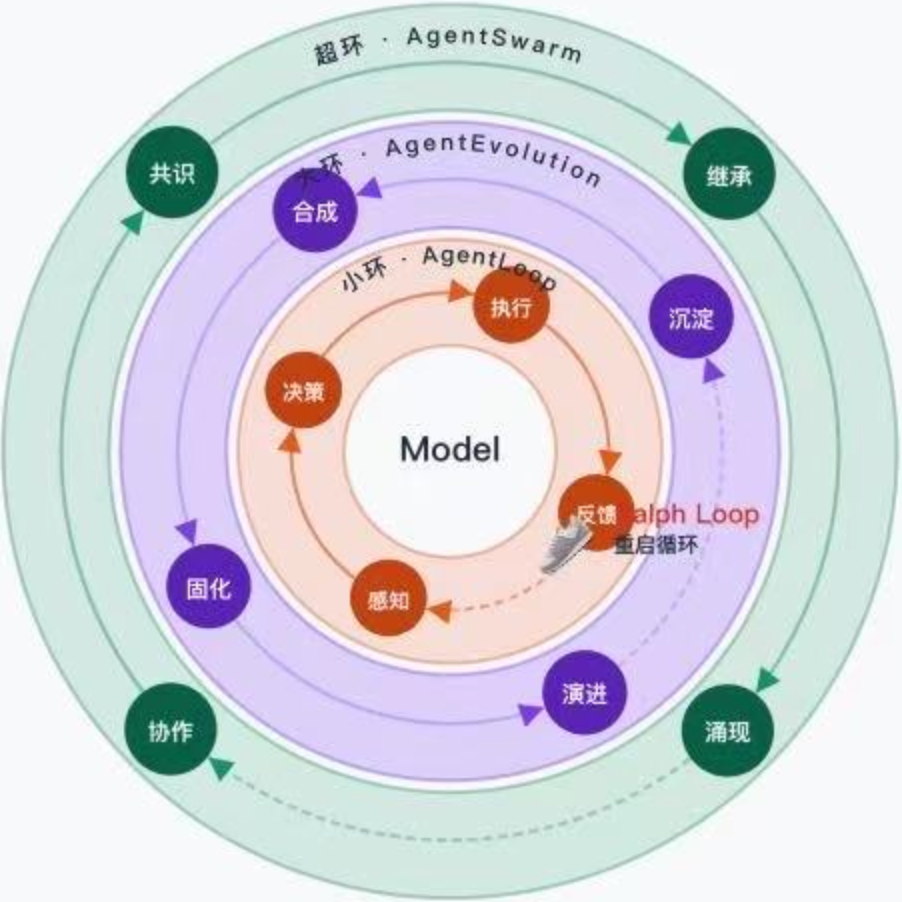
AI coding tools can lose context between tasks and struggle to carry development work forward consistently. Ralph addresses this by starting each iteration with a clean context while retaining progress through git history, progress.txt, and prd.json.
Key features
Fresh-context autonomous iterations — Each iteration launches a new AI instance with clean context. Work continui…
What problem it solves
Learners need a practical path from AI engineering fundamentals to tested systems rather than isolated API examples. The curriculum is structured to make model internals, retrieval pipelines, agent runtimes, evaluation, and failure inspection understandable through runnable code and retained evidence.
Key features
Structured AI engineering curriculum — The curriculum spans m…
What problem it solves
General-purpose agent work can require coordinating tools, context, multiple agents, and long-running tasks across devices. OpenBitFun addresses this with a configurable agent workspace, persistent runtime sessions, remote control, and extensions for agents, tools, workflows, interfaces, and source code.
Key features
Four Agent Harness modes — Choose Minimal, Standard, Ultim…
What problem it solves
AI coding tools need structured design guidance to produce interfaces with coherent visual systems and usable implementation details. This project packages such guidance into self-contained markdown skill folders that can be installed for different agents.
Key features
Landing page design — The landing-page-design skill covers intake questions, page structure, conversion cop…
What problem it solves
Developers need a coding agent that can assist with development work while remaining inspectable and open source. The project addresses the need for configurable agents with different access levels, a straightforward installation path across platforms, and a way to explore codebases without modifying them.
Key features
Two built-in agents with different access levels — A def…
What problem it solves
System design is a broad topic with many resources scattered throughout the web, making it difficult to find an organized learning path. Candidates also need a structured way to practice common design questions and compare their results with sample discussions, code, and diagrams.
Key features
Structured system design topics — The guide organizes core topics and explains the…
What problem it solves
Teams need a shared place where members can use AI for everyday office work, development, and creative production while keeping resources, access, and usage under centralized control. They also need to connect their own models and business tools and deploy the platform on infrastructure they manage.
Key features
Natural-language task execution — Users can describe goals and …
When an intelligent agent handles enterprise tasks, it often spends considerable effort on preparatory work: finding APIs, browsing directories, parsing spreadsheets, and determining which script generated a particular table. Change the question, and all that preparation gets repeated. Models can certainly keep getting stronger, but if many tasks take place in the same workspace, we can ask anothe…
What problem it solves
Teams that rely on AI agents need a way to give each agent a role, workspace, and instructions, keep context across conversations, and control what agents are allowed to do. Without that, agents run blind: actions happen without review, memory does not persist, and repeating scheduled work means redoing setup by hand.
Key features
Create agents and teams — Give an agent a na…
 oh-my-hermes• Pinned