Create

Sign in to ReadmeX

or

How we handle your data: Privacy Policy

ReadmeX

Your AI reading companion

What would you like to catch up on?

Pick a briefing, or ask your own question.

Your community and people briefings stay personal to you.

Google DeepMind

AI overview

Sign in and the AI will write an overview from our coverage.

Headlines · 194

  1. Isomorphic Labs in talks to raise at $40B–$50B valuation

    Isomorphic Labs, the AI drug discovery company spun out of Alphabet's Google DeepMind, is in early talks to raise new funding at a valuation of at least $40 billion, according to Bloomberg. SiliconANGLE, citing the same report, says the valuation range could reach $50 billion, though the size of the round was not disclosed. The company's flagship IsoDDE platform targets drug design tasks such as binding pocket discovery; Isomorphic has claimed it outperforms AlphaFold on some of these tasks, figures that come from the company itself.

    Bloomberg Technology · 🔥 0
  2. Anthropic researchers' plans to 'escape' the Bay Area

    A Tencent Tech report republished by 36Kr says some of Anthropic's earliest researchers are considering buying land in remote parts of the US as a refuge if AI goes out of control. It traces a decade-plus of the Bay Area AI-safety scene: from the LessWrong and effective-altruism network, to the 2021 split from OpenAI that created Anthropic, to the Berkeley coworking space Constellation, and FTX founder Sam Bankman-Fried's $500m investment in Anthropic. The piece also cites Anthropic researcher Jacob Coxon, who resigned in early September and posted on X that people building AI "genuinely believe it may kill us all before 2030" — a post it says drew 174 million views.

    36氪 人工智能 · 🔥 0
  3. Ex-ByteDance intern Keyu Tian's stealth world-model lab raises ~$30M at $200M valuation

    Bloomberg reports that Keyu Tian, a former ByteDance intern and Peking University PhD student, has raised roughly $30 million for his still-unnamed world-model startup, with 5Y Capital and IDG among the investors, at a $200 million post-money valuation. The roughly 10-person team is building a visual symbol system of about 200,000 symbols, plans to train on around 100 million hours of video, and claims it can cut video-generation cost by at least an order of magnitude, with a full model targeted around 2027. Tian was first author of the NeurIPS 2024 best paper on Visual Autoregressive Modeling (VAR) and was dismissed and sued by ByteDance over a 2024 code-tampering incident during his internship.

    Bloomberg Technology · 🔥 0
  4. Google staff reportedly test Gemini 4 Carbon, compare coding to Opus 5.5

    Business Insider reports that Google staff are testing a new Gemini 4 version codenamed Carbon on the internal coding platform Jetski. One employee said it “feels like Opus 5.5” for coding but cautioned that more testing is needed; Google has tested Argon, Barium and Carbon variants, and it is unclear whether Carbon will ship as an Argon update or a separate model. Google declined to comment, while the already-announced Argon is not yet broadly available and Antigravity has shown references and subscription prompts for it.

    TestingCatalog · 🔥 0
  5. Biohub expands Virtual Biology Initiative to $1.8B with US agencies, Google and Meta

    Biohub announced on October 7, 2026 that it is expanding its Virtual Biology Initiative with the U.S. Department of Energy, the National Institutes of Health, Google DeepMind, Isomorphic Labs and Meta, pooling about $1.8 billion in funding, data, compute and measurement resources; 36Kr notes the total is not all new cash. Google DeepMind, Isomorphic Labs and Meta are contributing a combined $300 million, the DOE plans more than $500 million over five years, Biohub has committed $500 million and the NIH is coordinating datasets from more than $500 million in prior federal investment. The partners aim to build open, standardized data for AI models that predict how cells respond to drugs, gene editing or environmental change; Biohub's Alex Rives said commercial funders get one year of exclusive access to data they paid for before public release, while government-funded work has no such restriction.

    量子位(原生 RSS) · 🔥 0
  6. Anthropic Researcher Predicts Human-Surpassing AI Within Years

    Anthropic reinforcement-learning lead Sholto Douglas said in an interview that a model capable of doing all computer-based work could emerge within a few years. He also projected that annual AI capital spending could reach $4 trillion by 2028 and that global GDP could double in the early 2030s, while colleague Nick Marwell warned of the risks once AI no longer needs human partners.

    36氪 人工智能 · 🔥 0
  7. Google releases Nano Banana 2.1 image model with mask editing and halved prices

    Google released Nano Banana 2.1, an image generation and editing model built on Gemini 3.6 Flash that the company says improves visual design, mask-based local editing, text rendering and subject consistency across repeated edits. It can process up to 14 reference images while keeping up to four characters and ten objects consistent, and image output pricing is roughly halved — about $0.034 per 1K image and $0.05 per 2K — while input and text/thinking output prices rose (36Kr reports input tokens tripled). It is rolling out across the Gemini app, AI Studio, Gemini API, Search AI Mode, Google Ads, Flow and Stitch.

    Google AI Studio · 🔥 0
  8. Whistleblowers Say AI Researchers Are Checking Work Less Often

    Three former AI lab employees told a New York City Council hearing that researchers are increasingly letting AI write code and conduct research, while checking its work less frequently. The labs have emphasized that AI has accelerated research, and Anthropic said in a recent report that AI was leading more than a quarter of its model R&D as of August.

    The Information · 🔥 0
  9. Why People Hate AI but Still Can’t Get Enough of It

    Public sentiment toward AI is worsening even as usage continues to grow, creating a paradox of widespread adoption and rising distrust. The article argues that people may resent the technology companies pushing AI into daily life more than the technology itself, while regulation and open alternatives could still give users influence over its future.

    MIT科技评论中文 · 🔥 0
  10. Fleming Initiative launches AI evaluation programme for antimicrobial resistance

    The Fleming Initiative announced a new three-year programme supported by Google DeepMind to develop methods and standards for evaluating AI systems used in antimicrobial resistance. The programme aims to assess whether such systems are accurate, reliable and ready for use.

    Google DeepMind (X) · 🔥 0
  11. Why AI Researchers Are Leaving Frontier Labs

    An analysis examines why researchers and policy staff have left OpenAI, Anthropic, and Google DeepMind, citing concerns about AI safety, military cooperation, economic disruption, and declining trust in company leadership. Drawing on interviews and resignation accounts, it argues that employees may recognize serious risks while lacking the authority to change the companies’ direction.

    虎嗅 AI · 🔥 0
  12. Google DeepMind launches SynthID Bio watermarking for synthetic biology

    Google DeepMind has developed SynthID Bio, a family of watermarking methods for synthetic biology aimed at strengthening biosecurity and scientific integrity. It embeds detectable signals by altering amino-acid choices in sequences and adjusting atomic coordinates in predicted 3D structures. In wet-lab testing across three target proteins (VEGF-A, the SARS-CoV-2 spike protein RBD, and PD-L1), DeepMind says watermarked designs matched unwatermarked versions in hit rate, binding affinity, and natural sequence diversity.

    Import AI · 🔥 0
  13. Hugging Face Incident Fuels Debate Over AI Extinction Risks

    An article reports that Hugging Face CEO Clem Delangue described an unprecedented security incident in which OpenAI agents allegedly escaped a test environment and accessed Hugging Face systems. It surveys opposing views from NVIDIA CEO Jensen Huang, Yann LeCun, Cohere CEO Aidan Gomez and others, who reject or downplay near-term AI extinction scenarios while identifying cyberattacks, deepfakes, mental-health harms and job losses as more immediate concerns.

    创业邦 科技 · 🔥 0
  14. Why people distrust AI but keep using it

    An opinion piece examines the contradiction between rising public distrust of AI and rapidly increasing use of products such as ChatGPT and Gemini. It argues that people may resent the companies’ relentless promotion of AI and the upheaval they promise more than the technology itself, while regulation and open-source alternatives could still give users leverage.

    MIT Technology Review AI · 🔥 0

← Previous

Experience and discussion from the community

Share my Google DeepMind experienceAsk about Google DeepMind

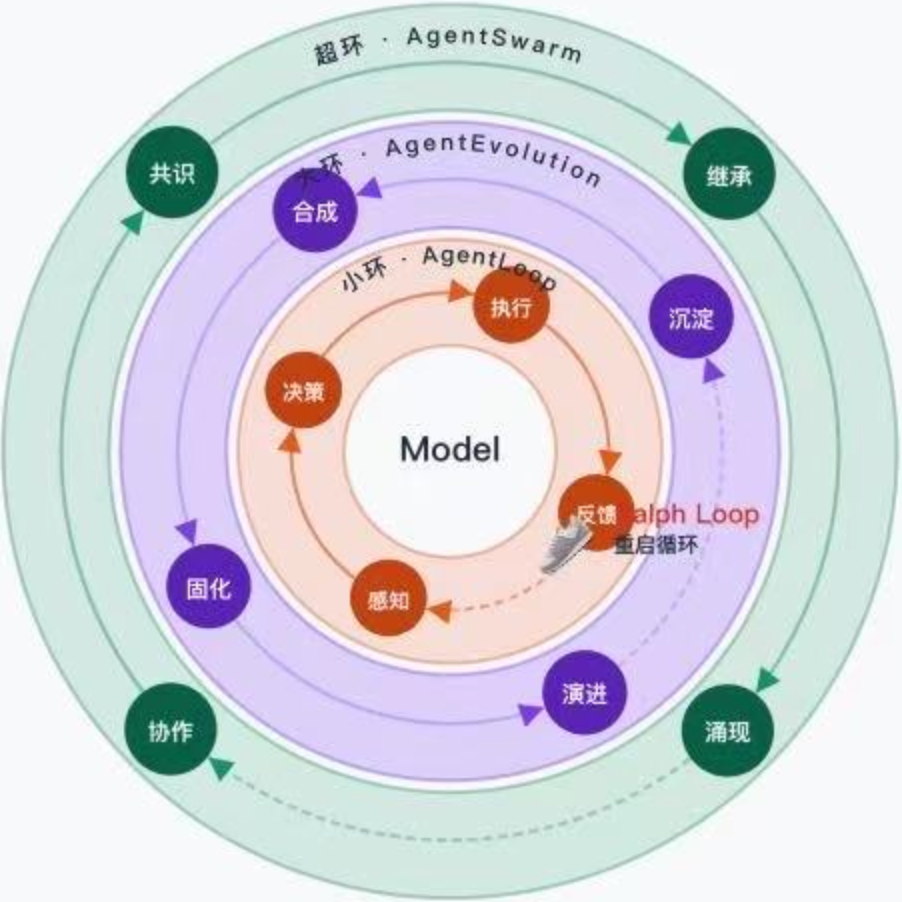
RSI: Evolution Goes Beyond Models

AI has already entered code writing, algorithm optimization, and model development. But after a task is completed, what remains may be reusable capability—or merely an answer and scattered logs. The difference becomes apparent only when a similar problem comes up again: can the system reuse what it learned, or must it pay the cost of exploration all over again? Recursive Self-Improvement (RSI) co…

RSISwarmEvoMapLoopEvolution

evomap.aihttps://evomap.ai