China’s LineShine remains the world’s top-ranked supercomputer in the 68th TOP500 list, with 2.198 FP64 ExaFLOPS on the HPL benchmark. The top 10 remained unchanged, while only 27 systems joined the list—the fewest since it began in 1993. Reports cited in the coverage said much advanced hardware is being deployed in AI data centers rather than traditional supercomputers.
What problem it solves
Running frontier-scale open-weight models locally requires an inference platform that can make efficient use of the heterogeneous hardware available on a personal device. The project addresses this by treating GPUs, CPUs, host memory, and interconnects as a unified, elastic inference platform.
Key features
Edge-native MoE runtime — The runtime provides MoE serving with bandw…
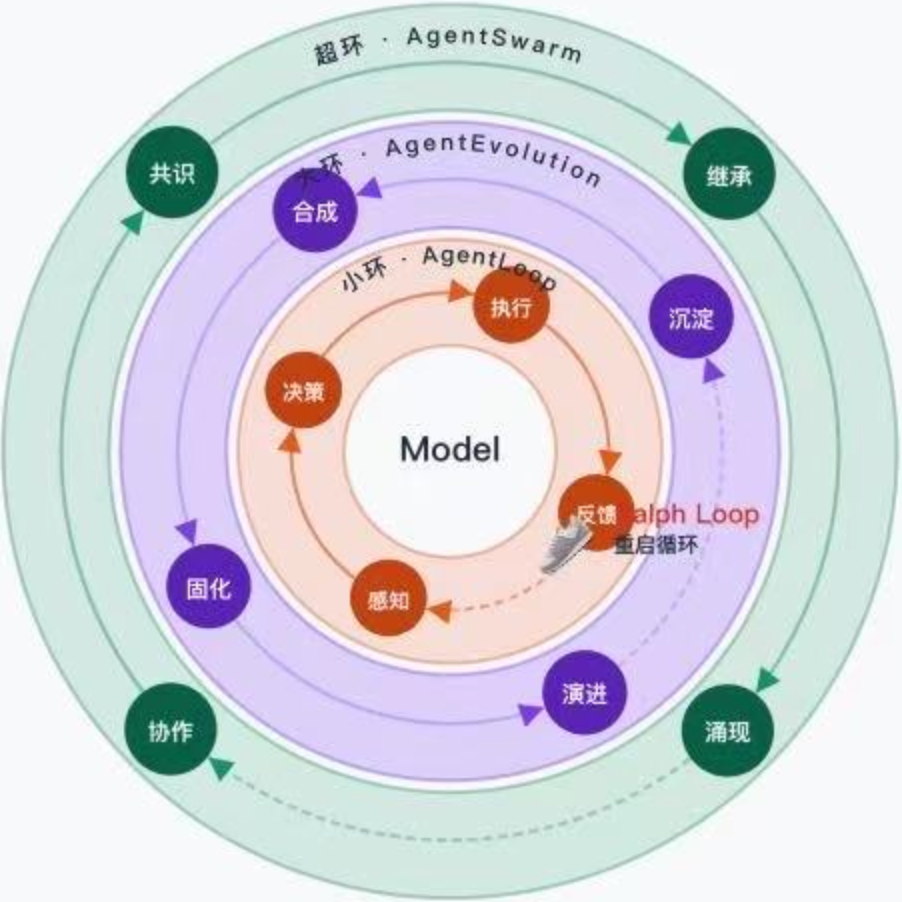
AI has already entered code writing, algorithm optimization, and model development. But after a task is completed, what remains may be reusable capability—or merely an answer and scattered logs. The difference becomes apparent only when a similar problem comes up again: can the system reuse what it learned, or must it pay the cost of exploration all over again?
Recursive Self-Improvement (RSI) co…
The Research system Anthropic unveiled in June 2025[1] organizes a research problem into a process of analysis, parallel search, and synthesis of results. Beyond model capabilities, how work is allocated and how results from different directions are connected have also become design questions that AI engineering needs to answer separately.
Along this line, I want to ask a deeper question: if even …
 FreeToken• Pinned