E-Shine Technology reported third-quarter 2026 revenue of NT$22.15 billion, up 58.83% from the prior quarter and 519.22% year over year, with EPS rising to NT$36.79. The company attributed the performance to sharply higher memory prices and said AI-driven HBM demand is shifting capacity away from conventional memory, contributing to shortages across DDR5, DDR4, DDR3, DDR2 and Flash. Its aiPIM accelerator-memory solution for Edge AI also completed tape-out in the third quarter.
Google has begun emailing Gemini AI Plus subscribers to confirm that, from November 13, 2026, they will no longer be able to select Pro models in the Gemini app or in AI Mode in Google Search, leaving Flash and Flash-Lite as the available options. Existing chats created with Pro models are not deleted but must continue with a different model. Subscribers who want continued access to the more capable models must upgrade to the $19.99/month Google AI Pro or $99.99/month AI Ultra plan; Google had already said Gemini 4 Argon would be included for AI Pro and AI Ultra subscribers. AIbase noted that Google's October support-document update had indicated an October 9 restriction date, while the email set November 13 without stating a reason.
What problem it solves
FreeVideo enables local video generation on consumer hardware while coordinating VRAM, system memory, disk, weight placement, compute precision, and attention kernels. It provides a ComfyUI workflow and launchers that simplify setup across Windows, macOS, and Linux.
Key features
Hardware-adaptive execution — The engine selects GPU-specific weight formats and probes available…
What problem it solves
Adobe Flash content needs an emulator that can parse SWF files and run ActionScript. Ruffle addresses this by providing a Flash Player emulator for desktop and web environments.
Key features
Desktop and web targets — The emulator targets desktop and web environments, with the web implementation using WebAssembly.
Source: README, desktop, web
ActionScript support — Ruffle sup…
What problem it solves
Managing multiple AI service sessions and translating them into compatible API interfaces can require repetitive account switching, custom routing, and protocol-specific integration. The project addresses these tasks with a desktop application that combines account administration, protocol conversion, request scheduling, and model routing.
Key features
Account dashboard and …
What problem it solves
Long-form videos need to be turned into short, platform-ready clips, but metered usage, platform branding, and server-side control can constrain the workflow. SupoClip addresses these concerns with a self-hostable, open-source pipeline that offers no-watermark output and a hosted option.
Key features
AI clip selection and scoring — A supported language model selects clip-wor…
Optimizing a GPU kernel or completing a set of formal proofs often requires repeated trial and error: try a different implementation, run an evaluation, and keep iterating in whichever direction proves effective. When giving a model more test-time compute, the most direct approach is to let more agents try simultaneously; if the task only needs one best result, the value of the other attempts lies…
What problem it solves
A frozen LLM can only use information that fits in its context window, making it difficult to answer questions from large document collections or long interaction histories. Memorilla addresses this by reading a collection and supplying the LLM with a fixed number of query-dependent memory tokens.
Key features
Query-dependent memory compression — The system reads a complete …
What problem it solves
System design is a broad topic with many resources scattered throughout the web, making it difficult to find an organized learning path. Candidates also need a structured way to practice common design questions and compare their results with sample discussions, code, and diagrams.
Key features
Structured system design topics — The guide organizes core topics and explains the…
What problem it solves
Teams need to release and adapt features without coupling each rollout to a full application deployment. Feature flags let them test code with real production data, work on multiple features simultaneously, and avoid separate feature branches.
Key features
Controlled feature releases — Use activation strategies to enable or disable features for particular users or segments w…
What problem it solves
Running frontier-scale open-weight models locally requires an inference platform that can make efficient use of the heterogeneous hardware available on a personal device. The project addresses this by treating GPUs, CPUs, host memory, and interconnects as a unified, elastic inference platform.
Key features
Edge-native MoE runtime — The runtime provides MoE serving with bandw…
What problem it solves
TiDB addresses the need for a database that supports transactional, analytical, and vector-search workloads while remaining available and consistent as infrastructure changes. Its distributed architecture separates computing from storage, supports scaling in either direction, and provides built-in mechanisms for replication and failover.
Key features
Distributed Transactions…
What problem it solves
Users need a local service that can expose Google AI Studio Playground and Build conversations through familiar API formats. The project addresses protocol differences across OpenAI, Anthropic, Gemini, agent clients, media generation, and other AI Studio capabilities while providing account and service management.
Key features
Four compatible API protocols — The service expo…
What problem it solves
Creating video from web-native content requires a way to define timing, tracks, media, and seekable animation without a proprietary timeline format. HyperFrames addresses this with an HTML-based workflow that supports local CLI use, coding agents, and hosted authoring workflows.
Key features
HTML-native video composition — Define compositions as HTML with data attributes for…
What problem it solves
Language models have fixed knowledge and can miss changes in libraries, SDKs and evolving development practices. Skills add relevant context to agents so they can work with current Gemini API guidance when building applications.
Key features
Gemini API development guidance — The gemini-api-dev skill covers text generation, multi-turn chat, streaming, function calling, struct…
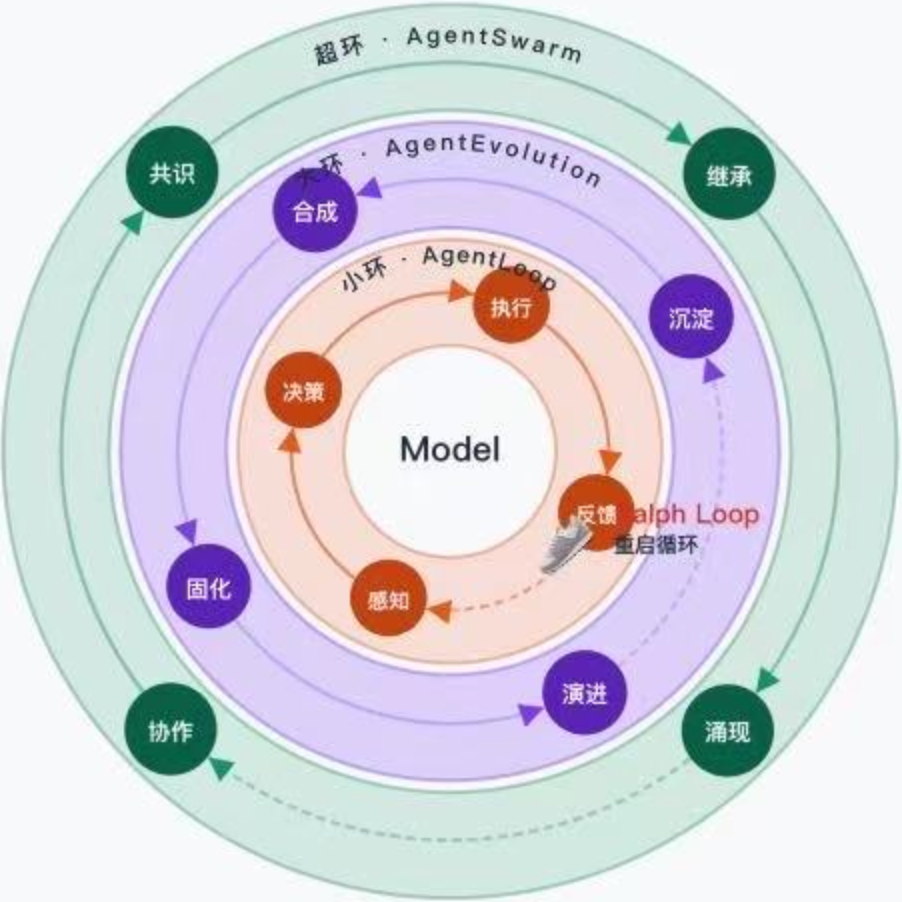
After an Agent completes a task, what it leaves behind is often more than an answer. There is also an expensive exploration path: which files it read, which tools it tried, where it failed, and what checks it used to confirm the result. The problem is that the next execution may not be able to use those experiences. The model parameters have not changed, and a new session will not naturally inheri…
AI has already entered code writing, algorithm optimization, and model development. But after a task is completed, what remains may be reusable capability—or merely an answer and scattered logs. The difference becomes apparent only when a similar problem comes up again: can the system reuse what it learned, or must it pay the cost of exploration all over again?
Recursive Self-Improvement (RSI) co…
The Research system Anthropic unveiled in June 2025[1] organizes a research problem into a process of analysis, parallel search, and synthesis of results. Beyond model capabilities, how work is allocated and how results from different directions are connected have also become design questions that AI engineering needs to answer separately.
Along this line, I want to ask a deeper question: if even …
First, the result: over the course of four months, on and off, I built a WeChat Mini Program called “随了么小管家” for keeping track of gift-giving and reciprocity. It currently has about 40 pages, with roughly 29,000 lines of frontend code and 14,000 lines of backend code, 85 commits, and a version number that has reached 1.1.9.
The tech stack is pretty ordinary: uni-app + Vue 3 + Pinia on the fronten…
 FreeVideo• Pinned