InfoQ reports that Elon Musk said xAI will abandon JAX and SGLang and rewrite its reinforcement learning and inference stack from scratch in C/C++. The report also presents Oxide co-founder Bryan Cantrill’s argument that Rust can improve memory safety and give AI coding tools useful compiler feedback, but cannot prevent LLMs from continually adding system complexity.
A commentary argues that AI-assisted development is making code verification more important than coding speed when choosing a programming language. It cites an AWS analysis of 1.5 million AI coding conversations, reporting differing static error rates across languages, and a PROBE benchmark measuring whether generated code compiles and passes tests. It cautions that these comparisons are imperfect: the AWS figures cover only problems detected by static analysis, whose strength varies by language, so a clean diagnostic result does not necessarily mean correct code. The author presents Rust as particularly difficult for AI in the cited results and says Java's strong typing, mature tooling and ecosystem remain relevant, while noting that performance-sensitive work may still favor Rust or Go.
What problem it solves
Developers need configurable interfaces for exploring large, real-time and streaming datasets without separating the presentation layer from the query engine. They also need a consistent way to run analytics in the browser, on the server or against existing databases.
Key features
Configurable analytics interface — The data-reactive UI is packaged as a Custom Element and sup…
What problem it solves
Teams deploying AI inference need to optimize models, reduce resource demands, and run them across different frameworks and hardware platforms. The toolkit addresses model conversion, compilation, and inference workflows for applications ranging from computer vision and speech recognition to generative AI and language models.
Key features
Inference optimization — Optimize de…
What problem it solves
Machine-learning applications need tensor operations across different platforms and compute backends while keeping setup and runtime overhead manageable. ggml provides a plain C/C++ tensor library with cross-platform support, multiple execution backends, quantization formats, and no runtime memory allocations.
Key features
Portable C/C++ implementation — The library is imple…
What problem it solves
Local videos, capture cards, game streams, and images need a unified way to preview and enhance visual output in real time. Veyra addresses this with a Windows pipeline that combines multiple enhancement stages, configurable processing workflows, capture sources, and export tools.
Key features
Real-time enhancement pipeline — Combine super-resolution, noise reduction, HDR pr…
What problem it solves
Running large language and vision-language models can require substantial setup and may depend on the available hardware. The project aims to make inference accessible across a wide range of local and cloud hardware with minimal setup.
Key features
Minimal-setup inference — The project provides installation options for common platforms, including scripts, Docker, pre-built b…
What problem it solves
Beginners can find data structures and algorithms difficult to understand because concepts involve both conceptual relationships and underlying implementation details. The project addresses this with animated explanations, runnable source code, and multilingual learning material.
Key features
Animated explanations — Animated diagrams present data structures and algorithms vi…
What problem it solves
NumPy is the fundamental package for scientific computing with Python. It provides a powerful N-dimensional array object, sophisticated (broadcasting) functions, tools for integrating C/C++ and Fortran code, and useful linear algebra, Fourier transform, and random number capabilities.
Key features
N-dimensional arrays — NumPy provides an array object for representing and com…
What problem it solves
Users need a local service that can expose Google AI Studio Playground and Build conversations through familiar API formats. The project addresses protocol differences across OpenAI, Anthropic, Gemini, agent clients, media generation, and other AI Studio capabilities while providing account and service management.
Key features
Four compatible API protocols — The service expo…
What problem it solves
Building user interfaces for desktop, mobile, web, and embedded applications requires coordinating interface design with application logic across programming languages and platforms. Slint separates declarative `.slint` interface definitions from business logic and compiles the interface to native code.
Key features
Declarative interface markup — Define interface elements, p…
What problem it solves
Listeners need a desktop way to browse and play YouTube Music without ads or an embedded browser runtime. They also need direct access to account features, playlists, local files, lyrics, scrobbling, and synchronized listening.
Key features
YouTube Music browsing and playback — Search and browse songs, albums, artists, playlists, and the YouTube Music home feed. Audio is str…
What problem it solves
Remote desktop access requires a way to connect to and control computers while retaining control over the infrastructure that brokers those connections. RustDesk addresses this with an application that can use its rendezvous and relay services, operate with a self-hosted server, or work with a separately written server.
Key features
Self-hosted connection infrastructure — Th…
What problem it solves
Complex robotics and computer-vision processes produce multiple synchronized data streams whose relationships over time are difficult to understand from text logs or conventional debugging tools. Rerun addresses this by recording, visualizing, querying, and streaming multimodal data from sources such as robots, human-data rigs, simulation, and web video.
Key features
Multimo…
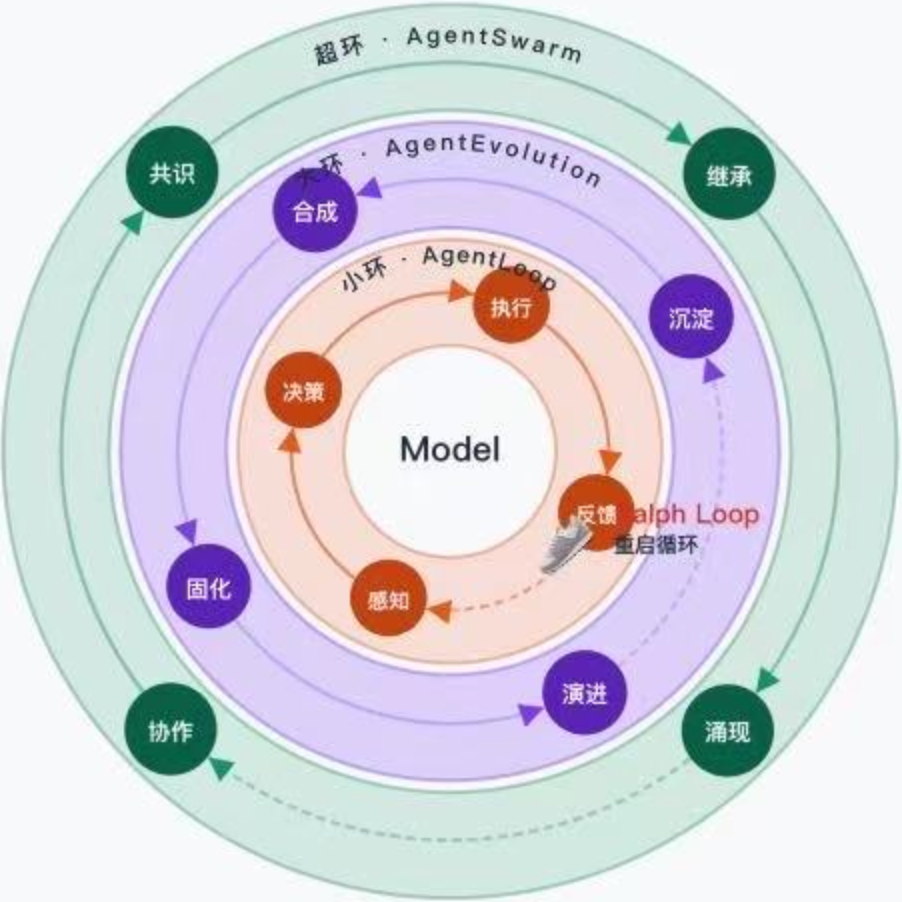
AI has already entered code writing, algorithm optimization, and model development. But after a task is completed, what remains may be reusable capability—or merely an answer and scattered logs. The difference becomes apparent only when a similar problem comes up again: can the system reuse what it learned, or must it pay the cost of exploration all over again?
Recursive Self-Improvement (RSI) co…
 perspective• Pinned