Nvidia had $530 billion in gross off-balance-sheet guarantees at the end of its fiscal second quarter, up from $184 billion a quarter earlier, according to SemiAnalysis. The guarantees helped emerging cloud service providers and data-center developers obtain financing for hardware and related infrastructure. Separately, the filing breakdown cited in the report lists $366 billion in future commitments, including $279 billion in supply and capacity commitments, while a Chinese report cites $390 billion in third-quarter procurement commitments. These are distinct categories and should not be treated as the same figure. The reports say the commitments helped Nvidia secure advanced logic, HBM and AI-accelerator capacity, but also raised concerns about financing conditions, the sustainability of large commitments and suppliers’ willingness to expand capacity.
TMTPost reported that Anthropic announced the acquisition of one-employee biotechnology company Mithril Medicine, which studies treatments for two rare muscular dystrophies. OpenAI also announced the acquisition of Orchestra Bio and plans to integrate its drug-development workflow coordination technology into Rosalind. Other initiatives include Isomorphic Labs’ drug pipeline, Nvidia and Eli Lilly’s planned AI laboratory, Amazon and Novo Nordisk’s strategic partnership, and Microsoft Discovery. Mithril Medicine’s reported mouse results are preclinical, and its potential entry into human trials by the end of 2028 remains conditional on further research.
TechNews, citing Agence France-Presse, reports that Anthropic is preparing for a potentially record-setting IPO while its prospectus identifies model convergence, falling prices and rising compute commitments as major risks. Morningstar figures cited by TechNews show equivalent AI workloads falling from $17 to $0.5, while Vercel reportedly shifted more than half of its August text requests to open-source models. Anthropic says it has committed to paying at least $417 billion for chips and servers, regardless of operating conditions.
TechNews reported that uranium’s long-term contract price reached a record $96 per pound in early November 2026, as AI and data-center expansion strengthened demand for reliable baseload electricity. Purecore said reactor construction is outpacing new uranium supply, while the 10–15-year mine development cycle and constraints in conversion and enrichment create a potential timing mismatch. The report cited forecasts from third-party organizations that range from a 335-million-pound uranium deficit to larger scenario estimates, but the underlying analyses and price data were not independently verified in the supplied report.
Amazon says it has deployed more than one million robots across its global fulfillment network, while describing automation as a way to assign dangerous, repetitive, or unsuitable tasks to machines and reserve judgment-intensive work for employees. TechNews reports that the upgraded Proteus mobile robot can stop when people approach, accept natural-language voice commands, and move carts weighing up to 400 kilograms. It is deployed at 25 US fulfillment centers, with expansion to European facilities planned for the first half of next year.
Reuters, citing internal documents and people familiar with the matter, reported that Amazon is pursuing World Product Graph, a proposed database covering nearly all goods sold online, including items not offered on Amazon. The project could draw data from brands and retailers and support more detailed comparisons and AI shopping features such as Alexa for Shopping. Amazon said the documents were outdated brainstorming drafts that might not reflect its current plans. The documents listed October 1, 2027, as an ideal launch date, but Reuters said its feasibility was unconfirmed and the project could be changed or canceled.
A Reddit poster claims OpenAI generated about $13 billion in the previous year and committed roughly $1.15 trillion to compute. The post describes a 2026 funding round involving $50 billion from Amazon, $30 billion from Nvidia and $30 billion from SoftBank, saying it closed at $122 billion and a $852 billion post-money valuation. It also says OpenAI committed to Nvidia Vera Rubin systems for 3 GW of inference and 2 GW of training, alongside about $300 billion in commitments for Oracle data centers running Nvidia chips. These figures are presented as the poster’s claims rather than independently confirmed findings.
Bloomberg reports, echoed by Android Authority, 智东西 and other outlets, that Apple plans to make Siri and third-party iPhone app integrations central to its first smart glasses, internally codenamed N50. The reported design could let users ask Siri to handle tasks such as restaurant reservations, ride requests, coffee orders, shopping and movie tickets by invoking functions in iPhone apps, while much of the processing remains on the phone. Apple reportedly aims to unveil the glasses at WWDC in June 2027 and begin shipments before year-end, but the schedule remains unconfirmed and could slip.
The U.S. Nuclear Regulatory Commission has authorized construction of four X-energy Xe-100 reactors at a Dow industrial facility in Texas. X-energy says each reactor is designed for 80 MW of electricity and 200 MW of thermal energy, but the units remain years from commercial operation, with service expected in the early 2030s. The Union of Concerned Scientists criticized the approval for leaving safety questions unresolved, while X-energy argues its fuel and helium heat-transport design offers safety advantages.
Chinese AI infrastructure firms are moving toward public markets, according to TMTPost. Infinigence AI announced a CNY 2.3 billion Series C round, while DataCanvas filed for a Hong Kong listing on September 29 and SiliconFlow began its Hong Kong IPO process in late June. TMTPost also cited media reports of a confidential Hong Kong filing by Infinigence AI, which was not publicly confirmed in the supplied report. China Academy of Information and Communications Technology data show daily token consumption in China reached about 500 trillion in June 2026, nearly four times the December 2025 level. However, disclosed figures show weak margins in token-related businesses: SiliconFlow’s 2025 revenue rose 653.2% to CNY 55.33 million while its blended gross margin fell to negative 24%, and its public-cloud segment, which includes its Serverless API business, had a gross margin of negative 119%.
Reuters reported that Amazon is considering World Product Graph, a database covering nearly all products sold worldwide, including products Amazon does not sell. The proposal combines brand-supplied data with information collected from other retailers, with products linked by specifications, versions, differences, prices, and use cases; Coca-Cola and Bayer reportedly agreed to provide data, while a pilot with Procter & Gamble was discussed. The draft lists October 1, 2027 as an expected release date, but Amazon says the document is outdated brainstorming material and does not confirm that the initiative was approved or will launch.
Ring confirmed that its Drone Cam home-security drone will no longer offer manual control after two wall-impact failures were reported during a demonstration, according to IT之家 citing Android Headline. The device instead relies on autonomous AI Pilot navigation for scheduled patrols and flight routes. Ring attributed the first crash to a collision-avoidance failure and the second to a network interruption that prevented the expected stop-and-land behavior.
MIT Technology Review profiled Trevor Wischnewsky, a FlyTrex remote pilot in command who monitors deliveries and coordinates air traffic for a six-rotor drone fleet serving homes and businesses within about three miles. The Dallas–Fort Worth area’s UTM network lets FlyTrex and competitors share positions in real time, while pilots can intervene when weather or other risks arise; during peak periods, Wischnewsky monitors as many as 10 drones. FlyTrex requires FAA-approved training and drone-pilot certification so staff can take over when necessary.
TechNews reported that Jensen Huang resigned as Nvidia’s chief executive on the 12th, with chief financial officer Colette Kress serving as interim CEO. Analysts cited by the outlet said the change would not immediately alter AI-chip supply and demand or customers’ existing AI training and inference needs. They expected the initial impact to center on valuation and market confidence, while potential effects on Nvidia’s competitive position, product cadence and industry outlook after 2028 remain uncertain. The report also raised questions about whether subsequent investigations involve national security, trade secrets or U.S. export controls.
36Kr reported that all three major U.S. stock indexes closed lower on November 12: the Nasdaq fell 0.39%, the Dow fell 0.36%, and the S&P 500 fell 0.35%. Nvidia fell more than 4%, with its market value reportedly shrinking by $182 billion. SK Hynix fell more than 3%, while Netflix and Intel fell more than 2%. Nvidia GPU competitors Broadcom and AMD gained more than 5%; Google and Tesla rose more than 1%, while Microsoft and Amazon posted modest gains.
Cerebras exceeded quarterly revenue expectations and raised its outlook after third-quarter revenue rose 55%, driven by cloud and services sales that more than tripled, Bloomberg reported. The company announced a new agreement with Microsoft after partnering with Amazon and Oracle. CEO Andrew Feldman also said demand and pricing power for fast AI inference were growing.
36Kr reported on November 12, 2026, that most large US technology stocks were lower in premarket trading. As of publication, NVIDIA was down more than 7%, SanDisk nearly 6%, SK hynix and Micron Technology more than 4%, and Intel nearly 3%. The report did not state the cause of the declines, and the figures reflected a premarket snapshot.
In a report citing Business Insider, IT之家 said AWS chief AI and technology officer Matt Wood believes strong engineers should focus on the problem rather than become attached to a particular solution. Wood said engineers can use AI to analyze problems more deeply and try different approaches. The report also said Amazon is revising its expectations for software engineers, with new guidance de-emphasizing maximum AI use in favor of long-term value for customers and the business.
AWS CEO Matt Garman said space-based AI data centers are unlikely to be economically feasible or practical within 10 to 20 years. He cited launch cost and frequency, payload limits, heat rejection, radiation, and maintenance as barriers, while acknowledging that the problems are technically solvable. Elon Musk continues to advocate SpaceX’s space-compute plans and has claimed that purpose-built aluminum radiators can dissipate 1,300 watts per square meter.
Charles Humble argued at GOTO Copenhagen that sustainability should be a top-level concern in AI architecture, alongside cost, performance, security, compliance and reliability. He recommended using prebuilt or smaller models, training with renewable energy, and placing or shifting workloads when lower-carbon power is available. InfoQ also cited IEA estimates and company reports showing rising electricity use and emissions, including Microsoft’s and Google’s attribution of much of their growth to AI infrastructure.
TechNews reports that Amazon shortened the estimated useful life of some servers and networking equipment from six years to five in 2025, citing faster AI and machine-learning progress. The change increased depreciation and amortization by $1.4 billion and reduced net income by $1 billion, with AWS identified as the business most affected. TechNews also cites a forecast that Amazon, Microsoft, Alphabet and Meta will spend a combined $725 billion on capital expenditures in 2026.
Anthropic’s updated IPO filing set a preliminary price range of $70 to $78 per share and disclosed substantial non-voting holdings for Amazon and Google. After the offering and private placement, Amazon is expected to hold 14.7% of Anthropic’s outstanding shares and Google 13.7%, according to a report on the filing. The filing also states that Amazon could hold 23.8% of the outstanding shares if its bonds were fully converted and the share count otherwise did not change. A separate report estimated that Amazon’s roughly 20% theoretical stake could be worth about $258 billion at the range midpoint, while New York Times reporting estimated values of more than $250 billion for Amazon’s $18 billion investment and $140 billion for Google’s $33 billion investment. These are theoretical estimates and depend on assumptions about conversion, the final share count and the IPO price.
The Verge reproduced Meta's Muse being unable to retrieve eBay listings and sometimes redirecting users to outside sites that mirrored those listings. eBay said it selectively restricts third-party agent access, including over unauthorized scraping or training, but did not confirm a new blanket ban on AI agents. The report contrasts eBay's position with Amazon blocking external agents, Target applying selective restrictions, and Shopify allowing agent-based purchasing.
Ring announced the Ring Robotics line with two AI-assisted mobile security products: the $249.99 Ring Drone Cam, an indoor flying camera for homes, and the $999.99 Ring Rover Cam, a wheeled robot for businesses. Both use Ring's AI Pilot navigation system to map spaces, move between patrol points, avoid obstacles and respond to alerts from connected Ring devices. The Rover Cam is available for preorder and is scheduled to ship on December 16, 2026. The Drone Cam's January 27, 2027 US launch remains conditional on final FCC approval. Scheduled patrols and some recording features require a compatible Ring Protect subscription.
Amazon engineers reported that Amazon and AWS teams replaced Claude Sonnet 4.6 with the Strands Decider E4B decision model for high-volume internal ticket labeling. Amazon's measurements showed comparable results, average call time falling from 4,215 ms to 897 ms, and estimated list-price cost dropping about 98%; these figures and the claimed annual savings of millions of dollars were not independently verified.
Marvell announced an all-stock agreement to acquire optical communications company Lumentum, with an implied enterprise value of $115 billion. The exchange ratio gives Lumentum shareholders 4.5 Marvell shares for each Lumentum share, while the companies expect existing Marvell shareholders to own about 67% of the combined company. The transaction remains subject to shareholder and regulatory approvals and is expected to close in the first half of 2028.
A commentary draws on The Trap by Aeer Zarah and Maurice Stuck to argue that algorithms, targeted pricing, and consumer monitoring can reshape competition. Applying that lens to large technology companies, the author questions how markets will react to heavy AI capital spending when its revenue path remains unclear. Google is presented as especially exposed because search is central to its traffic and advertising model, while the author notes that signs of users shifting from search to AI are not yet clear.
A republished Chinese commentary argues that major technology-company job cuts are driven more by declining legacy businesses, cost control and organizational restructuring than by demonstrated AI substitution. It cites Google’s expansion of voluntary departures and Microsoft’s invitation to roughly 60,000 employees to leave, alongside employment, productivity and agent-performance data that it says weaken the broad claim of AI-driven mass unemployment. The commentary attributes many figures to other reports and organizations, including Reuters, the US Department of Labor and Challenger, Gray & Christmas.
TechRadar found no readily purchasable RTX 5090 desktop configurations on Lenovo or HP US stores, while several retailers also marked standalone cards unavailable. Amazon listed an ASUS TUF Gaming RTX 5090 for $7,679.80, compared with the card's $1,999 launch price. Other systems remained available through Best Buy, Newegg and Dell Alienware Area-51, sometimes for more than $10,000.
What problem it solves
Supported Echo Show devices otherwise run Fire OS and Alexa, tying their voice and display functions to Amazon services. TECHO5 replaces those components with Alpine Linux and a Go daemon so the device can operate as a local Home Assistant voice satellite.
Key features
Home Assistant voice satellite — The firmware connects supported displays to Home Assistant as voice satell…
The common approach to RAG is to first collect documents into a vector database, then retrieve context from it in response to a query. This workflow is smooth, but it has an organizational prerequisite: data owners are willing to hand their materials to the same infrastructure. In cross-organizational collaboration, this is often the hardest step to coordinate. Hospitals, research institutions, an…
What problem it solves
Files and directories must be synced to and from different cloud storage providers, with file integrity and timestamps handled consistently across them. Rclone addresses this with a single command-line program that checks MD5/SHA-1 hashes for file integrity and preserves timestamps on files.
Key features
Broad storage provider coverage — The README lists a long set of cloud …
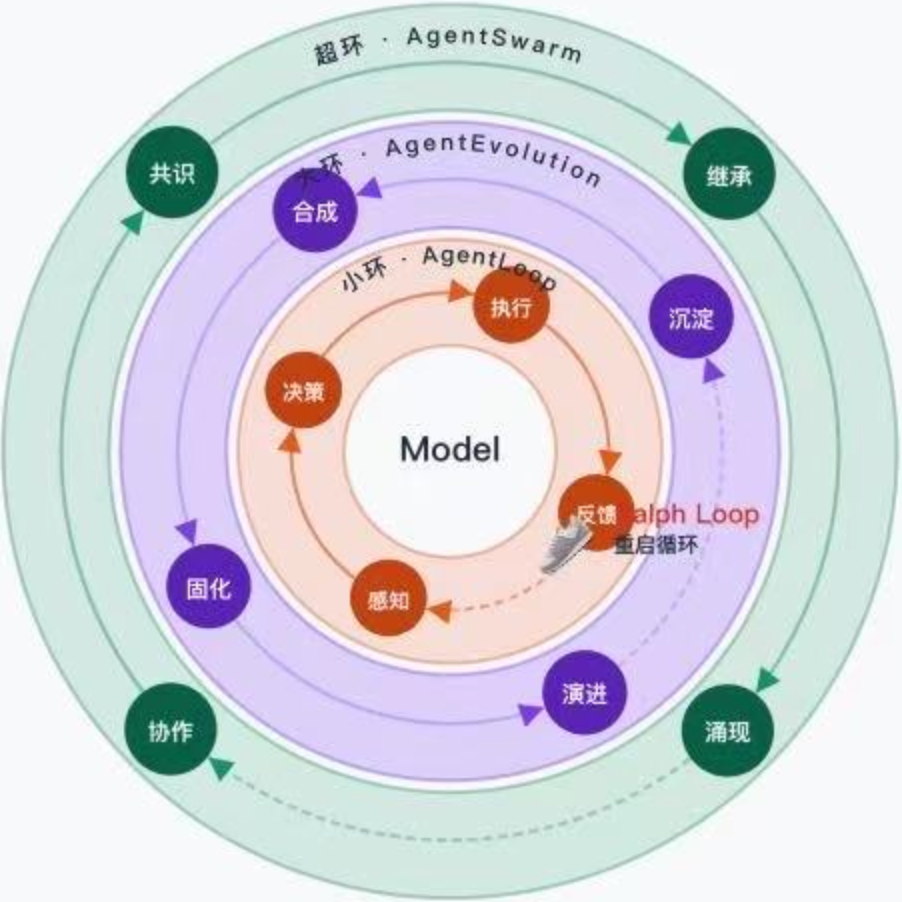
AI has already entered code writing, algorithm optimization, and model development. But after a task is completed, what remains may be reusable capability—or merely an answer and scattered logs. The difference becomes apparent only when a similar problem comes up again: can the system reuse what it learned, or must it pay the cost of exploration all over again?
Recursive Self-Improvement (RSI) co…
 techo5• Pinned