
Google SynthID 检测网站面向全球用户开放
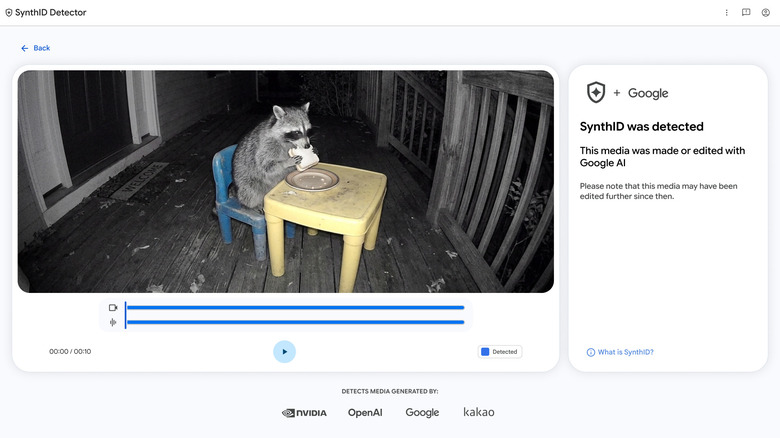
Google 宣布 SynthID Detector 门户网站(synthid.com)结束为期一年多的小范围测试,面向全球所有用户开放,可检测图片、视频和音频是否由 AI 生成或编辑。该工具除 Google 自家水印外,还能识别 OpenAI、NVIDIA、Kakao 的 SynthID 水印,Apple 的支持“即将”上线。使用免费,但需用 Google、OpenAI 或 Apple 账号登录。
为什么重要:跨厂商的内容溯源检测从各自的封闭入口走向统一网页,降低了普通用户核查 AI 生成素材的门槛,但水印可被剥离、各家标准不一,仍无法做到万无一失。
相关来源 9to5Google · Android Authority · Ars Technica AI · Engadget AI · TechCrunch AI · Techmeme · The Next Web
SynthID Detector will flag content created with AI tools from OpenAI, Google, Apple and other companies.
 Google
Google is making SynthID Detector, its web tool for identifying AI-created and AI-edited content, available to everyone. The web-based tool is able to flag images, video and audio clips created with AI tools from Google, OpenAI, NVIDIA and Kakao. It's free to use, but does require users to log in with a Google, OpenAI or Apple account.
The website will also be one of the first AI detection tools that will be able to identify images created with Apple's AI features, like Image Playground. Google says support for images created and edited with Apple Intelligence is coming "soon."
Google has been working on SynthID Detector for more than a year, and previously made versions of it available to journalists and other "media professionals." Now, anyone can visit synthid.com to check whether a piece of content has a SynthID watermark. The company has other methods for detecting SynthID watermarks and C2PA content credentials, including its "Circle to Search" feature and the Gemini app itself. But creating a dedicated website for detection makes these capabilities a bit easier to access, especially for people not already using Google's AI tools.
As with all AI detection features, there are some limitations. SynthID Detector can't detect all AI-generated content, since many companies rely on different standards for watermarking. Watermarks can also be stripped from content in some situations. And Google's website doesn't distinguish between content that was entirely AI-created and content that was merely edited with it. So it won't provide specific details about how a particular piece of content was created or which aspects might be synthetic.
While SynthID Detector is a step in the right direction, verifying AI-generated content is still far from foolproof. AI detection tools like SynthID Detector rely on a patchwork of different standards so there's no such thing as a universal checker. Meta, for example, has been experimenting with its own web tool, which can identify images created or edited with its latest Muse Image models, but not those from other companies or even its own prior models.
But it does seem likely Google will get more companies to sign on to SynthID over time, The company previously said that ElevenLabs had committed to adding support for the watermarks. On its website, Google notes that it's "continuously working on extending our partnerships to allow detecting more generated media."
前因后果
- Meta Muse 上线以来下载破 660 万、日活 180 万Bloomberg Technology · Meta
- Tony Fadell:首波 AI 硬件为何失败TechCrunch AI · Apple
- OpenAI Dots负责人将出席Disrupt 2026TechCrunch AI · OpenAI
- 微软与OpenAI遭美国多家报业集团起诉,指其侵权训练AIDoNews · OpenAI
- OpenAI 携手新思开发 GPT-Synopsys 芯片设计模型DoNews · OpenAI
- ChatGPT 插件升级:支持 MCP 事件自动化DoNews · OpenAI