vLLM Migrates CUDA Builds to the LibTorch Stable ABI
vLLM says its CUDA build now uses PyTorch’s LibTorch Stable ABI, allowing compatible LibTorch updates to be imported without rebuilding or updating vLLM. Starting with v0.33.0, the project publishes LibTorch ABI Stable CUDA wheels and uses torch-abi-audit in CI to check for unstable symbols. The Stable ABI does not guarantee compatibility across all PyTorch releases because Python APIs, GPU and CUDA requirements, and third-party dependencies remain relevant.
The migration can let vLLM users and package distributors adopt compatible PyTorch wheels with fewer rebuilds, while vLLM is expanding stable ABI coverage to its CPU and ROCm builds.
Introduction
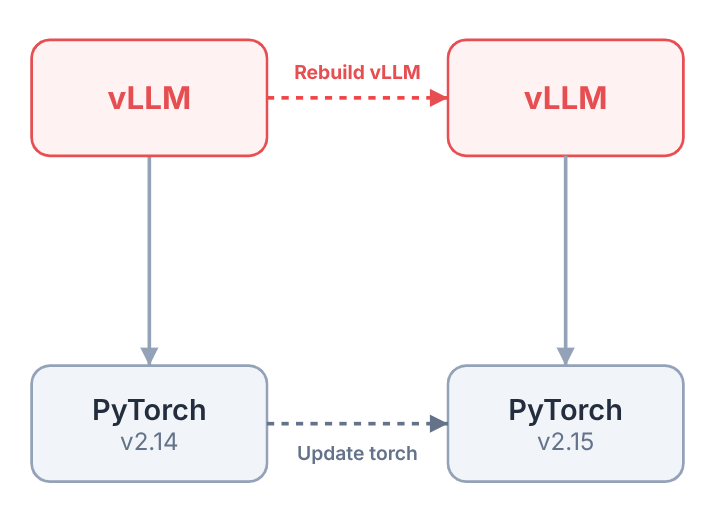
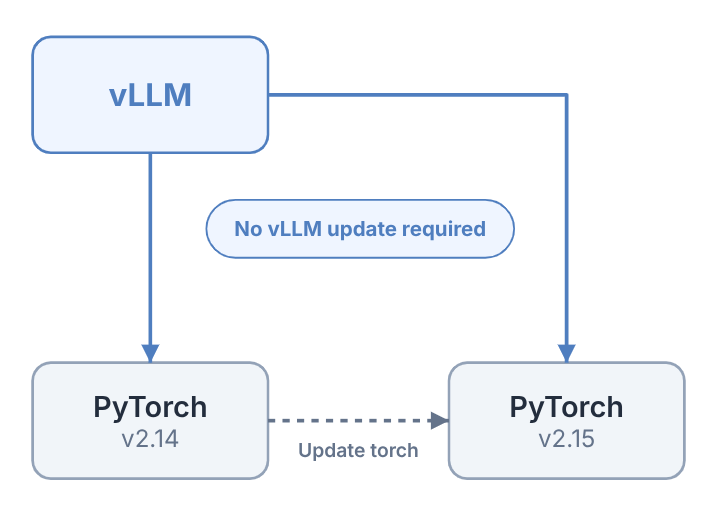
vLLM relies heavily on PyTorch, with frequent calls to LibTorch in its C++ backend. As a result, changes to LibTorch’s binary interface may require vLLM to be rebuilt and relinked, even when the APIs remain unchanged. What if we could update LibTorch without rebuilding vLLM? That’s where the LibTorch Stable ABI comes in. With a LibTorch Stable ABI, updating LibTorch does not require rebuilding or updating vLLM in order to keep using it. Instead, we could swap out the torch wheel and import it directly into our vLLM package. As of v0.33.0, vLLM publishes LibTorch ABI Stable CUDA wheels.