实地参观显示宇树执行器区域自动化有限
Josef Chen实地参观宇树杭州工厂后称,执行器生产区域仅有一两条新自动化线,其余大部分工人仍在操作绕线机。Chen尚不清楚自动化线生产的电机占比。他还指出,宇树将一段使用UnifoLM-X1-0的机器人装配视频称为“实际部署”,但其招股文件将相关活动描述为试点,并称装配目前“主要由人工完成”。此次参观仅允许在展厅拍照,限制了生产现场的可视核验。
此次参观以第一手观察呈现了一个执行器生产区域自动化有限的现场情况,并揭示了宇树“实际部署”的说法与其招股文件中更谨慎表述之间的差异。
Everyone thinks China's robot factories are automated. They aren't. The robots are Chinese; the robots that make robots will be Western.
On Wednesday I toured Unitree's factory in Hangzhou, and I wasn't allowed to take pictures. In the building that makes the actuators, the motors that drive every joint, there were one or two new automated lines. The rest of the floor was filled with humans operating old-school winding machines. (Winding means wrapping copper wire around a motor's core.) I don't know what percentage of the motors are made on the automated lines. But staffing the floor with humans made sense.
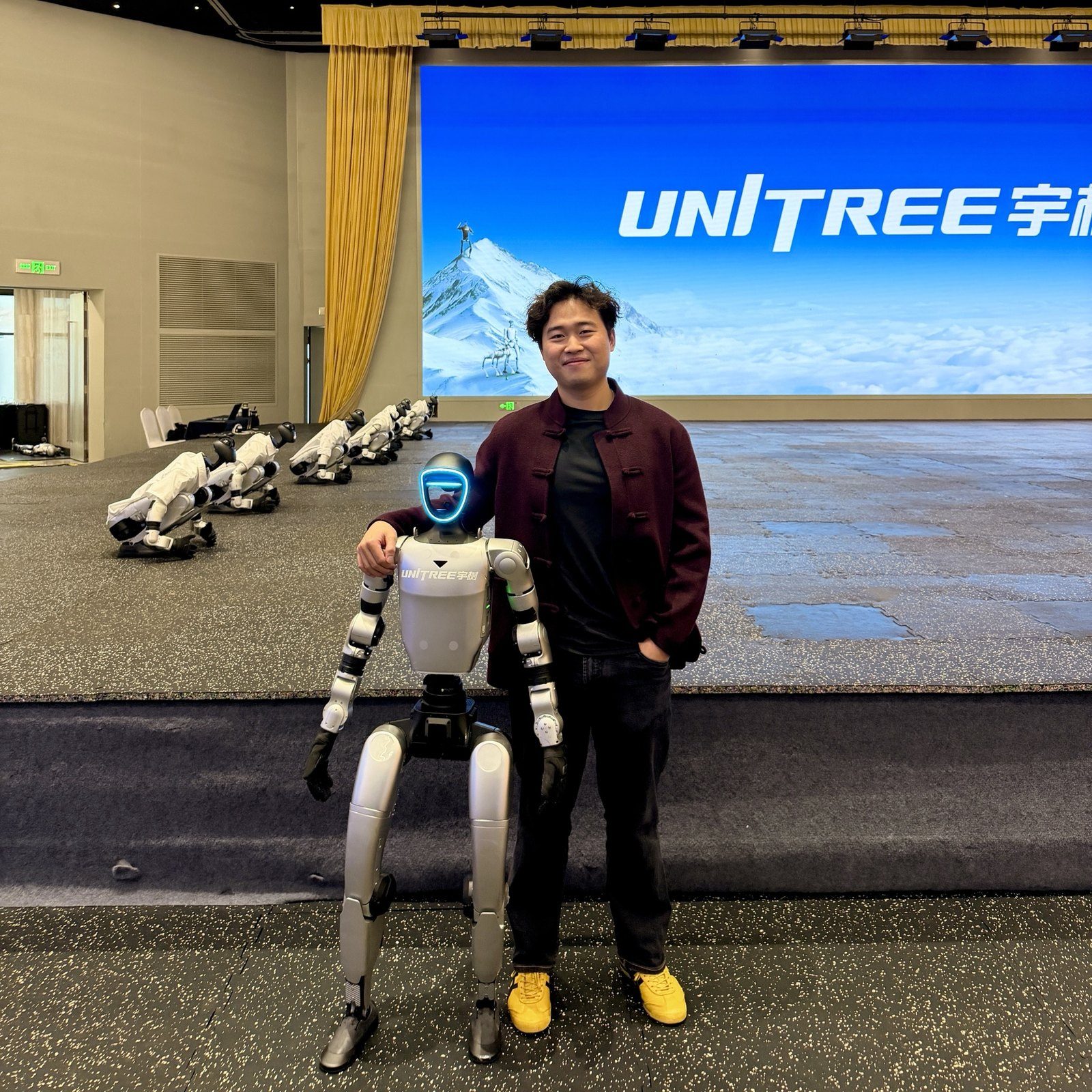
Me with a Unitree humanoid in the showroom, the one place photos were allowed. Behind us, a row of robots lies face down.
Unitree has a viral video (28 million views) of a humanoid doing assembly in its own factory, which it calls "an actual deployment". Its IPO prospectus calls it a pilot, and says assembly is "currently mainly manual". At the end of 2025 all of Unitree's machinery was worth about $1.7 million on its books, at a company that made almost 32,000 robots that year: some $50 of machinery per robot!