Unitree actuator area shows limited automation on factory tour
Josef Chen’s firsthand tour of Unitree’s Hangzhou factory found one or two new automated lines in the actuator-building area, while workers operated winding machines across much of the rest of the floor. He did not know what percentage of motors came from the automated lines. Chen also noted that Unitree calls a humanoid assembly video using UnifoLM-X1-0 an “actual deployment,” while its IPO prospectus describes the activity as a pilot with assembly “currently mainly manual.” Photography was permitted only in the showroom, limiting visual verification of production operations.
The tour provides a firsthand snapshot of limited automation in one actuator-production area and highlights a difference between Unitree’s “actual deployment” description and the more cautious wording in its IPO prospectus.
Everyone thinks China's robot factories are automated. They aren't. The robots are Chinese; the robots that make robots will be Western.
On Wednesday I toured Unitree's factory in Hangzhou, and I wasn't allowed to take pictures. In the building that makes the actuators, the motors that drive every joint, there were one or two new automated lines. The rest of the floor was filled with humans operating old-school winding machines. (Winding means wrapping copper wire around a motor's core.) I don't know what percentage of the motors are made on the automated lines. But staffing the floor with humans made sense.
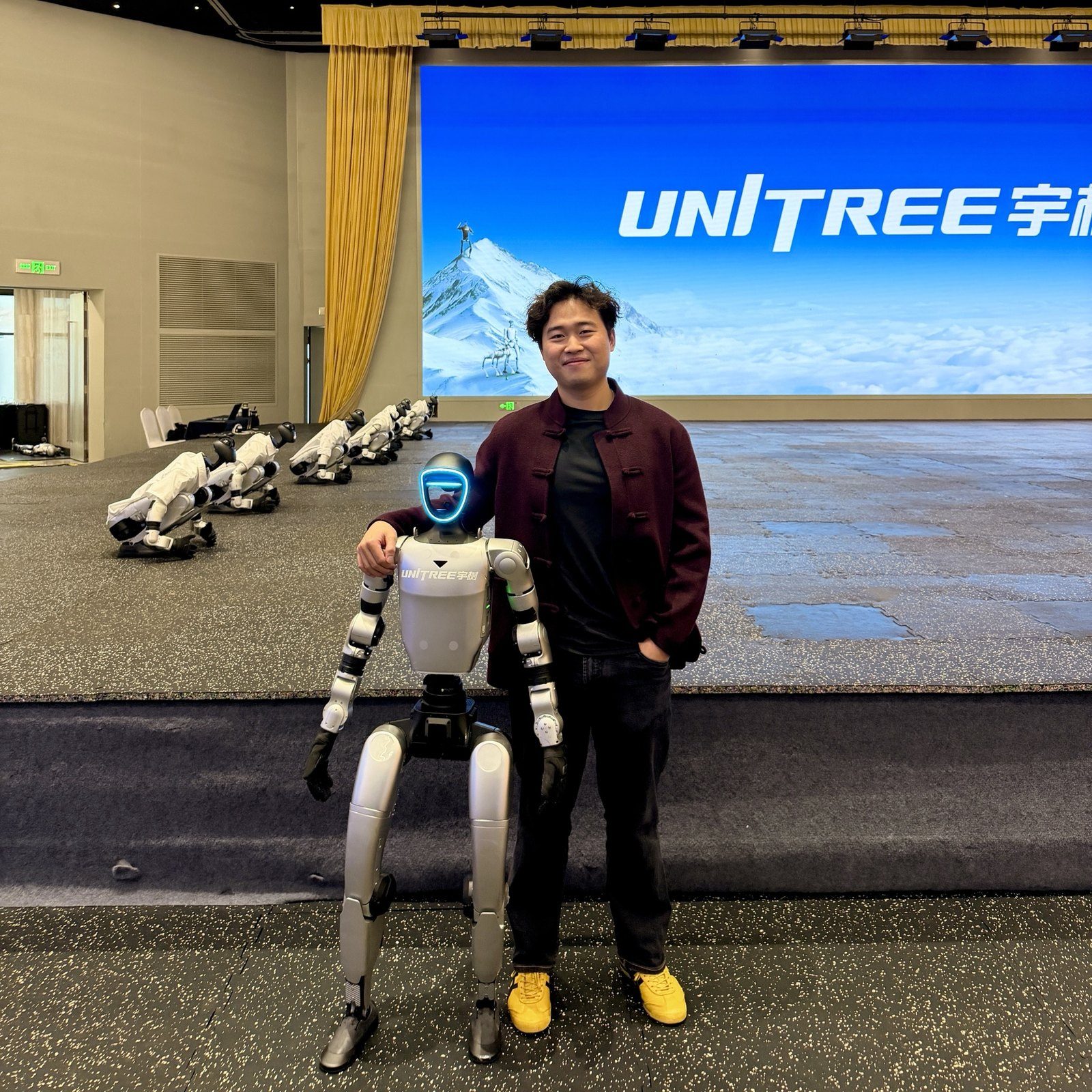
Me with a Unitree humanoid in the showroom, the one place photos were allowed. Behind us, a row of robots lies face down.
Unitree has a viral video (28 million views) of a humanoid doing assembly in its own factory, which it calls "an actual deployment". Its IPO prospectus calls it a pilot, and says assembly is "currently mainly manual". At the end of 2025 all of Unitree's machinery was worth about $1.7 million on its books, at a company that made almost 32,000 robots that year: some $50 of machinery per robot!