Xiaomi unveils open-source HachimoDock desktop AI device
Xiaomi introduced HachimoDock at the 2026 Guanchia Conference, describing it as an open-source desktop AI device that can be customized with a voice-driven desktop pet, desktop-agent task dispatch, smart-home controls and user-created components. The reports say users can collaborate with coding agents through natural language to create components that run on the device. GitHub materials include the software source code, hardware bill of materials, structural models and assembly tutorial. The device’s self-build cost was reported at approximately 150 yuan.
The release gives developers source code and hardware build materials for experimenting with customizable desktop AI devices and components created through natural-language collaboration.
当AI开始从屏幕走向现实世界,智能硬件的竞争逻辑也在发生变化。
过去,消费者购买一款AI硬件,往往是在选择厂商预先定义好的功能,品牌将预设功能打包交付,用户只能在厂商划定的框架内适配自身场景。但随着大模型能力不断增强,以及Vibe Coding的兴起,AI硬件的边界正在被重新定义:用户不再只是功能的使用者,也可以成为产品的创造者,普通人也能用自然语言亲手创造专属的AI硬件。
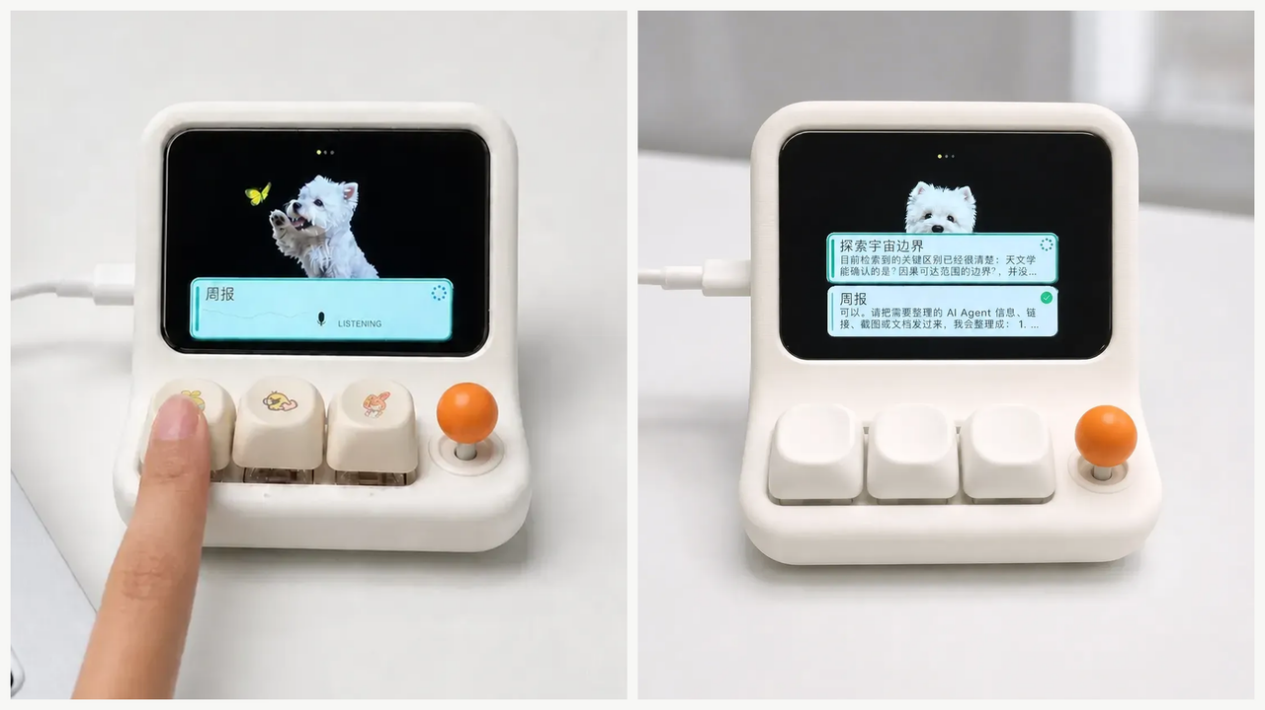
日前在2026观猹大会上,由小米技术委创新产品团队孵化的开源AI硬件HachimoDock首次公开亮相,这台巴掌大小的桌面设备,跳出了传统AI硬件定义的固有逻辑,可由用户按个人喜好自由改造,集成了个性化桌宠、语音操控电脑端Agent、智能家居联动、自定义组件创作等能力,试图成为大众入门Vibe Coding的第一台AI硬件,让更多人体会用自然语言创造一台万能桌面搭子的乐趣。