LiberNT adds a new kernel with AI-assisted development
Tom’s Hardware reports that the ReactOS-derived LiberNT project has added a new bootloader, graphics stack, memory manager, and kernel. The GPLv3-licensed operating system targets amd64, arm64, and riscv64 platforms, with its source code and ready-made bootable disk images available. Developers say AI helps review and write code, while a person reviews the output and validates end-to-end tests before it enters the main branch.
LiberNT provides public code and bootable disk images for a developing AI-assisted open-source operating system, while retaining human review and test validation in its workflow. Its Windows 11 compatibility and performance claims remain developer-reported and have not been independently verified.
There’s a new vibe-coded OS in town going by the name of LiberNT. Its name provides a big clue to its nature: Liber (free), NT (New Technology architecture, as in Windows NT). As it has been released under GNU’s GPL3.0 license, LiberNT also provides a free new way to run apps designed for Microsoft’s Windows 11.
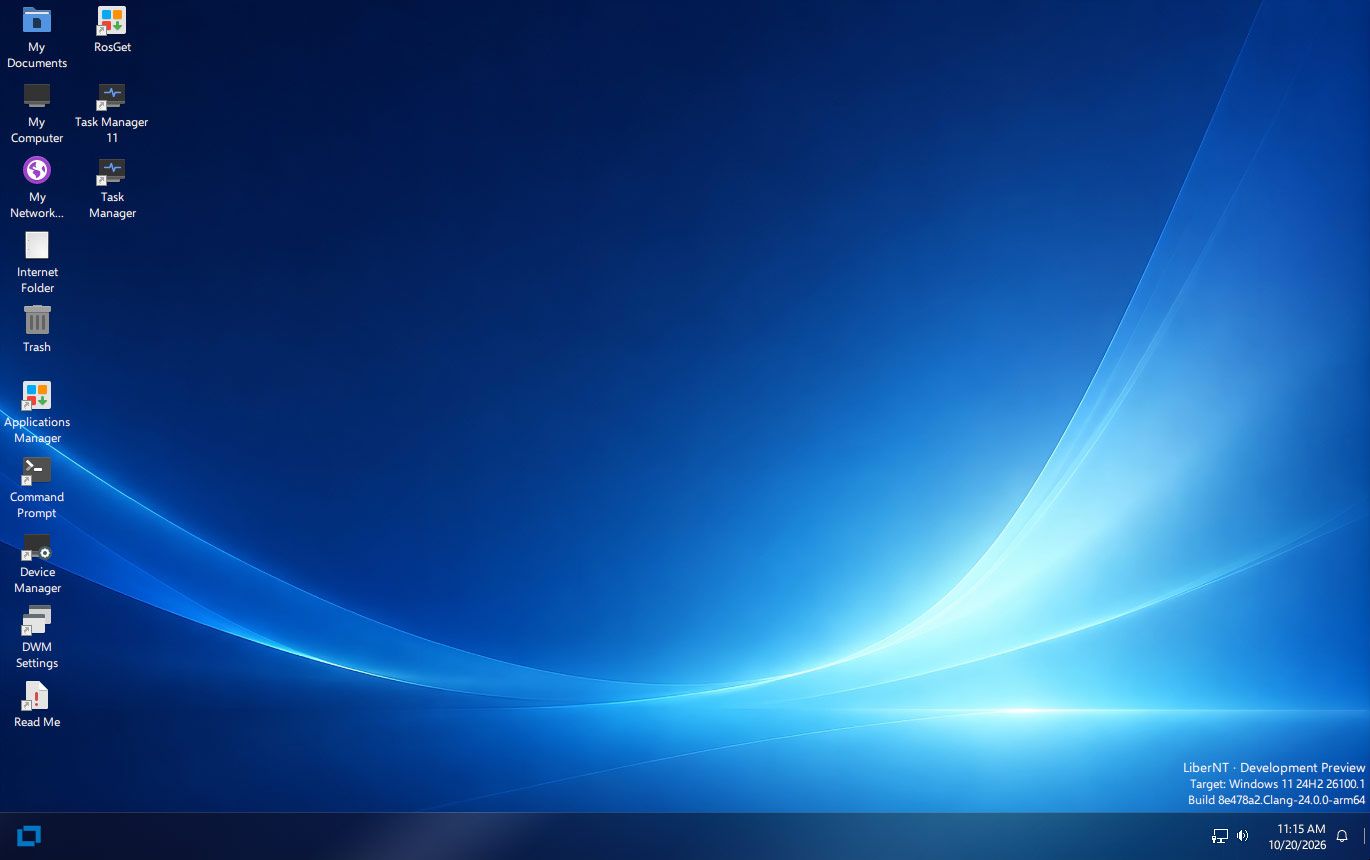
LiberNT has been under development for some time, but on Wednesday it made a big leap. Reading the intro, you might have wondered if this work had a ReactOS connection, and indeed there is. But what started as a fork of ReactOS has already got a new boot loader, graphics stack, memory manager – and yesterday a new kernel. “LiberNT is not affiliated with or endorsed by the ReactOS project or Microsoft,” insist the devs behind this OS.