Book Proposes Bayesian Framework for Assessing AI Consciousness
A report says 14 researchers affiliated with DeepMind published “Assessing AI Consciousness: From Cacophony to Hierarchy,” a book spanning computer science, neuroscience and philosophy. It presents a five-level functional description framework and a Bayesian model that combines researchers’ confidence in consciousness theories with observable evidence from AI systems to produce an overall confidence estimate. The report also says the project released code, an interactive assessment tool, presentation slides and public talk videos.
The framework is designed to make differences in theoretical assumptions and interpretations of evidence explicit and comparable. The report says the accompanying resources may allow researchers to run the model and test assessments of different AI systems.
11月2日消息,近日,来自 DeepMind 研究所,集合计算机科学、神经科学、哲学领域共 14 位研究者的合著书籍《Assessing AI Consciousness: From Cacophony to Hierarchy》(《评估 AI 意识:从众说纷纭到层级框架》)正式出版,该书试图跳出纯粹哲学思辨,提供一套可落地、可量化的评估范式,用来判断 AI 系统是否具备意识。
本书已于全球亚马逊上架,2026 年 11 月 7 日起将进入全球实体书店渠道销售。
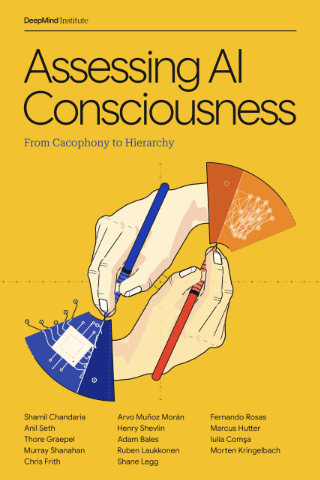
参与本书创作的作者阵容强大,包括 Shane Legg、Marcus Hutter、Anil Seth、Murray Shanahan 等知名学者。当前行业面对 AI 意识最大困境在于:不同专家不仅对 “现有大模型有没有意识” 结论完全对立,连意识本身依赖什么样的系统条件都没有统一理论,公众又很容易凭借 AI 拟人化行为本能地赋予机器心智,造成大量主观判断与争论。
#DeepMind#Assessing AI Consciousness: From Cacophony to Hierarchy#Shane Legg#Marcus Hutter#Anil Seth#Murray Shanahan