Osmani warns that AI agents can encourage cognitive surrender
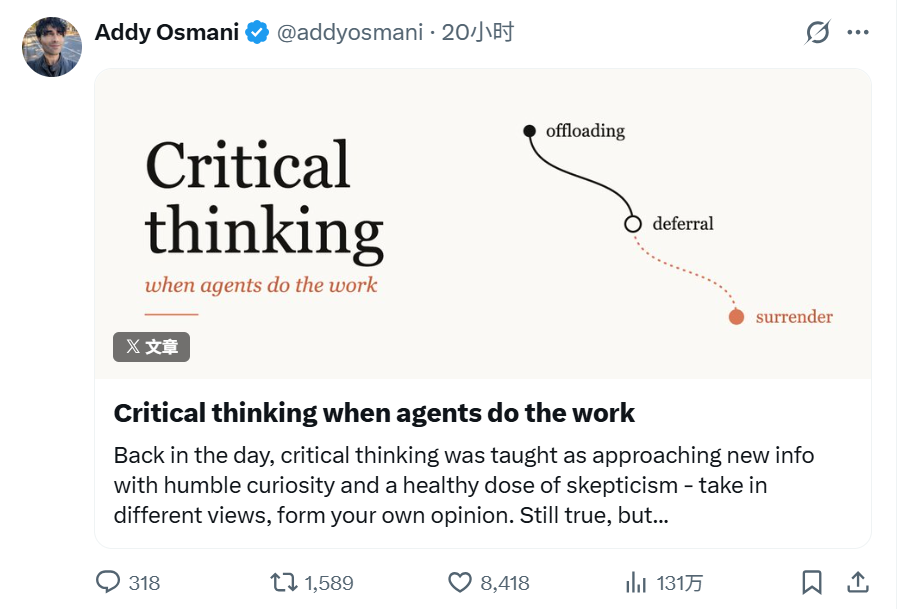
IT之家, cnBeta, 36氪 and 创业邦 report that Anthropic Claude Code engineer Addy Osmani published an essay warning that more accurate AI agents can make users less likely to verify outputs or question their own judgment. He describes three stages of AI use: cognitive offloading, deferral and cognitive surrender, the last involving acceptance of AI output without checking. He recommends forming independent hypotheses, demanding verifiable evidence, reviewing what agents assumed or missed, and improving automated validation when human review cannot keep pace.
The essay offers practical safeguards for agent-assisted development at a time when faster and more plausible outputs may weaken independent verification and build comprehension debt among developers.
11月4日,Anthropic旗下Claude Code团队工程师、前Google技术高管Addy Osmani近日在社交平台X发表长文《当AI智能体完成工作时,如何保持批判性思维》(Critical thinking when agents do the work),警告随着AI智能体(AI Agent)越来越强大,人类可能在享受效率提升的同时,逐渐丧失独立思考、验证结果和理解复杂系统的能力。他将这种现象称为“认知投降”(Cognitive Surrender)。
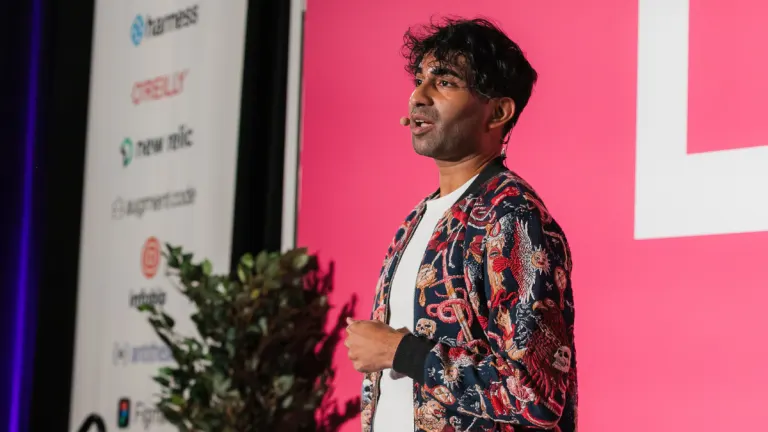
Osmani曾在Google工作超过14年,负责过Chrome开发者体验及Google云AI相关业务,目前在Anthropic从事Claude Code相关工作。
#Anthropic#Claude Code#Claude#Addy Osmani#Google#Pangram#Steven Shaw#Gideon Nave#Wharton School