Jinjiang AI-writing dispute tests detector limits
Readers posted AI-detection results for Jinjiang Literary City novels, including works by ranked authors and titles whose rights had been sold, prompting questions about refunds and disclosure to rights buyers. Entertainment Capital Theory tested more than 30 web-fiction samples with Zhuque and found inconsistent results: some fully AI-generated text was partly labeled as human, while the outlet's test generally did not classify human text as AI. Separately, social-media users reported that Zhuque flagged some handwritten passages as suspected AI and gave inconsistent results for human and AI-generated versions of the same outline. Jinjiang's rules permit limited AI assistance and require at least three detection tools, with AI-suspicion scores above 60% in three or more tools, before content is deemed a violation. At publication, the platform had not publicly responded to the latest dispute.
The dispute shows the limits of relying on AI detectors to make enforcement decisions. Detection errors can expose authors to suspicion, while the platform must balance enforcement against false positives and address subscriber refunds and disclosure to rights buyers.
编者按:本文来自微信公众号 “娱乐资本论”(ID:yulezibenlun),作者:文刀雨日青,创业邦经授权发布。
最近,晋江文学城也陷入了AI创作的争议。
本月伊始,陆续有读者在社交平台晒出晋江小说的AI检测结果。部分作品的多个章节被标出80%以上的AI可疑度,涉及作品从普通网文延伸到金榜作者,甚至包括部分已经出售版权的小说。
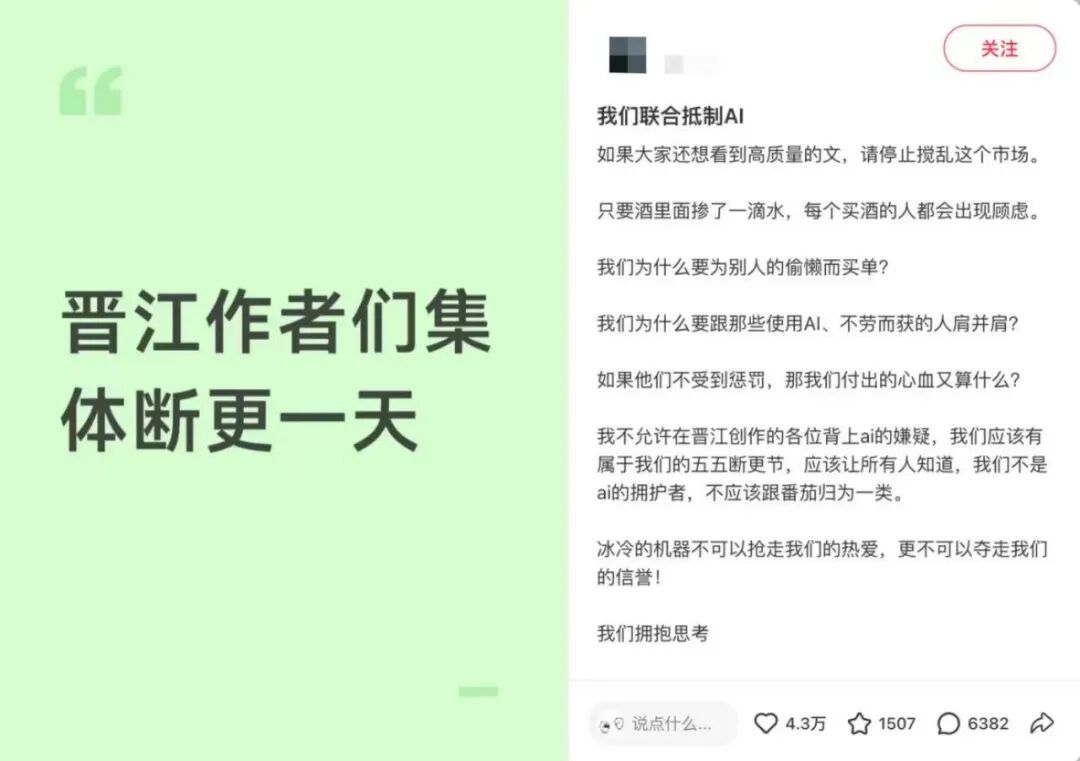
随着越来越多的作品被网友集中“鉴AI”,争议也从作者是否使用AI,转向晋江平台如何认定和处理违规创作。一些读者认为平台处理力度不足,但朱雀等AI检测工具本身的准确性,同样受到质疑。坚持原创的作者,也开始行动呼吁平台抵制AI创作以保护原创积极性。
#Jinjiang Literary City#Zhuque AI Detection Assistant#DeepSeek#Zhipu#Qwen