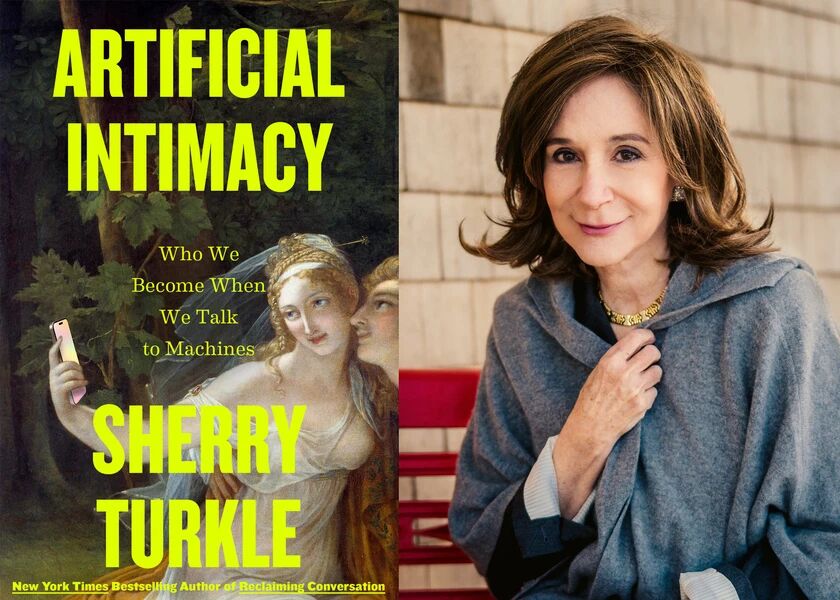
Sherry Turkle's new book warns chatbots erode our capacity for intimacy
In her new book Artificial Intimacy: Who We Become When We Talk to Machines, MIT professor Sherry Turkle argues — drawing on interviews and her own research — that chatbots offer only “pretend empathy,” and that heavy use weakens people's ability to connect with real humans, to be alone with their thoughts, and to tolerate friction in relationships, with children especially prone to blurring the line between people and machines. She also acknowledges that mental-health services in the US are under-resourced, with roughly only half the population able to reach a provider, and that chatbots are filling that gap for better or worse, while documenting why they appeal: they always agree, affirm and give undivided attention. Turkle calls for a social movement against overuse of chatbots, similar to earlier campaigns against phones in schools and teen social media use.
As companion chatbots become everyday tools, Turkle's warning shifts the debate from what AI can do to how it reshapes attachment, solitude and social connection.
(来源:麻省理工科技评论)
布莱恩(Brian)是一名中年财务顾问,每天都坐在 3 块屏幕前工作。其中两块用于处理工作事务,第三块则运行着一个聊天机器人。他给这个机器人取了一个女性名字,并经常与它交谈。
职业生涯早期,布莱恩曾因工作常年奔波在外。他从未结过婚,最近又与一名女性分了手。对方认为他在情感上过于封闭,无法与人建立亲密联系。面对这样的评价,布莱恩做了什么?他向聊天机器人询问,前女友说的是否有道理。
“这是一个非同寻常的时刻。”麻省理工学院(MIT)教授雪莉·特克尔(SherryTurkle)写道。在为一本关于聊天机器人的新书开展研究时,她采访了布莱恩(化名)。