Danaher to launch AI autonomous lab with up to 8x faster antibody reagent development
Danaher announced it will launch its first AI-powered autonomous research lab, based at its reagent subsidiary Abcam and combining AI, robotics and technologies from subsidiaries including Beckman Coulter Life Sciences, Cytiva, Genedata, Integrated DNA Technologies and Molecular Devices, with instrument coordination and robotic automation co-developed with Automata, which Danaher invested in during January 2026; full-scale operation is expected in early 2027. In the loop, AI first designs affinity reagents such as antibodies that bind biological targets, robots build and test them, and results are fed back to the models to improve the next design round. Danaher says the approach can speed up the path from concept to validated reagent by up to 8x and lift annual reagent output up to 10x, from dozens to hundreds of reagents — figures that are the company's own projections.
Life-science toolmakers are embedding AI and automation into lab workflows, which could shorten early-stage antibody and drug research cycles if the company's projections hold.

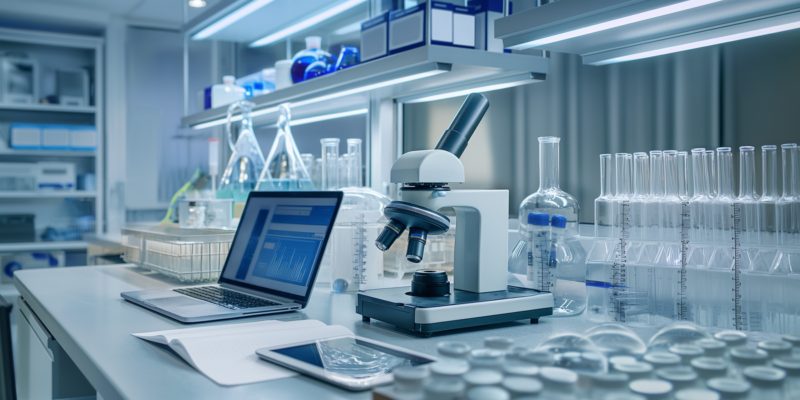
美國生命科學大廠丹納赫(Danaher)7 日宣布,推出首座 AI 驅動的自動研究實驗室,協助科學家更快速、有效率開發客製化抗體與其他分子工具,2027 年初全面規模化運作。
這座實驗室設於旗下試劑供應商 Abcam,整合 AI、機器人,以及 Beckman Coulter Life Sciences、Cytiva、Genedata、Integrated DNA Technologies、Molecular Devices 等子公司的技術,串連成端到端的工作流程。儀器協調與機器人自動化部分,則與丹納赫 2026 年 1 月投資的 Automata 共同開發。
系統先由 AI 設計可與生物標靶結合的親和性試劑,如抗體,再交由機器人製作與測試,實驗結果持續回饋給模型以改良下一輪設計,形成「設計、製作、測試、學習」的連續循環。丹納赫預估,從構想到完成驗證試劑的速度最高可提升 8 倍,每年試劑產量也可望增加至 10 倍,從數十種擴大到數百種。
#Danaher#Abcam#Automata#Beckman Coulter Life Sciences#Cytiva#Genedata#Integrated DNA Technologies#Molecular Devices