AI and DESI Data Yield 70 New Strong Gravitational-Lens Systems
Astronomers used DESI Legacy Imaging Surveys data with a residual neural network to identify candidate strong gravitational lenses, then confirmed 70 systems through spectroscopic observations with the VLT’s MUSE instrument, according to 科技新報. The newly confirmed systems were added to a gravitational-lens database for research into dark matter, galaxy structure and cosmic evolution. The report also says that a 5.6-trillion-pixel map released in August 2026 records nearly four billion celestial objects.
The report provides a concrete example of machine learning accelerating the search for rare astronomical objects while spectroscopic observations verify the candidates.

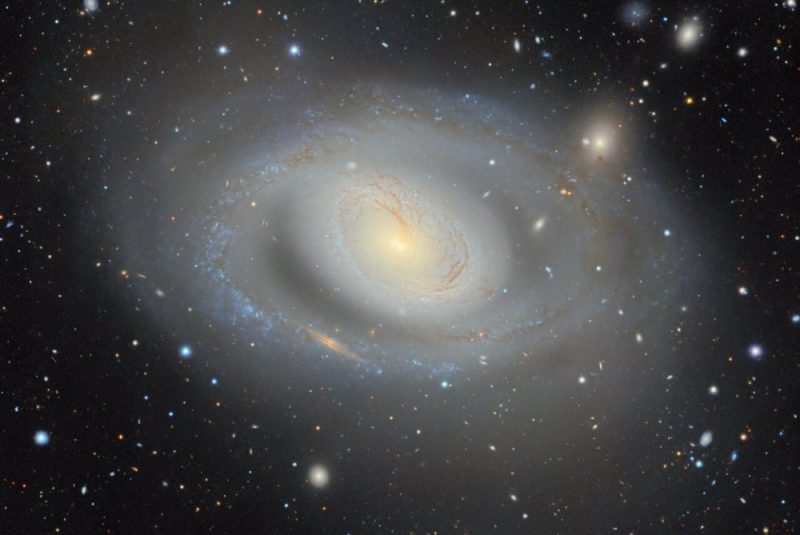
天文學家運用暗能量光譜儀巡天影像計畫(DESI Legacy Imaging Surveys)的龐大觀測資料,結合人工智慧影像辨識技術,發現並確認 70 個新的強重力透鏡系統。這項成果為研究暗物質、星系結構與宇宙學提供了更多重要樣本。2026 年 8 月,研究團隊公布目前規模最大的宇宙二維影像地圖,資料包含約 5.6 兆像素,記錄近 40 億個天體,涵蓋恆星、星系、黑洞及小行星等,為搜尋罕見天文現象建立了前所未有的資料基礎。
#DESI Legacy Imaging Surveys#MUSE#Very Large Telescope#NOIRLab