Eureka robot collects deep-sea nodules over 4,000 meters down
Impossible Metals said its AI-guided Eureka collection system autonomously descended into the Pacific Clarion-Clipperton Zone and collected about 450 grams of polymetallic nodules below 4,000 meters. The robot uses computer vision to identify nodules with attached organisms and mechanically collects the others while hovering above the seabed. The collected samples will be studied by Viridian Biometals, while a larger Eureka III is planned for an independent environmental-impact study aboard the German research vessel Sol in 2027.
The trial demonstrates a concrete use of computer vision in autonomous deep-sea robotics, although the test results and the claimed environmental advantages remain unverified independently.

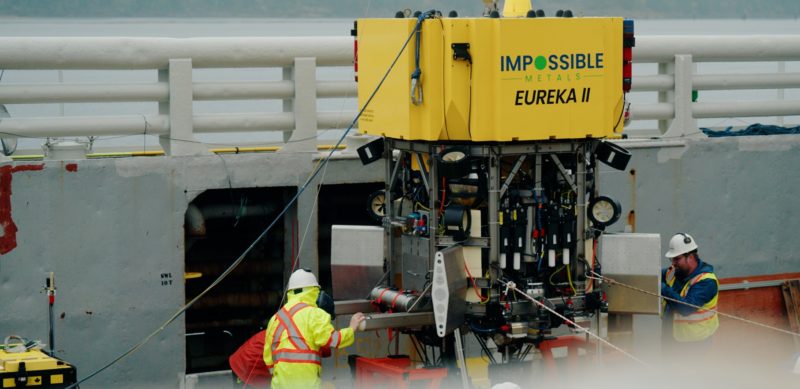
美國深海採礦技術新創 Impossible Metals 9 日宣布,自動水下機器人「Eureka 採集系統」9 月在太平洋克拉里昂─克利珀頓區完成科學潛航,於水深逾 4,000 公尺處以 AI 選擇性採集多金屬結核,稱為全球首例。執行長卡納特(Steve Curnutte)向《日本經濟新聞》表示,有意與日本企業合作,將技術用於日本近海礦產開發。
多金屬結核是散布在深海海床、形似馬鈴薯的礦石,富含銅、鎳等電動車與電子產品所需的關鍵礦物。業界多數方案是以類似吸塵器的集礦機在海床行駛,將結核連同沉積物一併吸起,再經揚礦管送上水面,因破壞棲地遭環保團體批評。
#Impossible Metals#Eureka#Eureka III#Viridian Biometals#International Seabed Authority#BGR#Sol