微调Inception v3在皮肤病变测试中胜过两款LLM
在由 Magnus Lynch 博士设计的测试中,微调后的 Inception v3 正确诊断了200个经活检确诊皮肤病灶中的125个,GPT-6 Astra 与 Claude Fable 5.1 分别诊断正确84个和85个。CNN 将30个黑色素瘤中的13个列为首选诊断,两款 LLM 分别为8个和11个。全部200个病灶均经过活检,因此病例难度较高。Lynch 提醒,样本量较小,每例 LLM 测试仅运行一次,无法排除 LLM 存在数据集污染,而且 Inception v3 是刻意选用的非最先进基线模型。
在这项皮肤科评测中,任务专用图像模型胜过了两款通用多模态 LLM。不过,小样本、单次运行、潜在污染以及由作者设计的测试,使其不足以构成确定性的模型排名。
This is a melanoma.
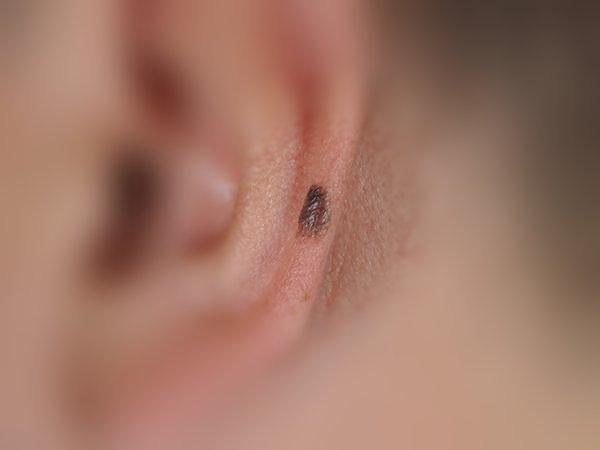
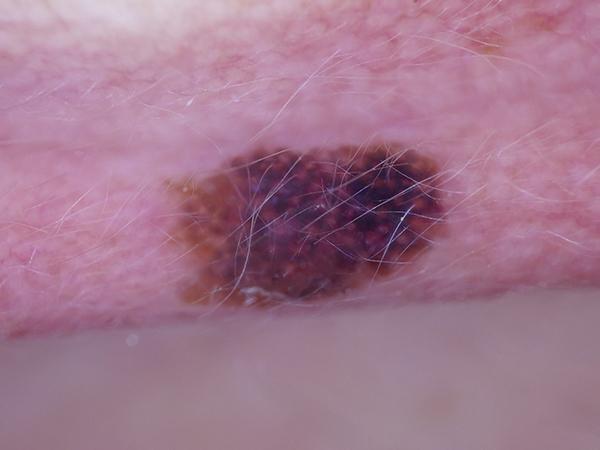
Figure 1. Invasive melanoma on the ear, under 0.8 mm thick. Both LLMs called it a seborrhoeic keratosis and said it could be discharged. The CNN called it a melanoma. Clinical photograph on the left, dermoscopic image on the right. Images: MILK10k, MILK study team, CC BY-NC.
I showed these two images - a clinical photograph and a dermoscopic (skin microscope) image - to GPT-6 Astra and Claude Fable 5.1, two of the most capable AI models available in October 2026. Both said it was a seborrhoeic keratosis, a harmless warty growth, and that the patient could be discharged. I then showed them to fine-tuned version of Inception v3, a convolutional neural network (CNN) first published by Google in 2015 and fine-tuned here on public dermatology images. The CNN got the right answer based on the dermoscopy view.
#Inception v3#GPT-6 Astra#Claude Fable 5.1#MILK10k#ISIC Archive#International Skin Imaging Collaboration#Claude Code#Anthropic