Global smartphone shipments fall 20% as memory costs rise
Omdia reported that global smartphone shipments fell 20% year over year to 254.7 million units in Q3 2026, the lowest third-quarter volume since 2013. Rising DRAM and NAND prices are pressuring manufacturers and distributors, while Omdia also links weaker consumer demand and tighter shipment controls to the contraction.
AI data-center demand is competing for memory-chip capacity, transmitting higher component costs and supply constraints into the smartphone market.
根据市场研究机构Omdia于2026年10月29日发布的最新报告,2026年第三季度全球智能手机出货量同比下降20%,仅为2.547亿部,创下自2013年以来第三季度的最低水平。这意味着全球智能手机市场正经历一轮严重收缩,而持续恶化的存储芯片供应状况和不断上涨的零部件成本,正在成为打击行业需求的主要因素。
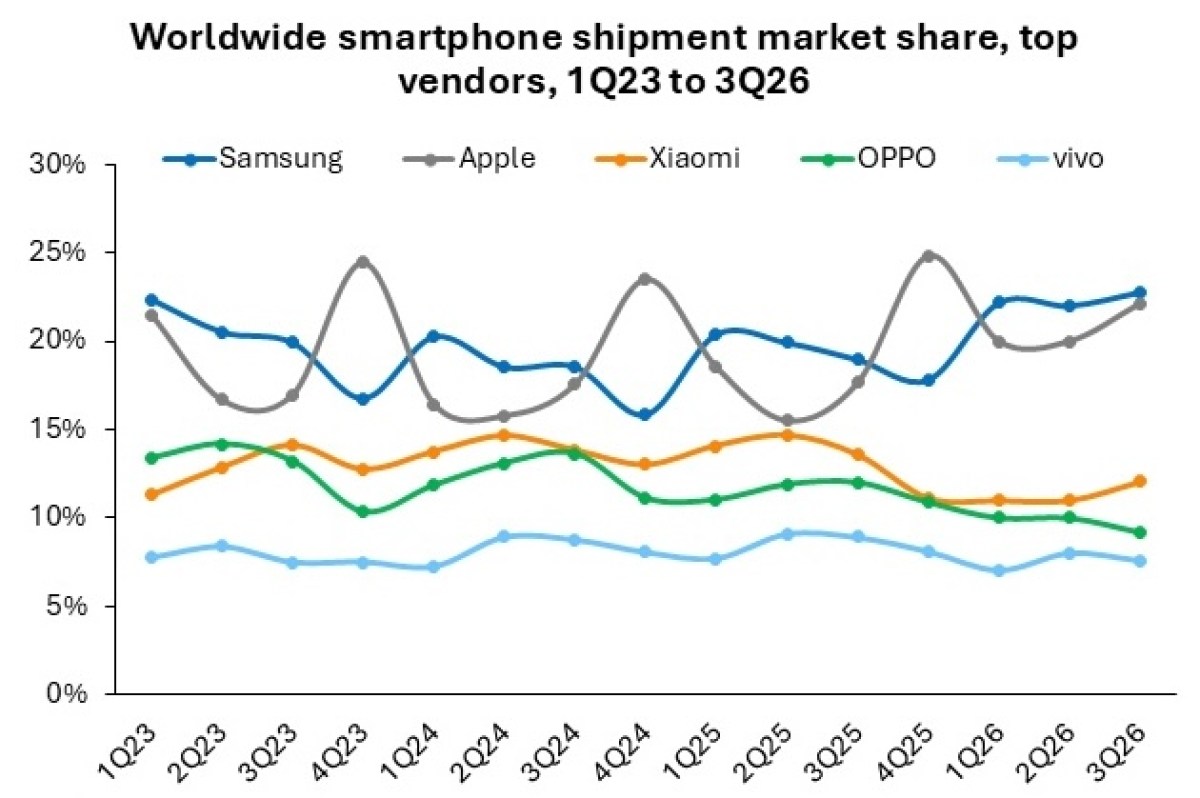
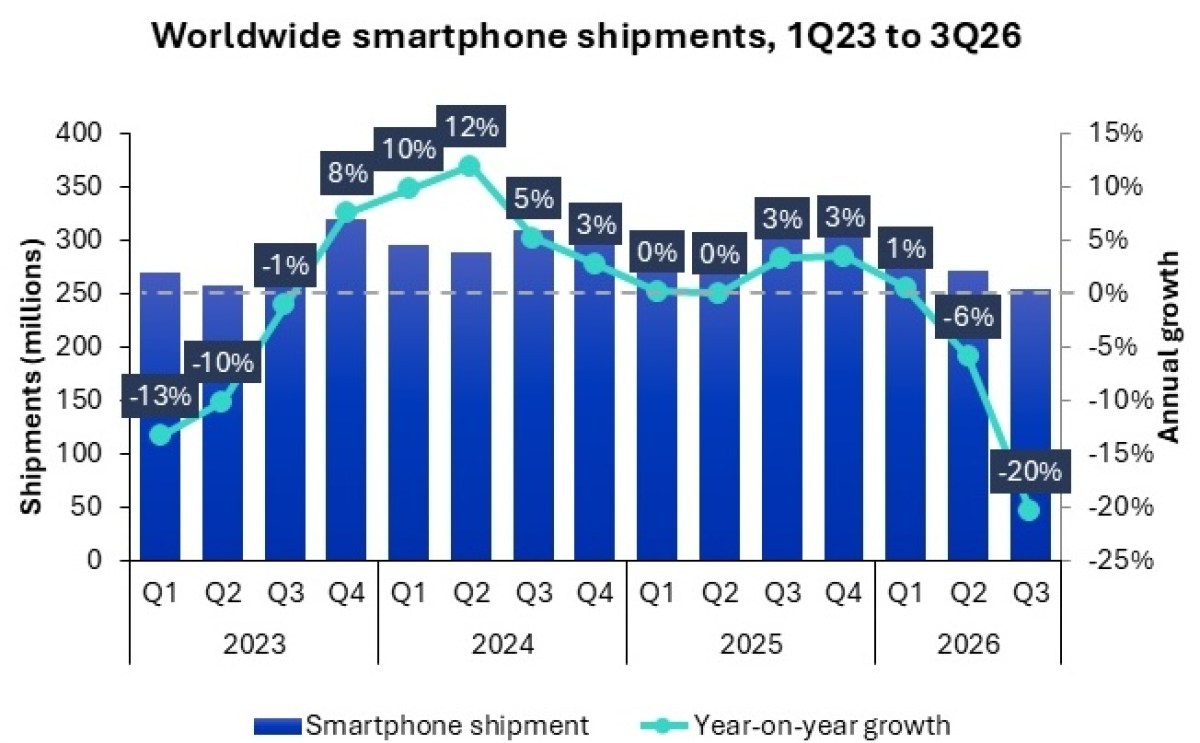
此次市场下滑不仅体现在消费者购买意愿减弱,也反映出智能手机厂商主动控制出货量的经营策略。随着DRAM和NAND闪存价格持续上涨,手机制造商面临越来越大的成本压力。内存作为智能手机不可或缺的核心组件,其价格上涨直接推高了整机物料成本。对于利润率本来就不高的入门级和中端手机而言,厂商很难完全消化这些成本,只能通过提高售价、调整配置或者减少出货量来维持盈利能力。