A Reddit user reported running GLM 5.3 q6 and Qwen Flash Next q6 on two 256GB M5U units with 80 cores each. The post claims 4.9k prefill and 50 tokens per second for GLM, while Qwen reached 8k prefill and 200 tokens per second through Tensorfold; the author explicitly questioned the GLM prefill figure because it came from an LLM's explanation. The author said DeepSeek configured oMLX from guides and asked the community for optimization advice.
What problem it solves
Building full-stack web applications in Rust often requires coordinating server rendering, client reactivity, routing, assets, and reusable UI components. Topcoat aims to simplify and streamline that work by combining these capabilities in a unified framework.
Key features
Server rendering with client reactivity — Components render asynchronously on the server and can access…
When asking AI to solve a problem, we usually prepare the question, rules, and evaluation criteria for it in advance. Scientific research often starts from an earlier point: how should a phenomenon be described, which premise in an existing theory deserves scrutiny, and what kind of new explanation could connect several things that were previously separate. After reasoning capabilities continue to…
What problem it solves
Running frontier-scale open-weight models locally requires an inference platform that can make efficient use of the heterogeneous hardware available on a personal device. The project addresses this by treating GPUs, CPUs, host memory, and interconnects as a unified, elastic inference platform.
Key features
Edge-native MoE runtime — The runtime provides MoE serving with bandw…
What problem it solves
LLM and Visual Gen inference requires specialized kernels, efficient runtime orchestration, and flexible deployment across NVIDIA GPU configurations. Developers also need a modular framework that supports customization while integrating with established inference tooling.
Key features
Optimized inference kernels — Custom kernels accelerate common inference operations, includ…
What problem it solves
Security teams need to identify vulnerabilities, misconfigurations, secrets and other security issues across multiple kinds of systems. Trivy addresses this problem by pairing scanners for different issue types with targets such as container images, filesystems, Git repositories, virtual machine images and Kubernetes.
Key features
Scan multiple target types — Trivy can scan …
What problem it solves
Inference deployments need to place requests across model servers while accounting for load, KV-cache locality, priority, and request format. They also need flexible deployment options, request management, and coordination for multi-stage inference workflows.
Key features
Load- and cache-aware endpoint selection — The Endpoint Picker evaluates current InferencePool state to …
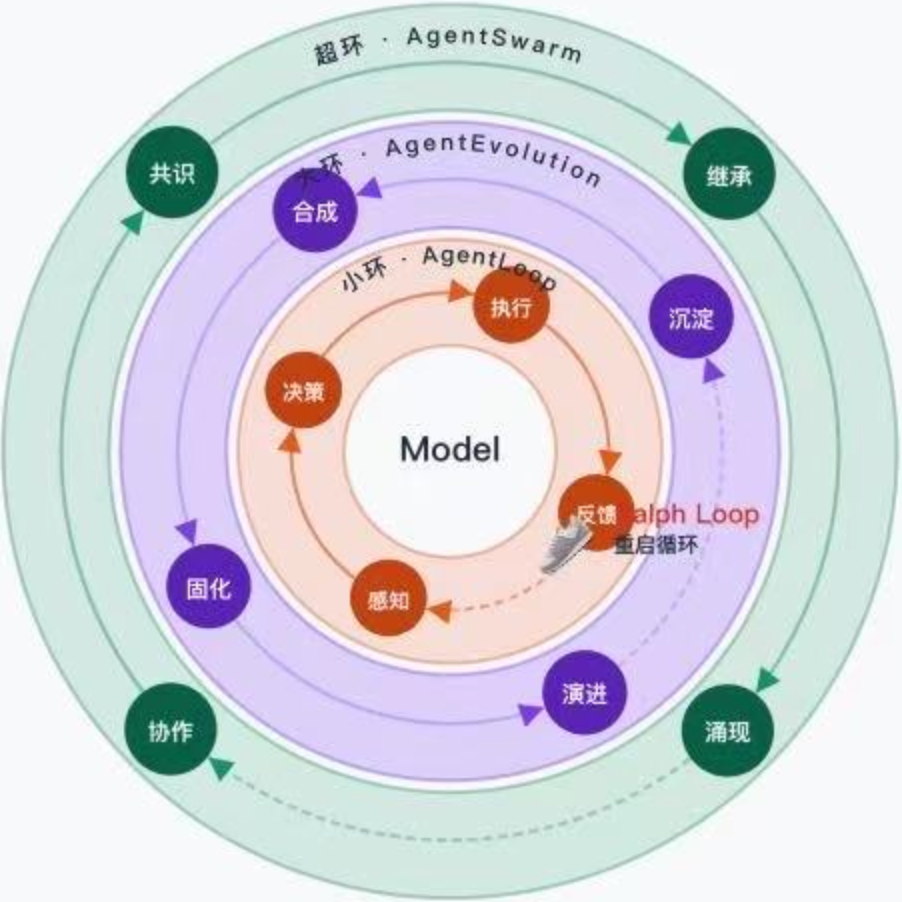
AI has already entered code writing, algorithm optimization, and model development. But after a task is completed, what remains may be reusable capability—or merely an answer and scattered logs. The difference becomes apparent only when a similar problem comes up again: can the system reuse what it learned, or must it pay the cost of exploration all over again?
Recursive Self-Improvement (RSI) co…
 topcoat• Pinned