World is promoting World ID as a privacy-preserving way for dating-app users to prove they are a unique, real person without revealing their identity. The company-sponsored Harris Poll survey reported that 74% of online daters had suspected a match was not real, while 81% said confirmed profiles would make them more likely to use a dating app. World said Tinder is displaying an optional human-verification badge as part of its verification pilot.
World launched World ID for banking and finance at Money20/20, combining its identity wallet, the generally available World ID for Zoom integration, and World ID for Agents. Zoom participants can receive a “Human Badge,” while agent tools let users delegate verified Proofs to AI agents acting on their behalf. Bain Capital, VanEck Funds, OpenExchange, Outtake and Pantera Capital were named as design partners, but the reports did not identify a production bank customer.
What problem it solves
Adobe Flash content needs an emulator that can parse SWF files and run ActionScript. Ruffle addresses this by providing a Flash Player emulator for desktop and web environments.
Key features
Desktop and web targets — The emulator targets desktop and web environments, with the web implementation using WebAssembly.
Source: README, desktop, web
ActionScript support — Ruffle sup…
What problem it solves
Building representative game worlds from real locations requires geographic, elevation, and architectural data. Arnis addresses this by processing large-scale geospatial information to generate terrain and structures that reflect the selected area.
Key features
Multiple game editions — Generated worlds can target Minecraft Java Edition, Bedrock Edition, Luanti, and Hytale.
S…
What problem it solves
Game creation often requires agents to work across multiple tools or outside the editor, making changes harder to review and verify. Estella exposes the editor's command surface through MCP so agents can build, inspect, play-test, generate assets, and export projects through visible, undoable operations.
Key features
Agent-driven editor workflows — Connect an MCP client and …
What problem it solves
Monitoring global news, geopolitical activity, markets, conflicts, infrastructure, and other live signals requires bringing information from many domains into one view. The project addresses this with a unified situational awareness interface that combines curated feeds, maps, correlation, analytics, and programmatic access.
Key features
Curated global intelligence — Curated…
What problem it solves
Building text-based user interfaces for command-line applications, dashboards, and other interactive console programs requires a way to compose and render terminal interfaces. Ratatui addresses this problem with a simple and flexible API for creating TUIs, supported by templates, examples, and documentation.
Key features
Flexible terminal user interfaces — Create text-based …
What problem it solves
Story creation often requires coordinating ideas, settings, characters, continuity, review, revision, covers, interactive state, and multilingual delivery. InkOS addresses this by giving different creative formats a shared workbench and harness that manages context, state, and artifacts.
Key features
Unified production harness — Studio Chat, the TUI, CLI interaction, and pro…
What problem it solves
Real-world translation involves more than converting text between languages: tasks can require terminology, style, personalization, delimiter preservation, and structured-data constraints. Hy-MT2 is designed to support translation among 33 languages and follow translation instructions in multiple languages for complex real-world scenarios.
Key features
Instruction-driven tas…
What problem it solves
Production ontology changes can introduce consequences that are not visible in a text diff, making it difficult to assess their impact before deployment. Reviewers also need evidence they can verify later without trusting the engine or the person who applied the change.
Key features
Plan and control ontology changes — The lifecycle workflow plans changes, reports their blast…
What problem it solves
Long-horizon agents need a shared, durable world model that can be queried and updated continuously without becoming tightly coupled to the storage or execution layer. Omnigraph addresses this with typed graph data, multimodal retrieval, reviewable branches, declarative deployment configuration, and server-side policy enforcement.
Key features
Typed ontology — Define node an…
What problem it solves
Web application developers need a framework that is quick and easy to get started with while remaining suitable for complex applications. Flask provides that foundation without enforcing dependencies or a project layout, leaving developers free to choose their own tools and libraries.
Key features
Lightweight web framework — Flask provides a lightweight WSGI foundation for b…
What problem it solves
Developers and administrators need to manage container images, volumes, container lifecycles, networking, and grouped pods across Linux, macOS, and Windows. They also need interfaces for local, remote, Docker-compatible, and advanced programmatic workflows.
Key features
Container and image lifecycle management — Manage image pulling, creation, pushing, and container creation…
What problem it solves
Security teams and developers need a practical way to detect vulnerabilities across applications, APIs, networks, DNS, and cloud configurations. Nuclei addresses this with customizable YAML templates that can model real-world detection conditions and integrate scans into existing workflows.
Key features
YAML-based detection templates — Create and customize vulnerability dete…
What problem it solves
Coding agents often default to legacy patterns because their training data contains substantial amounts of legacy code, which can produce bloated JavaScript where native web platform solutions are available. They may also know that a modern API exists without having enough real-world implementation patterns to apply it correctly in production-ready code.
Key features
Context…
What problem it solves
Building full-stack web applications in Rust often requires coordinating server rendering, client reactivity, routing, assets, and reusable UI components. Topcoat aims to simplify and streamline that work by combining these capabilities in a unified framework.
Key features
Server rendering with client reactivity — Components render asynchronously on the server and can access…
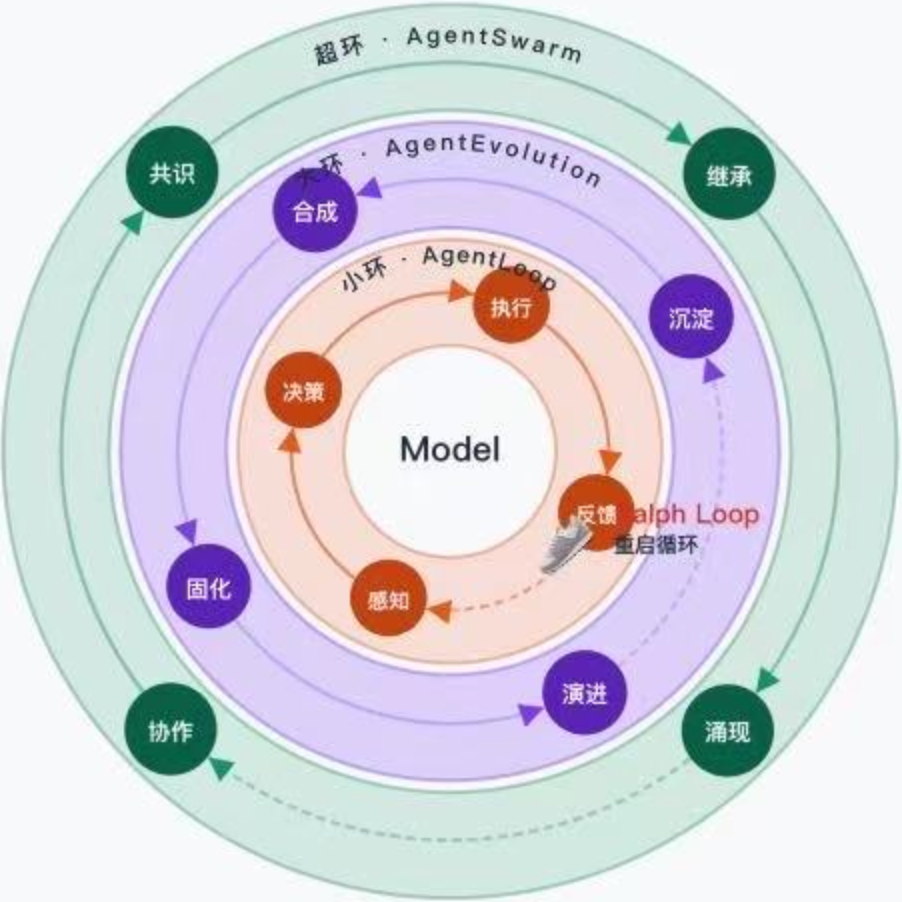
The most direct way to give an Agent long-term memory is to write history into a database and retrieve a few relevant records when a new question arrives. This pipeline soon encounters two different requirements: a personal assistant needs to remember specific people, events, times, and preferences; a task Agent needs to learn from past actions what to do next. The former fears losing details to c…
What problem it solves
A frozen LLM can only use information that fits in its context window, making it difficult to answer questions from large document collections or long interaction histories. Memorilla addresses this by reading a collection and supplying the LLM with a fixed number of query-dependent memory tokens.
Key features
Query-dependent memory compression — The system reads a complete …
The difficulty in getting an agent to complete a long task often lies midway through. It may have already written the code but missed the actual delivery steps; it may also have simply encountered an ordinary error and be looking for an alternative on its own. At this point, we want it to correct its course promptly, but we also don't want to interrupt it every time something happens.
Meta² studi…
What problem it solves
External data needs to conform to an application's expectations before it is used. Pydantic addresses this by letting developers define data shapes with standard Python type hints and then validate incoming values against those definitions.
Key features
Type-hint-based models — Models describe expected data using familiar Python type hints. This keeps validation definitions …
What problem it solves
Artists need control over composition, character identity, and camera placement. ArtCraft addresses this by providing visual tools for building scenes before generation, refining prompts, and creating precise, repeatable results.
Key features
Visual scene crafting — Build scenes before generating them with 2D composition, 3D staging, character posing, camera placement, and m…
What problem it solves
Go applications need a way to create, read, and modify spreadsheet documents produced by Microsoft Excel. They also need support for complex spreadsheet components and workflows involving large worksheet datasets.
Key features
Read and write spreadsheet files — Create and modify workbooks, set cell values, save files, and read cell values and worksheet rows through a Go API.…
 ruffle• Pinned