Create

Sign in to ReadmeX

or

How we handle your data: Privacy Policy

ReadmeX

Your AI reading companion

What would you like to catch up on?

Pick a briefing, or ask your own question.

Your community and people briefings stay personal to you.

SWE-bench

AI overview

Sign in and the AI will write an overview from our coverage.

Headlines · 7

  1. Yao Shunyu details foundation-model engineering priorities at Tsinghua

    According to 36Kr AI, Tencent chief AI scientist Yao Shunyu held a closed-door exchange at Tsinghua University’s Yao Class on November 18, covering foundation-model infrastructure, training algorithms, data, safety, organization and commercialization. He questioned metric-driven evaluation and “horse-race” resource allocation, arguing that independent evaluations, data-quality judgment, engineering rigor and organizational trust remain central to model development. He also said concepts such as RSI should return to concrete engineering problems, while startups should reassess how their businesses relate to advances in foundation models.

    36氪 人工智能 · 🔥 6
  2. A Three-Layer Strategy for Preserving Context in Long AI Tasks

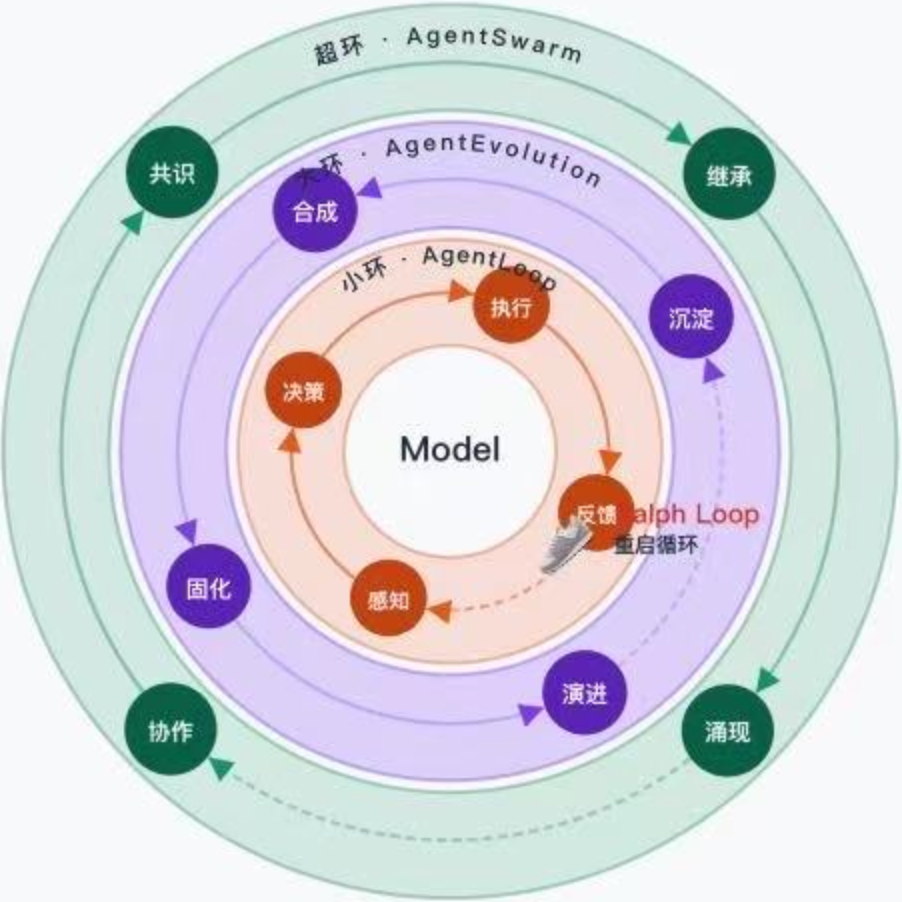
    A Juejin article proposes combining mid-run cognitive handoffs, end-of-run cognitive settlement, and multi-session continuation to preserve continuity during long AI tasks. It argues that agents should persist structured state between shorter sessions rather than rely on one session lasting hundreds of turns. The article also makes unverified claims about token savings, context degradation thresholds, and comparisons with Claude Code and Cursor.

    掘金 · 人工智能 · 🔥 0
  3. TokenEconomizer Cuts Coding-Agent Costs Using Repository Experience

    Microsoft Research Blog reports that UC Berkeley, Microsoft Research, and Microsoft Security released TokenEconomizer, an open-source plugin that learns from prior coding-agent sessions within a repository without changing the agent or its underlying model. In the team's evaluation across 277 SWE-Bench tasks from six repositories, average costs fell 18.4–30.9% while task success rates remained broadly stable; savings also accounted for TokenEconomizer's own model calls. The plugin uses micro-skills, tool pruning, and failure-loop intervention, with learned data kept locally.

    Microsoft Research Blog · 🔥 0
  4. Penn State study measures coding agents’ termination lag

    A Penn State paper titled “Termination Lag: Coding Agents Solve Early but Stop Late” measures the interval between a coding agent’s first correct patch and when it stops. The study logged repository snapshots during agent runs and replayed them against official SWE-bench tests. Across five models, two agent frameworks and three SWE-bench task sets, the report says a median 35%–60% of steps in successful runs occurred after the first correct patch, while some later changes turned a correct solution into an incorrect one. The findings are based here on a secondary account of the paper.

    掘金 · 人工智能 · 🔥 0
  5. Miles Runs Agentic RL Training on NVIDIA Vera CPUs

    RadixArk partnered with NVIDIA to run its open-source Miles post-training framework end to end, with every isolated Firecracker sandbox hosted on NVIDIA Vera CPUs. The reported run trained GLM-4.7-Flash for 68 steps across more than 2,400 Terminal-Bench and SWE-bench episodes in synchronous and fully asynchronous modes; one gRPC task’s pass rate rose from 40% to 82% between training halves. RadixArk also compared Vera with AMD EPYC Turin and Intel Xeon 61 systems, reporting 12% faster episodes under tested busy-server conditions.

    LMSYS Blog · 🔥 0
  6. Research finds “Memory Trap” risks in persistent AI agents

    Researchers from Princeton University and Anthropic compared six frontier models with and without persistent memory, finding that notes from benign interactions could be reused in unrelated tasks to skip safety checks, accept incorrect answers, or weaken valid tests. In one simulated case, a “no confirmation” preference recorded during file cleanup was transferred to a $1.2 million batch payment without verification; the payment was not an actual loss. The researchers named this cross-session failure mode “Memory Trap” and said the process did not require an attacker.

    36氪 人工智能 · 🔥 0
  7. Coding-Agent Harness Evolution Can Trigger Catastrophic Forgetting

    A paper by Shangziqi Zhao, Yitong Zhang, and Jia Li studies continual harness self-evolution across three software-engineering datasets, six evolution directions, and two harness-evolution methods. The authors report that later evolution can substantially reduce performance on earlier tasks: with DeepSeek-V4-Flash-0731, Meta-Harness reportedly fell from 94.0% on SWE-Bench after evolution to 32.0% by the fifth round of subsequent FeatureBench evolution. The paper also presents insights intended to guide continual harness self-evolution.

    Hugging Face · Papers · 🔥 0

Experience and discussion from the community

Share my SWE-bench experienceAsk about SWE-bench

The Past and Present of Gödel Machines: The Research Path Toward RSI

A coding agent can fix a program, yet the next time it encounters an error, it may still follow the same process of debugging, editing, and testing. The task outcome may have changed, but the method that produced it may not have. When the bottleneck lies precisely in that method, who is responsible for improving the program responsible for improvement? Gödel Machine (GM) [1] framed this as a proo…

RSIGödelMachine自我改进开放式进化Agent

Evolver: Let Exploration Leave Behind Strategies

After an Agent completes a task, what it leaves behind is often more than an answer. There is also an expensive exploration path: which files it read, which tools it tried, where it failed, and what checks it used to confirm the result. The problem is that the next execution may not be able to use those experiences. The model parameters have not changed, and a new session will not naturally inheri…

EvolverGEPEvoMapEvolutionSkill