A Juejin AI article reviews Google’s Gemini 4 Argon, Carbon and Hydrogen in the Antigravity coding environment, alongside their reported launch timeline and API pricing. The author says Carbon is the strongest of the three but slower than Argon, while Hydrogen offers faster responses suited to code exploration and writing tasks. It also recommends global prompts, a custom IO plugin and Swarm-based delegation, but treats its comparisons with Claude and GPT as personal impressions rather than standardized benchmarks.
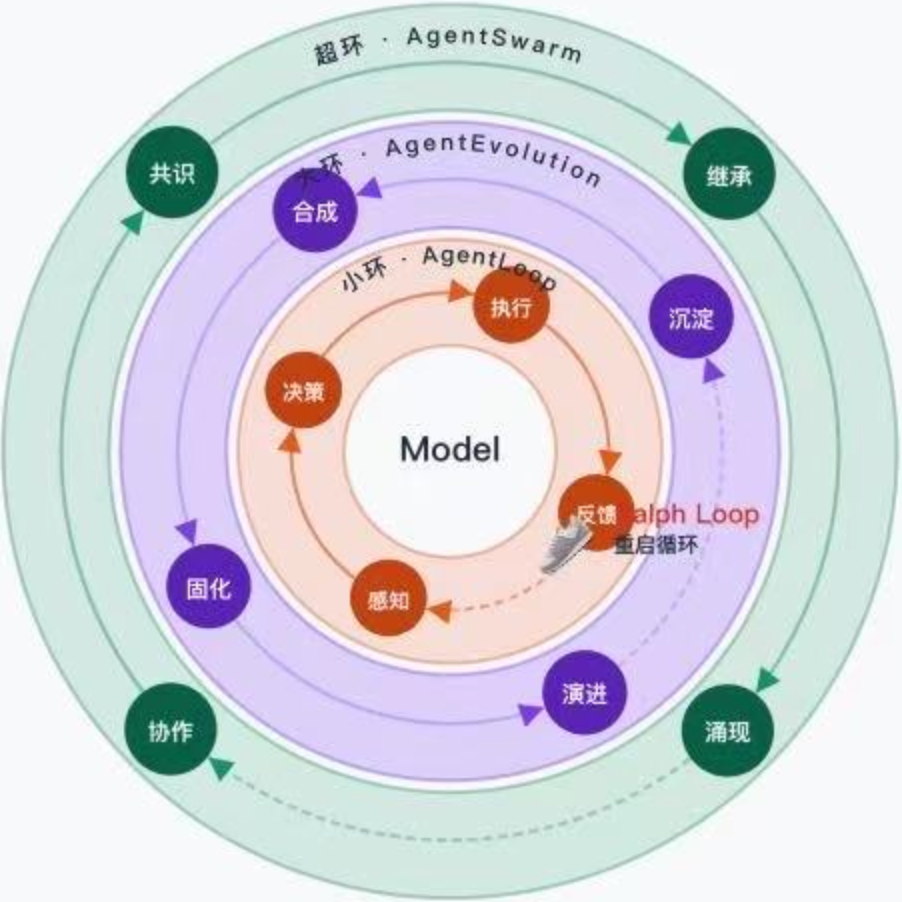
openJiuwen has released an RSI-native AgentOS that provides extension points across the interface, gateway, server, and Agent execution layers. According to QbitAI, extensions can be hot-loaded without changing the host application, managed by version, and rolled back after failures. WorkSwarm uses the mechanism to let an Agent generate, package, install, test, and revise system plugins in response to user feedback.
AWS reports that Natera built SWARM, an agentic AI system on Amazon Bedrock AgentCore, to capture institutional knowledge and support diagnostics for laboratory instruments. During a 90-day production evaluation, average first response time fell from 17.4 hours to roughly eight minutes, and 96.2% of incoming tickets received an automated diagnostic report before engineer review, according to Natera and AWS. The evaluation covered 524 tickets, but only 269 had confidence labels and engineer-verified resolutions available for comparison; the 37 low-confidence cases were too few for statistically meaningful conclusions.
openJiuwen has published a detailed interpretation of its HyperAgent architecture, outlining eight traits for next-generation agents and the layered design of its open-source AgentOS. According to 机器之心, the framework covers persistent agents, recursive improvement, heterogeneous swarm collaboration, reliable execution, interoperability, and total task-cost optimization, with some components already open-sourced. openJiuwen also reported that persistent agents in WorkSwarm can coordinate across IM channels, while humans, digital workers, and expert teams divide work in native group chats.
TestingCatalog reports that Google is developing Swarm, a bee-marked slash command for Antigravity that launches multiple agents to divide parallelizable tasks among different roles. In a hands-on test, three agents, including Greeter and Verifier, coordinated through a shared message board, while a dashboard displayed their work and messages. The feature warned that it could consume substantial quota, although its token use with Gemini 4 Argon or Carbon was not confirmed.
What problem it solves
Docker environments require centralized management across containers, stacks, configuration, updates, and operational workflows. Arcane provides a web-based management interface while its latest release also addresses agent-mode operation, update verification, and Docker, Swarm, and backup behavior.
Key features
Docker and container management — Manage Docker environments wi…
What problem it solves
Finance research often requires combining market data, source documents, valuation methods, strategy testing and portfolio analysis across multiple workflows. This project provides an agent-based interface that turns those questions into research reports, backtests and paper portfolios, with optional supported live broker execution under user-defined limits.
Key features
Nat…
What problem it solves
Individual agents have different capabilities, context, workflows, and ecosystem connections, forcing users to switch interfaces, repeat information, and coordinate subtasks manually. Users need a way to delegate a task to appropriate installed agents and consolidate their work without managing each agent separately.
Key features
Automatic agent selection — AutoSwarm selects…
What problem it solves
Microservices deployed through an orchestrator or service registry need routes that expose them to users, but maintaining every route manually becomes tedious as services change. Traefik addresses this by reading infrastructure APIs and generating routes automatically and dynamically.
Key features
Automatic routing — Traefik configures itself automatically and dynamically by…
Handing a problem to four Agents most easily produces four attempts. Increasing the number to eight may raise the success rate further. But if every Agent searches along similar lines, a significant portion of the additional computational power brought by a larger team will be spent on duplicate work. If we instead require them to communicate continuously, messages will consume context and reasoni…
What problem it solves
Container logs are commonly distributed across Docker, Swarm, K8s, and remote Docker hosts, making live monitoring difficult to consolidate. Dozzle provides a web-based interface for viewing logs as they arrive without storing log files, though it does not support offline searching.
Key features
Search and query container logs — Find containers with fuzzy name search, filter…
What problem it solves
Single-session agents depend on people to start work, block during long-running jobs, share one context, and stop when a machine sleeps. Companies need agents that can run continuously, coordinate parallel work, retain state across sessions, and integrate with the tools and approval processes used by their teams.
Key features
Event-driven agent execution — Schedules, signed …
What problem it solves
Models need more than prompts to carry out substantial development work: they require tools, persistent context, task coordination, controls, and a way to inspect results. Ruflo provides this execution layer so multiple agents can divide work, retain useful experience, and operate within defined permissions.
Key features
Coordinated agent swarms — Route work among specialize…
What problem it solves
Coordinated bug hunting is often gated by years of security practice, expensive tooling, and access to specialized workflows. The framework aims to make authorized reconnaissance, exploitation, and reporting more accessible while retaining explicit scope controls and reproducible evidence.
Key features
Agent-led security workflow — Operators follow a reconnaissance-to-exploi…
AI has already entered code writing, algorithm optimization, and model development. But after a task is completed, what remains may be reusable capability—or merely an answer and scattered logs. The difference becomes apparent only when a similar problem comes up again: can the system reuse what it learned, or must it pay the cost of exploration all over again?
Recursive Self-Improvement (RSI) co…
The Research system Anthropic unveiled in June 2025[1] organizes a research problem into a process of analysis, parallel search, and synthesis of results. Beyond model capabilities, how work is allocated and how results from different directions are connected have also become design questions that AI engineering needs to answer separately.
Along this line, I want to ask a deeper question: if even …
 arcane• Pinned