A report on Meta’s “Meta’s AI Storage Blueprint at Scale” examines its BLOB Storage architecture for AI training, including simplified metadata, direct client I/O, and multi-tier caching. It also compares Meta’s design with JuiceFS, which the report promotes. Meta’s reported 80% cache-hit rate and 93% average and 97% worst-case reductions in data-loading time were not independently verified in the supplied material.
The most direct way to give an Agent long-term memory is to write history into a database and retrieve a few relevant records when a new question arrives. This pipeline soon encounters two different requirements: a personal assistant needs to remember specific people, events, times, and preferences; a task Agent needs to learn from past actions what to do next. The former fears losing details to c…
What problem it solves
AI agents need a durable memory that records facts with provenance, supports corrections and withdrawal, and remains available across different agents. Conventional retrieval may surface relevant pages without synthesizing them into a sourced answer or identifying gaps in the available knowledge.
Key features
Portable agent memory — Store explicit facts with sources and make…
What problem it solves
Developers need a unified way to build semantic search applications, ground language models with knowledge sources, and connect models into larger workflows. They also need support for different data types, models, deployment modes, and application interfaces without assembling each capability separately.
Key features
Unified embeddings database — The core component combines…
What problem it solves
Learners need a practical path from AI engineering fundamentals to tested systems rather than isolated API examples. The curriculum is structured to make model internals, retrieval pipelines, agent runtimes, evaluation, and failure inspection understandable through runnable code and retained evidence.
Key features
Structured AI engineering curriculum — The curriculum spans m…
What problem it solves
Search tools commonly return file paths and matching lines, leaving users to open files and synthesize the context themselves. AutoRAG Agent searches files, mail, chats, and notes in place, verifies answers against source documents, and can also organize or edit files on request.
Key features
Federated search across local sources — The agent searches files, mail, chats, and …
What problem it solves
Teams need a shared place where members can use AI for everyday office work, development, and creative production while keeping resources, access, and usage under centralized control. They also need to connect their own models and business tools and deploy the platform on infrastructure they manage.
Key features
Natural-language task execution — Users can describe goals and …
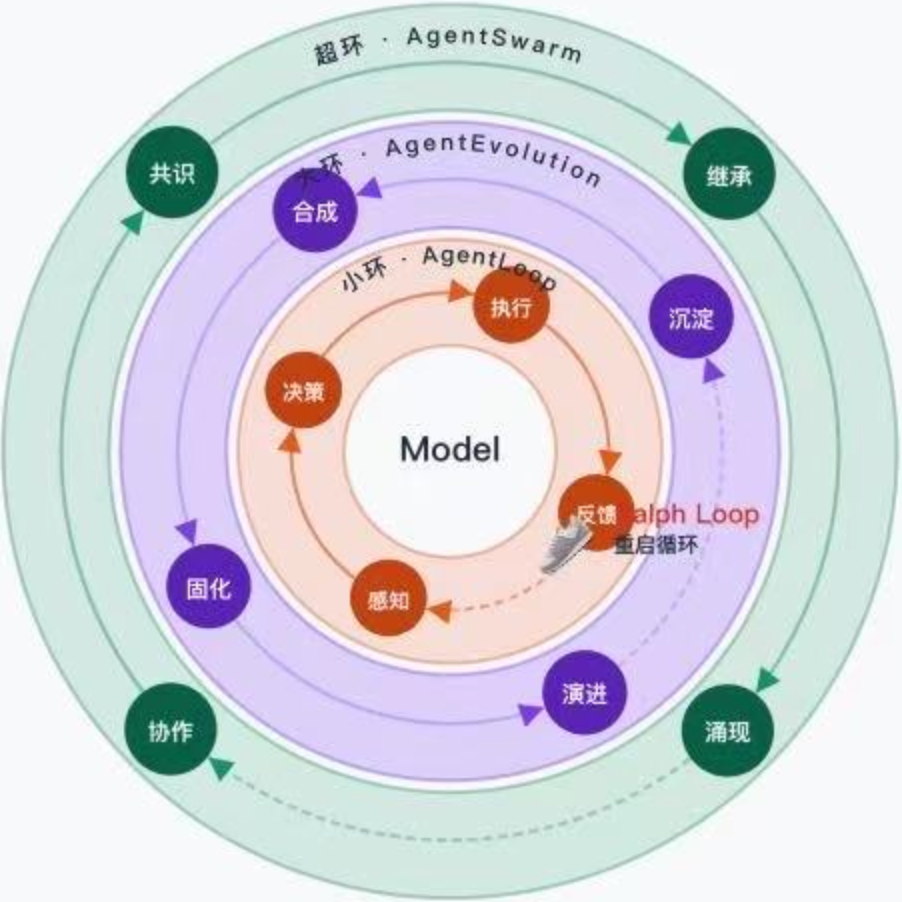
The difficulty in getting an agent to complete a long task often lies midway through. It may have already written the code but missed the actual delivery steps; it may also have simply encountered an ordinary error and be looking for an alternative on its own. At this point, we want it to correct its course promptly, but we also don't want to interrupt it every time something happens.
Meta² studi…
What problem it solves
Engineers and inventors often have design documents and code but no structured way to identify patentable points, draft disclosure documents, or assemble application files. Public patent texts are also hard to read: claims are convoluted, terminology is dense, and the practical context is scattered across descriptions and drawings. The skill set addresses both sides of this …
What problem it solves
Developers and researchers need a reusable charting engine, interpretation data, and reference material for studying and building applications around Zi Wei Dou Shu. The project addresses this by separating the public charting algorithms and knowledge assets from the proprietary interpretation library, AI services, and commercial interface.
Key features
Configurable charting…
What problem it solves
Learners need tutoring that can adapt across long-term study, use their own learning materials, and connect answers to sources. They also need a flexible environment for reading, practice, research, visualization, and other agent-assisted workflows without separating each activity from their learning history.
Key features
Personalized agent collaboration — The tutoring envir…
What problem it solves
Teams need a maintainable way to define workflows as code, schedule dependent tasks, and monitor running pipelines. Airflow addresses this with code-defined Dags, task execution across workers, command-line tools, and a user interface for visualizing progress and troubleshooting issues.
Key features
Code-defined workflows — Define pipelines as Python code with dynamic Dag ge…
What problem it solves
People need AI agents that can continue work across their devices, use the model providers they already have, and operate their actual files and applications. They also need a shared interface for existing coding agents and a way to build reusable companions, integrations, and recurring routines.
Key features
Cross-device sessions and access — Continue sessions from another …
What problem it solves
AI coding agents need precise code context without repeatedly reading broad files or surrounding code. Gortex turns indexed repositories into a queryable knowledge graph so agents can retrieve symbols, call chains, contracts, and impact relationships through supported development interfaces.
Key features
Graph-native code context — Repositories are indexed into a persistent …
What problem it solves
Open Notebook provides a private, self-hosted environment for organizing research material while using multiple AI providers. It supports multimodal sources, full-text and vector search, context-aware conversations, notes, content transformations, and podcast generation.
Key features
Multi-provider AI support — Connect language, embedding, speech-to-text, and text-to-speech …
What problem it solves
Passwords, API keys, and tokens can be committed or stored unnoticed in source code and repository history. Developers need a way to scan repositories, directories, individual files, and streamed data to identify these secrets.
Key features
Multiple scanning modes — Scan local Git repositories, directories or files, and data supplied through standard input using the `git`, `…
What problem it solves
Knowledge workers need Claude to follow their organization’s tools, terminology, critical workflows, and preferred ways of working rather than provide only generic assistance. The repository provides customizable role-specific plugins that package this guidance with connectors, skills, commands, and sub-agents.
Key features
Role-specific plugin collection — The collection in…
What problem it solves
Building conversational AI applications inside existing instant messaging workflows requires connecting models, platforms, agent capabilities, knowledge, and extensions. The project addresses this by providing a unified platform for personal companions, customer service, automation, and enterprise knowledge-base applications.
Key features
Agent and conversational AI capabili…
What problem it solves
Agent workflows, corrections, debugging patterns, and repository conventions often disappear when a session ends or remain trapped inside one coding tool. Beacon addresses this by capturing session history across harnesses and turning useful findings into reusable memory for future agents.
Key features
Cross-harness session history — Capture session history from Claude Code,…
What problem it solves
Creating intelligent AI agents that can collaborate on complex tasks can require code and substantial integration work. Docker Agent addresses this by letting users define agents in YAML, assign tools, and run them through the Docker CLI.
Key features
Multi-agent orchestration — Create teams of specialized agents that delegate tasks automatically.
Source: README
Extensible t…
What problem it solves
AI coding agents need AWS-specific tools, knowledge, and guardrails to work effectively with AWS services. Teams using different coding agents also need a consistent way to configure AWS API access, guidance, and reusable skills.
Key features
AWS MCP Server — The managed MCP Server gives agents access to AWS APIs, isolated script execution, and current documentation through …
 Memory Systems•Florian•