Amazon Web Services has become the FIA’s official partner for AI, cloud computing, machine learning and cloud infrastructure in a deal covering every level of motorsport, from club racing to Formula 1. The FIA already runs aerodynamic simulations on AWS computers and says this enables it to write rules faster while reducing costs and environmental impact. Under the agreement, AWS will provide AI tools to help FIA engineers draft rules on safety, speed and sustainability. The FIA’s Digital Licensing Platform, developed and hosted by AWS, is expanding to more national sporting authorities, with event-management and other features planned. More FIA business applications and hosted services are also expected to move to AWS over the coming years.
What problem it solves
Personal and team knowledge is distributed across notes, conversations, trackers, and research, making it difficult to capture, organize, verify, and synthesize useful information. COG provides a markdown-based workflow in which agents can maintain a shared knowledge base, support recurring research and operational tasks, and verify selected work through independent checks.
…
What problem it solves
Backups need to be easy to create, reliable to restore and safe to store in environments that may not be trusted. They also need to handle growing datasets without rewriting unchanged or duplicate data unnecessarily.
Key features
Cross-platform backups — The program supports Linux, macOS and Windows, along with FreeBSD and OpenBSD. Backups can be stored natively across sever…
What problem it solves
Production ontology changes can introduce consequences that are not visible in a text diff, making it difficult to assess their impact before deployment. Reviewers also need evidence they can verify later without trusting the engine or the person who applied the change.
Key features
Plan and control ontology changes — The lifecycle workflow plans changes, reports their blast…
What problem it solves
Fintech applications need a reliable system of record for wallets, payouts, marketplaces, billing, and agent-initiated payments. They also need exact monetary arithmetic, enforceable spending controls, and evidence that the recorded history has not been altered.
Key features
Exact double-entry accounting — Records transfers, payouts, billing activity, reservations, and refun…
What problem it solves
GitHub workflows often require moving between a terminal and GitHub to manage pull requests, issues, and other GitHub concepts. This project places those capabilities alongside git and code, reducing the need for separate browser-based interactions.
Key features
GitHub workflows in the terminal — Manage pull requests, issues, and other GitHub concepts directly from the comma…
What problem it solves
Coding agents may silently make assumptions, fail to surface tradeoffs, overcomplicate implementations, and modify code they do not fully understand. The guidelines seek more focused changes, earlier clarification, simpler code, and verifiable execution.
Key features
Think Before Coding — The guidelines require explicit assumptions, clarification of ambiguity, consideration …
What problem it solves
Ad-hoc AI coding can lose context as projects grow. AI-DLC keeps requirements, decisions, implementation, tests, and operational work connected through an audited lifecycle.
Key features
Harness-neutral workflow core — A single core runs across multiple coding-assistant harnesses, with thin harness-specific integrations.
Source: README
Structured delivery lifecycle — The wor…
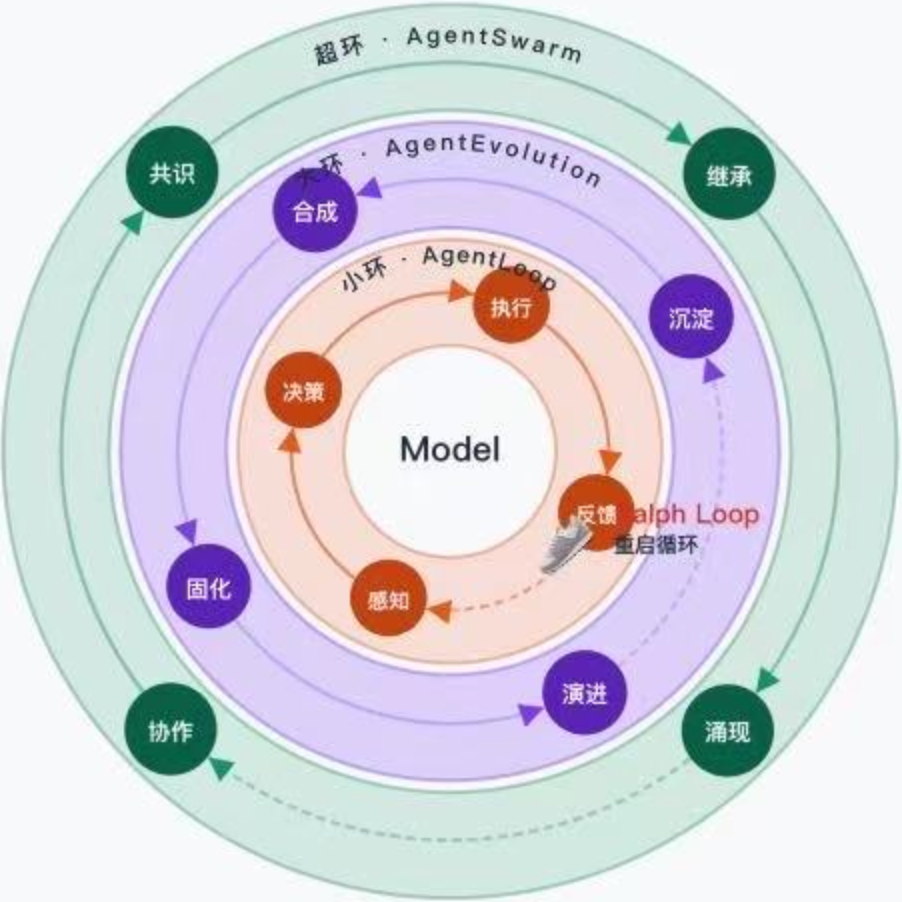
AI has already entered code writing, algorithm optimization, and model development. But after a task is completed, what remains may be reusable capability—or merely an answer and scattered logs. The difference becomes apparent only when a similar problem comes up again: can the system reuse what it learned, or must it pay the cost of exploration all over again?
Recursive Self-Improvement (RSI) co…
 COG-second-brain• Pinned